Culture on My Mind – Not Just Musicals: Stand Up and Magic

Culture on My Mind

Culture on My Mind
Not Just Musicals: Stand Up and Magic
August 11, 2023

This week, I’m playing catch-up with the Theater and Musical Lovers YouTube Channel.

The channel and its associated Facebook group were established as an unofficial gathering of Dragon Con attendees who love theater, musicals, and the performing arts. Their goal is to create a community of fellow thespians and fans at the convention.

About a month ago, the thespians continued their exploration of the stagecraft that wasn’t musicals. This time, Sarah was joined by Jon Armstrong and Primetime Steve to discuss the craft of stand up and magic, the highs and lows of live performances, and why what they do is included in the theater genre.

Note: Depending on security settings, you may have to click below to see the video directly on YouTube. You should definitely subscribe to their channel for more updates.


The Theater and Musical Lovers Group will be hosting more of these panels. If you’re interested in participating or have some topic ideas in mind, head over to the group on Facebook and drop them a line. You can also find them on Instagram and coming soon on TikTok.

You can find Gary and Sarah on the socials: On Twitter, they are Gary_Mitchel, SarahRose_KPK, and Daisuki_Suu; on Instagram, they are Gary_Mitchel and Daisuki_Suu; and Gary’s horror-themed podcast that he hosts with Erin McGourn is A Podcask of Amontillado. Of course, the Theater & Musical Lovers channel can be found on YouTube.

cc-break

Culture on My Mind is inspired by the weekly Can’t Let It Go segment on the NPR Politics Podcast where each host brings one thing to the table that they just can’t stop thinking about.

For more creativity with a critical eye, visit Creative Criticality.

Dragon Con 2023

Dragon Con 2023
Atlanta, GA – August 31 through September 4, 2023

Logo_no_background

Dragon Con!

It’s typically an annual tradition for me, but it won’t be this year. I’m taking this year off for personal and family reasons, but I’d still like to support the convention where possible.

The convention app is available now – look for Dragon Con by Core-apps in the Apple App Store and the Google Play Store – and will have the schedule of events soon. The list of confirmed guests, performers, artists, and attending professionals is available on the official Dragon Con site. That list and the events surrounding it will obviously be subject to the ongoing WGA/SAG-AFTRA strike.

Dragon Con itself takes place in downtown Atlanta spanning five hotels (Sheraton Atlanta Courtland Grand, Hilton Atlanta, Atlanta Marriott Marquis, Hyatt Regency Atlanta, and Westin Peachtree Plaza) and the AmericasMart Atlanta exhibition center. The convention draws approximately 70,000 to 80,000 attendees (or more) annually and showcases one of the city’s most popular parades on Saturday morning at 10am. This year, the attendance numbers will be lower with an attendance cap between the reported 85,000 in 2019 and 65,000 in 2022.

Dragon Con prides itself on contributions to charity and the community. You can find more information about those efforts on their webpage. Each year, the convention partners with a local charity organization and this year’s partner is CURE Childhood Cancer. CURE’s mission is to conquer childhood cancer through funding targeted research while supporting patients and their families. Donations can be made at various locations around the convention, including donation buckets in each track room and contributions from the annual charity auctions. Dragon Con will match every donation up to $125,000.

The convention has previously hosted the Dragon Con Hustle, a virtual 5K conducted on the honor system. The registration fee is donated to the annual charity and each participant gets a physical medal two weeks after the convention ends. As of this writing, I haven’t seen a post about the event this year, but keep an eye out if you’re interested. You can run, walk, roll, or even skip your way to the goal, and all Dragon Con asks is for a progress update on social media with the #DragonConHustle hashtag.

Dragon Con also hosts one of the most successful blood drives with the donations going to the non-profit Lifesouth Community Blood Centers. Lifesouth serves 125 hospitals in Alabama, Georgia, and Florida, and the Dragon Con blood drives routinely outperform those held at that big West Coast corporate convention. In exchange for your donation, you get a custom exclusive t-shirt.

If you’re new to the convention, consider visiting the Dragon Con Newbies group on Facebook. It is run by Kevin Bachelder, Sue Kisenwether, Kim McGibony, and me, and is an in-depth community resource for information about this massive (and sometimes overwhelming) event. Memberships (tickets) for this year’s convention are available, however memberships are limited.

Note: All Dragon Con schedules are tentative until the convention ends on Monday. Even then, things are a bit suspect.

I will miss you all this year. Please be safe and have a wonderful long weekend, and (fate willing) I’ll see you all again in 2024.

cc-break

Culture on My Mind – SUBSAFE

Culture on My Mind

Culture on My Mind
SUBSAFE
July 24, 2023

On June 18, 2023, the submersible Titan imploded during an excursion to the wreck of the Titanic in the Atlantic Ocean. The submersible was owned and operated by OceanGate CEO Stockton Rush, and the incident claimed the lives of Rush, French deep-sea explorer and Titanic expert Paul-Henri Nargeolet, British billionaire Hamish Harding, Pakistani-British billionaire Shahzada Dawood, and Dawood’s son Suleman.

I watched as the internet exploded in memes and mockery over this event. I get the reasoning behind it: According to the 2022 Global Wealth Report from Credit Suisse, nearly half of the world’s wealth – 47.8%, or 221.7 trillion in US dollars – is controlled by 1.2% of the world’s population. Over half of the world’s population has a wealth of less than $10,000, and one-third of the population lives in the $10,000-$100,000 range. 

This year, Forbes reported that there are 2,640 billionaires on the planet. They are collectively worth $12.2 trillion. That’s 2.6% of the world’s wealth controlled by a tiny fraction of the world’s population, and they are concentrated in the United States, China, India, and Germany.

I’m not here today to adjudicate that. It’s merely the motive behind the reaction of the masses as one billionaire’s hubris killed four other people. And while it’s possible that those four passengers may have known about the submersible’s shortcomings, it’s not likely in my opinion.

I look at skydiving, scuba diving, bungee jumping, rollercoasters, and other such thrill-seeking experiences that people enjoy. Most of them are taken with the assumption that some higher authority has oversight… that the attraction has a safety record and someone would have shut them down if it wasn’t safe to an acceptable degree of risk.

OceanGate has been transporting paying customers on submersible trips since 2010, including several trips to other shipwrecks. On its face, 13 years without significant incidents is a pretty good track record. Most people in search of a thrill-seeking experience would stop looking for problems at that point and sign the requisite waivers.

I don’t engage in the internet’s mockery of the Titan implosion because I can reasonably assume that those four passengers made the same risk calculations. But what came out after the Titan implosion is what really bothered me as a former submariner. 

In a 2019 Smithsonian Magazine article, Rush was referred to as a “daredevil inventor” who believed that the U.S. Passenger Vessel Safety Act of 1993 “needlessly prioritized passenger safety over commercial innovation”. He later admitted that he broke rules with “logic and good engineering” behind those decisions. He described safety as a “pure waste” and suggested that people should do nothing in life if they want to remain safe.

The OceanGate submersible had multiple engineering issues which Rush ignored based on faulty assumptions and questionable engineering experience. Rush also ignored dissenting opinions from David Lochridge and Rob McCallum, even to the point of firing dissenters and pursuing legal action against them.

But, most importantly to what I want to discuss here, he openly stated in a now deleted video meeting with Teledyne Marine that he bucked the trend of hiring submarine veterans – “50-year-old white guys” – because he wanted his team to be younger and more inspirational.

The thing is that the talent that he kicked aside because he wanted to “make expeditions to the Titanic more enjoyable for his customers” could have potentially saved those customers on June 18, 2023. Submarine veterans (like me) know about the history of the USS Thresher and the quality assurance program that was developed as a result.

On April 10, 1963, the USS Thresher (SSN-593) was lost at sea with all hands. She was a Permit-class nuclear submarine, the fastest and quietest of the day, and designed to hunt and kill Soviet submarines during the Cold War. Thresher was launched in 1960 and conducted her sea trials over the next couple of years to thoroughly evaluate her new and complex technological systems. After a series of operations, she entered Portsmouth Shipyard in July 1962 for a post-shakedown availability to examine and repair systems, and as typical for first-of-class boats, the availability took longer than expected. Thresher was finally certified for sea and undocked on April 8, 1963.

The crew began post-overhaul sea trials the next day, and everything seemed to be okay until the deep-dive tests on April 10th. Thresher slowly dove deeper while making circles under her surface support ship, Skylark, pausing every 100 feet of depth to perform a shipwide integrity check. As the submarine neared test depth, Skylark received a garbled communication indicating “…minor difficulties, have positive up angle, attempting to blow”.

That “blow” would be an emergency blow of the main ballast tanks, which means rapidly filling the large tanks with high-pressure air and making the ship overwhelmingly positively buoyant. You’ve probably seen the stock footage in movies and television, particularly during The Hunt for Red October.

There was one more even more garbled message from the deep and Skylark‘s crew knew that something was wrong. An extensive search was conducted and Thresher‘s families were notified that night. Chief of Naval Operations Admiral George W. Anderson Jr. held a press conference to announce that the submarine was lost with all hands.

After an investigation, the root cause of the disaster was determined to be a failure of the saltwater piping system. Specifically, there was a joint that relied on silver brazing instead of welding, and that failure would have potentially shorted out an electrical panel, shut down the reactor, and caused a loss of propulsion. There was also some concern over excessive moisture in the high-pressure air system which would have frozen during an emergency blow and plugged up the piping. The Navy made several modifications to systems to prevent these failures in the future. 

They also instituted the Submarine Safety Program, better known as SUBSAFE, which is a quality assurance program specifically designed to provide maximum reasonable assurance that submarine hulls will remain watertight and can recover from unanticipated flooding. The program’s scope includes every system exposed to sea pressure or critical to recovery during a flood. Any work on those systems is tightly controlled to ensure that materials, assembly, maintenance, and testing are perfect, including certifications with traceable quality evidence from point of manufacture to point of installation.

The track record speaks for itself: From 1915 to 1963, the United States Navy lost 16 submarines through non-combat-related causes. After SUBSAFE was introduced in 1963, the only submarine lost in similar causes was the USS Scorpion (SSN-589), and she was not SUBSAFE certified.

It’s an expensive program, but the cost of failure is much higher, and it’s a program that could have prevented the Titan disaster had some “50-year-old white guys” been consulted. SUBSAFE is embedded in the DNA of pretty much anyone who has earned a set of submarine dolphins. The regulations are written in blood.

The story of Stockton Rush and the Titan should serve as a cautionary tale. Safety and engineering may not be sexy and edgy, but it is a necessary part of pushing the limits of knowledge and understanding. The ocean’s depths are perhaps the largest unexplored frontier on Earth, and while I personally think that we should leave the Titanic graveyard alone, we should definitely continue to research the sea. 

But we should never willingly throw away experience and wisdom in the process, otherwise, we invite hubris, ignorance, and ultimately disaster.


cc-break

Culture on My Mind is inspired by the weekly Can’t Let It Go segment on the NPR Politics Podcast where each host brings one thing to the table that they just can’t stop thinking about.

For more creativity with a critical eye, visit Creative Criticality.

Schedule Update: The Timestamps Project (WGA/SAG-AFTRA Strike Edition)

Schedule Update: The Timestamps Project
WGA/SAG-AFTRA Strike Edition

Timestamps

The Timestamps Project is on hiatus in solidarity with the Writers Guild of America.

I recognize that Doctor Who is guided primarily by Equity UK, formerly known as the British Actors’ Equity Association, but the show also holds a production number with the Screen Actors Guild because they pay pension and healthcare contributions for any SAG members of the cast. Technically, Doctor Who is a SAG signatory. But that’s not important to this discussion.

I stand with the WGA and SAG-AFTRA because I am a writer and creative. I come from a family of creatives. Many members of my close-knit geek family are creatives, some of whom make their livings in film and television because of their passion for telling stories that mean something to all of us. Creativity lives in us, and it deserves to thrive with us.

I’m not being asked to do this. In fact, the strike rules don’t apply to me because I’m not a member of the unions and Creative Criticality falls more under the journalism rules than anything else. I am choosing this action because I feel that strongly about it.

The WGA strike started on May 2, 2023, and is based on the evolution of the streaming environment. The WGA has minimums for writers, but unlike the normal American worker who is nominally employed on a permanent basis, a writer works 35-40 weeks a year on a standard network show and 20-24 weeks a year in the streaming environment (where seasons are far shorter). In a city like Los Angeles, writers are fighting with the incredibly high cost of living and inflation. To compete against that, writers need a raise of about 10 percent.

Along with increased minimum compensation across all media, writers are also looking for increased residuals (which have been notoriously tough with streamers), appropriate compensations for writing television series across all stages of production, larger contributions to pension and health plans, the strengthening of professional standards and the overall protections for writers, and other terms.

Writers have talked about toxic environments in production, and it’s pretty obvious from the plans by studio execs to wait out the strike until writers “go broke“. These studio execs are on display as embodiments of late-stage capitalism: Success being defined by how much wealth can be banked while paying those who create the actual products as little as possible. They’d rather see crews destitute on the street rather than pay more in fair compensation and cut into their million- and billion-dollar comforts. It’s despicable, and it’s part of a pattern in corporate America of continually undervaluing the creative class.

It’s also pretty obvious on the SAG-AFTRA front. Consider the proposal that background actors – the lowest paid in the industry – get scanned for a single day’s pay with the intent of using their likenesses for any project at any time in perpetuity. It’s actually funny when you look at the Hollywood anti-piracy efforts over the last couple of decades that focused on how wrong it was to pay for something, transform it from the original format, and then share it over and over without due compensation.

As a producer friend of mine told me, this action would eliminate most working actors, the ones who never “make it” but still pay the bills just fine. It would domino across the industry: Current rules dictate one assistant director per every 100 background actors, so as background actor jobs diminish, jobs for ADs are eliminated. That cascades by eliminating jobs among all of the guilds.

All of it so that studio executives can pocket more cash as the industry burns around them.

During my lifetime, I have watched time and again as creatives have been treated like garbage. They’re treated like they don’t have real jobs or that their work is in the public domain because it exists in the internet era. Creatives aren’t valued until they don’t produce, and then they are replaced as if they were ultimately disposable.

Creatives are the lifeblood of the entertainment industry and the history of human storytelling, from film and television to books, video games, comics, art, podcasts, and beyond. Without creatives, we have nothing for actors, directors, producers, and publishers to translate to their chosen media. In turn, the studio executives have nothing without the hard work of all those people.

I stand with creatives. I stand against the continued devaluing of creatives and hard-working individuals. It’s not because I’m some sort of influencer (though, wouldn’t it be nice to have that many eyes on my work?), but because it’s the right thing to do when creators more powerful than me are fighting for what they believe in.

The Timestamps Project will remain on hiatus until the strike has ended. I hope you understand.

WGA-SAG-AFTRA-2023

cc-break

The Timestamps Project is an adventure through the televised universe of Doctor Who, story by story, from the beginning of the franchise. For more reviews like this one, please visit the project’s page at Creative Criticality.

Culture on My Mind – The Queer Revolution: Breaking the Broadway Mold

Culture on My Mind

Culture on My Mind
The Queer Revolution: Breaking the Broadway Mold
July 17, 2023

This week, I’m playing catch-up with the Theater and Musical Lovers YouTube Channel.

The channel and its associated Facebook group were established as an unofficial gathering of Dragon Con attendees who love theater, musicals, and the performing arts. Their goal is to create a community of fellow thespians and fans at the convention.

About a month ago, the thespians explored the impact that LGBTQIA+ artists, writers, and performers have had on Broadway. From the groundbreaking work of Hedwig & the Angry Inch to the Tony-winning productions, Rent and Kinky Boots, queer voices have been instrumental in shaping modern theater. Having experienced Rent live, I understand the power that it holds. I still get a little misty when I hear “Seasons of Love”.

Panelists Christi Chalmers, Courtney, and Vulva Va-Voom joined Sarah and Gary to discuss their favorite queer characters and stories on stage, the icons that helped shape their identities, and how LGBTQIA+ narratives have helped to bring visibility and acceptance to the theater community and the world.

It was a celebration of the queer revolution on Broadway and the power of representation in the arts!

Note: Depending on security settings, you may have to click below to see the video directly on YouTube. You should definitely subscribe to their channel for more updates.


The Theater and Musical Lovers Group will be hosting more of these panels. If you’re interested in participating or have some topic ideas in mind, head over to the group on Facebook and drop them a line. You can also find them on Instagram and coming soon on TikTok.

You can find Gary and Sarah on the socials: On Twitter, they are Gary_Mitchel, SarahRose_KPK, and Daisuki_Suu; on Instagram, they are Gary_Mitchel and Daisuki_Suu; and Gary’s horror-themed podcast that he hosts with Erin McGourn is A Podcask of Amontillado. Of course, the Theater & Musical Lovers channel can be found on YouTube.

cc-break

Culture on My Mind is inspired by the weekly Can’t Let It Go segment on the NPR Politics Podcast where each host brings one thing to the table that they just can’t stop thinking about.

For more creativity with a critical eye, visit Creative Criticality.

Timestamp #285: Rosa

A powerful historical story.

Montgomery, Alabama – 1943: A seamstress named Rosa Parks boards a bus on her way home from work. She pays the fee and heads to the back where “colored people” are forced to sit. The driver tells her that she must disembark and enter the bus through the back door. When she tries to reason with the driver, he forcibly removes her. In the process, she drops her purse and briefly sits in the “whites” section to retrieve it. The driver is furious, prompting Rosa to tell him not to hit her. She leaves the bus and heads for the back door, but the driver maliciously drives away, leaving Rosa stranded in the middle of the street.

Montgomery, Alabama – 1955: The Doctor and her companions land in an alleyway. She’s dismayed that they didn’t land in Sheffield, and she chastizes the TARDIS for failing to take the humans home for the ninth time. Graham remarks that it was the fourteenth attempt, but he’s interested in meeting Elvis Presley. The Doctor discovers high amounts of artron energy in the area, which might be why the TARDIS chose this time and place, so they decide to investigate.

As they walk, Ryan notices that a woman has dropped her glove. When he tries to return it, the woman’s husband rewards him with a slap to the face. As the TARDIS team tries to work through the assault, Rosa Parks steps in to smooth things over. When the white couple walks away, Rosa turns on the team and lectures them on the Emmett Till situation before introducing herself. The team is starstruck, and the Doctor finds traces of artron energy all around Rosa.

Meanwhile, a mysterious man in a leather jacket finds the TARDIS. He tries to break in with an energy weapon but the capsule’s shields deflect it.

The Doctor and her companions convene at Slim’s Bar. Ryan and Yaz discuss their lessons about Rosa Parks from school, awed by the fact that she refused to give up her seat on a bus on December 1, 1955. The event (and her subsequent arrest) led to the Montgomery Bus Boycott and the end of racial segregation on public buses in America. That event will happen tomorrow.

Graham notes how quiet the bar has become. A waitress confronts them, stating that they don’t serve “negroes” or Mexicans (in reference to Yaz), and forces them to leave. Ryan is disgusted that he has traveled to the one time and place where he is hated most. The team decides to track down the artron energy and follows the readings to a nearby warehouse with copious padlocks.

Elsewhere, the mysterious man creeps on Rosa Parks. He returns to the warehouse where the team has discovered a suitcase hidden by a perception filter. The suitcase is filled with worn futuristic tech, including a charger. The mystery man fires on them, pushing the team into the yard outside. The Doctor confronts him, recognizing his weapon as a temporal displacement device that sends things to other times. She also notes that he’s carrying a vortex manipulator. He threatens to kill the team. She tells him not to threaten her. She takes a scan of his tech before the team leaves.

Their next stop is whites-only Sahara Springs Motel. The Doctor and Graham secure a room and sneak Ryan and Yaz in through a back window. They brainstorm about their situation and use a wall as a markerboard until a police officer knocks at the door. The Doctor erases the writing with her sonic screwdriver before answering the door, admitting the officer who searches the room. Luckily, Yaz and Ryan have escaped through the bathroom window and hidden behind a nearby dumpster. The officer departs with a warning that the Doctor and Graham should leave town soon.

Yaz and Ryan discuss their situation, irritated that things haven’t truly evolved between 1955 and their home time. Ryan relates how he is stopped while driving more often than his white friends, and Yaz explains how she’s seen as a “Paki” and a terrorist for going to a mosque. They return to the room and continue to work.

The team collects bus schedules and (thanks to Grace) narrows down their target to a bus driven by James Blake. They take a ride on the bus, disgusted by the seating situation, and end up at Rosa’s workplace. They eventually find Rosa on the bus and ask her about her riding habits, but she prompts the Doctor to move to maintain the racial status quo. Ryan volunteers to follow Rosa home while the rest of the team makes plans.

Rosa confronts Ryan for following her, but Ryan offers to help her with the fight. She eventually invites him to join her Youth Council, consisting of her husband, Fred Gray, and Martin Luther King. Ryan explains that his grandmother loved King and makes coffee for the meeting. He talks with Rosa later and shares his hopes that things will get better in the future.

The Doctor confronts the mysterious time traveler, tricking him into sending his own equipment to the 79th century. She identifies him as a prisoner of Stormcage, the same location where River Song was imprisoned. His name is Krasko, and he was imprisoned for murdering 2000 people, but he can’t kill the Doctor or Rosa due to a neural restrictor. The Doctor tests this by destroying his vortex manipulator and stranding him in time. Krasko wants to change history starting with the point where everything started to go wrong, and the Doctor warns him to go somewhere else. Krasko refuses.

Meanwhile, Yaz and Graham continue their research. Graham returns to Slim’s Bar and finds James Blake, but Graham is surprised to hear that Blake is taking a day off (orchestrated by Krasko). Graham returns to the motel room where the team is surprised by the news, prompting them to get James Blake back on duty.

Yaz and the Doctor pose as raffle officials, congratulating Elias Griffin Jr. on winning an all-expenses paid trip to Las Vegas to meet Frank Sinatra. The catch is that he has to leave now so he’ll have to miss his shift. Graham and Ryan find James Blake fishing on Mill Creek and convince him that a group of Black passengers are planning a sit-in protest across all of the bus routes. Furious, Blake packs up his gear and goes back to work.

Finally, the Doctor deliberately tears her coat and contracts Rosa to fix it as soon as possible. Yaz offers to wait for it.

Blake finds that his bus has been wrecked. A disguised Krasko tells him to head home, so the Doctor sends Ryan to game the bus system while Graham finds a replacement bus for Blake to drive. As Blake starts his route, Yaz talks to Rosa about their lives. Rosa is surprised that Yaz is a police officer. Rosa finishes the coat in time to catch the bus.

Ryan discovers that Krasko has blocked the road. After a confrontation about Ryan’s “kind” staying “in their place”, Ryan sends Krasko back in time as far as the time traveler’s gadget will allow. He makes it back to the bus just in time, placing all of the key players in the right spots.

As events play out, Graham ends up being the fulcrum that forces Rosa to occupy a white seat. When Blake demands that she move, she refuses, even if means being arrested. Blake calls for the police, and as Rosa is taken away she nods to the travelers. It’s obvious that she won’t forget them.

The team returns to the TARDIS and the Doctor explains how history plays out. The boycotts occur, and segregation on buses ends on December 21, 1956. Life was still hard, but Rosa was recognized for her brave fight in June 1999 by President Bill Clinton when she received the Congressional Gold Medal.

She was also remembered well into the future. The Doctor opens the TARDIS doors to reveal Asteroid 284996. It is named Rosaparks.


This was a hard episode to watch. It is also a necessary one in the mission of science fiction.

As someone who has lived in Georgia for over a decade and has spent most of his professional life in the American South, I have studied a lot about the history of the places I’ve called home. Cases like the murder of Emmett Till – a 14-year-old boy who was abducted, tortured, and lynched on the mere accusation of offending a white woman – are heartbreaking and woven throughout the fabric of society.

The details are sometimes lost to time as the system whitewashes them (leading to the importance of educational places like the National Center for Civil and Human Rights and the Martin Luther King, Jr. National Historical Park, both in Atlanta, Georgia) and sometimes they are celebrated by those who support oppression (after an all-white jury found the perpetrators not guilty of Till’s murder and thus immune to double jeopardy, they sold the story of how they tortured and murdered Till to a popular magazine for the world to see).

In the nearly 250-year-long history of the United States, racial segregation has only been illegal for about 60 years. Even though it was banned by the Civil Rights Act of 1964, segregation remained for many years as jurisdictions dragged their feet toward compliance and enforcement.

Even with that considered, racism and discrimination aren’t dead, leading to the importance of this particular episode in the science fiction genre. One of my favorite quotes about the genre comes from Stargate SG-1‘s episode “200”, in which a character addresses the camera and states:

Science fiction is an existential metaphor that allows us to tell stories about the human condition. Isaac Asimov once said, “Individual science fiction stories may seem as trivial as ever to the blinded critics and philosophers of today, but the core of science fiction, its essence, has become crucial to our salvation, if we are to be saved at all.”

Science fiction is a mirror to reflect upon ourselves. The messages are timeless, but in the moment it has the power to show a receptive audience where their society stands. As such, it has the power to enlighten and offend, and the response says a lot about the viewer and how the message resonates.

The hope is that the audience takes the opportunity for self-reflection and self-improvement.

The writing takes some creative liberties, but the message delivered by this story, sadly, is still relevant today.

It also breaks some important ground in the history of Doctor Who since it was co-written by Malorie Blackman, the first woman of color to write for the series. She joins Vinay Patel, who penned the upcoming Demons of the Punjab, as the first writers of color to work on Doctor Who. They follow in Noel Clarke’s footsteps after he wrote Combat for Torchwood.

Further, the episode was directed by Mark Tonderai, the first Black director for Doctor Who. We previously saw his work on The Ghost Monument, and he follows in the footsteps of Waris Hussein, the first person of color to direct for the series. Hussein, of course, directed An Unearthly Child and the majority of Marco Polo.

The episode joins an elite pair by not featuring the series theme over the end credits. Here, the episode ends with “Rise Up” by Andra Day. It joins the finale of Earthshock, though that story ended with silence.

The racial tensions mirror concerns shared by Martha and Bill, though the tensions are brought fully into the spotlight here by the necessity of the story. I will say that the character of Krasko was written with a heavy hand, and his demise continues a (perhaps inadvertent) bloodthirsty trend of dispatching villains in this run.

I liked seeing a nod to The Chase as our heroes watch historical events on the Time-Space Visualizer (or something similar). Krasko’s meddling is reminiscent of the Meddling Monk‘s schemes, and I also found Graham’s constant use of the name “Doc” amusing. Apparently, the Thirteenth Doctor doesn’t share the First, Sixth, and Tenth Doctor’s dislike of the nickname.

Finally, we once again see the Doctor and companions becoming part of history – Donna and the Tenth Doctor were part of the events at Pompeii – and it makes me wonder if they were always there, thus creating another bootstrap paradox.

Rating: 5/5 – “Fantastic!”


UP NEXT – Doctor Who: Arachnids in the UK

cc-break

The Timestamps Project is an adventure through the televised universe of Doctor Who, story by story, from the beginning of the franchise. For more reviews like this one, please visit the project’s page at Creative Criticality.

Timestamp #284: The Ghost Monument

A new family looking for an old friend.

Floating in the vacuum of deep space, the terror sets in as Ryan loses consciousness. A spacecraft arrives and the next thing that he knows is waking up in a pod with Graham watching over him. The spacecraft is being piloted by a woman named Angstrom who is suspicious of the two men. Despite the mutual misgivings, Angstrom drives the ship toward the “final” planet, which wasn’t where it was supposed to be.

Yaz and the Doctor are on a different ship, this one piloted by a man named Epzo. The “final” planet is named Desolation, and Epzo’s ship – which is falling apart around the trio – is crashing toward it. The Doctor recommends ejecting the back half of the ship, and while Epzo doesn’t like the idea, he has no choice.

Ryan, Graham, and Angstrom land on Desolation. The pilot scans the area while the two men revel in the fact that they’re on an alien planet. That joy soon evaporates as Epzo’s ship burns into the atmosphere above them and crashes pretty much on top of them.

The bright spot on the planet with three suns: The fam is back together.

The group makes their way across the desert as the pilots talk about their statuses as the last participants. An alarm echoing across the sands draws them to a large tent. Inside that tent, they find a man named Ilin and the lavish ephemera related to the final Rally of the Twelve Galaxies. The Doctor immediately recognizes all of it as a holographic projection.

The pilots have to survive the dangers of the planet without sabotage, injuries, or murder as they find a site called the Ghost Monument. The winner will receive 3.2 trillion Krin – is that a lot? – and will be taken off-planet, but the loser will be left to rot in desolation. Angstrom and Epzo are the last two participants in a field of 4000 who signed up for the ultimate test of survival and stamina.

The pilots are sent on their way, and the Doctor is treated to a holographic view of the Ghost Monument, which was named by the planet’s ancient settlers because it appears in the same place every 1000 rotations.

The Ghost Monument is the TARDIS. Its engines are stuck in a loop, leaving it to phase in and out on the planet. The Doctor and her crew set out after the pilots to get her ship back. They catch up to Angstrom and Epzo as the pilots fight over a single boat to cross a lake. Epzo threatens Angstom with a gun and the Doctor disarms him with Venusian Aikido. Ryan and Graham take a look at the broken engine while the Doctor and Yaz discover that the water is infested with flesh-eating microbes.

Graham tries to talk to Ryan about Grace, but Ryan shows him the cold shoulder. They do have a breakthrough about the engine, which is actually a solar battery. Meanwhile, Yaz and Angstrom bond for a short time until the boat is fixed.

The Doctor is puzzled by the empty planet, and Epzo shares a story about how his mother taught him a lesson about trust when she failed to catch him as he fell from a tree. Later, Angstrom explains the rally and how she entered to return home and bring her family back together again. Eventually, the travelers get some sleep while the Doctor watches over them.

When the boat lands, the group makes their way to some nearby ruins. Epzo and Angstrom split up while the Doctor and her companions enter the ruins. Epzo trips a sensor and activates a batch of sniper robots, and when he shoots at one, it shoots back. Both are struck, but the entire murderous group is activated. The Doctor’s group takes refuge in a shooting range, but when Ryan opts to fight back, the Doctor chastises him. Ryan goes all Call of Duty but returns when he can’t reload, bringing the snipers with him. The Doctor uses a fallen robot to rig an EMP, but this only gives them a short window to escape.

The Doctor’s group finds Angstrom and Epzo. After hacking into Angstrom’s tracker, the Doctor finds a hatch leading to an underground tunnel. They all take refuge in a large laboratory, taking heed of Ilin’s warning to not travel at night. Of course, Epzo wanders off to take a nap while everyone else explores the lab.

After syncing Angstrom’s tracker to the facility’s computer, they find a map of the tunnel system and a direct route to the Ghost Monument. Yaz and Ryan realize that the robots have found the hatch while the Doctor finds writing from the scientists who ran the facility. They were forced to work on weapons of mass destruction, and they opted to destroy the planet rather than let the weaponry fall into the hands of the Stenza. Angstrom reveals that the Stenza destroyed her planet and murdered millions, forcing her family into hiding.

Meanwhile, remnants of the scientists’ experiments attack Enzo, presenting as semi-sentient cloth strips. The group runs into the tunnels as the sniperbots shut down the life support systems. The group has no choice but to leave the tunnels, emerging into a field of acetylene. The Doctor takes a moment to praise Ryan for his courage as he climbs the ladder, and Ryan remembers that acetylene is lighter than air. The group digs into the sands as the cloth creatures whisper to them, even piquing the Doctor’s interest with something known as the Timeless Child. The Doctor and Graham use one of Enzo’s auto-igniting cigars to set the fields ablaze, destroying the cloth creatures.

As the suns rise, the group arrives at the tent marking the finish line. As Epzo and Angstrom debate who should win, the Doctor suggests that they enter the tent at the same time. Ilin is displeased but concedes the victory. He refuses, however, to take the Doctor and her fam off-world.

The Doctor is despondent and apologizes for failing to save her companions. The companions buoy her up as the sounds of the TARDIS echo around them. The Doctor uses her sonic screwdriver to summon and stabilize the TARDIS, and she is overjoyed when the time capsule materializes.

The ship has had a minor makeover on the outside, and it even opens the door for her. The inside has also been redecorated, and while it is a much darker control room, it does reflect the Doctor’s trip thus far with an orange crystal motif. The companions are astounded to see that the police box is bigger on the inside, and the Doctor is pleased to see that the console dispenses custard creams.

The Doctor works the controls and the TARDIS vanishes from Desolation.


The TARDIS has redecorated… and it’s okay. I’m not a fan of the dark and limited console room, but the designs on the walls and the eccentric console intrigue me. The crystal motif doesn’t pique my interest one way or the other, but it only makes sense when tying back into the Doctor’s homemade sonic screwdriver. The exterior is a nice callback to the Tom Baker era with the “pull to open” sign flipping the colors to white text on black.

The one choice that I really like is making the main entrance reflect the exterior design of the police box. It’s almost as if the Doctor and the companions have to step through the box to enter the extra-dimensional space.

I also like how Chris Chibnall paid attention to translation, specifically how the TARDIS’s translation field wouldn’t play into this story since the ship was missing. Enter the universal translators implanted by the medical pods as a nice touch.

I’m not a fan of the sonic screwdriver being used as a magic wand here. It’s a standard trope in the revival era, but there’s no reason why the team couldn’t spin the handwheel and open the hatch on their own. It was unnecessary to sonic it open.

I do like the new title sequence and the new theme. They take a creative spin on the usual while defining this era as its own.

The story itself is a standard quest line as our heroes get from point A to point B with some encounters along the way. That said, that bog-standard story is buoyed up by the characters as they get to know each other and the alien that they’re traveling with. The Doctor herself doesn’t present as some kind of superpowered deus ex machina, instead allowing the companions to solve the puzzles while encouraging them along the way. That helps to elevate an otherwise average adventure.

Rating: 4/5 – “Would you care for a jelly baby?”


UP NEXT – Doctor Who: Rosa

cc-break

The Timestamps Project is an adventure through the televised universe of Doctor Who, story by story, from the beginning of the franchise. For more reviews like this one, please visit the project’s page at Creative Criticality.

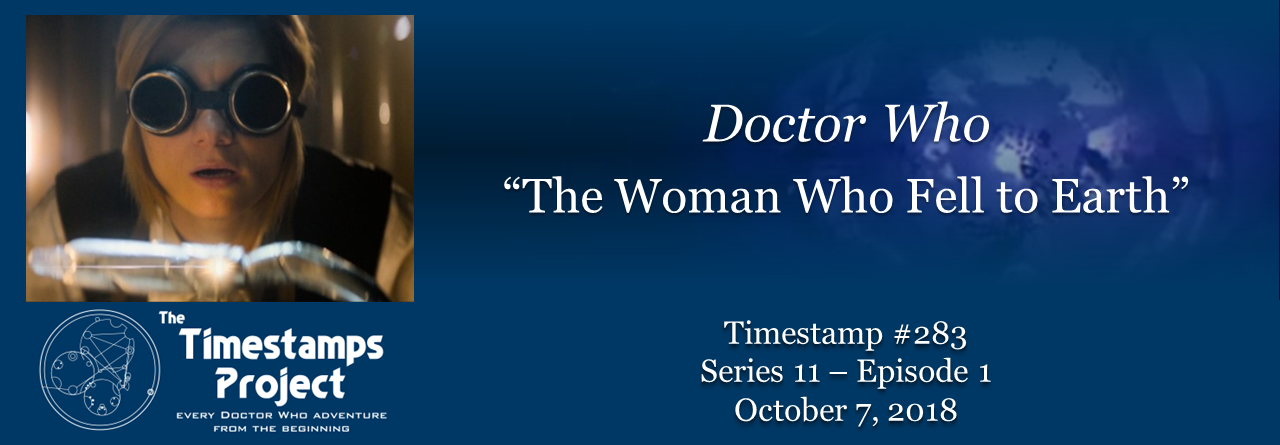
Timestamp #283: The Woman Who Fell to Earth

These new teeth are definitely weird.

Ryan Sinclair records a YouTube video and decides to talk about the greatest woman he ever met. He recounts trying to ride a bicycle with his grandmother Grace and her husband Graham O’Brien. It’s a challenge for him since Ryan struggles with dyspraxia, and when he falls off, he angrily throws the bike over a cliff. Grace and Graham try to console him but have to leave for their train home, so Ryan is left alone to retrieve the bike. He finds it trapped in a tree, then encounters a strange set of floating glowing golden lines. He touches one of them and watches as a purple plant-like pod emerges. It’s then that he calls the police.

We next meet Yasmin Khan, a probationary police officer who is settling a petty dispute between two women. She calls her supervisor, asking for something more challenging, and he gives her Ryan’s case. When Yaz meets with Ryan, she thinks that he’s pulling a prank on her, but their relationship warms up when they realize that they went to school together.

Grace and Graham are on their way home when a ball of energy collides with the train. The lights all go out, leaving the train shrouded in moonlight, and Grace investigates the disturbance. The couple soon encounters an erratic and electrified tentacle creature, and when they call Ryan and Yaz, the phones go dead. As the creature approaches, a woman falls through the train roof.

The Doctor springs into action and shorts out the electrified creature, but she cannot open the doors because she lost her sonic screwdriver. Yaz and Ryan arrive and the creature scans a bystander named Karl before briefly shocking everyone and flying away.

The Doctor takes charge but comes up short as Yaz asks who she is. The Doctor is perplexed by Yaz’s choice of address, recalling that she herself was a white-haired Scotsman half an hour before. She tells Ryan that she’s looking for a doctor before finding the train’s driver. Yaz thinks that the driver was murdered, but the Doctor says that she died of shock. The Doctor convinces Yaz and Ryan to join her, then meets Graham and Grace while mourning the loss of her TARDIS. Graham declares that there aren’t any aliens on trains in Sheffield, and the Doctor corrects him since she’s an alien.

Yaz takes contact information for a passenger named Karl and Ryan tells the Doctor about the pod. The team of Ryan, Yaz, Graham, and Grace go to the site but the pod is missing. In fact, it has been taken by a man named Andy for delivery to another man named Rahul. After paying Andy for his services, Rahul sets up several cameras to record the pod before sitting down to watch it.

The team, who the Doctor has started calling her “fam,” decides to check with their networks about anything out of the ordinary. Meanwhile, the Doctor collapses, prompting Ryan and Grace to take her to Ryan’s home. As the Doctor recovers, she glows with regeneration energy. Grace is astounded to find two separate pulses.

In Rahul’s shop, the pod cracks open. The energy awakens the electrical being and the Doctor simultaneously, and the Doctor discovers DNA bombs lodged in everyone’s collarbones. The Doctor tries to muddle through since her regeneration is not yet complete, but she recognizes the bombs as a way to get rid of witnesses. She reformats Ryan’s phone and uses it as a tracking device.

An armored figure emerges from the pod. Rahul demands to know where his sister is located and the being kills him and takes part of the corpse. The fam arrives soon after, watching as the creature leaves the shop. The creature escapes so the team investigates the shop. The creature has taken a single tooth from Rahul, and as Grace covers the body, Ryan finds the opened pod. The Doctor questions why the pod has come and Ryan admits to touching the golden lines.

The tracking signal, which was correlated to the electrical creature, has gone erratic. The Doctor decides to build her own sonic screwdriver so she can properly analyze the data. Meanwhile, Ryan and Yaz find a video file from Rahul, meant to be played upon his death. Rahul’s sister Asha was taken and he took it upon himself to find the truth.

The Doctor scans the pod with her fancy new sonic screwdriver and finds a recall circuit. She infers that the pod alien and the electrical alien are at war and looking to scrap it out on Earth. Graham gets a call about an alien’s location as the Doctor gathers some equipment. Meanwhile, the pod alien kills a drunk man who tosses salad at it and extracts another tooth. It then spots the electrical alien and heads toward it.

The Doctor’s team arrives first and shorts out the electrical alien. The Doctor scans it and finds a mass of gathering coils, a species that collects and correlates data. That data points back to Karl, the other passenger on the train. They are interrupted by the armored alien who demands to know who the Doctor is. When she can’t come up with the answer, she asks who the alien is.

The creature removes its helmet and identifies himself as Tzim-Sha (“Tim Shaw”) of the Stenza warrior race. He collects trophies from each kill and embeds them into his body, and he has been sent to hunt a randomly selected human without technology or assistance so he can become his people’s leader. Yaz and Ryan recognize that Asha was a previous victim of the hunt and that Ryan granted permission for the hunt by touching the golden lines. The Doctor declares that Tzim-Sha is cheating by using the gathering coils, and it turns out that he’s a double-cheat because he uses a short-range teleporter to escape after downloading the target’s info.

Tzim-Sha tracks Karl to his job as a crane operator at a building site. Following behind, the Doctor tasks Graham and Grace with evacuating the site while she, Yaz, and Ryan start climbing another crane. Despite his disability, Ryan takes on the task. Meanwhile, the Doctor formulates a plan to evacuate Karl by moving two cranes together. Karl tries to make the jump, but he’s stopped by Tzim-Sha, so the Doctor decides to jump across to confront the hunter herself.

She also takes a moment to curse her shorter legs.

Meanwhile, the Gathering Coil has recovered and is attacking the cranes. Grace decides to electrocute it with power from the site’s main power.

The Doctor confronts Tzim-Sha and threatens to destroy his recall device. She asks what he does with his trophies and is offended to learn that they are kept in stasis on the edge of death forever. Tzim-Sha threatens to detonate the DNA bombs, leaving the two at a standoff. Finally, the hunter asks his opponent who she is.

She’s glad he asked because she is the Doctor, sorting out fair play throughout the universe. She asks him to leave the planet and he decides to detonate the bombs, but she moved them to the Gathering Coil. The pain of the explosions transfers to Tzim-Sha and he’s stunned, leaving an opportunity for Karl to kick him off the crane. Tzim-Sha snags the recall device and uses it to teleport away as he falls.

Grace successfully runs the cables to the Gathering Coil, but when the electricity shorts out the creature, the energy discharge knocks her from the crane. She dies in Graham’s arms as the rest of the team arrives.

Ryan later pays tribute to Grace, the greatest woman he has ever known, on his YouTube channel. He continues trying to ride the bike in her honor as the Doctor watches from a distance. At Grace’s funeral, Ryan waits for his father but gives up after two hours. Later on, Graham gives a heartfelt speech about how he met Grace during his cancer treatments and how he has cherished their three years together.

After the funeral, the Doctor discusses her family and how she lost them a long time ago. She carries them with her as memories during her travels. She remembers that she needs to find her TARDIS and decides that she’s stayed too long. Yaz tells her that she really needs to change clothes.

Yaz, Ryan, and the Doctor go shopping at a charity store, eventually landing on a very colorful outfit. She then assembles a rudimentary teleportation device out of Tzim-Sha’s technology that will track the artron energy from the TARDIS. The device activates…

…and teleports all four of them into deep space.


This episode marks a major tonal shift in the franchise. It marks the debut of the first official female Doctor – I love Curse of Fatal Death but it really doesn’t count – and the introduction of the largest all-new regular cast since Terminus. On top of all of that, this story premiered with the biggest crew shift since The Eleventh Hour, marking a near-effective reboot of the show.

It’s not a reboot, mind you, but it certainly feels like it from direction and music to cinematography.

The companions are quite engaging as they learn about this whole new world, and I found the large cast to be used well in this story. I loved how authentic they were with each other, even to the point of Graham being upset about touching the “permission slip” symbol, Grace chastizing him for that, and the Doctor admitting that she would have done exactly what Ryan did.

The loss of Grace was tragic and I do wish that she would have remained to travel with the Doctor because the chemistry was great, but the cast is really too large for revival-era standard hour-long adventures. The last time that the Doctor traveled with three companions, the show thrived on stories broadcast over multiple hours per adventure. I don’t think there’s enough time in a single episode to give everyone their dues.

Of those companions, we’ve seen one of them before as a different character: Bradley Walsh played the Pied Piper in The Day of the Clown.

The Thirteenth Doctor is another tonal shift, taking us from the acerbic Twelfth Doctor back to a more whimsical Time Lord. She’s more soft-spoken, but there is tremendous power behind the cover. There’s also a lot of Doctor Who oddness, like using her (unreliable) nose to tell time.

There’s not a lot in the trivia department, but of note is that this is the tenth story not to feature the TARDIS. It joins Mission to the Unknown, Doctor Who and the Silurians, The Mind of Evil, The Dæmons, The Sea Devils, The Sontaran Experiment, Genesis of the Daleks, Midnight, and The Lie of the Land. It’s also the first time since The Faceless Ones that we have two male companions traveling with the Doctor.

I’m interested as to where the previous sonic screwdriver and the sonic sunglasses ended up, especially since humans are keen on reverse engineering alien technology. One hopes that UNIT was hovering around and snapped those pieces up for the Black Archive or something.

I enjoyed watching this again for the Timestamps Project. It’s probably the third or fourth time that I have seen this episode, and I find it to be a strong presentation (even as a regeneration episode). I saw it live with Mike Faber at a viewing party hosted by Battle & Brew. Every time I see it, I’m reminded of a bunch of fans crowded around a bunch of television sets and wondering what the future of Doctor Who had to offer.

I’m eager to see how this era has held up as I move through it once again.

Rating: 5/5 – “Fantastic!”


UP NEXT – Doctor Who: The Ghost Monument

cc-break

The Timestamps Project is an adventure through the televised universe of Doctor Who, story by story, from the beginning of the franchise. For more reviews like this one, please visit the project’s page at Creative Criticality.

Culture on My Mind – Narrative Diversions (Spring 2023 Edition)

Culture on My Mind

Culture on My Mind
Narrative Diversions
(Spring 2023 Edition)

June 9, 2023

Narrative Diversions is a look at the various pop culture things I’ve been watching, reading, and playing over the last few months.


Movies

ND Spring 2023 1Dungeons & Dragons: Honor Among Thieves (2023) – PG-13
This is the first Dungeons & Dragons movie that I have fully enjoyed, and that’s probably because it doesn’t take itself too seriously. In fact, it plays out like many of the campaigns that I’ve played over the years, mixing humor and heart with a story that’s easily understood. The sword and sorcery are organic, but they don’t overwhelm the humanity within.

It also acts as a love letter to the brand and its history, including a hilarious nod to the classic D&D cartoon from the 1980s.

Tetris (2023) – R [Apple TV]
This is based on the true story of Tetris, and despite some obvious Hollywood liberties, it tracks very closely to that complicated tale of getting this popular Soviet computer game to the Western world. I was engaged from start to finish, comedy, drama, and thriller included.

Ghosted (2023) – PG-13 [Apple TV]
As the polar opposite of Tetris, this spy flick channels those of the 1980s and 1990s with its absurdity and ridiculousness, but flips the typical gender roles with success. It doesn’t take itself seriously at all, and it includes a ton of cameos that add to the fun. Don’t expect a straight spy thriller here. Instead, come in expecting a B-movie with plenty of gunplay and slapstick humor mixed with some less-than-believable rom-com elements.

Peter Pan & Wendy (2023) – PG [Disney+]
As someone who grew up on Disney masterpieces, when people ask why the Disney classics need a remake, this will be one of my examples. Unfortunately, those reasons are also why this movie is getting review-bombed on IMDb by the usual suspects who hide like cowards behind terms like “boring,” “poorly written,” “woke,” and “not faithful to the original.”

Peter Pan is one of those evergreen properties that has been done and re-done seven ways to sunset. This version tracks pretty closely to the 1953 animated Disney classic, but it steps up in ways that the Disney original could not 70 years ago: Wendy takes on a much more substantial role in driving the plot, gaining a ton of character development over the typical mother role; Meanwhile, Tiger Lily is played by a legitimate Cree actor and this interpretation drops the stereotypical red skin and feather motif for a realistic representation of Native people; The Lost Boys include girls, minorities, and an actor with Downs Syndrome, and while they don’t have the staying power of the Lost Boys from Hook, they certainly don’t simply fill space; Finally, Peter is allowed character growth while being vulnerable about his past in Neverland.

Oh, dare I mention it, Tinker Bell is played by a Black actress. *gasp* How woke!

Despite the hue and cry from the tiny corner of the internet that supposedly rejects “cancel culture” while actively trying to cancel anything they don’t like, none of these changes negatively impacted the story. In fact, I fully believe that this version of Peter Pan is a great way to tell this classic tale in a manner that modern-day children will get. Unlike Pinocchio, this live-action remake had heart and kept me engaged throughout. The child actors did a phenomenal job as well.


Television

ND Spring 2023 2Quantum Leap – Season 1 [NBC]
This revival series has an interesting road to walk. In an era of television where spectacle seems to reign supreme and stories need to aggressively hook the viewer instead of building slowly over time, Quantum Leap chose to take the path of its predecessor. It hearkens back to a time when good heroes traveled from place to place and did good deeds along the way in a subtle fight against the wrongs in society. Television shows like The Incredible Hulk, Knight Rider, and the original Quantum Leap don’t really exist anymore, but their messages are still so important because one person can make a difference.

I loved how this revival took the basics of the original and modified them just enough to help them fit into the modern day. The concept of the Waiting Room is gone due to advances in technology and anyone can communicate with the Leaper in the Imaging Chamber. I also loved seeing more of an ensemble cast fleshing out the team at home that helps Ben solve his problem of the week.

The big difference is that this version also runs a season-long story arc in addition to the moral of the week format, and I really got into the mystery as it developed.

Quantum Leap isn’t about macho guns-blazing action and big CGI spectacles. Quantum Leap is about finding the good in life, embracing family, and acceptance. The original run was very progressive for its time, and this revival hits the mark in so many ways. I really hope that Scott Bakula can fit in somehow in the future.

Shadow and Bone – Season 1 [Netflix]
I generally don’t like many fantasy shows because I have a hard time following them, but this one was a bit easier to get into. There are still a lot of easy shortcuts and plot-armor moments to move the plot, but I recommend it and I’m even considering reading the books that the show is based on.

The Mandalorian – Season 3 [Disney+]
This season was divisive among fans, but I had a great time with it because of how it expanded the current continuity and teased things yet to come. The underlying thread of the Mandalorian people – the modern Star Wars equivalent to both the Romani and the Jewish diaspora, which were parallels drawn early in Season One – fighting for their true home is a powerful turning point for their people, and I don’t put much stock in complaints that Din Djarin was “upstaged on his own show” by Bo Katan. Season Three was a logical extension of the Mandalorian story.

I’m also a really big fan of this “Filoni-verse” concept where everything in this time period is connected. Marvel tried it once in the early days of the MCU, but Ike Perlmutter was Ike Perlmutter.

Star Trek: Picard – Season 3 [Paramount+]
The third and final season of this show went down the road that Patrick Stewart had feared since the show was announced. He signed on for the role because it wasn’t a Next Generation reunion, yet here we are.

Season Three gave fans that reunion and answered the question posed by Star Wars fans about what the sequel trilogy could have been with original heroes on one last adventure. That answer is fan service in lieu of a coherent plot, exchanging the soul of boldly going for a bumper crop of “member berries”. The ten-episode run was like a bowl of candy and lacked any amount of the philosophical meat that has defined Star Trek since 1966. Seasons One and Two were narrative dumpster fires, but they at least tried to tread new ground before getting bogged down with navel-gazing. Season Three was nothing more than TNG‘s greatest hits designed to allow the most popular Enterprise crew to ride into the sunset for (checks notes) the third time.

Fun? Yes. Disappointing? Definitely. At least it has generated plenty of interest in the “Star Trek Legacy” idea.

ND Spring 2023 3Alaska Daily – Season 1 [ABC]
This series is a slow-burn drama about a disgraced veteran journalist who finds a career revival while investigating the disappearances and murders of native women in Alaska. It’s a great vehicle for Hilary Swank and addresses a real-world concern with reverence and honesty. I loved the characters and the show, but it was recently canceled by ABC.

The Diplomat – Season 1 [Netflix]
Keri Russell and Rufus Sewell had a ball with this political drama that balanced tension with humor sometimes flirting with the absurd. The chemistry among the cast is good but the plot does get a little muddy from time to time. It also ends on a cliffhanger to tease a second season (which recently became official).

The Good Doctor – Season 6 [ABC]
Like most long-running fan-favorite television dramas, this one has become more about the characters than the plots. Those characters continue to grow and change with minor speedbumps along the way. Those bouts of friction can seem contrived but also (to some degree) believable because humans are far from rational. 

This season also contained a backdoor pilot for The Good Lawyer, which I hope gets a series pick up because it was one of the episodes I enjoyed most.

The Company You Keep – Season 1 [ABC]
I tuned in for Milo Ventimiglia, Sarah Wayne Callies, and William Fichtner. I stayed for Catherine Haena Kim and the family drama. The romantic collision course storyline evaporates in lieu of political and criminal intrigue, which betrays the initial hook but carries the show fairly well. The characters are engaging and the theme music that kicks in when the family starts their cons makes me tap my toes every time.

It was recently canceled by ABC, so one season is all we get.

ND Spring 2023 4The Rookie – Season 5 [ABC]
The Rookie: Feds – Season 1 [ABC]
If you want a set of police procedurals with a high level of accuracy, these aren’t your shows. The big draw for the pair is the characters and their relationships. We started watching The Rookie because of Nathan Fillion, but the rest of the characters are easy to invest in. Both shows are quite predictable, but they have heart. I also appreciate the bits of social commentary that they add about modern policing in America.

Not Dead Yet – Season 1 [ABC]
It’s the story of a woman in search of a better life who also sees dead people. The situations and characters make me laugh, and Gina Rodriguez really sells this show. I can’t stand Lauren Ash’s character Lexi, but that’s more of a feature than a bug for this dysfunctional work family. It’s getting a second season as well.

New Amsterdam [NBC]
I missed this on the last post. Again, it comes down to characters and how they deal with conflict. Max wears his heart on his sleeve and has to manage his people while facing constant rejection for his out-there ideas. The show really fired on all cylinders with relationships and commentary on American medicine, but it really faltered after Max moved to London and continued to stumble in the final season. Even so, the finale was a tearjerker and I miss this series overall.

I also want to see the lost episode that was pulled due to COVID-19. 

ND Spring 2023 5Sweet Tooth – Season 2 [Netflix]
Season One was amazing in its purity and innocence. Season Two picks up after the cliffhanger with intrigue and character drama leading into some great action in the last few episodes. I enjoyed the season but I feel like they spent way too much time with the kids being confined. The season felt so much better once the zoo was left behind.

Season Three will be the final one.

Schmigadoon! – Season 2: Schmicago [Apple TV]
Season One was hilarious. Season Two brought more of that while changing the tone to parody the darker side of Broadway musicals. While the ending serves as a good series finale, I really hope that we get a third season.

Star Wars: Visions – Season 2 [Disney+]
Another solid set of “what if” stories from the Star Wars universe, though I engaged more with this season than the previous one. Given the franchise’s origins in Akira Kurosawa films, it lends well to the anime genre.

ND Spring 2023 6Night Court – Season 1 [NBC]
Despite what the trolls on the internet say, this is in the tone and spirit of its predecessor. I binged the original series on Amazon before diving into this one, and they flow quite nicely together. I had a good time with the dumb humor and I hope that Season Two only continues to improve (just like the original did).

Secrets of Sulphur Springs – Season 3 [Disney+]
I love the easy-to-digest concept but shows starring kids are always racing the clock. This younger-audience time travel show doesn’t hold back in how it plays with characters spanning vastly different times all fighting against a single threat. The story over the last three seasons has been coherent enough, even if the details become murky in the long stretches between the seasons. The big problem comes from trying to tell a story that takes place within a few months or so while the child actors are obviously growing and aging.

The resolution also rankled a bit when it embraced the easy heaven/hell tropes to wrap things up. That bit came out of nowhere.

Shrinking – Season 1 [Apple TV]
It’s a story about grief and mental health, and it’s told in a quirky and often hilarious manner. Harrison Ford played himself, but he did it all too well. This was touching and had my wife and I rolling in laughter.

ND Spring 2023 7Queen Charlotte: A Bridgerton Story [Netflix]
Grey’s Anatomy – Season 19 [ABC]
Station 19 – Season 6 [ABC]
Aside from being Shondaland productions, there are good reasons that I linked these three together. First, they are shows that I pay half attention to as my wife watches them. She does the same with my CW superhero shows, and we spend time together in the meantime. Second, they are thematically similar in their soapiness, sincerity, and messages.

On the Seattle side, the stories and characters are often shared between Grey’s and Station 19, but I found that the firefighters have the more powerful character dramas while Grey’s did a better job of tackling conflicts in modern medicine and politics. My wife and I agreed that Grey’s Anatomy has slipped quite a bit in quality – the COVID-19 arc where Meredith spent the season in a coma-fever-dream state was terrible – but hopefully things change with next season’s new showrunner. I give the show a ton of credit for lasting two decades.

Station 19 and Queen Charlotte both did well with stories about mental health, and I admit that the finale for the Bridgerton spinoff had me in tears. Admittedly, it’s a historical drama that takes a ton of liberties for the aesthetic that makes Bridgerton successful, but it made me care for this version of King George III. While the clip-show episode in the middle of the set brought the dramatic momentum to a screeching halt, it was important to provide context for the king’s character. Station 19‘s arc with Maya and Carina also got to me emotionally.

I appreciate shows that do mental health stories well.


Books
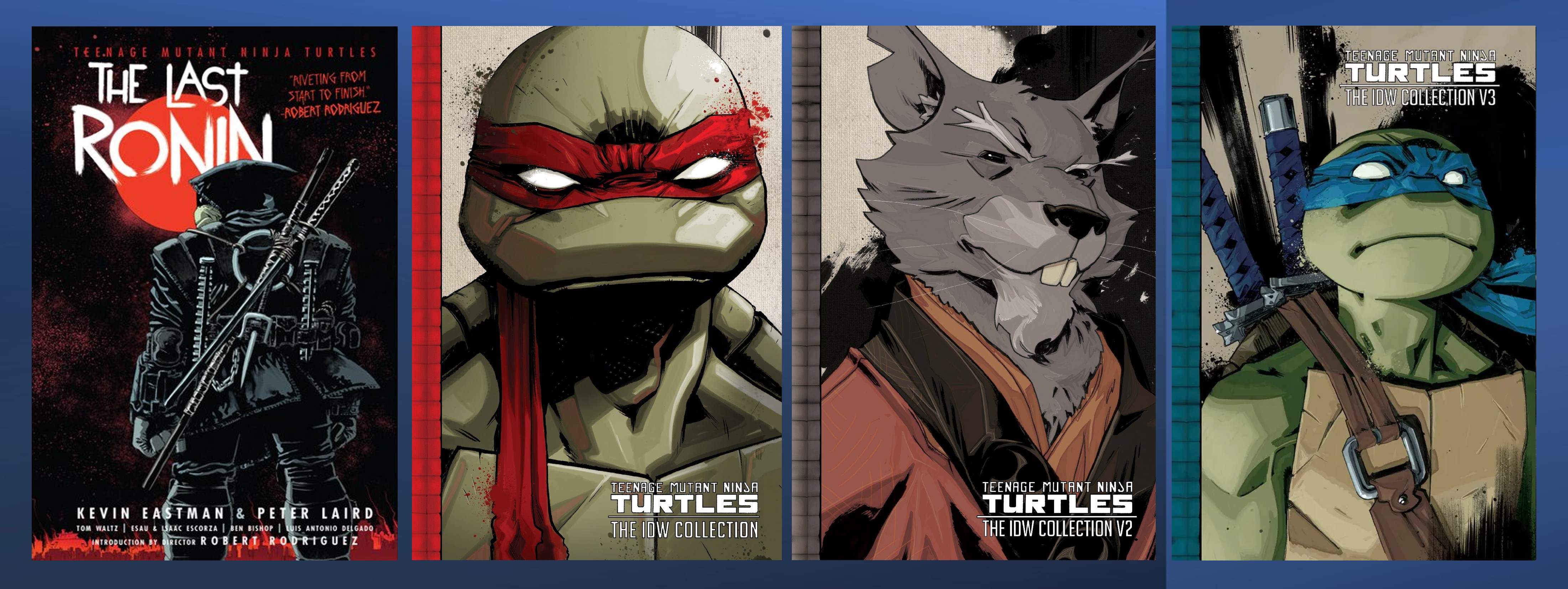
ND Spring 2023 8ND Spring 2023 9ND Spring 2023 10ND Spring 2023 11Teenage Mutant Ninja Turtles: The Last Ronin – Kevin Eastman, Peter Laird, Tom Waltz, and Andy Kuhn
My TMNT was the cartoon series from the ’80s and the live-action films from the ’90s, so when I have the opportunity to explore versions of the Turtles outside of those childhood experiences, I take it. This limited series tells a story of an apocalyptic future where one of the Turtles is left standing and seeks vengeance against the Foot Clan for his family following their conquest of New York. It was pretty powerful and a great read. It’s also prompting me to check out the fifteen collected volumes from IDW that are available on Kindle Unlimited.

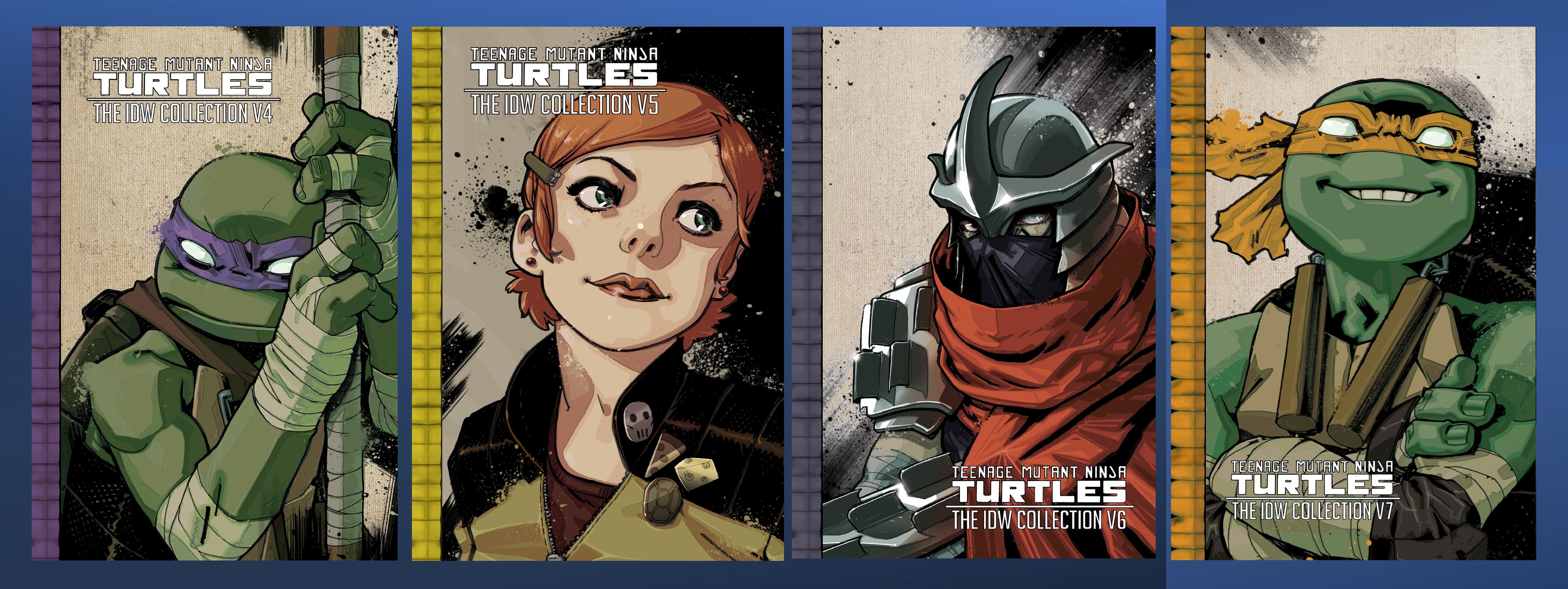
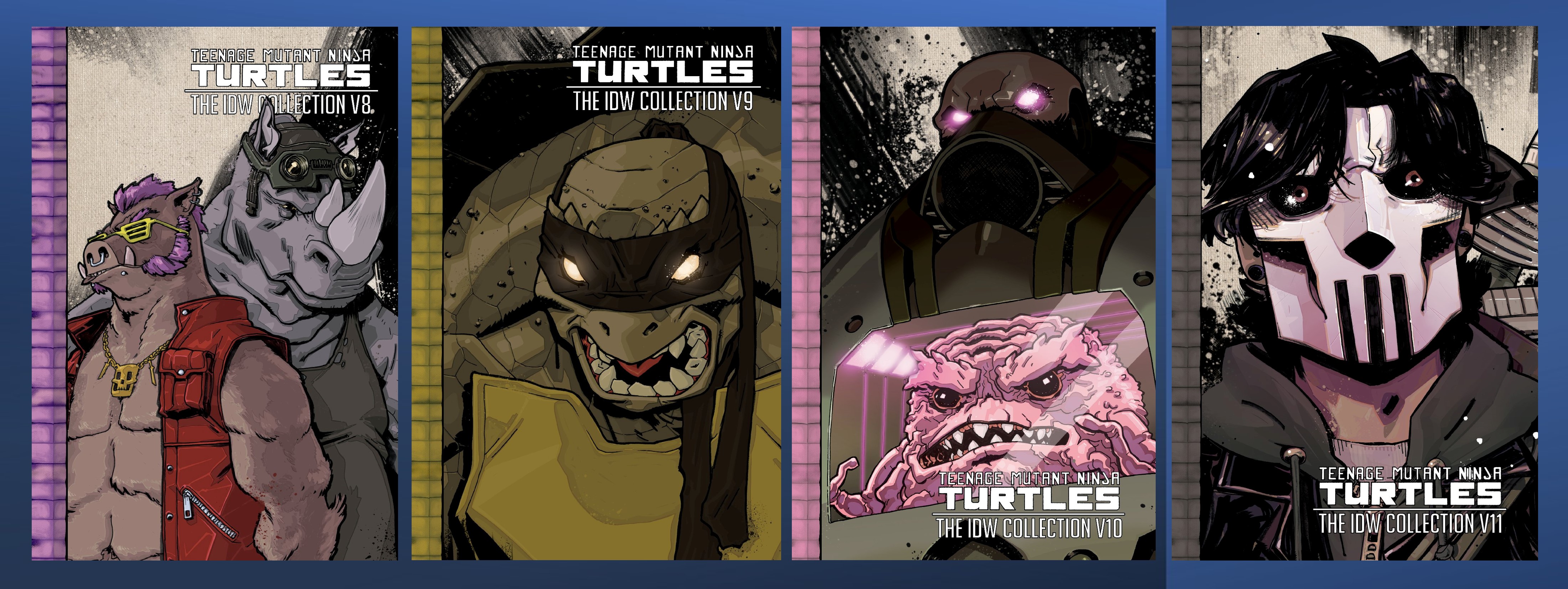
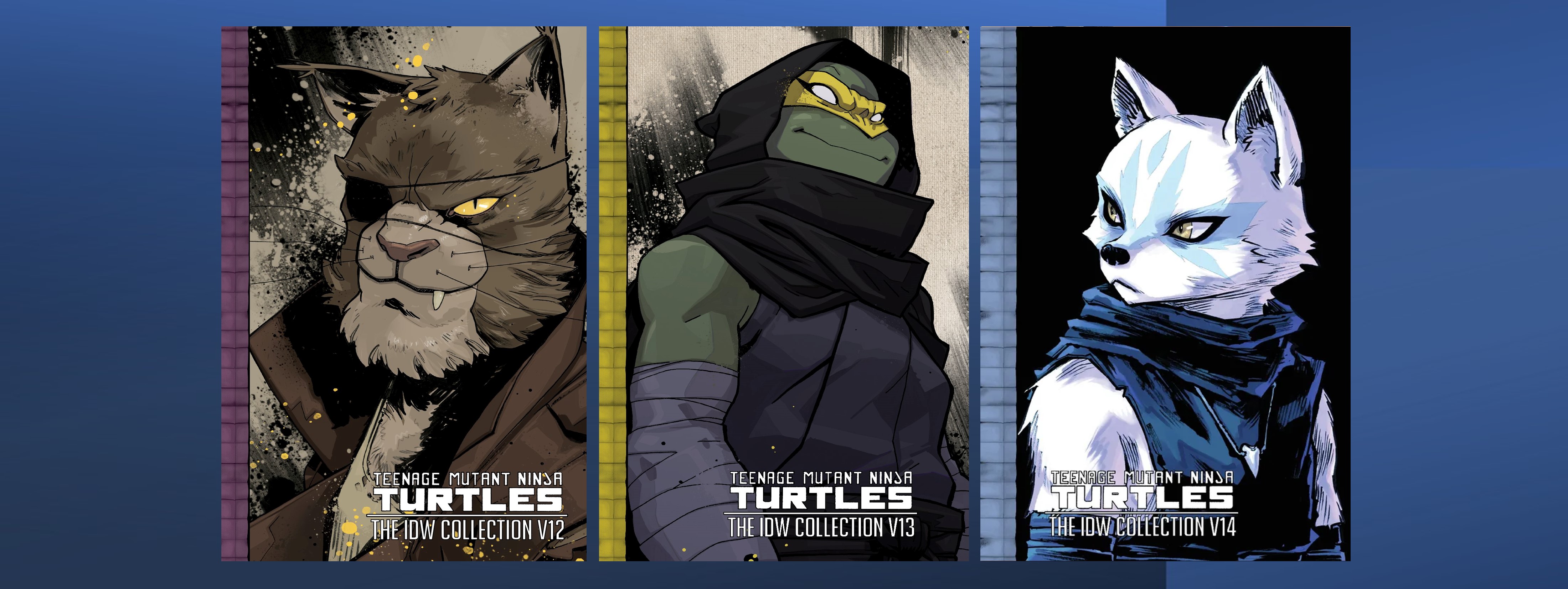
Teenage Mutant Ninja Turtles: The IDW Collection Volumes 1-14 – Kevin Eastman, Tom Waltz, Bobby Curnow, Sophie Campbell, et. al. 
Following my reading of The Last Ronin, I dove into the available IDW collections on Kindle Unlimited. These collections chronologically assemble the mainline and additional side stories, and they explore the lean green fighting machines as reincarnations of Hamato Yoshi and his four sons from feudal period Japan. These stories have plenty of fighting, a lot of metaphysical and ethereal stuff, and great opportunities for April, Casey, Splinter, and characters new to me to take the spotlight. There are a lot of wacky storylines too. I got hooked and have really enjoyed reading them.

Reads in progress:

  • The President’s Club by Nancy Gibbs and Michael Duffy (43%)
  • The Complete Sherlock Holmes by Sir Arthur Conan Doyle (32%)

Those in-progress titles haven’t budged due to the lean green ninja teens. I did finish Star Wars: Heir to the Empire, which has only gotten better as we both have aged. I’m continuing with Dark Force Rising and The Last Command as palate cleansers.


Stage

ND Spring 2023 12A Soldier’s Play – Broadway in Atlanta
This is not a feel-good story, but it is an important one to tell in the vein of Greek and Shakespearean tragedies. It’s a loose adaptation of Billy Budd, but it also discusses a lot of racial themes centered on the World War II time period. My wife got chills by the end and I cried based on my family’s history with the military. Powerful stuff.

Moulin Rouge! – Broadway in Atlanta
I had no idea what to expect since I’d never seen this production or the movie version before. It was beautiful and bonkers if not a bit predictable. I’d definitely watch it again, and the movie version is now on my watch list.


Games

ND Spring 2023 13Legend of Zelda: Tears of the Kingdom – Nintendo Switch
I’ve been getting lost in Hyrule and this story since it was released. People who claim that this sequel is nothing more than Breath of the Wild DLC have no idea what they’re talking about. I’m loving it and wish that I had more time to spend on it.


cc-break

Culture on My Mind is inspired by the weekly Can’t Let It Go segment on the NPR Politics Podcast where each host brings one thing to the table that they just can’t stop thinking about.

For more creativity with a critical eye, visit Creative Criticality.

Timestamp: Series Ten and Twelfth Doctor Summary

Timestamp - Series Ten Twelfth Doctor Summary

Peter Capaldi’s final run was nearly on par with his last set.

This group of stories kept up with Series Nine‘s continuing mission to analyze the human condition in the science fiction tradition. Series Ten focused less on vengeance but kept a focus on the consequences of what came before. In a beautiful narrative loop, we found the Twelfth Doctor suffering from the loss of Clara and River, finding hope in Missy and Bill, and then coming right back to the top of the clock with the intent of giving up so he didn’t lose anyone else again. Thankfully, he faced his fear (with a little help from his friends) and decided to carry on with brave hearts.

The big miss in an otherwise strong thematic season was the Monk trilogy – Extremis & The Pyramid at the End of the World & The Lie of the Land – which took a strange sideways adventure that didn’t really have any consequences aside from opening the door on Missy’s vault. It also brought to bear several questions about regeneration after the big reset in The Time of the Doctor, including why the Doctor chose not to spend a little energy to restore his eyesight.

Bill and Nardole were amazing as the Doctor’s combined conscience, almost acting in the same style as the classic Star Trek Kirk-Spock-McCoy pathos-logos-ethos triumvirate. I absolutely adored Bill’s wide-eyed innocence when it came to the Doctor’s adventures, and her growth was evident when she saved his life and then told him point-blank to move on. She’s probably one of my favorite modern companions.

Overall, Series Ten comes in with a solid 4.0 score. That ties with the classic Twelfth Season, and places this set at fifteenth among the thirty-eight seasons (so far) in the scope of the Timestamps Project. That’s not too bad at all, particularly for a group of stories that I wouldn’t mind visiting again in the future (with the exception of the Monk Trilogy).

The Return of Doctor Mysterio – 4
The Pilot – 5
Smile – 4
Thin Ice – 4
Knock Knock – 4
Oxygen
– 3
Extremis & The Pyramid at the End of the World & The Lie of the Land
– 2
Empress of Mars
– 4
The Eaters of Light
– 4
World Enough and Time & The Doctor Falls – 5
Twice Upon a Time – 5

Series Ten Average Rating: 4.0/5


Timestamps Twelfth Doctor

Following tradition…

The First Doctor was a wise grandfather, the Second a sly jester, the Third a secret agent scientist, the Fourth an inquisitive idealist, the Fifth an honorable humanitarian, the Sixth a squandered cynic, the Seventh a curious schemer, the Eighth a classical romantic, the Ninth a hopeful healing veteran, the Tenth a bargaining humanitarian, the Eleventh an irascible runner…

…and the Twelfth Doctor is a principled warrior.

It’s evident that this Doctor grew over his lifetime, and while he faced a lot of loss in this lifetime and his previous regenerations, he faced the threats before him with a hard line drawn at his feet. He stood as a sentinel to protect the innocent, the memories of the Last Great Time War fresh in his mind, and he kept his fury close to the surface as a warning to any who would challenge him. He cared for his companions to a fault, and those losses hurt him, but in the end he knew that he needed to soldier on for the sake of the universe at large.

While it’s easy to find a place for the Twelfth Doctor based on the scores I have assigned over three series, it was far more difficult to weigh out how I feel about him as a character. That took a lot of thought, and while the rankings are very close among the top ten in the “by character” list, I feel like that ranking is true to how I feel. I’d watch any episode with those Doctors on a whim.


Series Scores
Series 8 – 3.6
Series 9 – 4.1
Series 10 – 4.0

Twelfth Doctor’s Weighted Average Rating: 3.87

Ranking (by score)
1 – Eighth (4.50)
2 – Tenth (4.34)
3 – Ninth (4.30)
4 – Eleventh (4.17)
5 – Third (4.00)
6 – Twelfth (3.87)
7 – Second (3.67)
8 – Fourth (3.67)
9 – Seventh (3.54)
10 – First (3.41)
11 – Fifth (3.20)
12 – Sixth (2.73)
N/A – War (No score)

Ranking (by character)
1 – Tenth Doctor
2 – Second Doctor
3 – Ninth Doctor
4 – Eighth Doctor
5 – Third Doctor
6 – Fourth Doctor
7 – Twelfth Doctor
8 – War Doctor
9 – Eleventh Doctor
10 – Seventh Doctor
11 – First Doctor
12 – Fifth Doctor
13 – Sixth Doctor

As I’ve mentioned before, the top ten spaces on the character ranking are really, really, really close. I’m always tempted to simply rank them all as a first-place tie, but I find the real challenge to be actually thinking it through and placing them.


Next up, the Timestamps Project continues to the Thirteenth Doctor’s era. Without any spinoffs on the docket, it’s a straight shot from here through her journey to the franchise’s sixtieth anniversary.

UP NEXT – Doctor Who: The Woman Who Fell to Earthcc-break

The Timestamps Project is an adventure through the televised universe of Doctor Who, story by story, from the beginning of the franchise. For more reviews like this one, please visit the project’s page at Creative Criticality.