
Culture on My Mind – SUBSAFE

Culture on My Mind

Culture on My Mind
SUBSAFE
July 24, 2023

On June 18, 2023, the submersible Titan imploded during an excursion to the wreck of the Titanic in the Atlantic Ocean. The submersible was owned and operated by OceanGate CEO Stockton Rush, and the incident claimed the lives of Rush, French deep-sea explorer and Titanic expert Paul-Henri Nargeolet, British billionaire Hamish Harding, Pakistani-British billionaire Shahzada Dawood, and Dawood’s son Suleman.

I watched as the internet exploded in memes and mockery over this event. I get the reasoning behind it: According to the 2022 Global Wealth Report from Credit Suisse, nearly half of the world’s wealth – 47.8%, or 221.7 trillion in US dollars – is controlled by 1.2% of the world’s population. Over half of the world’s population has a wealth of less than $10,000, and one-third of the population lives in the $10,000-$100,000 range. 

This year, Forbes reported that there are 2,640 billionaires on the planet. They are collectively worth $12.2 trillion. That’s 2.6% of the world’s wealth controlled by a tiny fraction of the world’s population, and they are concentrated in the United States, China, India, and Germany.

I’m not here today to adjudicate that. It’s merely the motive behind the reaction of the masses as one billionaire’s hubris killed four other people. And while it’s possible that those four passengers may have known about the submersible’s shortcomings, it’s not likely in my opinion.

I look at skydiving, scuba diving, bungee jumping, rollercoasters, and other such thrill-seeking experiences that people enjoy. Most of them are taken with the assumption that some higher authority has oversight… that the attraction has a safety record and someone would have shut them down if it wasn’t safe to an acceptable degree of risk.

OceanGate has been transporting paying customers on submersible trips since 2010, including several trips to other shipwrecks. On its face, 13 years without significant incidents is a pretty good track record. Most people in search of a thrill-seeking experience would stop looking for problems at that point and sign the requisite waivers.

I don’t engage in the internet’s mockery of the Titan implosion because I can reasonably assume that those four passengers made the same risk calculations. But what came out after the Titan implosion is what really bothered me as a former submariner. 

In a 2019 Smithsonian Magazine article, Rush was referred to as a “daredevil inventor” who believed that the U.S. Passenger Vessel Safety Act of 1993 “needlessly prioritized passenger safety over commercial innovation”. He later admitted that he broke rules with “logic and good engineering” behind those decisions. He described safety as a “pure waste” and suggested that people should do nothing in life if they want to remain safe.

The OceanGate submersible had multiple engineering issues which Rush ignored based on faulty assumptions and questionable engineering experience. Rush also ignored dissenting opinions from David Lochridge and Rob McCallum, even to the point of firing dissenters and pursuing legal action against them.

But, most importantly to what I want to discuss here, he openly stated in a now deleted video meeting with Teledyne Marine that he bucked the trend of hiring submarine veterans – “50-year-old white guys” – because he wanted his team to be younger and more inspirational.

The thing is that the talent that he kicked aside because he wanted to “make expeditions to the Titanic more enjoyable for his customers” could have potentially saved those customers on June 18, 2023. Submarine veterans (like me) know about the history of the USS Thresher and the quality assurance program that was developed as a result.

On April 10, 1963, the USS Thresher (SSN-593) was lost at sea with all hands. She was a Permit-class nuclear submarine, the fastest and quietest of the day, and designed to hunt and kill Soviet submarines during the Cold War. Thresher was launched in 1960 and conducted her sea trials over the next couple of years to thoroughly evaluate her new and complex technological systems. After a series of operations, she entered Portsmouth Shipyard in July 1962 for a post-shakedown availability to examine and repair systems, and as typical for first-of-class boats, the availability took longer than expected. Thresher was finally certified for sea and undocked on April 8, 1963.

The crew began post-overhaul sea trials the next day, and everything seemed to be okay until the deep-dive tests on April 10th. Thresher slowly dove deeper while making circles under her surface support ship, Skylark, pausing every 100 feet of depth to perform a shipwide integrity check. As the submarine neared test depth, Skylark received a garbled communication indicating “…minor difficulties, have positive up angle, attempting to blow”.

That “blow” would be an emergency blow of the main ballast tanks, which means rapidly filling the large tanks with high-pressure air and making the ship overwhelmingly positively buoyant. You’ve probably seen the stock footage in movies and television, particularly during The Hunt for Red October.

There was one more even more garbled message from the deep and Skylark‘s crew knew that something was wrong. An extensive search was conducted and Thresher‘s families were notified that night. Chief of Naval Operations Admiral George W. Anderson Jr. held a press conference to announce that the submarine was lost with all hands.

After an investigation, the root cause of the disaster was determined to be a failure of the saltwater piping system. Specifically, there was a joint that relied on silver brazing instead of welding, and that failure would have potentially shorted out an electrical panel, shut down the reactor, and caused a loss of propulsion. There was also some concern over excessive moisture in the high-pressure air system which would have frozen during an emergency blow and plugged up the piping. The Navy made several modifications to systems to prevent these failures in the future. 

They also instituted the Submarine Safety Program, better known as SUBSAFE, which is a quality assurance program specifically designed to provide maximum reasonable assurance that submarine hulls will remain watertight and can recover from unanticipated flooding. The program’s scope includes every system exposed to sea pressure or critical to recovery during a flood. Any work on those systems is tightly controlled to ensure that materials, assembly, maintenance, and testing are perfect, including certifications with traceable quality evidence from point of manufacture to point of installation.

The track record speaks for itself: From 1915 to 1963, the United States Navy lost 16 submarines through non-combat-related causes. After SUBSAFE was introduced in 1963, the only submarine lost in similar causes was the USS Scorpion (SSN-589), and she was not SUBSAFE certified.

It’s an expensive program, but the cost of failure is much higher, and it’s a program that could have prevented the Titan disaster had some “50-year-old white guys” been consulted. SUBSAFE is embedded in the DNA of pretty much anyone who has earned a set of submarine dolphins. The regulations are written in blood.

The story of Stockton Rush and the Titan should serve as a cautionary tale. Safety and engineering may not be sexy and edgy, but it is a necessary part of pushing the limits of knowledge and understanding. The ocean’s depths are perhaps the largest unexplored frontier on Earth, and while I personally think that we should leave the Titanic graveyard alone, we should definitely continue to research the sea. 

But we should never willingly throw away experience and wisdom in the process, otherwise, we invite hubris, ignorance, and ultimately disaster.


cc-break

Culture on My Mind is inspired by the weekly Can’t Let It Go segment on the NPR Politics Podcast where each host brings one thing to the table that they just can’t stop thinking about.

For more creativity with a critical eye, visit Creative Criticality.
Schedule Update: The Timestamps Project (WGA/SAG-AFTRA Strike Edition)

Schedule Update: The Timestamps Project
WGA/SAG-AFTRA Strike Edition

Timestamps

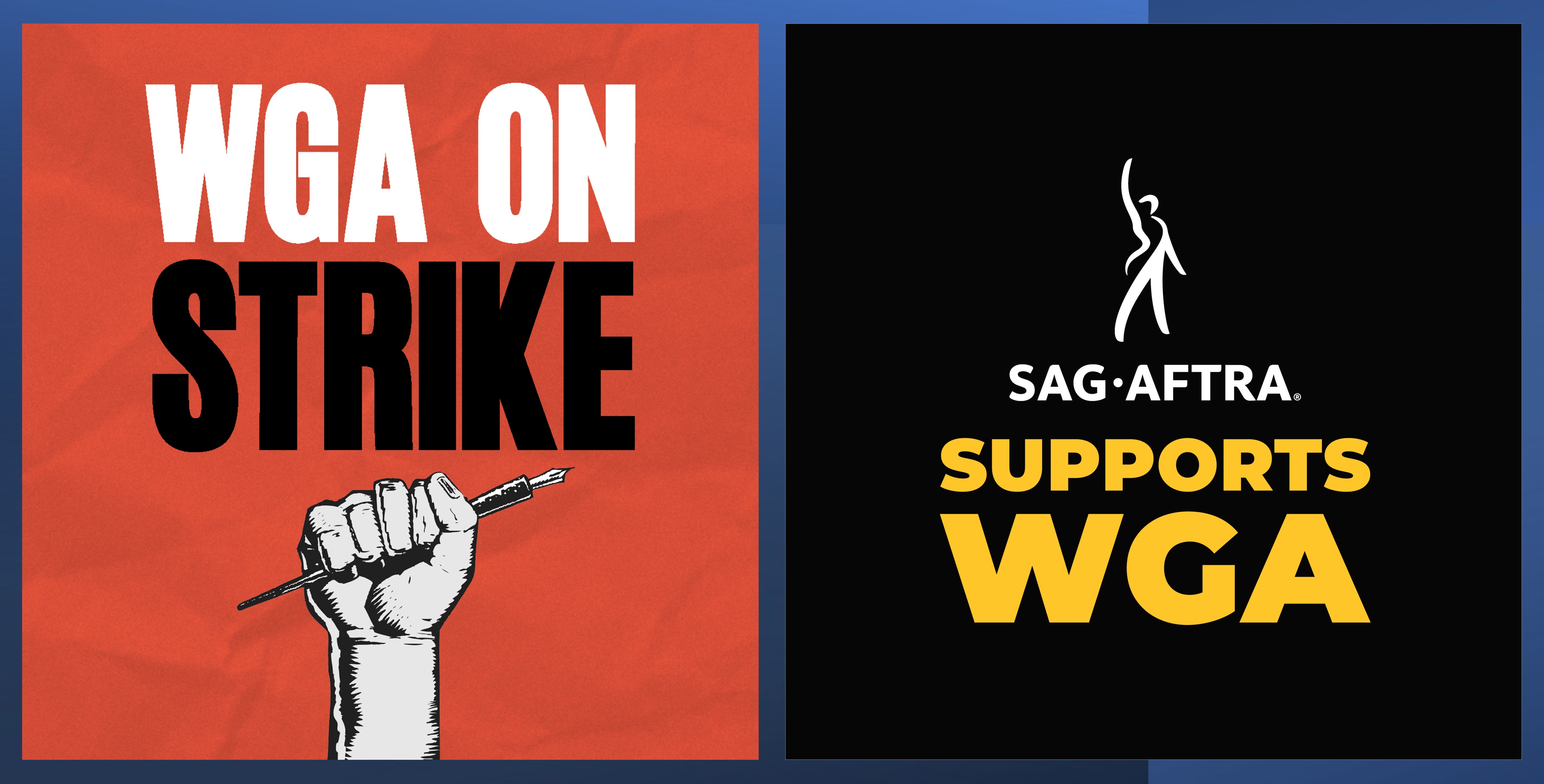
The Timestamps Project is on hiatus in solidarity with the Writers Guild of America.

I recognize that Doctor Who is guided primarily by Equity UK, formerly known as the British Actors’ Equity Association, but the show also holds a production number with the Screen Actors Guild because they pay pension and healthcare contributions for any SAG members of the cast. Technically, Doctor Who is a SAG signatory. But that’s not important to this discussion.

I stand with the WGA and SAG-AFTRA because I am a writer and creative. I come from a family of creatives. Many members of my close-knit geek family are creatives, some of whom make their livings in film and television because of their passion for telling stories that mean something to all of us. Creativity lives in us, and it deserves to thrive with us.

I’m not being asked to do this. In fact, the strike rules don’t apply to me because I’m not a member of the unions and Creative Criticality falls more under the journalism rules than anything else. I am choosing this action because I feel that strongly about it.

The WGA strike started on May 2, 2023, and is based on the evolution of the streaming environment. The WGA has minimums for writers, but unlike the normal American worker who is nominally employed on a permanent basis, a writer works 35-40 weeks a year on a standard network show and 20-24 weeks a year in the streaming environment (where seasons are far shorter). In a city like Los Angeles, writers are fighting with the incredibly high cost of living and inflation. To compete against that, writers need a raise of about 10 percent.

Along with increased minimum compensation across all media, writers are also looking for increased residuals (which have been notoriously tough with streamers), appropriate compensations for writing television series across all stages of production, larger contributions to pension and health plans, the strengthening of professional standards and the overall protections for writers, and other terms.

Writers have talked about toxic environments in production, and it’s pretty obvious from the plans by studio execs to wait out the strike until writers “go broke“. These studio execs are on display as embodiments of late-stage capitalism: Success being defined by how much wealth can be banked while paying those who create the actual products as little as possible. They’d rather see crews destitute on the street rather than pay more in fair compensation and cut into their million- and billion-dollar comforts. It’s despicable, and it’s part of a pattern in corporate America of continually undervaluing the creative class.

It’s also pretty obvious on the SAG-AFTRA front. Consider the proposal that background actors – the lowest paid in the industry – get scanned for a single day’s pay with the intent of using their likenesses for any project at any time in perpetuity. It’s actually funny when you look at the Hollywood anti-piracy efforts over the last couple of decades that focused on how wrong it was to pay for something, transform it from the original format, and then share it over and over without due compensation.

As a producer friend of mine told me, this action would eliminate most working actors, the ones who never “make it” but still pay the bills just fine. It would domino across the industry: Current rules dictate one assistant director per every 100 background actors, so as background actor jobs diminish, jobs for ADs are eliminated. That cascades by eliminating jobs among all of the guilds.

All of it so that studio executives can pocket more cash as the industry burns around them.

During my lifetime, I have watched time and again as creatives have been treated like garbage. They’re treated like they don’t have real jobs or that their work is in the public domain because it exists in the internet era. Creatives aren’t valued until they don’t produce, and then they are replaced as if they were ultimately disposable.

Creatives are the lifeblood of the entertainment industry and the history of human storytelling, from film and television to books, video games, comics, art, podcasts, and beyond. Without creatives, we have nothing for actors, directors, producers, and publishers to translate to their chosen media. In turn, the studio executives have nothing without the hard work of all those people.

I stand with creatives. I stand against the continued devaluing of creatives and hard-working individuals. It’s not because I’m some sort of influencer (though, wouldn’t it be nice to have that many eyes on my work?), but because it’s the right thing to do when creators more powerful than me are fighting for what they believe in.

The Timestamps Project will remain on hiatus until the strike has ended. I hope you understand.

WGA-SAG-AFTRA-2023

cc-break

The Timestamps Project is an adventure through the televised universe of Doctor Who, story by story, from the beginning of the franchise. For more reviews like this one, please visit the project’s page at Creative Criticality.

Culture on My Mind – The Queer Revolution: Breaking the Broadway Mold

Culture on My Mind

Culture on My Mind
The Queer Revolution: Breaking the Broadway Mold
July 17, 2023

This week, I’m playing catch-up with the Theater and Musical Lovers YouTube Channel.

The channel and its associated Facebook group were established as an unofficial gathering of Dragon Con attendees who love theater, musicals, and the performing arts. Their goal is to create a community of fellow thespians and fans at the convention.

About a month ago, the thespians explored the impact that LGBTQIA+ artists, writers, and performers have had on Broadway. From the groundbreaking work of Hedwig & the Angry Inch to the Tony-winning productions, Rent and Kinky Boots, queer voices have been instrumental in shaping modern theater. Having experienced Rent live, I understand the power that it holds. I still get a little misty when I hear “Seasons of Love”.

Panelists Christi Chalmers, Courtney, and Vulva Va-Voom joined Sarah and Gary to discuss their favorite queer characters and stories on stage, the icons that helped shape their identities, and how LGBTQIA+ narratives have helped to bring visibility and acceptance to the theater community and the world.

It was a celebration of the queer revolution on Broadway and the power of representation in the arts!

Note: Depending on security settings, you may have to click below to see the video directly on YouTube. You should definitely subscribe to their channel for more updates.


The Theater and Musical Lovers Group will be hosting more of these panels. If you’re interested in participating or have some topic ideas in mind, head over to the group on Facebook and drop them a line. You can also find them on Instagram and coming soon on TikTok.

You can find Gary and Sarah on the socials: On Twitter, they are Gary_Mitchel, SarahRose_KPK, and Daisuki_Suu; on Instagram, they are Gary_Mitchel and Daisuki_Suu; and Gary’s horror-themed podcast that he hosts with Erin McGourn is A Podcask of Amontillado. Of course, the Theater & Musical Lovers channel can be found on YouTube.

cc-break

Culture on My Mind is inspired by the weekly Can’t Let It Go segment on the NPR Politics Podcast where each host brings one thing to the table that they just can’t stop thinking about.

For more creativity with a critical eye, visit Creative Criticality.

Timestamp #285: Rosa

A powerful historical story.

Montgomery, Alabama – 1943: A seamstress named Rosa Parks boards a bus on her way home from work. She pays the fee and heads to the back where “colored people” are forced to sit. The driver tells her that she must disembark and enter the bus through the back door. When she tries to reason with the driver, he forcibly removes her. In the process, she drops her purse and briefly sits in the “whites” section to retrieve it. The driver is furious, prompting Rosa to tell him not to hit her. She leaves the bus and heads for the back door, but the driver maliciously drives away, leaving Rosa stranded in the middle of the street.

Montgomery, Alabama – 1955: The Doctor and her companions land in an alleyway. She’s dismayed that they didn’t land in Sheffield, and she chastizes the TARDIS for failing to take the humans home for the ninth time. Graham remarks that it was the fourteenth attempt, but he’s interested in meeting Elvis Presley. The Doctor discovers high amounts of artron energy in the area, which might be why the TARDIS chose this time and place, so they decide to investigate.

As they walk, Ryan notices that a woman has dropped her glove. When he tries to return it, the woman’s husband rewards him with a slap to the face. As the TARDIS team tries to work through the assault, Rosa Parks steps in to smooth things over. When the white couple walks away, Rosa turns on the team and lectures them on the Emmett Till situation before introducing herself. The team is starstruck, and the Doctor finds traces of artron energy all around Rosa.

Meanwhile, a mysterious man in a leather jacket finds the TARDIS. He tries to break in with an energy weapon but the capsule’s shields deflect it.

The Doctor and her companions convene at Slim’s Bar. Ryan and Yaz discuss their lessons about Rosa Parks from school, awed by the fact that she refused to give up her seat on a bus on December 1, 1955. The event (and her subsequent arrest) led to the Montgomery Bus Boycott and the end of racial segregation on public buses in America. That event will happen tomorrow.

Graham notes how quiet the bar has become. A waitress confronts them, stating that they don’t serve “negroes” or Mexicans (in reference to Yaz), and forces them to leave. Ryan is disgusted that he has traveled to the one time and place where he is hated most. The team decides to track down the artron energy and follows the readings to a nearby warehouse with copious padlocks.

Elsewhere, the mysterious man creeps on Rosa Parks. He returns to the warehouse where the team has discovered a suitcase hidden by a perception filter. The suitcase is filled with worn futuristic tech, including a charger. The mystery man fires on them, pushing the team into the yard outside. The Doctor confronts him, recognizing his weapon as a temporal displacement device that sends things to other times. She also notes that he’s carrying a vortex manipulator. He threatens to kill the team. She tells him not to threaten her. She takes a scan of his tech before the team leaves.

Their next stop is whites-only Sahara Springs Motel. The Doctor and Graham secure a room and sneak Ryan and Yaz in through a back window. They brainstorm about their situation and use a wall as a markerboard until a police officer knocks at the door. The Doctor erases the writing with her sonic screwdriver before answering the door, admitting the officer who searches the room. Luckily, Yaz and Ryan have escaped through the bathroom window and hidden behind a nearby dumpster. The officer departs with a warning that the Doctor and Graham should leave town soon.

Yaz and Ryan discuss their situation, irritated that things haven’t truly evolved between 1955 and their home time. Ryan relates how he is stopped while driving more often than his white friends, and Yaz explains how she’s seen as a “Paki” and a terrorist for going to a mosque. They return to the room and continue to work.

The team collects bus schedules and (thanks to Grace) narrows down their target to a bus driven by James Blake. They take a ride on the bus, disgusted by the seating situation, and end up at Rosa’s workplace. They eventually find Rosa on the bus and ask her about her riding habits, but she prompts the Doctor to move to maintain the racial status quo. Ryan volunteers to follow Rosa home while the rest of the team makes plans.

Rosa confronts Ryan for following her, but Ryan offers to help her with the fight. She eventually invites him to join her Youth Council, consisting of her husband, Fred Gray, and Martin Luther King. Ryan explains that his grandmother loved King and makes coffee for the meeting. He talks with Rosa later and shares his hopes that things will get better in the future.

The Doctor confronts the mysterious time traveler, tricking him into sending his own equipment to the 79th century. She identifies him as a prisoner of Stormcage, the same location where River Song was imprisoned. His name is Krasko, and he was imprisoned for murdering 2000 people, but he can’t kill the Doctor or Rosa due to a neural restrictor. The Doctor tests this by destroying his vortex manipulator and stranding him in time. Krasko wants to change history starting with the point where everything started to go wrong, and the Doctor warns him to go somewhere else. Krasko refuses.

Meanwhile, Yaz and Graham continue their research. Graham returns to Slim’s Bar and finds James Blake, but Graham is surprised to hear that Blake is taking a day off (orchestrated by Krasko). Graham returns to the motel room where the team is surprised by the news, prompting them to get James Blake back on duty.

Yaz and the Doctor pose as raffle officials, congratulating Elias Griffin Jr. on winning an all-expenses paid trip to Las Vegas to meet Frank Sinatra. The catch is that he has to leave now so he’ll have to miss his shift. Graham and Ryan find James Blake fishing on Mill Creek and convince him that a group of Black passengers are planning a sit-in protest across all of the bus routes. Furious, Blake packs up his gear and goes back to work.

Finally, the Doctor deliberately tears her coat and contracts Rosa to fix it as soon as possible. Yaz offers to wait for it.

Blake finds that his bus has been wrecked. A disguised Krasko tells him to head home, so the Doctor sends Ryan to game the bus system while Graham finds a replacement bus for Blake to drive. As Blake starts his route, Yaz talks to Rosa about their lives. Rosa is surprised that Yaz is a police officer. Rosa finishes the coat in time to catch the bus.

Ryan discovers that Krasko has blocked the road. After a confrontation about Ryan’s “kind” staying “in their place”, Ryan sends Krasko back in time as far as the time traveler’s gadget will allow. He makes it back to the bus just in time, placing all of the key players in the right spots.

As events play out, Graham ends up being the fulcrum that forces Rosa to occupy a white seat. When Blake demands that she move, she refuses, even if means being arrested. Blake calls for the police, and as Rosa is taken away she nods to the travelers. It’s obvious that she won’t forget them.

The team returns to the TARDIS and the Doctor explains how history plays out. The boycotts occur, and segregation on buses ends on December 21, 1956. Life was still hard, but Rosa was recognized for her brave fight in June 1999 by President Bill Clinton when she received the Congressional Gold Medal.

She was also remembered well into the future. The Doctor opens the TARDIS doors to reveal Asteroid 284996. It is named Rosaparks.


This was a hard episode to watch. It is also a necessary one in the mission of science fiction.

As someone who has lived in Georgia for over a decade and has spent most of his professional life in the American South, I have studied a lot about the history of the places I’ve called home. Cases like the murder of Emmett Till – a 14-year-old boy who was abducted, tortured, and lynched on the mere accusation of offending a white woman – are heartbreaking and woven throughout the fabric of society.

The details are sometimes lost to time as the system whitewashes them (leading to the importance of educational places like the National Center for Civil and Human Rights and the Martin Luther King, Jr. National Historical Park, both in Atlanta, Georgia) and sometimes they are celebrated by those who support oppression (after an all-white jury found the perpetrators not guilty of Till’s murder and thus immune to double jeopardy, they sold the story of how they tortured and murdered Till to a popular magazine for the world to see).

In the nearly 250-year-long history of the United States, racial segregation has only been illegal for about 60 years. Even though it was banned by the Civil Rights Act of 1964, segregation remained for many years as jurisdictions dragged their feet toward compliance and enforcement.

Even with that considered, racism and discrimination aren’t dead, leading to the importance of this particular episode in the science fiction genre. One of my favorite quotes about the genre comes from Stargate SG-1‘s episode “200”, in which a character addresses the camera and states:

Science fiction is an existential metaphor that allows us to tell stories about the human condition. Isaac Asimov once said, “Individual science fiction stories may seem as trivial as ever to the blinded critics and philosophers of today, but the core of science fiction, its essence, has become crucial to our salvation, if we are to be saved at all.”

Science fiction is a mirror to reflect upon ourselves. The messages are timeless, but in the moment it has the power to show a receptive audience where their society stands. As such, it has the power to enlighten and offend, and the response says a lot about the viewer and how the message resonates.

The hope is that the audience takes the opportunity for self-reflection and self-improvement.

The writing takes some creative liberties, but the message delivered by this story, sadly, is still relevant today.

It also breaks some important ground in the history of Doctor Who since it was co-written by Malorie Blackman, the first woman of color to write for the series. She joins Vinay Patel, who penned the upcoming Demons of the Punjab, as the first writers of color to work on Doctor Who. They follow in Noel Clarke’s footsteps after he wrote Combat for Torchwood.

Further, the episode was directed by Mark Tonderai, the first Black director for Doctor Who. We previously saw his work on The Ghost Monument, and he follows in the footsteps of Waris Hussein, the first person of color to direct for the series. Hussein, of course, directed An Unearthly Child and the majority of Marco Polo.

The episode joins an elite pair by not featuring the series theme over the end credits. Here, the episode ends with “Rise Up” by Andra Day. It joins the finale of Earthshock, though that story ended with silence.

The racial tensions mirror concerns shared by Martha and Bill, though the tensions are brought fully into the spotlight here by the necessity of the story. I will say that the character of Krasko was written with a heavy hand, and his demise continues a (perhaps inadvertent) bloodthirsty trend of dispatching villains in this run.

I liked seeing a nod to The Chase as our heroes watch historical events on the Time-Space Visualizer (or something similar). Krasko’s meddling is reminiscent of the Meddling Monk‘s schemes, and I also found Graham’s constant use of the name “Doc” amusing. Apparently, the Thirteenth Doctor doesn’t share the First, Sixth, and Tenth Doctor’s dislike of the nickname.

Finally, we once again see the Doctor and companions becoming part of history – Donna and the Tenth Doctor were part of the events at Pompeii – and it makes me wonder if they were always there, thus creating another bootstrap paradox.

Rating: 5/5 – “Fantastic!”


UP NEXT – Doctor Who: Arachnids in the UK

cc-break

The Timestamps Project is an adventure through the televised universe of Doctor Who, story by story, from the beginning of the franchise. For more reviews like this one, please visit the project’s page at Creative Criticality.