
Culture on My Mind – Super Follies and Nuclear Power

Culture on My Mind

Culture on My Mind
Super Follies and Nuclear Power

April 23, 2021

This week, I have nuclear power technology on my mind. While pop culture and public perception get this wrong all the time, I’m looking at the pilot episode of Superman & Lois in particular since it was one of the most recent offenders.

People who know me might be surprised that I’m not harping on the “reactor is critical” trope again. “Give me time. I’ll get back to that,” he said with a wink.

The premiere episode of Superman & Lois – creatively titled “Pilot” in a long-standing television tradition – debuted on February 23, 2021. (Aside: It’s been two months, and that’s long enough that I’m not including a spoiler warning.) After a quick series of flashbacks to tell this version’s origin story, we spring into action as Superman saves the day by stopping a meltdown at a nuclear reactor near Metropolis. Apparently, someone has sabotaged the site by breaching the reactor, so Superman welds the hold and then drops a giant ice block into the cooling tower. The temperatures immediately plummet, everyone cheers, Superman smiles, end scene.

The show nearly lost me at this point. Less than five minutes into the pilot episode.

I have nearly twenty years of experience in nuclear power between the Navy and the civilian industry (both domestic and international). I’m registered with The Science & Entertainment Exchange through the National Academy of Science. Seriously, Hollywood, I’m available to consult for times like this.

I’ll explain why this scene struck me as wrong and why public perception gets it wrong all the time, with the caveat that I’m approaching this from the United States perspective since (a) it comprises the majority of my nuclear experience, and (b) Metropolis is an American city in the Superman & Lois universe.

I’ll also touch on why I think it matters.

The Story

First, let’s highlight the scene. It’s set at night and punctuated by helicopters, spotlights, and alarms. General Sam Lane arrives, has a discussion with someone who looks all Hollywood-nuclear-official in a hard hat and lab coat, and pages Superman to the casualty.

“How long we got before this thing pops its top?”

“A few minutes, tops.”

“The fallout?”

“As far as Metropolis.”

After Superman hears the page and changes course, we get this:

“The heat exchanger’s offline.”

“Where’s the damn water tanker?”

Superman arrives at the site and dives into the cooling tower. He lands on a walkway which visibly buckles it so it cannot be used until it is fixed. Hopefully it wasn’t important. The heat is noticeable in the wavering air and flying embers reminiscent of last decade’s movie posters as Kal-El surveys the damage. He spots a crack in a large circular component. Inside, something glows orange with heat.

“His cold breath isn’t gonna fix it.”

“We need water back in the reactor vessel, or we’re gonna have a meltdown the size of Fukushima.”

“It’s out of water!”

“Tanks!”

Superman seals the rupture with his heat vision, then rockets off. As he flies toward the nearby body of water, we get a view down the cooling tower. Under a blossom of catwalks, it is glowing like a pool of magma. Superman uses his cold breath to freeze a giant chunk of ice, hoists it up, and drops it into the cooling tower. The temperature drops and the reactor is safe.

Later, we get some dialogue that points to a crack in the cooling tower as the main problem.

That’s the foundation of the story. Now, let’s take a look at the foundation of reality.

Nuclear Plant Design

In general, there are two types of nuclear reactors in the United States: Pressurized Water Reactors (PWRs) and Boiling Water Reactors (BWRs). The operating principles are effectively the same in both types and can be differentiated by when water changes into steam.

Fission of fuel generates heat. That heat is transferred into the reactor coolant, which is water with a specific chemical makeup. That water eventually generates steam – In a BWR, the coolant boils in the reactor vessel, but in a PWR, the coolant transfers its energy to another system in the steam generator – which spins a turbine before being cooled, condensed, and returned to its starting point. The spinning turbine generates electricity which is transmitted to the electric grid.

PWR
PWR Diagram – Tennessee Valley Authority (Public Domain)

The advantage of the PWR is that the steam does not come into contact with the reactor coolant, which is potentially contaminated by fission products. The BWR exchanges this advantage by being more simple.

Regardless, the reactor core – fissionable fuel wrapped in metal sheets (cladding) and arranged into assemblies where the reaction is controlled by the reactor coolant and control rods – is separate from the turbines and the cooling towers.

The cooling towers deal with the steam it spins the turbine. To condense the steam, it is passed over tubes containing cool water. The heat is transferred from the steam to the water, which is then sent out to the cooling towers to transmit that energy to the atmosphere.

The trope and public perception are that the large hyperboloid towers immediately indicate the existence of a nuclear plant. That’s simply not true. In fact, Duke Energy noted in 2013 that there are 250 cooling towers on plants across the United States, and fewer than 100 of those belong to nuclear stations. For context, there are 94 commercial reactor units in the United States. That comprises 63 PWRs and 31 BWRs, and approximately 20% of the country’s electrical generating capacity. Some sites have multiple reactors.

Some towers are the hyperboloid style (which rely on natural draft to reject the excess heat) and some are forced air style (relying on fans to push air across the water to extract the excess heat).

Not all sites use cooling towers, either. Some pull the cooling water directly from nearby water sources and return it with a slight increase in temperature. Extensive studies are performed to ensure that the temperature increase does not negatively impact the environment, including wildlife. In order to protect the aquatic life in the water source, the use of cooling towers for new power plants larger than 100 megawatts (MW) was mandated by the Clean Water Act of 1972.

Since these heat sinks, be they cooling towers or bodies of water, are separated from the reactor coolant by several layers of metal, the probability of contaminating those heat sinks with fission products is very small.

ANO
Arkansas Nuclear One (ANO) – NRC File Photo (non-copyrighted)

Hyperboloid Cooling Towers

Focusing on the hyperboloid towers, their operation is pretty simple. The distinctive shape comes from rotating a hyperbola – a graph that looks like two infinite bows reflected on each other, reminiscent of an hourglass – around an axis. This shape presents high structural strength, minimum usage of material, and efficient upward convective air flow.

The heated water travels into the cooling tower and is sprayed from a set of nozzles. The hot mist drifts downward, giving up heat to air that is pulled in naturally through large vents at the bottom of the tower. The cooled water pools in a collection reservoir to be pumped back into the plant while the hot, moist air rises out through the top of the tower as a plume of steam.

Despite claims to the contrary, the exhaust is not smoke, does not carry fission products, and does not alter the weather (no matter what weathermen in large markets claim on Twitter).

Any losses to water inventory can be made up from external sources such as reservoirs, lakes, or local make up tanks.

The Science of Superman

The first thing that Superman & Lois got wrong was placing the reactor inside the cooling tower.

The reactor vessels in these light-water thermoelectric power plants are kept inside containment buildings with layers of protection between the public and the nuclear fuel. That’s a lot of metal and concrete designed to keep the public safe. The Superman & Lois power plant appears to have a single layer of metal between the fuel and the atmosphere, and at the bottom of the tower, any release of fission products would vent right out through the top. Right into the communities nearby.

Also consider that hyperboloid towers can be up to 200 meters (660 feet) tall and 100 meters (330 feet) in diameter. With the reactor we see on screen in mind, any bad actor has a nice size target to bomb.

The second thing that Superman & Lois got wrong has to do with Fukushima.

The dialogue clearly shows that the Fukushima Daiichi nuclear disaster happened in this fictional universe. In our reality, the 2011 Tōhoku earthquake and the ensuing tsunami led to a partial nuclear meltdown. The active reactors automatically shut down (as designed) upon detecting the earthquake. Because of the shutdowns and electrical grid supply problems, the emergency diesel generators automatically started (again, as designed) to keep circulating the coolant through the cores.

The reason to keep the coolant circulating after shutdown is residual decay heat. Even after fission has ceased, the fission products will continue to naturally decay and produce heat for several hours. In these reactors, that decay heat needs to be removed before it boils the coolant away. Water cools better than steam and air, and overheated fuel can melt the cladding, resulting in a meltdown.

Although the term is not officially defined International Atomic Energy Agency (IAEA) or by the United States Nuclear Regulatory Commission (NRC), that’s all a meltdown really is: At least one nuclear fuel element exceeds its melting point.

The Fukushima plant was designed to withstand earthquakes and tsunamis based on historic events. The 2011 earthquake and tsunami exceeded this design basis. It was the most powerful earthquake ever recorded in Japan, and the fourth most powerful earthquake in the world since modern record-keeping began in 1900. The waves swept over the seawall and the flooding caused the failure of the emergency generators and loss of power to the circulating pumps. The loss of decay heat removal led to three nuclear meltdowns, three hydrogen explosions, and the release of radioactive contamination.

In response to the Fukushima accident, the NRC issued order EA-12-049, requiring nuclear facilities to implement mitigation strategies (known in the industry as FLEX) for a beyond-design-basis external event using a three-phase approach. The first phase relies on installed equipment and resources to maintain or restore cooling capabilities. The second phase uses portable on-site equipment and consumables kept in storage for this purpose, and the third phase relies on off-site resources that are trucked or flown in to sustain those functions indefinitely.

Back to Superman & Lois, while a meltdown (and fission product release) was inferred by all the glowing orange magma, the operators clearly failed to implement the FLEX strategies to contain it. I can forgive the first phase since they mentioned that heat exchangers were “offline”, so obviously the installed equipment had failed. However, the second phase equipment is hooked up during the emergency and patches in around failed components. Unless the emergency equipment was sabotaged in some manner, it should have been able to supply water directly from the nearby lake/ocean to keep the core cooled.

Aside: It should also be noted that heat exchangers are passive components, so they can’t go offline. The pumps that supply water to the heat exchangers can go offline since they are powered active components. There is a fundamental difference. Further, there are a ton of heat exchangers in a nuclear power plant, so specificity matters in an emergency.

The third thing that Superman & Lois got wrong was thermodynamics.

Normal water freezes at 32°F (0°C) and salt water freezes at about 28.4°F (−2°C). Interior temperatures of the largest known iceberg in the North Atlantic were estimated between 5°F and −4°F (−15°C and −20°C), and that was for the equivalent of a 55-story building.

During a meltdown, the fuel assembly cladding deforms between 1,292°F and 1,652°F (700°C and 900°C). The cladding melts at 3,270°F (1,800°C) and the uranium oxide fuel melts between 4,890°F and 5,070°F (2,700°C and 2,800°C).

I know, that’s a lot of numbers. But, the point is that a 300-foot wide ice cube would likely have melted long before dropping those kind of temperatures to a reasonable level. In fact, it would have probably created an explosive steam cloud that would carry the already exposed fission products into the atmosphere.

There’s an even larger danger, however. In the event of a meltdown, a lava-like mass of fuel-containing material colloquially called corium is formed. Adding water to this mass, either by flooding or dropping it into a pool, can result in damage to containment and a spread of fission products. The reaction would cause a temperature spike and the production of a large amount of hydrogen. That immediate gas formation can result in a pressure spike inside the containment, and the steam explosion that I mentioned earlier could send projectiles and shrapnel flying. The same gas could also combust causing further pressure spikes.

Simply put, I don’t think Superman’s solution would have worked. In fact, it would have only made the problem worse.
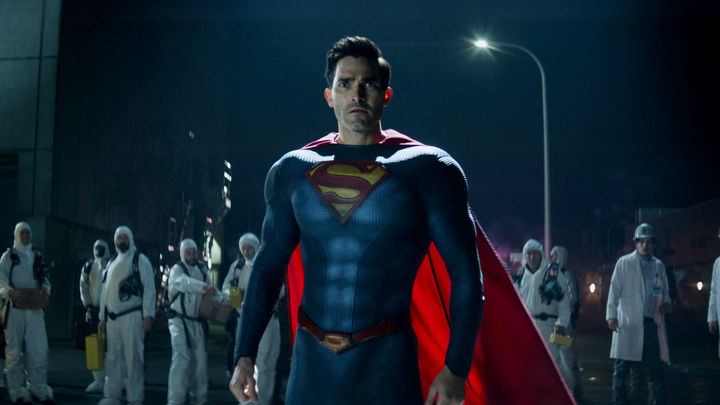
CW-SPL-101
Screencap from Superman & Lois: “Pilot” – The CW Television Network

Wrap-Up

I’ve been around science-fiction and fantasy long enough to understand creative license and suspension of disbelief. I also understand that the general television watching public is not going to dive into this level of detail about a program based on a comic book hero. It’s supposed to be fun escapism, right?

In the twenty-first century, there should be no excuse for scientifically lazy storytelling in this genre, particularly when the bar has been set so high by Marvel Studios in superhero entertainment and by other properties like Star Trek, Stargate, Battlestar Galactica, and The Expanse.

The problem could have been solved in so many other ways that would have maintained at least the illusion of technical integrity. Really, the crux of the matter is having a scientific advisor or consultant available. If IMDb is any indication, Superman & Lois hasn’t used that expertise. At a minimum, they haven’t credited their consultants.

It’s 2021. Geeks are smart. We’ve seen the potential in sharply written entertainment that doesn’t patronize us or insult our intellects. We’ve also seen the power of science and the rise of STEM education opportunities.

By tapping proven science-in-entertainment experts – André Bormanis, Dr. Erin Macdonald, Mika McKinnon, Dr. Kevin Grazier, Dr. Naren Shankar, and Dr. David Saltzberg come to mind right away – or other technical experts through a resource like The Science & Entertainment Exchange, producers and writers can avoid making scientific mistakes and fans worldwide can get smarter stories for their time and money.

It’s a return on investment in which everyone wins.


This post was inspired by Michael Bailey, Bethany Kesler, and Alison Richards, the hosts of The Superman & Lois Tapes, a weekly podcast about The CW’s television series Superman & Lois. Thanks to you, BAM Crew, for the spark and the read-through.

You can find their show and all things Superman on The Fortress of Baileytude Podcasting Network.

Special thanks also go to Gary Mitchel for his keen eye and advice in proofing this work.

This group of awesome people made sure that I didn’t get too technical for the average reader. Nuclear power can be complex, but the science and engineering concepts behind it are simple. One of my goals is to make all of it easier to understand.

cc-break

Culture on My Mind is inspired by the weekly Can’t Let It Go segment on the NPR Politics Podcast where each host brings one thing to the table that they just can’t stop thinking about.

For more creativity with a critical eye, visit Creative Criticality.
Timestamp: Sarah Jane Adventures Series Four Summary

Sarah Jane Adventures: Series Four Summary

Series Four was a strong showing for a season of change.

The series started with the departure of another series regular, Tommy Knight as Luke, leaving Elisabeth Sladen as the only remaining member of the cast that started with the show. As it progressed, the chemistry between Sladen, Daniel Anthony (Clyde), and Anjli Mohindra (Rani) carried this block of adventures even when the gaps in the writing were evident.

In a great set of stories, the strongest focused on the most established Doctor Who characters associated with The Sarah Jane Adventures: Death of the Doctor introduced Sarah Jane to the Eleventh Doctor and brought Jo Grant… rather, Jo Jones back to the screen, and Goodbye, Sarah Jane Smith focused on Sarah Jane and the natural ravages of time while giving her young co-stars the chance to really shine.

Death of the Doctor also brought Russell T. Davies back to the writing desk for the Doctor, and that was a tour de force that we never quite got from Steven Moffat.

I can’t speak highly enough of this series.

Series Four comes in at an average of 4.3. That’s on par with the first series of The Sarah Jane Adventures and tied for the top spot. In comparison to Doctor Who, that’s equivalent to the revival era seasons One, Three, and Five, which are at fifth place in the Timestamps Project.


The Nightmare Man – 4
The Vault of Secrets – 4
Death of the Doctor – 5
The Empty Planet – 4
Lost in Time – 4
Goodbye, Sarah Jane Smith – 5

Sarah Jane Adventures Series Four Average Rating: 4.3/5


The Timestamps Project is moving into Series Six with Matt Smith. As that series comes to its halfway point, Torchwood will return with Miracle Day. The two will merge for a bit until Torchwood ends, and then we’ll finish off Series Six around the first part of October.

That plan kicks off with a taste of Christmas in April.

UP NEXT – Doctor Who: A Christmas Carol

cc-break

The Timestamps Project is an adventure through the televised universe of Doctor Who, story by story, from the beginning of the franchise. For more reviews like this one, please visit the project’s page at Creative Criticality.
Timestamp #SJA25: Goodbye, Sarah Jane Smith

Sarah Jane Adventures: Goodbye, Sarah Jane Smith
(2 episodes, s04e06, 2010)

Timestamp SJA25 Goodbye Sarah Jane Smith

Who could ever replace Sarah Jane Smith?

A meteor hurtles toward Earth. Mr. Smith redirects the threat into the forest and the Bannerman Road Gang rushes to the scene to deal with a potential pathogen. When they arrive, they find the pathogen neutralized by a stranger who dresses and acts like Sarah Jane Smith.

The team returns to Sarah Jane’s house to discover that the woman has moved in across the street. Clyde sets the car’s hand brake (which Sarah Jane apparently forgot) and the gang confronts the new arrival. She doesn’t receive them well, but we find out that her name is Ruby White. She came to Ealing after hearing about the alien activity, including the Trueman incident, the Bubble Shock! factoryrhinos driving police cars, and alien plant life. Sarah Jane tries diplomacy, but Ruby shows her the door.

Sarah Jane mentally drifts as the team discusses Ruby. She also forgets that Luke is away at university, leaves the front door open, and forgets K9’s name upon calling Luke only two hours after the last time. Rani stops by to check on her friend and suggests Sarah Jane take a break to visit Luke. A red alert interrupts their discussion as the Dark Horde fleet heads for Earth.

Mr. Smith redirects their teleport beam to an uninhabited area. Since transmissions are jammed and UNIT is unreachable, Sarah Jane hands weapons to her teammates and they confront the intruders. Unfortunately, Sarah Jane forgot her sonic lipstick so the weapons are useless. Just before the Horde kills the group, Ruby arrives and saves the day with alien technology and her own AI supercomputer. Sarah Jane and Ruby reconcile from their first meeting and the new arrival joins the gang in the attic.

Clyde and Rani depart as Sarah Jane and Ruby express their pleasure at having adult friends to share alien encounters with. Sarah Jane recalls meeting the Doctor when she was 23, but had trouble with the Time Lord’s name. She later thinks about the memory lapse and asks Mr. Smith for a full medical scan. He determines that she has brain tissue deterioration. She believes that she’s finally too old to defend the Earth, and Ruby slowly moves into her position on the team.

Sarah Jane offers leadership of the Bannerman Road Gang, along with the house and its contents, to Ruby. Ruby accepts and Sarah Jane transfers Mr. Smith’s command to Ruby. Once it is done, Ruby reveals that she is responsible for Sarah Jane’s condition. Sarah Jane is teleported to a secret cellar which houses Ruby’s stomach, since the new arrival is a Qetesh, a creature that devours peoples’ thrills and emotions. Ruby was fascinated by Sarah Jane’s exciting and adventurous life.

Ruby has her AI spoof a farewell message from Sarah Jane while the Qetesh’s stomach begins devouring our hero. Ruby gloats as the planet is undefended. It will make an excellent feast for alien species across the universe.

Clyde and Rani watch the spoofed video and lament the news. Clyde storms out and calls Luke after blaming Rani for putting the idea of a vacation in Sarah Jane’s head. Later, Mr. Smith tries to warn Clyde, but Ruby shuts down the computer and teleports Clyde to her orbiting ship. The ship was her prison until she reprogrammed the game console what was her only entertainment. That console took her from planet to planet as she consumed each one. She decides that Clyde is too smart for his own good and leaves him to suffocate in her prison cell.

After talking to her mother, Rani tries to call Clyde. She opens her door to find Luke (with K9 on video conference). K9 tracks Clyde to the orbiting ship and analyzes the Qetesh. Together, they discover that the Dark Horde invasion and the meteor strike were holographic simulations and they devise a plan to reboot Mr. Smith.

Meanwhile, in orbit, Clyde records a goodbye message.

Rani distracts Ruby as she puts the plan into motion. Ruby realizes that it is a ruse, but she’s too late. Mr. Smith is restored, Clyde is teleported to the attic, and Ruby is trapped in a containment vortex. The team locates Sarah Jane and as Clyde and Rani rush to the rescue, Luke arranges for Ruby to be trapped on Earth. Ruby breaks free of containment and confronts the team as they release Sarah Jane.

Luke enters the cellar and warns Ruby to leave Earth. When Ruby refuses, Luke tells her console to initiate his own custom distraction. The console broadcasts a simulation of meteor strikes to the entire world, overwhelming the Qetesh with a meal she cannot handle. The stomach overloads, restoring Sarah Jane’s mind and splurting Clyde in the process (as is customary).

Sarah Jane returns Ruby to her prison cell. The Qetesh vows revenge as the ship rockets into the deep dark. Back in the attic, the team finds that Mr. Smith and K9 have finally become friends. Sarah Jane cherishes her friends and treats them all to a night off in celebration of their victory.


This story is bittersweet. It was the last serial of the series to air before Elisabeth Sladen passed away from cancer, making the title and the plot ironically poetic. The question presented in this story – “Can Sarah Jane Smith be replaced?” – is answered by the giant hole Elisabeth Sladen’s absence has left in the Doctor Who universe. She’s still sorely missed.

I understand that her daughter, Sadie Miller, has taken up her character in the recent Big Finish line. I may need to track down that story.

As far as this story is concerned, I really enjoyed it. I love stories where the companions get a chance to shine, and the Rani-Clyde team did not disappoint. I especially loved how Luke and K9 came back as well to help save Sarah Jane. If there is a fault to be found, it would be the overdramatic scenery-chewing from Ruby’s side of the house, but there is a certain charm in an over-the-top melodramatic performance in an otherwise solid story with a fun villainous twist.

The two big franchise mythology ties that I loved in this serial were Clyde’s anger and anxiety over Sarah Jane abandoning him like his father did and the use of “Contact!” when K9 and Mr. Smith link up, echoing back to The Three Doctors.

All told, this was a great way to end Series Four, and a fitting episode to mark Elisabeth Sladen’s departure from this plane.

Travel well, Sarah Jane.

Rating: 5/5 – “Fantastic!”


UP NEXT – Sarah Jane Adventures: Series Four Summary

cc-break

The Timestamps Project is an adventure through the televised universe of Doctor Who, story by story, from the beginning of the franchise. For more reviews like this one, please visit the project’s page at Creative Criticality.

Timestamp #SJA24: Lost in Time

Sarah Jane Adventures: Lost in Time
(2 episodes, s04e05, 2010)

Timestamp SJA24 Lost in Time

It’s a good core with poor wrapping.

The Bannerman Road Gang is chasing a report of aliens in a local shop. While looking around, the team meets a parrot and finds both a music box and a bloodstained arrow. They also encounter Mr. Smalley, the shop’s proprietor. He tells Sarah Jane that the news article was a ruse to draw her team into a quest for three pieces of chronosteel, metal forged in the time vortex.

You see, the Shopkeeper is a guardian of time, the chronosteel can reshape Earth’s destiny, and the Bannerman Road Gang has no choice. They have until the Shopkeeper’s hourglass runs out to save the world.

Clyde awakens in a grassy field, Sarah Jane in a box, and Rani in a candlelit chamber with Mistress Ellen, all of them in unknown times. Rani is the Tower of London’s royal chambers and has assumed the role of lady-in-waiting for Queen Jane Grey. Clyde finds himself on a beach in 1941 with a boy named George Woods as they watch Nazi spies land a short distance away. Sarah Jane, released from her box in a spooky mansion, meets a ghost hunter named Emily Morris in 1889.

As each traveler makes way through their respective time periods, the Shopkeeper observes them through a crystal ball.

Rani changes into period-specific clothing and makes a good impression on Queen Jane by speaking to her as a person, not as a royal. Rani presents the queen with the music box from the Shopkeeper’s establishment. Rani also hints again at her budding relationship with Clyde. The mood is broken as Mistress Ellen brings word of Lady Mary and her armies arriving in London to claim the crown. Queen Jane is ready to relinquish her crown as an unlawful claimant.

Clyde and George confirm that the spies are Nazis – the uniforms are a dead giveaway – and scurry off to warn the Home Guard. The phone in the nearby church is dead, and the boys are forced to hide as the Nazis arrive and start setting up a base of operations. They’re discovered and taken prisoner in short order. The Nazis set up a device with a core they call Thor’s Hammer, which Clyde recognizes as the chronosteel object he needs to secure.

Sarah Jane scans the mansion with her wrist scanner. There’s a lot of energy in the house, and while Emily believes that the house is haunted, Sarah Jane remains skeptical. As the clock strikes eight, the haunting begins with howls, rattles, and voices from events gone by. Well, the events seem to be linked to the past at first, but Sarah Jane determines that the voices are actually from the future. Sarah Jane explains that she’s a time traveler as they approach a room where the voices have converged. The room is warm, which Sarah Jane determines is due to an inferno in the future as the children accidentally set a fire with a candle.

As the first half comes to a close, Rani overhears Lady Matilda plotting to kill Queen Jane, Clyde and George escape the church, and Sarah and Emily decide to save the children trapped in the burning room. The Shopkeeper worries that they are taking too long and if they do not get back soon, they will all be trapped in the past forever. As the hourglass runs out, the Shopkeeper and Captain the parrot believe that all is lost. They are buoyed up by the fact that the time portal has not yet closed. Unfortunately, the planet now runs the risk of being torn apart by the time window.

Rani saves Lady Jane from assassination. Lady Matilda claims that the queen’s death would have inspired thousands as a martyr, but now Lady Jane will be condemned to die forgotten and alone. Rani recognizes the dagger as the chronosteel MacGuffin. Matilda is confined, but the castle is surrounded by Mary’s forces. Lady Jane offers Rani the chance to return home, but Rani decides to stay behind in friendship. Queen Mary assumes the crown and Lady Jane is taken into custody. Rani promises that Lady Jane is never forgotten, then picks up the dagger as she bids the lady farewell. As Rani vanishes, Mistress Ellen believes it to be witchcraft but Lady Jane claims that she is an angel.

Clyde and George escape the Nazis. They encounter Miss Wyckham, George’s schoolteacher, who brings news that the village is under siege. She also has a handgun amongst her parcels. As they storm the church, Clyde and George find out that Miss Wyckham is really a Nazi double agent and that an invasion of the British isles is underway. Clyde stages a diversion by pretending that his mobile phone is a bomb, opening the way for George to grab Thor’s Hammer. They sound the church bells to alert the Home Guard. As the Nazis run, George wants to give chase and fight, but Clyde encourages him to stay behind. Clyde grabs the Hammer and returns to the Shopkeeper.

Sarah Jane consoles Emily, who is experiencing a bout of PTSD since her mother also died in a fire. As they leave the room, Emily laments that they will have to wait until 8 pm the next day, but Sarah Jane dials the grandfather clock back and starts the events all over. This time, however, the events are stronger and include a visual component. They discover that the woman they were following decided to lock the children in their room for the night, but continue upstairs to look for the chronosteel. The door to the children’s bedroom changes shape as the time fields begin to merge, revealing the key as the quest item. The children briefly detect the women as Emily’s fear rises, and Sarah Jane convinces Emily to harness that power to grab the key and unlock the door in the future. The children are saved and Sarah Jane takes the key, but Emily grabs it as well. Sarah Jane vanishes but the key does not follow.

With everyone back in the right time, the Shopkeeper places the first two objects into perfectly sculpted slots in a suitcase. As the room rumbles, a woman enters the shop and hands Sarah Jane the key. The Shopkeeper adds it to the collection, scoops up the Captain (who apparently was in charge the whole time), and vanishes.

The woman explains that she is Angela Price, Emily’s granddaughter, who told Angela to pass on the key. She and Sarah go for a cup of tea and a chat about her family. Later on, Clyde researches George and discovers the man was recently knighted by Queen Elizabeth II, and Rani reads about Lady Jane and finds she was happy in her final moments, assured of immortality.


On the one hand, each quest and story are well played between the writing and acting, focusing on the core strengths of each character. The pacing is good, though Rani’s quest seems to run out of steam well before Clyde’s and Sarah Jane’s. Clyde’s story also has a rather quick twist with the treacherous schoolteacher.

On the other hand, the framing story is lacking. It’s obvious that the Shopkeeper and the Captain know what items to look for, but they refuse to disclose that information or even explain the details of the overall adventure. They literally abduct the team and throw them into a life and death scenario with scant data.

Even the Doctor eventually explains the situation to keep the companions on track.

I initially wondered if the Shopkeeper and the Captain were Time Lords – or maybe even a Time Lord and companion, ala Frobisher – but the rules of the universe at this point are pretty clear: The Doctor is the last of the Time Lords. So, this pair remains a rogue but powerful duo with vague motivations.

Overall, the whole framing story is frustrating but the individual quests more than make up for it.

In trivial matters, this story links up with two classic Seventh Doctor adventures. First, Clyde’s quest included Norse mythology and Nazis, which echoes The Curse of Fenric. Second, the grandfather clock reset to make the “haunting” start again hearkens back to events at Gabriel Chase in Ghost Light.

Rating: 4/5 – “Would you care for a jelly baby?”


UP NEXT – Sarah Jane Adventures: Goodbye, Sarah Jane Smith

cc-break

The Timestamps Project is an adventure through the televised universe of Doctor Who, story by story, from the beginning of the franchise. For more reviews like this one, please visit the project’s page at Creative Criticality.
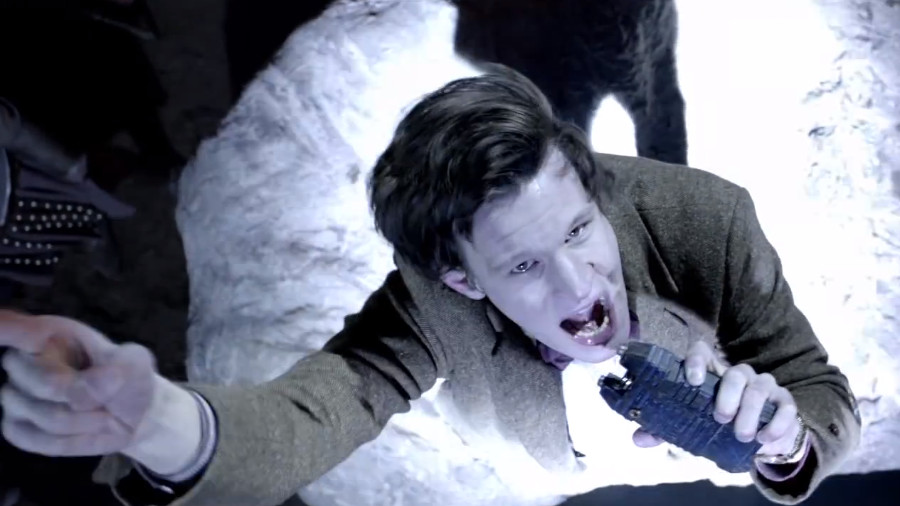
Timestamp #SJA23: The Empty Planet

Sarah Jane Adventures: The Empty Planet
(2 episodes, s04e04, 2010)

Timestamp SJA23 The Empty Planet

It’s a tale of loneliness and acceptance.

Mr. Smith detects an alien energy trace but it vanishes into Earth’s own energy signals. Sarah Jane asks for a deep scan to locate it while Rani and Clyde look on. Sarah Jane reminds her teammates that it is a school night and they should head to bed. As they leave, Rani reminds Clyde of a pending school assignment. Clyde rebuffs the advice because, hey, they might just be invaded tomorrow.

As Rani reads Great Expectations, her father stops by for a quick chat before turning in. Clyde, on the other hand, is working on his artwork rather than his reading, but his mother compliments his creativity and genius.

They both go to sleep. The world goes quiet. All signals cease.

When they wake the next morning, they seem to be alone in the world. Rani’s parents, Clyde’s mother, Sarah Jane, and even Mr. Smith are gone. Rani snags Sarah Jane’s sonic lipstick as she runs the streets to investigate. She returns home and Clyde stops by. Together, they head into town to look for people, but they don’t find anyone.

They also remark that there are no crashed planes or cars, so whatever took the humans did not want to cause harm or damage. Rani and Clyde continue their discussion over breakfast. They decide to head back to the attic, but discover another living person. They give chase on bicycles and follow him to his apartment. His name is Gavin, and he has been living with his aunt and uncle since his mother died and his father ran off.

Gavin is skeptical of the newcomers, so Rani tells him about aliens to gain his trust. A loud trumpeting and rumbling sound distracts them and Gavin slips away. Clyde and Rani pursue but Gavin has disappeared. Clyde wonders why he doesn’t seem like a normal kid but Rani doesn’t believe him. They return to the restaurant and hash out their relationship. While they talk, the planet’s broadcasts light up with a single signal. It’s a black screen with a red triangle and yellow alien text.

When they investigate, they find giant yellow and red robots who seem intent on blasting them both. Luckily, Gavin saves the day and the trio escape into the nearby shops. The robots prove that they aren’t very robust by completely missing Clyde posing as a mannequin. The trio reunites at the electronics store as they discuss the signal then return to the restaurant.

They try to figure out the common link between them, ranging from time fissures and the TARDIS to their restriction to Earth by the Judoon. That doesn’t quite explain Gavin, but the ruminations are interrupted by the robots. They scatter and the robots pursue.

Both Rani and Clyde end up being cornered and scanned by the robots. They reunite at the restaurant, robots in tow, and begin the time-honored science fiction tradition of trying to communicate. In Short Circuit fashion, they use a newspaper as input, resulting in the translation of the alien signal. It’s a countdown, and the robots reveal that they are in search of a heir who is hiding on Earth. Humanity has been blipped into a sub-universe and will return if they can find the young prince in time.

And, believe it or not, Gavin is the errant heir. His father was an alien king, and since the king is dead, the robots have come to take their new ruler home. The energy trace was a signal calling him home.

After a bit of quick detective work, Rani and Clyde track Gavin to a nearby nature area. The robots can’t see Gavin because of a bio-dampening ring that shields his alien half. Gavin believes Rani and Clyde, removes the ring, and takes his place as the rightful heir.

The prince orders that the people of Earth are restored as he jets off to his new home. Before he leaves, he names his benefactors Lady Rani and Lord Clyde. As the timer hits zero, everyone returns to the planet as if they were never gone save losing ninety minutes somewhere.

Rani’s parents thought she was missing. Haresh asks where she was and she tells him the truth: She was with Clyde. Sarah Jane walks in, thus reuniting the Bannerman Road Gang. Later that night, the team celebrates Rani and Clyde’s victory as Mr. Smith scrubs the official records to hide the truth. Sarah Jane springs for pizza in honor of their good work.


I liked the core moral here, which is that everyone has worth, value, and a place. We see it with Rani and Clyde as they become more than just “hangers-on” and save the people of Earth, and we see it with Gavin as he realizes that he is important on a scale that he never imagined.

As a scientist and engineer, it took me a few minutes to adapt to the dampening effect. It seemed to be limited to broadcast signals since electricity was still available, but it made me wonder for a while exactly how it worked. I had a similar problem with Revolution, a sci-fi series with the premise that all electricity ceases one day. “Yeah, but,” I said, “what about the electrical signals in the human nervous system?”

After a while, you just let it go as pure handwavium, kind of like the concept that the seemingly peaceful seeker robots would consider obliterating an entire species if they didn’t find their target. I mean, that is a whole new level of hide and seek.

One thing that did throw me for a while was Clyde’s use of “honest injun” to describe his integrity while paying for a soda. The phrase supposedly originated in the 1850s (or earlier) and gained popularity when used by author Mark Twain in the 1890s. By the mid-twentieth century, however, it fell into obsolescence, probably due to its prejudicial overtones. The slur “injun” is a corruption of the term Indian, as in Native American, and the honesty part is said to stem from the idea that white people “spoke with a forked tongue” while the tribesmen were considered to be forthright and sincere in their dealings.

Given the stereotypes and prejudices that still exist to this day about Native Americans (at least in the United States), it shouldn’t surprise me that a television program from 2010 worked one of them in. What did surprise me is how far they’ve reached, considering that The Sarah Jane Adventures is a UK production.

Among the minor things that I found fun, Clyde’s still working on his art and our remaining teenagers are still toying with a relationship. I’m glad that the latter is developing organically instead of being created out of the ether.

Rating: 4/5 – “Would you care for a jelly baby?”


UP NEXT – Sarah Jane Adventures: Lost in Time

cc-break

The Timestamps Project is an adventure through the televised universe of Doctor Who, story by story, from the beginning of the franchise. For more reviews like this one, please visit the project’s page at Creative Criticality.

Timestamp #SJA22: Death of the Doctor

Sarah Jane Adventures: Death of the Doctor
(2 episodes, s04e03, 2010)

Timestamp SJA22 Death of the Doctor

The Doctor is dead. Long live the Doctor.

Luke is talking to the Bannerman Road Gang over webcam when UNIT arrive at Sarah Jane’s home. Colonel Tia Karim bears bad news: The Doctor is dead.

The Shansheeth discovered the body of a Time Lord and, upon confirming the DNA, organized a funeral. The Shansheeth delivered a holographic epitaph via Colonel Karim and Sarah Jane doesn’t believe the news, but Rani helps her to cope. Later that night, Sarah Jane muses with Luke that the Doctor cannot be dead. After all, she believes that she’d know somehow as though a piece of her was missing.

The Bannerman Road Gang take a road trip with UNIT to the funeral location at Mount Snowden, a massive UNIT base. While getting into the private car, Clyde experiences a jolt of energy, but he chalks it up to simple static electricity. When they arrive, they find out that the Brigadier is stranded in Peru and Liz Shaw is unable to leave the moon base in time for the service. They also see a group of Groske – a blue and tame version of the Graske – who tell Clyde that he smells like time. Clyde notices the energy on his hand and the Groske simply says that “he’s coming.”

The gang attend the gathering of remembrance where Sarah Jane requests that Karim open the coffin. The colonel replies that the Doctor was injured and a viewing is impossible. Sarah Jane notes that the last time that she saw the Doctor he was preparing for regeneration. He could have a completely different face now.

As the Shansheeth officiating the ceremony asks everyone to recollect their memories, Clyde recognizes the static as artron energy and a newcomer arrives. Enter: Jo Jones, previously known as Jo Grant. Sarah Jane recognizes her from the way that UNIT described her and they hit it off right away. Rani and Clyde meet Jo’s grandson Santiago who talks about the family’s globetrotting activism.

Jo is upset to learn that the Doctor returned for Sarah Jane. He never stopped in for her. But they share the belief that they’d feel it if the Doctor died (even on Metebilis III), so they start brainstorming his faked death. They also bond over their shared experiences on Peladon with the great beast Aggedor.

Meanwhile, Clyde pursues the mystery of the artron energy and we learn that the Shansheeth are trying to harvest the mourner’s memories of the Doctor using a memory weave that will kill the former companions. Clyde, Rani, and Santiago overhear the Shansheeth plot. They run back to Sarah Jane and Jo just in time for the Doctor to make contact through (and then exchange places with) Clyde.

Clyde’s on a red planet somewhere, but the Doctor is here. The companions catch up with the Doctor’s new face and the Time Lord confronts the Shansheeth. The Shanseeth reply with an energy beam and the sincerest wish that he rest in peace.

In the energy beam, the Doctor and Clyde swap places a couple of times. Once released, the Doctor runs with the assembled allies to safety behind a locked door. The Doctor grabs hands with Jo and Sarah Jane, spiriting “Smith and Jones” away to the red planet, the Crimson Heart. Clyde is left behind with Rani and Santiago in the locked room. They are soon rescued by the Groske and taken to his hiding spot in the ventilation system.

The Shansheeth, meanwhile, reveal that they have the TARDIS and are building a method to break in.

Sarah Jane and the Doctor work on the gadget that he used to swap places with Clyde while Jo muses about why the Doctor left her behind. After all, he did promise that he’d see her again. The Doctor reveals that, just before his regeneration, he visited every one of his former companions and is very proud of what Jo has done with her life.

Colonel Karim discovers where Rani, Clyde, and Santiago are hiding and locks them inside while turning up the heat. Luckily, the Doctor and his companions have fixed the device so they can return to Earth without leaving Clyde on the Crimson Heart. The Doctor saves the teenagers but Sarah Jane and Jo are captured by Karim and the Shansheeth.

The Shansheeth plan to use the memory weave to conjure a physical TARDIS key from the memories of the companions. They want to use the TARDIS to stop death on a universal scale and put an end to pain and suffering. Karim, on the other hand, merely wants to leave the planet and travel the stars.

The Doctor stops the memory weave’s operation by calling to the companions through the locked door and asking them to remember every adventure that he shared with them. Clyde and Rani also tell Sarah Jane to remember all of their adventures on Bannerman Road and Santiago prompts Jo’s memories of their Earthbound travels.

The memory weave overloads and begins a self-destruct sequence. Jo and Sarah Jane are trapped, but the Doctor reminds them of the lead-lined coffin. It provides just enough protection to shield the companions from the blast. The Shansheeth and Karim are destroyed and the Groske is amused by the smell of roast chicken.

Everyone hitches a ride home with the Doctor in the TARDIS. The companions say their farewells – Jo has no idea about the Time War, but why would she? – and the Doctor hies off to his next adventure. Rani and Clyde help Santiago figure out how to reunite with his parents, then Jo and Santiago say goodbye as they move on to Norway.

Sarah Jane tells her friends about the echoes of the Doctor around the globe: Tegan is fighting for aboriginal rights in Australia; Ian and Barbara Chesterton are Cambridge professors who are rumored not to have aged since the 1960s; Harry Sullivan is a doctor working on vaccines; Ben and Polly run an orphanage in India; and Dorothy McShane has raised millions through her company “A Charitable Earth”.

All of that from a simple Google search for “TARDIS”.

Long live the Doctor.


What a powerhouse story! Russell T Davies provided a story reflective of his years on Doctor Who, right down to the pacing and well-crafted prose. It’s also saturated with Doctor Who lore, including scenes from 36 adventures which I am not going to list here. Believe me, it’s tempting…

The attention to detail about regeneration – Jo knows about it since she met the First and Second Doctors – and the Last Great Time War is amazing. It’s also fun to watch the Doctor toying with Clyde about regeneration. The idea of 507 possible regenerations was a jest by this incarnation, but we know for a fact that regeneration can indeed result in changing into a form other than a white male.

I was amused by the Doctor musing about ventilation shafts, particularly in light of The Ark in Space, The Hand of Fear, and Planet of the Daleks. I also laughed about Amy and Rory’s marital adventures on the honeymoon planet. Ah, sentient planets.

Last but not least, the memory weave has a distinctive sound in science fiction history. It is unmistakably the activation sound for the proton packs in the Ghostbusters franchise. That takes me back.

Rating: 5/5 – “Fantastic!”


UP NEXT – Sarah Jane Adventures: The Empty Planet

cc-break

The Timestamps Project is an adventure through the televised universe of Doctor Who, story by story, from the beginning of the franchise. For more reviews like this one, please visit the project’s page at Creative Criticality.

Timestamp #SJA21: The Vault of Secrets

Sarah Jane Adventures: The Vault of Secrets
(2 episodes, s04e02, 2010)

Timestamp SJA21 The Vault of Secrets

Here come the Men in Black… um… again.

A teenage girl searches an abandoned asylum for something called the Vault of Secrets. Her arrival sets off alarms and awakens guardians. When she finds the vault she’s stopped in her tracks because the container requires two keys and she only has one. A door opens behind her and reveals three black-suited figures with guns for hands. We last saw them in Dreamland.

The girl escapes but twists her ankle. She falls unconscious and Androvax the Veil emerges from her.

Meanwhile, in the Attic, the Bannerman Road Gang (with Luke calling in via video) watch a livestream from a recent NASA Mars rover landing. As the rover crests a hill, Sarah Jane disables the machine. NASA believes that they’ve lost another one, but Sarah Jane knows the truth: She’s just prevented the probe from discovering an ancient and deadly civilization.

Rani’s parents, Gita and Haresh, attend a meeting of the B.U.R.P.S.S. – the poorly-named British UFO Research and Paranormal Studies Society – after their recent encounter with Androvax. On the way home, Gita spots Androvax in Sarah Jane’s driveway, but Sarah Jane talks Haresh down from searching for the alien. Androvax takes over Rani’s body and leads a chase to the attic where the alien stages a tense reunion with Sarah Jane, Rani, and Clyde. Surprisingly, he asks for their help.

Androvax claims to be dying, poisoned by a swamp viper from a Judoon prison facility. He wants to free one hundred survivors from his otherwise dead planet that crashed on Earth forty years ago. The Alliance of Shades placed the ship in the Vault of Secrets, of which Androvax possesses a key. The Bannerman Road Gang head for the asylum after a short diversion by B.U.R.P.S.S.

Once inside, the gang finds the resting pods for the Men in Black – along with evidence that Ocean Waters, the leader of B.U.R.P.S.S., was abducted at some point – and the suits themselves. When the MiBs threaten incineration, the gang runs after discovering that the androids are sonic-proof. Arriving back in the attic, they learn about the Alliance of Shades and their mission to cover up alien incidents on Earth. Sarah Jane decides to visit Ocean Waters, and Androvax asks to go along to learn more about her knowledge of the Alliance of Shades. Androvax takes over Clyde for the trip which proves fruitful when Ocean is almost effervescent about her experience with Mr. Dread.

Ocean also has the second key, which Androvax immediately steals. On cue, the Men in Black break down the door and threaten to incinerate everyone. They explain that any attempt to release the Veil ship will destroy the planet. Androvax uses the distraction to escape and switch bodies from Clyde to Gita and make haste for the asylum.

The Bannerman Road Gang pursues, taking a moment to disable Mr. Dread’s can with a pulse of the sonic lipstick. When they arrive, they split up to search the building. Rani and Clyde rescue Gita-Androvax from one of the Men in Black while Mr. Dread confronts Sarah Jane at the Vault. When Mr. Dread decides to confiscate Sarah Jane’s technology and process her, she runs.

Meanwhile, Rani uses diplomacy to extract Androvax from Gita, then tricks the alien so they can all run away. Rani confides in her mother that aliens are real and she’s helping to fight them. Clyde runs interference with the Men in Black while Rani and Gita escape. He manages to catch two of the androids in a crossfire, destroying both of them and winning a cool new pair of shades in the process.

Sarah Jane finds Androvax and ends up being possessed by the Veil while Rani and Gita are taken prisoner by Mr. Dread. The android takes them back to the charging pods where Clyde ambushes him and locks him away. The gang catches up with Sarah Jane-Androvax at the Vault and opens it, revealing an extradimensional space beyond filled with spacecraft.

Androvax leaves Sarah Jane and enters the Vault, sealing himself inside. While Androvax powers up the Veil stardrive, the gang awakens Mr. Dread two minutes before the planet is destroyed. They use a transmat device coupled with the android’s power source to move the Veil ship into orbit. At the cost of 450 years of Dread’s energy, the Veil leave without destroying Earth. Mr. Dread then erases Gita’s short-term memory and, with his mission over, settles in for a long nap.

The team arrives home to find B.U.R.P.S.S. waiting for them. Gita no longer believes in aliens and Sarah Jane denies any knowledge of the Men in Black. As the comedic support group walks away dejected, Androvax flies through space in search of a second genesis for his people.


This was an exciting story where a couple of recent enemies came together with completely different motivations. It was a fresh take with plenty of humor to go around in the first post-Luke adventure.

Among this story, Rose‘s whoisdoctorwho.co.uk, Love & Monsters, and The End of Time‘s Silver Cloak, it’s really interesting to me how the normal civilians build communities around the things that they cannot explain. Be it the Doctor’s presence throughout human history or alien abductions, we keep seeing support groups and conspiracy theorists popping up, mostly with humorous and dysfunctional results.

It’s easy to lose track of that human element in the vastness of time and space, but just like my admiration of Rose’s mother and Martha’s family, I think it adds a nice touch to ground things a bit. After all, at its core, science fiction is the art of discussing the human condition through metaphor.

Doctor Who and its spinoffs keep doing a fantastic job with that.

Rating: 4/5 – “Would you care for a jelly baby?”


UP NEXT – Sarah Jane Adventures: Death of the Doctor

cc-break

The Timestamps Project is an adventure through the televised universe of Doctor Who, story by story, from the beginning of the franchise. For more reviews like this one, please visit the project’s page at Creative Criticality.

Timestamp #SJA20: The Nightmare Man

Sarah Jane Adventures: The Nightmare Man
(2 episodes, s04e01, 2010)

Timestamp SJA20 The Nightmare Man

You can’t get him out of your head.

Luke starts the story with a warning that the end of the world is approaching, that it is his fault, and the Nightmare Man is coming for him.

One year earlier, Luke confides in Sarah Jane that Mr. Chandra has given him permission to take his A-level exams early. This will enable him to go to Oxford University. Their discussion is interrupted by the fact that they are chained to a bomb, but fortunately Rani, Clyde, and K9 arrive to defuse the bomb and stop the Slitheen behind it.

Of course, in show tradition, everyone ends up covered in exploded alien goo.

Some time later, Luke passes his exams with flying colors. Some time after that, Luke watches Rani head to school while he packs his room and confides his nervousness in Sarah Jane. Sarah Jane tries to console him with scrambled eggs for breakfast, but ends up setting the kitchen on fire. Rani and Clyde hear about this on their way to school as they lament Luke’s departure.

Sarah Jane presents Luke with her old VW Beetle. She tells Luke that he gave her something to live for in an existence of loneliness. She promises him that Bannerman Road will always be his home and that she will miss him.

Later that night, Luke is awakened by laughing and overheads Sarah Jane and K9 talking about how they can’t wait for him to leave. Turns out that it was a nightmare, and as Luke startles awake he hears laughing. Luke shouldn’t be able to dream due to his genetic makeup, and while Rani suggests that he tell Sarah Jane, he decides against it. He also confides that he hasn’t seen Clyde for a while, and Rani pressures him to visit Luke.

Luke has another nightmare, this time with Clyde and Rani at the school. He meets the Nightmare Man, an entity that feeds on fearful dreams. He tells Sarah Jane about his nightmare and Mr. Smith scans Luke but finds nothing. He receives a text from Clyde and ends up at a surprise farewell party. The friends have a quick chat and Luke suggests that Clyde dance with Rani. After that, he inadvertently falls asleep and comes face-to-face with the Nightmare Man, but is told that he cannot speak the entity’s name. He is woken up by Rani and Clyde and taken back to the dance floor.

Later that night, Luke is sending a message to Maria but still cannot tell anyone about the Nightmare Man. He falls asleep and dreams about Sarah Jane replacing him with a new boy named Josh. His family throws all of their memories of him into a barrel and lights it on fire. The Nightmare Man tells him that one more nightmare will allow him to enter the real world and terrorize everyone.

On the final day before Luke leaves for Oxford, the Bannerman Road Gang throws him a farewell bash. Clyde and Rani keep Luke company but they fall asleep. Luke records the video that we saw in the opening sequence, sidestepping the rules by speaking to the camera and not to a particular person. He orients the camera to capture the events as he falls asleep. The Nightmare Man materializes shortly thereafter, but Luke is trapped in an echoing empty void.

The entity disappears as Sarah Jane enters the room and picks up the video camera. It materializes next to Rani and Clyde and begins to attack Rani as Sarah Jane watches Luke’s recording. Rani’s nightmare involves being pulled into the television by the BBC’s (completely fictional) Louise Marlowe. The Nightmare Man moves on to Clyde as Sarah Jane summons K9 and Mr. Smith to help combat the threat.

Mr. Smith identifies the entity as a Vishklar from the Seretti dimension as Clyde has a nightmare about being a fry cook and being berated by Sarah Jane for his lack of success. Rani’s dream continues as she takes the role of a newscaster being forced to tell the secrets about Sarah Jane Smith.

Sarah Jane and her cybernetic companions use a sentient concrete and a power boost to connect Luke with K9 inside his dream. Luke is able to connect with Rani and Clyde through the dream universe and rescues them through their focus. The Nightmare Man extends his influence onto the rest of Bannerman Road, but Luke, Rani, and Chandra stifle his power so he materializes in the attic, disables K9 and Mr. Smith, and turns his attentions on Sarah Jane.

Sarah Jane isn’t afraid of the Nightmare Man, but the entity is unwilling to send her into the dream. Instead, he materializes in the dream and threatens the team. Luke confronts him, emphasizing his love for Sarah Jane and his friends. The power of their friendship overwhelms the Nightmare Man and pushes him into a nightmare of his own. A nightmare where the elderly Sarah Jane Smith tells him all about Luke’s successes for all time.

The trio awakens as Sarah Jane brings K9 and Mr. Smith back online. Sarah Jane decides to send K9 with Luke. The next morning, they all gather to say farewell to Luke and K9. After hugs and tears, Luke leaves Bannerman Road in the yellow Beetle, eager to face the adventure ahead.


This is a pretty straightforward story, told in a fractured style, that has ties within both its series and year of production. Alongside Amy’s Choice, this was the second story in 2010 to involve a dream universe. It was also the second premiere to serve as a farewell for a series regular, the former being Maria’s departure in The Last Sontaran.

Tommy Knight had previously reduced his involvement in the show to focus on his schoolwork, but when his studies became much more demanding he decided to bow out. The other character to leave the show, the very good boy K9, was written out due to the Australian K9 spin-off. Thus, only Elisabeth Sladen remains from the roster of original full-time regulars that started the show.

This episode played well on both of those fronts. The anxiety and apprehension surrounding Luke leaving the nest is scripted nicely, and is sold by Elisabeth Sladen’s performance. Similarly, I loved the talent exercise of elderly Sarah Jane. We also got a touching and humorous farewell between Mr. Smith and K9, adding a beautiful dimension to their friendly rivalry.

All told, the story was good as both a welcome back and as a farewell.

Rating: 4/5 – “Would you care for a jelly baby?”


UP NEXT – Sarah Jane Adventures: The Vault of Secrets

cc-break

The Timestamps Project is an adventure through the televised universe of Doctor Who, story by story, from the beginning of the franchise. For more reviews like this one, please visit the project’s page at Creative Criticality.

Timestamp: Series Five Summary

Doctor Who: Series Five Summary

Timestamp Logo Eleventh

Series Five shifted gears with a new Doctor and a new showrunner.

Having seen the Matt Smith episodes before, I haven’t looked back fondly upon them. I think part of it was my mindset, especially after binging the episodes from Series One. I’m also a big fan of David Tennant and the paradigm shift from Russell T Davies and David Tennant to Steven Moffat and Matt Smith was a shock.

There’s a lot later in Steven Moffat’s tenure as showrunner to be critical about, but Series Five is much better than I remember.

The big stumbling blocks were Amy’s Choice and The Lodger. In the former case, the issue was presenting a mystery for the audience to solve but leaving out a critical puzzle piece to make the Doctor the smartest man in the room. In the latter case, the story was obviously a filler episode. The season also had a hard time selling me on the love between Amy and Rory. He obviously adores her, but she treats him like refuse far too often.

But it’s hard to be angry with such a fun and interesting slate otherwise, from the “I’m the Doctor” moment in The Eleventh Hour to the Daleks winning the battle in Victory of the Daleks, the return of the Silurians in The Hungry Earth & Cold Blood, and the time-traveling epic that is The Pandorica Opens & The Big Bang.

Lest we forget the most beautiful story in this batch: Vincent and the Doctor. It makes me cry every time.


Series Five comes in at an average of 4.3. That leaves it in a three-way tie for fifth place for the Timestamps Project, coming in behind the classic Ninth Series, the new era’s Series Four, the Eighth Doctor’s run, and the Tenth Doctor’s specials. It’s on par with two other revival groupings – Series One and Series Three – and just ahead of the classic Eleventh Series.

The Eleventh Hour – 5
The Beast Below – 5
Victory of the Daleks – 4
The Time of Angels & Flesh and Stone – 4
The Vampires of Venice – 4
Amy’s Choice – 3
The Hungry Earth & Cold Blood – 5
Vincent and the Doctor – 5
The Lodger – 3
The Pandorica Opens & The Big Bang – 5

Series Five (Revival Era) Average Rating: 4.3/5


Next up, we head back to Bannerman Road with the fourth series of The Sarah Jane Adventures.

UP NEXT – The Sarah Jane Adventures: The Nightmare Man

cc-break

The Timestamps Project is an adventure through the televised universe of Doctor Who, story by story, from the beginning of the franchise. For more reviews like this one, please visit the project’s page at Creative Criticality.

Timestamp #219: The Pandorica Opens & The Big Bang

Doctor Who: The Pandorica Opens
Doctor Who: The Big Bang
(2 episodes, s05e12-e13, 2010)

Timestamp 219 The Pandorica Opens and The Big Bang

A roller coaster ride that closes the narrative circle. Mostly.

The Pandorica Opens

France, 1890: Vincent van Gogh finishes a painting and lapses into a screaming fit. Doctor Gachet and Madame Vernet attempt to calm him, but Vernet takes a moment to criticize the painting as one of the artist’s worst.

London, 1941: In the Cabinet War Rooms, Professor Bracewell delivers a rolled up canvas to Winston Churchill. It is the painting, found behind the wall in a French attic. Bracewell tells Churchill to deliver the message.

Stormcage Containment Facility, 5145: A guard answers the phone and hands it to River Song. After speaking to Churchill, River whammies the guard with her hallucinogenic lipstick and escapes from the prison. She breaks into the Royal Collection and swipes the painting. Liz 10 catches her, but after she looks at the artwork, River is free to go.

The Maldovarium, 5145: River meets with black marketeer Dorium Maldovar and exchanges a Callisto Pulse in exchange for a vortex manipulator, fresh from the wrist of a Time Agent.

The TARDIS, in the temporal vortex: Amy looks at the wedding ring as the Doctor lands on Planet One. There they find the first words in recorded history carved into the diamond cliffs: “Hello, Sweetie.” The accompanying coordinates take them to Roman Britain in the 2nd century where they are met by a soldier whose face is smeared with lipstick. They are escorted to Cleopatra, who is really River in disguise. She presents the travelers with the painting.

It is a mixture of Starry Night and the destruction of the TARDIS. It is titled The Pandorica Opens.

River, Amy, and the Doctor discuss the painting, which the Doctor considers a fairy tale, but they all ride to Stonehenge where it is presumed to reside. Amy notes that River warned them about this on the Byzantium, but River responds that she will. That hasn’t happened for her yet. River finds evidence of energy weapons at the site. They open a tomb beneath Stonehenge, missing the active Cyberman head nearby, in search of the mightiest warrior of all time contained within the Pandorica.

Behind a giant door they find a giant box. It is the Pandorica. Amy notes that the story of the Pandorica is similar to her favorite story, that of Pandora’s Box, and the Doctor draws attention to the coincidence. As River and the Doctor examine the box, Amy keeps an eye on the crypt.

Amy wonders how Vincent could know of this and the Doctor notes that the pillars of the crypt are transmitters. They’ve been broadcasting into all of time and space, and River traces the signals to Earth’s orbit. There are at least ten thousand starships in orbit, and every one of them belongs to the Doctor’s enemies.

It’s a veritable Who’s Who of Doctor Who universe villains, including the Daleks, the Drahvins, the Cybermen, the Autons and the Nestene Consciousness, the Silurians, the Draconians, the Sontarans, the Zygons, the Terileptils, the Chelonians (an enemy from the Virgin novels), the Slitheen, the Roboforms, the Sycorax, the Hoix, the Weevils and the Blowfish (crossing over from Torchwood), the Judoon, the Uvodni, the Atraxi, and the Haemogoths (from the novel The Forgotten Army).

Everything that ever hated the Doctor is coming to Earth on this night. River begs him to run but the Doctor has other plans. He enlists the help of the Roman army with River and her futuristic technology. She is greeted by a single mysterious volunteer.

The Doctor continues his work at the Pandorica. After extending the force fields of the box to buy them thirty minutes, he and Amy discuss the engagement ring. The Doctor explains that it belongs to a friend, and hopes that the traces it left behind can spark memories within that friend. He asks if Amy is bothered that her life doesn’t make a lot of sense, but before she can respond they are interrupted by laser blasts from a dismembered Cyberman arm. They nearly escape from the arm, but it shocks the Doctor as Amy grapples with the Cyberman head. She nearly gets the upper hand but it shoots her with a dart and threatens her with assimilation. On cue, the headless body (a Cybus Industries model) marches into view, reattaches the head, and chases the drugged companion.

Amy ends up in a side chamber. The door opens as a sword impales the Cyberman. The sword belongs to none other than Rory. He’s dressed as a Roman soldier and she still doesn’t remember him. The Doctor considers the Cyberman and the Pandorica, eventually coming around to the fact that Rory is alive again and unerased from time.

Rory is fuzzy on how he got to this point, but he still cares for Amy. They’re distracted by the ships descending from orbit and the sudden awakening of the Pandorica. The site and the Roman army are surrounded. The Doctor ascends to the surface, stands on a rock, and addresses his enemies over a communicator. His enemies face him as he threatens them with his rage. He has possession of the Pandorica and it’s opening, and though they have plenty of weapons, he has nothing to lose. He reminds them of all the times he has defeated them in the past and encourages them to do the smart thing and let someone else try first.

The fleet withdraws, granting the Doctor an additional hour. Meanwhile, River tries to pilot the TARDIS to the crypt but it won’t play nice. It takes her to Earth, specifically Amy’s house, on June 26, 2010. A crack appears on the scanner as River heads outside and a voice echoes in the console room: “Silence will fall.”

Amy wakes up but still doesn’t remember Rory. The Doctor cannot explain his presence, but listens while Rory talks about his memories while the Doctor ponders the explosion of the TARDIS. He returns Rory’s ring and dismisses Rory’s return (for now, anyway) as a miracle.

Landing patterns from alien ships have scarred the yard at Amy’s house. Inside the house, River finds a book on Roman Britain and a copy of The Legend of Pandora’s Box. She also finds a picture of Rory and Amy, but Rory is dressed like a centurion in the photograph. River contacts the Doctor and tells him that the Roman army is made of duplicates. The duplicates believe that they are alive, and River says it must be a trap.

On the surface, Amy starts to remember Rory. At Amy’s house, the TARDIS begins to shake and will not respond to River’s commands. The console room echoes with the warning again: “Silence will fall.”

The Pandorica starts transmitting a signal as it cracks open. The soldiers all stop moving and converge on the crypt, their hands raised like Auton hand-blasters. Rory fights his transformation and warns Amy to run, but she remembers him. The Autons seize the Doctor and declare that the Pandorica is ready. The Doctor’s enemies materialize in the room and force the Time Lord into the box.

All of reality is threatened by the cracks in time. The enemies of the Doctor have banded together to save the universe from destruction by his hand. They used Amy’s memories to trap him.

Unable to control himself, Rory fatally shoots Amy. As she dies, he grieves as he fights for control.

River opens the doors of the TARDIS to find a stone wall. She’s trapped as the TARDIS explodes.

The universe dies as every star goes supernova at once. The Earth is left alone in a black void.

Silence falls.

The Big Bang

Leadworth, 1996: It’s the night that Amelia Pond prays to Santa Claus on Easter to fix the crack in her wall. She hears a noise, but her garden is empty. She notes the moon in the sky and later paints the sky for her psychiatrist. She remembers stars in the sky, but no one else can. In fact, the sky is empty except for the moon.

That night, Amy sees a man in a fez slip a pamphlet through the mail slot. It advertises that Pandorica exhibit at the National Museum with a note: “Come along, Pond.” She visits the museum with her aunt, passing exhibits of antique Daleks and penguins in the Arctic. A note on the Pandorica tells her to stick around, so she hides from her aunt until the museum closes. She returns to the Pandorica and it opens to reveal Amy Pond.

Things just got complicated.

Stonehenge, 102 AD: The Auton duplicate of Rory Williams cradles Amy’s corpse. He cracks a joke and wishes that she’d laugh, but his mourning is interrupted by the vortex manipulated arrival of the Doctor. He’s wearing a fez and brandishing a mop, and he leaves instructions for Rory to open the Pandorica with his sonic screwdriver. He vanishes again.

The present-version Doctor emerges from the Pandorica. Deducing that he will set up the chain of events that have led to his release, he and Rory note the stone remains of the allied aliens. They are echoes in time of entire species that have been erased from existence. The Doctor and Rory find Amy and load her into the Pandorica. A punch to the jaw tells the Doctor that Rory has moved beyond his programming, and the Time Lord leaves a telepathic message in Amy’s head. The Pandorica will restore her to life in order to keep her imprisoned.

The Doctor picks up River’s vortex manipulator and offers Rory the opportunity to travel back to the future. Instead, Rory decides to stand watch over the Pandorica for the next 2,000 years. When Amy awakens in 1996, she sees the video presentation about the Pandorica and the lone centurion who stood guard no matter where the box went. The centurion was presumed dead in 1941.

As the Doctor appears in the museum, one of the Daleks awakens and threatens the Amys. As the Doctor finds a fez and looks for a way to stop the Dalek, a security guard appears and stops the threat with an Auton cannon. That security guard is none other than Rory the Centurion.

While Amy and Rory catch up with a whole lot of smooching, the Doctor analyzes the Dalek and realizes that it came to life when the Pandorica’s light touched it. As it revives again, the Doctor ushers everyone out and starts his chain reaction of events. His bouncing around in time comes to a halt as an older version of himself appears, leaves him a message, and dies without regeneration.

The younger version of Amy also vanishes. Time is still collapsing.

As the travelers rush to the roof, the Dalek opens the Pandorica and casts its light on the statues in the museum. On the roof, our heroes note that the sun has risen. Unfortunately, the sun is really the explosion of the TARDIS. Fortunately, the signal it is generating includes River’s last words, which tells the Doctor that the TARDIS placed her in a time loop to keep her alive. The Doctor jumps to the TARDIS and pulls her to safety in 1996.

River questions the Doctor’s fashion sense. Amy pulls the fez off his head and throws it. River shoots it, blasting it into atoms. Then the Dalek arrives and drives the team back into the museum. The Doctor questions how the Dalek could exist, then develops a plan to cast the Pandorica’s light across all of time and existence by using the TARDIS explosion as an infinite power source.

His plotting is cut short as the Dalek shoots the Doctor. The Doctor falls and teleports away. In her anger, River makes the Dalek beg for mercy (three times over) before killing it in a single shot. When the team heads back to the Pandorica, the Doctor has crawled inside and wired the vortex manipulator to transport the box to the heart of the exploding TARDIS. Rory and Amy thought he was dead, but River tells them about Rule Number One: The Doctor lies.

The downside to the Doctor’s plan is that he’ll be trapped on the wrong side of Big Bang #2. While the rest of existence will be reset, he will never have existed. He asks to talk to Amy one last time before he leaves. He explains that her parents didn’t die but rather were consumed by the crack in time. It has been eating away at her life for a long time, making her the girl whose life didn’t make sense. If she can remember them when the Big Bang happens, they stand a chance of being restored.

With that, the Doctor seals the Pandorica and launches it into the heart of the TARDIS with a transmitted “Geronimo”.

As the universe heals, the Doctor wakes up on the floor of the TARDIS console room. He watches as his timestream unravels and stumbles on the fact that Amy can still hear him. He returns to the Byzantium and has that mysterious conversation with Amy that seemed out of place. He asks her to remember what he told her when she was seven.

He rewinds back to Amy’s house on the night that she waited for him as a girl. He finds her asleep in the garden and takes her up to her bed. He tells her the story of a daft old man who “borrowed” a magic box that was ancient and new and the bluest blue ever. He realizes that the crack in her wall cannot close properly until he’s on the other side. He steps through, avoiding the rest of the rewind of his lives, and the crack seals. Amelia wakes up briefly, then goes back to sleep. The stars are back in the sky.

In 2010, Amy wakes up on her wedding day. Her gaze drifts across the dolls she made of the Doctor to her wedding dress. She’s startled by her mother and breakfast, rushes downstairs to hug her father, then calls Rory to ask him if he remembers something big.

At the wedding reception, Amy spots River outside just before her father’s speech. Rory notes that Amy is crying, then hands her a gift that someone left for them. It’s River’s TARDIS journal, but it is blank. She looks around the room, spotting things that remind her of the Doctor, and has a revelation as a single tear splashes onto the journal.

She interrupts her father’s speech to tell the assembled crowd about her raggedy man imaginary friend. Her belief in him rises as the wind swirls through the ballroom and the TARDIS materializes. She vaults over the table and knocks on the door. The Doctor emerges, congratulates Mr. and Mrs. Pond, promises to leave the kissing to Rory, and moves the TARDIS off the dance floor.

After a night of dancing and celebration, the Doctor heads outside and meets River Song. He returns her journal and the vortex manipulator, then questions her identity as they muse about marriage. River vanishes into time and the Doctor enters the TARDIS. Before he can leave, Amy and Rory barge in and demand to know why he’s taking off so soon. He tells them that the mystery of the exploding TARDIS still remains before taking a phone call about an Egyptian goddess loose on the Orient Express in space.

As he signs off with the member of royalty on the line, Amy and Rory bid farewell to their wedding guests. The Doctor fires up the TARDIS and the trio vanishes into the temporal vortex.


This finale brings a whole lot of guns to the fight. From wrapping up the season-long story arc to laying the foundations for the next big adventure while handing the audience nods to the entire history of Doctor Who, including the prose side of the house. The Doctor is in fine form as he unravels this mystery with Amy as she reclaims her life. River (doing her best Han Solo and Indiana Jones) and Rory carry the action while adding heart through their relationships with our other heroes.

The climax of the story plays the typical franchise trope of a universe reset where the protagonists remember everything, but the twist here is that Amy and Rory have to work for it. What’s even more interesting is that the Doctor is ready to make the ultimate sacrifice (without the prospect of regeneration) to save the universe. It’s times like these when we see just how much of a hero the Doctor truly is.

I loved seeing the references to the enemies of the Who-niverse, but one that really stood out was the Cyberman. Given the big C on its chest, the one in this story was obviously a Cybus Industries model from Pete’s World. We last saw them in The Next Doctor, survivors of the Battle of Canary Wharf, and it can be inferred that at least one of them was transported to 102 A.D. to face the Doctor. But the Mondasian Cybermen still exist, right? We haven’t seen them since Silver Nemesis but it stands to reason that they still exist in this universe. That means that they should be the majority of the Cyberman fleet in orbit, right? Would this universe’s Cybermen accept the Pete’s World Cybermen into their ranks without issue?

I think I miss the normal universe Cybermen. Just a little.

Rating: 5/5 – “Fantastic!”


UP NEXT – Series Five Summarycc-break

The Timestamps Project is an adventure through the televised universe of Doctor Who, story by story, from the beginning of the franchise. For more reviews like this one, please visit the project’s page at Creative Criticality.