Culture on My Mind – Best Day of Television

Culture on My Mind

Culture on My Mind
Best Day of Television
June 5, 2015

A meme has been making the rounds on Facebook about getting children into nature, claiming that kids “don’t remember their best day of television.” Thankfully, many of the people in my geeky circles have torn it apart with their best life-changing television memories.

Photo originally posted by the Children & Nature Network page on Facebook

Mine was May 23, 1994. The episode was “All Good Things…”, the series finale of Star Trek: The Next Generation. It was the first time I had ever seen a television show do what is now considered a proper wrap-up of story lines from the series, and it still ranks up there with “Goodbye, Farewell, and Amen” from M*A*S*H as one of my favorites farewells in television history.

While the Children & Nature Network has a point in unplugging kids and getting them into the world around them – I spent a great deal of time in nature and away from tech in my youth over many years working on my Eagle Scout award and as a volunteer Trail Patrol member at Antelope Island State Park – this meme easily glosses over the effect that good television has on people. Good stories, regardless of medium, transport your imagination away from the burdens of reality and allow you to dream and hope, and fosters creativity.

Yes, even kids can understand the burdens of the real world and create imaginative wonders to solve them. Anecdotally, I know a successful filmmaker and writer who escaped abuse at home through the wonders of Star Wars. A more concrete example is the duo of Jerry Siegel and Joe Shuster, the high school teens who created Superman to battle the social injustices of the 1930s.

My love of speculative fiction stems from being introduced to Star Trek and Lost in Space by my father, and the plethora of action, adventure, and science fiction that dominated the 1980s television landscape. My imagination is still fueled by those memories to this day.

In the end, kids will remember their best days so long as those days are spent seeking their bliss. The trick is finding out what fuels their passions while guiding them into the world at large. All things in moderation.

cc-break

Culture on My Mind is inspired by the weekly Can’t Let It Go segment on the NPR Politics Podcast where each host brings one thing to the table that they just can’t stop thinking about.

For more creativity with a critical eye, visit Creative Criticality.

Culture on My Mind – Cleaning Up After the Storm: Reflections on Black Widow in the Age of Ultron

Culture on My Mind

Culture on My Mind
Cleaning Up After the Storm: Reflections on Black Widow in the Age of Ultron
May 14, 2015

scarlett

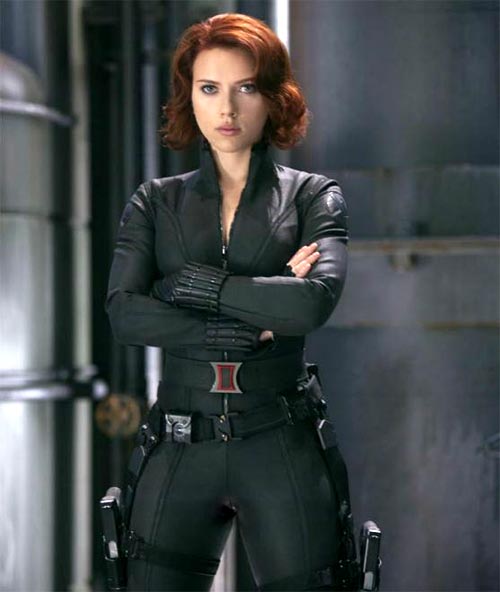
Natasha Romanoff, better known as Black Widow, is a strong female character and role model in Marvel’s Cinematic Universe.

Throughout the movies so far, she has held her own as an agent of SHIELD and as an Avenger. She has capably stopped threats both on a planetary and galactic scale, ranging from Justin Hammer’s robot army and HYDRA to Loki and the Chitauri. In the aftermath of Avengers: Age of Ultron, her status remains unchanged.

Both critics and audiences have responded phenomenally to the newest installment in the record-breaking franchise, but complaints have still arisen about how Black Widow has been treated by marketing and the film itself. Chief among those grievances is the phenomenon of “Mommy Widow,” a claim that writers and directors are betraying the character by spotlighting her maternal instincts.

In the film, Romanoff and Bruce Banner (human alter-ego to the Incredible Hulk) have developed a relationship. During a peaceful interlude at Hawkeye’s pastoral farmhouse, Romanoff and Banner are discussing their future together, and Banner laments that they can’t have the life that the archer does: a happy nuclear family. The roadblock, he claims, is the Hulk, which is always one angry moment away and, in all likelihood, is now a genetic curse.

To defend her position – a woman who is proactively seeking companionship instead of being the lustful target of the male gaze – Romanoff shares the details of the backstory the audience discovered minutes before thanks to the induced hallucinations of the Scarlet Witch’s mental sorcery.

Natasha became the assassin she is today in a place called the Red Room. In the flashback, we see that her training was intense (to say the least), and that part of that training was taking human life. Romanoff’s graduation ceremony was her own mutilation.

“You know what my final test was in the Red Room? They sterilized me, said it was one less thing to worry about. You think you’re the only monster on the team?”

Romanoff wasn’t calling herself a monster because she couldn’t have children. She simply wasn’t. The agency behind the Red Room, presumably the KGB, cut her apart in an effort to create the perfect killing machine. As seen in Iron Man 2 and The Avengers, Romanoff is trained to use her sexual allure as a weapon. One can assume that this makes KGB assassins similar to secret agents like James Bond, a man who is famous for having sex in every one of his nearly 25 films just to get to the target.

This is the origin of all that “red in the ledger” that Widow wants to erase. She’s not lamenting the loss of her motherhood, but rather the lack of free agency that chains her to her work. She considers herself a monster that was created the moment her freedom was taken away.

The “Mommy Widow” argument continues in a discussion of her role on the team. In Age of Ultron, she’s racing to the rescue and picks up Captain America’s discarded shield, stating, “I’m always picking up after you boys.”

That snarky line is more of a window to her role on the team than it seems. Since her debut in Iron Man 2, Romanoff has been saving the Avengers or delivering a critical hit in every film. In Iron Man 2, she pretty much single-handedly took out Justin Hammer’s guards and helped to shut down his robot army. In The Avengers, she brought Hawkeye back from his Loki-induced stupor and wielded the scepter to shut the Chitauri portal. In Captain America: The Winter Soldier, she literally guided Captain America to not only avoid capture by Hydra but was also instrumental in stopping their genocidal plan. She is, in every sense of the phrase, always picking up after the team. She’s the deal closer.

From the very beginning, Romanoff and Coulson have been the guardians of the Avenger Initiative. They were the front line, courting and babysitting Tony Stark, pushing the right buttons to incorporate Banner, investigating Thor’s arrival, and integrating Captain Rogers to the current era. In essence, they were the parents of the movement, always working for and reporting directly back to Fury. That is a huge amount of development for two characters who started out as secondary non-solo-film roles. They may not have major leading roles, but they are the heart of this universe, and continue to be in their respective roles as team leaders in different branches of SHIELD.

Part of that character development comes back to the relationship with Banner, a pairing that critics claim is Mommy Widow’s arrival at motherhood with a bouncing baby Hulk to nurture.

In The Avengers, it was plainly obvious that Romanoff had only met Banner on paper. She respected the man and outright feared the power of The Other Guy. She set up a typical martial sting operation, complete with a strike team, to take Banner down if necessary. Admittedly, that’s a 180-degree spin from where they stand in Age of Ultron.

However, the film clearly establishes that the Avengers haven’t just been sitting around waiting for the next movie premiere since we saw them last. They explicitly mention that it has been a long hunt for Loki’s scepter, and that means that the team has been working together for a significant time off-screen. The Avengers have developed a great sense of teamwork, as evidenced in the film’s opening gambit at the Hydra base, as well as a way to tame the Hulk when they need him to “Code Green” against a threat.

This wasn’t the only development that occurred off-screen: Stark built more suits after he “Clean Slated” his entire line in Iron Man 3, and overcame his PTSD from the Battle of New York; Rogers and Stark developed a new uniform for the captain, including a short-range retrieval system for the iconic shield; Stark Industries built at least one new model Quinjet (since SHIELD no longer has the capability) and a series of automated armor-bots; the world has come to resent the Avengers and the havoc they wreak; and Hawkeye had a family.

The Marvel Cinematic Universe is so vibrant and alive that it continues to breathe and evolve even though the cameras are off.

The fact that this team picked Romanoff, the character who feared the Hulk the most, to be his handler speaks volumes about her character and role on the team. It is reasonable that the Romanoff/Banner relationship has grown beyond Widow being petrified of the Big Guy because their lives have continued between the films. That makes Widow more than just a swooning love interest with mommy issues and even more than just an ass-kicking blunt instrument to deploy in battle.

Romanoff is three-dimensional, and therefore a truly strong, living and breathing female character instead of the typical comic book trope of a pair of absurdly large walking breasts in spandex waiting for a fridge to fall into.

Even without a solo film outing (which is no excuse for her not to have one), Natasha Romanoff’s status as a strong female character and respectable role model in Marvel’s Cinematic Universe remains intact and promises to remain that way for the foreseeable future.

Cross-published to RevolutionSF on May 13, 2015

cc-break

Culture on My Mind is inspired by the weekly Can’t Let It Go segment on the NPR Politics Podcast where each host brings one thing to the table that they just can’t stop thinking about.

For more creativity with a critical eye, visit Creative Criticality.

Culture on My Mind – Thoughts on Gotham

Culture on My Mind

Culture on My Mind
Thoughts on Gotham
May 11, 2015

I’m not the typical comic book property fan. I don’t care about canon from book to screen – I’m able to read, and if I wanted to experience the adventures in the pages, I’m more than capable of consuming them – but I do care about consistency within the story itself.

That’s where Gotham has failed. The first season of the show started with such promise, but the weaving plot threads stumbled along the way and betrayed that potential.

The pilot episode premiered back in September with a bang, introducing squeaky clean Lieutenant James Gordon to the gritty and grimy of Gotham City. His first case is the Wayne murders, and we get the clear dichotomy between lawful good Gordon and his partner (and embodiment of the city) Harvey Bullock. The further dynamics established with Oswald “Penguin” Cobblepot defying his employer, up and coming crime boss Fish Mooney (a new character to the Bat-Catalog), and the city’s officials being beholden to the Falcone and Maroni crime families intrigued me.

In the first couple of episodes, the threads were clearly established. I wanted this show, billed as an origin for Jim Gordon, to succeed.

Jim Gordon has always been a great supporting character in my opinion. He’s typically portrayed as a paragon of law whose methods of cleaning up Gotham won’t work, but he can’t violate his moral fiber to personally use methods that will work. Hence, he turns to the man who can do what the law cannot, and we get a vigilante called Batman.

With this in mind, I was excited for this show. Gotham’s Jim Gordon had everything stacked against him from the very beginning: The crime families are in a cold war, and everyone including the police are afraid to go against the status quo and either lose their power or bring that power down upon them. I wasn’t expecting him to clean up the city, since that’s Batman’s job in the next decade, but rather make enough of an impact (and survive long enough) to become the commissioner who enables Batman’s crusade.

The first quarter of the season led me to believe that the season arc would revolve around the mob cold war. Instead, it focused on a considerable deal more, including trying to establish origins for all of the Bat-Villains. Trying to develop all of those threads killed the momentum of the first season, especially in the middle third.

How would I have approached it?

The overarching story should have been about the mob cold war, culminating (as it partially did in the finale) with Fish Mooney having played both sides against each other and Cobblepot having played her, sought his revenge, and stolen her victory to become the new boss of organized crime. Falcone could survive and slink into retirement as he did, and Maroni could remain dead. The entire Dollmaker subplot could have been completely excised, as it just felt like filler to stretch the season and remove Fish from the playing field until the finale.

Under that umbrella, the first subplot could have been Gordon’s efforts to stem the corruption in the police force. I loved his defiance of the mayor and commissioner, and his outwitting them when they tried to silence him by demoting and reassigning him. I loved the commissioner’s attempt to discredit and/or remove Gordon’s threat to his power by setting the Ogre on the detective’s trail.

What I didn’t like was the Barbara Kean subplot.

If the writers follow the comics, which I don’t expect, Barbara is eventually supposed to marry Gordon and start a family with him. The problem is that they have removed any sympathy I have for the character by stripping away the promise of her being an emotional anchor and support for Gordon in a city that stands against him. If they wanted to make her more complex, the troubled backstory they provided sufficient complexity, and they could have removed Gordon’s support by sending Barbara off to work through her issues but still remain sympathetic to the audience and Gordon.

As it stands with this multiple personality/nonsensical drugged-by-the-Ogre-fugue-state storyline, if they choose to reunite them later it will feel artificial. She may or may not have killed her parents in cold blood. A lawful good character like Gordon wouldn’t settle for that. Even if she’s dead after attacking Leslie Thompkins, who should not have been counseling someone with a conflict of interest, she’s still not someone that Gordon would name his daughter after.

Also, where did Renee Montoya and Crispus Allen go? These two could have been fantastic allies to help rally behind Gordon as he stems the police department’s corruption. Instead, they are wasted. So is the subplot about the commissioner’s illegitimate daughter, which Gordon could have used to topple Commissioner Loeb after the Ogre storyline started.

This subplot could have been resolved with a power vacuum in the Mayor’s office after Gordon reveals the corruption and mob ties. District Attorney Harvey Dent, Montoya, and Allen stand with Gordon, and the next season is set up for a subplot with a now scared commissioner secretly teaming with Bullock to find a way to stop Gordon’s crusade. This also opens the door for the typical “Penguin runs for Mayor” storyline.

The second subplot could have been Bruce Wayne’s quest for the truth, which was actually one of my favorite parts of the season even though it was only tangentially related to Gordon’s story. Both he and Gordon know that Pepper was a scapegoat in the pilot, and the investigation could have been handed off to Wayne as Gordon got pulled into the first subplot’s machinations. The investigation could have proceeded pretty much the way that it did, but tightened up with less involvement from Gordon. Bruce earns his “world’s greatest detective” stripes by unraveling the secrets, digging into Wayne Enterprises, and going through the cloak-and-dagger that he and Selina Kyle performed. Sure, have Bruce discover the cave and how his father also fought against the corruption in his own corporate house. But Bruce Wayne’s story should be minimized in a series about Gordon’s origins, and as such, he should have been involved for about only 60 to 75 percent of the entire season’s episodes.

As this subplot ends, Wayne gains an ally against the corporation in Lucius Fox, he and Alfred grow much closer as he recovers from the trauma of the murder of his parents and discovers his new life’s calling, and Selina departs just as she did to join Fish Mooney (in a more meaningful capacity than the twenty minutes in the season finale) before slinking into the shadows after Fish’s death. This sets up a smaller subplot for Season Two where Bruce discovers his heritage, Wayne Enterprises potentially endorses Cobblepot for mayor, and Bruce and Alfred decide to travel abroad and start rallying allies against the corporation. Bring back Sean Pertwee from time to time, but leave Bruce to evolve into the cape and cowl. There are also opportunities for Falcone to return in a limited capacity to provide information (for a price) regarding the Wayne murders.

Finally, each season should focus on evolving one (and only one) Bat-Villain, with the Penguin and possibly (and minimally) Selina Kyle as common threads. The second season could start showing cracks in the good façade of Harvey Dent or perform a longer and more realistic slip into schizophrenia for Edward “Riddler” Nygma. Nygma was best when he was subtly creepy, and by the end of Season One, he lost that quality in the sudden 180 spin into complete supervillain mode, which also removed some of the magic in the series. Even better, remove the schizophrenia and simply make him completely sane and malevolently intelligent. Not every villain needs to have some kind of psychological break.

Overall, Gotham is a mess, but I don’t think it’s unsalvageable. I’ll be tuning in for the first part of Season Two, but I can’t guarantee much more beyond that if it doesn’t start pulling together. The show needs a clear roadmap for every season to help it reach the potential that I still see. The acting is great from many of the starring roles, and they deserve the chance to shine in a tight and coherent story.

cc-break

Culture on My Mind is inspired by the weekly Can’t Let It Go segment on the NPR Politics Podcast where each host brings one thing to the table that they just can’t stop thinking about.

For more creativity with a critical eye, visit Creative Criticality.

Culture on My Mind – Book Review: “Player Choice” by Jeff Deck

Culture on My Mind

Culture on My Mind
Book Review: “Player Choice” by Jeff Deck
April 17, 2015

Jeff Deck, co-author of The Great Typo Hunt, recently reached out to me to promote his new novel Player Choice. He provided me a copy in exchange for an honest review.

It’s 2040. With neural implants, people can play games in an immersive virtual reality known as the aether space. Game designer Glen Cullather has a plan for the most ambitious aether game ever imagined: a fantasy epic that gives players the freedom to do anything.

But Glen’s own life is fragmenting into alternate realities. He can’t tell whether his aether game idea has succeeded, or failed miserably. And Freya Janoske is either his biggest rival, or his most intimate partner. Glen must figure out what’s real and what’s, well, fantasy—for his own survival.

Player Choice is a fast-paced gaming sci-fi adventure that dares to ask: What happens when unreality becomes our reality?

The protagonist, Glen Cullather, is a successful game programmer. He lives in a world not too far from our current reality where technology dominates everyday life, from interactive semi-sentient digital assistants to fully-capable AIs who can run entire companies. Gaming is immersive in shades of today’s Oculus Rift and Star Trek’s holodeck technology, and Glen is on his way to pitch a new experience called Novamundas to the company’s board of directors when his entire world goes sideways.

The story is quickly paced and the mystery around the reality of Glen’s situation is exciting. It kept me engaged and drawn back to the pages, as did the cognitive exercise of what else this universe could explore. The characters were diverse and colorful, and the social message was clear as the story drew to a close, warning readers of the potential pitfalls from over-reliance on tech and limited decision making.

Novamundas is built on the philosophy of providing choice to the players by trying to make them think beyond the hack-and-slash that dominates the gaming scene, even to the point of making violent problem-solving in the virtual world a chore rather than a quick means to drive the game’s story.

This is in contrast to the game’s creator, who is limited by his own tortured past: Glen’s own agency is limited by mental trauma that he hasn’t worked through, which leaves him as man who treats women and himself poorly. For that reason, I had a hard time identifying with Glen. It was necessary for the hero to be a flawed character, but he was not a hero that I could cheer for.

Similarly, Freya Janoske was hard to identify with because of how she was filtered through Glen’s experiences. Since this story is told entirely from Glen’s point of view, every interaction is laced with his prejudices and biases. Again, it’s a great way to tell Glen’s story, but it also becomes difficult to develop a sympathetic relationship for supporting characters when every interaction before the final three chapters is completely subjective.

The second half of the story is dominated by the aether world of the game as Glen’s goals start to coalesce. The game itself is quite interesting, and the dynamics of emphasizing creativity over violence are intriguing, but the story is bogged down in the nuts and bolts of skills, attributes, and gaming mechanics. It made sense to me as a casual gamer, but the details and gamer lexicon might potentially derail the story’s flow for anyone not well-versed in the gaming world, which adds an accessibility hurdle to the moral message.

The pacing is more evident in the second part, especially once the characters realize the urgency of their situation. The actual core conflict and the goals of the antagonists – yes, bad guys with actual goals and moderately complex motivations! – was very fun to think about. Unfortunately, I think the pace hindered Glen’s character growth as he is forced to react quickly to each development and never gets a chance to really reflect on what he’s learned about himself or resolve his inner demons. The story actually ends at the beginnings of his healing process, which left me feeling like I’d been cheated out his complete arc.

What this story did do for me is make me think. From a morals, messages, and meanings standpoint, it leaves several avenues to explore in how a society exists in a world dominated by technology. While it’s far from being neatly wrapped with a big red bow, that aspect of science fiction exploring the human condition through allegory was refreshing.

Overall, I give Player Choice three and a half stars out of five. For Goodreads and Amazon, which don’t deal in halves, I’ll bump it to four.

cc-break

Culture on My Mind is inspired by the weekly Can’t Let It Go segment on the NPR Politics Podcast where each host brings one thing to the table that they just can’t stop thinking about.

For more creativity with a critical eye, visit Creative Criticality.

Leonard Nimoy (1931-2015)

Culture on My Mind

Culture on My Mind
Leonard Nimoy (1931-2015)
February 27, 2015

It’s difficult to fathom right now, but a legend is truly gone.

Leonard Nimoy, icon of the stage and screen, has died at the age of 83.

Similar to most fans of his work, I knew him best as the stoic Mr. Spock in the Star Trek franchise. In that role, Nimoy portrayed a half-human, half-Vulcan science officer who was (supposedly) devoid of emotions and driven purely by logic. Ironically, he was the lens through which the show could analyze the human condition. His character acted in concert and counterbalance with McCoy’s emotion and Kirk’s authority, and became an Aristotelian trifecta by embodying logos, punctuated by pathos and the ethos of expertise and (later) command. Spock was perhaps the most well-rounded and defined character in the franchise.

Mr. Spock helped me in my youth as a role model for my awkwardness and gracelessness in social situations. Spock was an outsider among the Enterprise crew, but was well-respected for being an expert in his field and was also a valued friend. He was my favorite original crew member.

Of course, Mr. Nimoy was more than Spock. Beyond Star Trek, he was an accomplished actor, both on screen and stage as well as off screen with his fantastic and easily recognizable voice. He also was a director, producer, writer, singer, poet, and photographer.

I had the chance to see him on a panel at Dragon*Con, and his candor and humor was admirable. He sparred quite well with William Shatner on that stage, and his passion for life was palpable.

He was a quick wit, a true artist, and a kind soul.

It’s easy to say that he will be missed. It’s hard to quantify just how much.


Spock Chair

cc-break

Culture on My Mind is inspired by the weekly Can’t Let It Go segment on the NPR Politics Podcast where each host brings one thing to the table that they just can’t stop thinking about.

For more creativity with a critical eye, visit Creative Criticality.

My Only Hope for Star Wars: The Force Awakens

Culture on My Mind

Culture on My Mind
My Only Hope for Star Wars: The Force Awakens
February 11, 2015

Star-Wars-The-Force-Awakens

I sincerely have one hope for Star Wars: The Force Awakens.

I hope that it is good.

As silly as it sounds, I hope that is a good movie. Not just good in the it’s a movie with the original cast and has the words star and wars in the title so it has to be good sense, but rather the knock your socks off even if this is the first thing you’ve ever seen in the franchise and even Siskel and Ebert would have given this thing four thumbs up and more if they could find more hands sense.

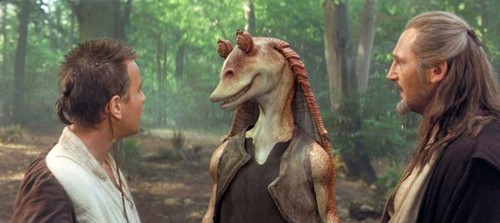
My reasoning is pretty simple. There were sixteen years between Return of the Jedi and The Phantom Menace, and no matter how good the first prequel could have been, I don’t think it would have mattered. There was too much hype, and too many expectations among fans of the original trilogy. I grant that The Phantom Menace (and by extension the prequel trilogy as a whole) did not meet its true potential. It could have been more, and I fully acknowledge the faults. But, it was by no means as bad as the original trilogy fandom would have the world believe.

As The Phantom Menace and the rest of the prequels debuted, original trilogy fans took to the internet in droves to tear the films apart. Many of them waved their “I watched the first Star Wars (with no bloody Episode IV or A New Hope attached to it) in theaters so I know what makes a good Star Wars movie” privilege in the face of new fans. Critical reviews, both professional and otherwise, took the movie to task by addressing fandom, citing how real fans would disavow the new films, and how those who liked them should move out of their parents’ basement. The Red Letter Media reviews are particularly venomous, but are celebrated among the crowd dominated by bitterness even ten years after the last prequel debuted.

Of course, that’s after The Phantom Menace made $431 million domestically. That’s a lot of multiple viewings for a film that supposedly sucks so bad, but I digress.

Star Wars has become a generational fandom, and each new set of fans is usually kids: There was a set of fans who came to the franchise in 1977-1983, a set who came to it with the heyday of the novels in the late ’80s and early ’90s, a set that joined with the Special Editions and prequels (1997-2005), and a set that came of age with The Clone Wars. The Force Awakens will usher in a new generation of fans who will likely be kids as well.

I don’t want the prequel generation to develop the same bitterness about their fandom that their OT and novel era counterparts have.

Prequel fans deserve better than they have been offered. Sequel era fans deserve a fan community based on fun and love, not venom and hatred.

I’ve talked and written at length about how, first and foremost, fandom should be fun. No matter the franchise, this is all entertainment, not life and death matters. Being critical about the content and execution of the material is important, but being bonked on the head for the things that you love by self-instated gatekeepers is not fun.

Critical analysis and review should be limited to the material and never extended to the fandom. It is ironic that a fandom built around geeky exploits and adventures, a community that has long lamented and fought against bullying by others like the stereotypical “jocks,” should in turn bully their own for not walking the right way. I’ve fallen away from Star Wars fandom in recent years because of the way that older fans treat younger fans. Star Wars has lost part of the innocence and excitement that it once had, and not because George Lucas violated childhoods, but because time and again the fandom has forgotten Wheaton’s Law in their critiques.

I don’t want the prequel generation, the group that opened their eyes to the franchise with The Phantom Menace, the group that knows what it feels like to be bonked on the head continuously by older generations, to fall into that darkness. They need to remember that “real” Star Wars fans are anyone who loves the magic of Star Wars. They need to remember how it feels to be told that their opinion “can’t be trusted” based on what they like.

I’d like to think that my generation and the first generation of Star Wars fans can be brought back from the brink of bitterness, but I don’t hold much hope for it. I believe that many of them are beyond redemption for sacrificing their own for the honor of being right on the internet.

I want The Force Awakens to be so good that fans can look on it in admiration and joy, basking in the happiness and escape that fandom should embody. I want prequel fans to avoid the fate that befell the generations that came before. I want them to be critical without feeling the need to attack their own tribes. I want them to remember that it is okay to not like things.

I want them to remember what it means to be a fan and not a self-appointed savior of the franchise.

I want them to remember the feeling they felt when they heard the Star Wars theme in theaters for the first time.

I want them to remember what it means to be a Star Wars kid.

Most importantly, I want them to help new fans to find that moment as well.

cc-break

Culture on My Mind is inspired by the weekly Can’t Let It Go segment on the NPR Politics Podcast where each host brings one thing to the table that they just can’t stop thinking about.

For more creativity with a critical eye, visit Creative Criticality.

Culture on My Mind – Movie Review: Batman Returns (1992)

Culture on My Mind

Culture on My Mind
Movie Review: Batman Returns (1992)
September 4, 2014

Batman Returns is the oft-maligned second child in the Tim Burton-directed Caped Crusader family. Expectations were so high after the first film that, while being an otherwise enjoyable experience, it had no other choice but to disappoint audiences looking for another Batman.

The thing is, this film isn’t supposed to be Batman, and it shows from the beginning with a dark title sequence that tells the origin story of the film’s baddie, The Penguin, to move that element of the plot along during an otherwise useless section of the film. This entry has similar visual styling to the first movie, but the color palette is brighter overall. The sets are better lit and Gotham feels larger and more open with more color added to the shadows and dour grays that dominated the original. This element reaches grotesque levels with Selina Kyle’s apartment, which is dominated in shades of pink to remind the audience (beyond the blatant sexism of Max Shreck) that she is a caricature of the stereotypical female secretary. It’s annoying (and potentially insulting) in its directness, but acts as a deliberate contrast to the strong femme fatale that is Catwoman. It also serves as a setpiece to visually facilitate her destructive transformation. The more lively palette does contrast with the darker, more violent fight scenes in an attempt to convince the viewer of the thematic duality with Catwoman and Batman.

This installment has more of the Burton/Elfman whimsical eccentricity that their collaborations have come to be known for, including sweeping camera pans over highly detailed miniatures with soaring but eerie choral scores. Additionally, the set decoration also retains the art-deco gothic noir mix of the original, melding it with elements of the ’60s camp. All of those exaggerated elements combine with some additional sexual innuendo over the first film to make a still entertaining but slightly lower quality experience. In all honesty, this film has trouble deciding if it wants to be the successor to the 1989 Batman, the 1960s series, or both. That indecisiveness hurts the experience.

Regarding the themes and the plot, this film has trouble deciding how to discuss duality. Catwoman’s motivation is to kill Shreck in both revenge and an attempt to reconcile her new identity. Penguin’s motivation makes less sense, as it seems he wants to gain power over Gotham by killing all of the first born sons and becoming a dictator to, in some way, get revenge against his parents and the society that led to his exile. When Batman stops this threat, Penguin resorts to destroying Gotham to destroy Batman. Batman wants to stop both of them, but also wants to redeem Selina through (here it comes…) the power of love. Though good intentioned, that road to hell is in direct conflict with Catwoman’s thread of feminine power and independence. It also smacks of the backward idea that women who go against societal norms can be “fixed” by providing them with strong male companionship.

It repeats a lot of the romantic themes from the Bruce Wayne/Vicki Vale relationship, but removes part of the duality essential to the Batman character by squeezing the conflict between Catwoman and Batman into the shared overcoming of their split identities. They even hang a lampshade on the plot point of giving up the masks, but then reverse course almost as quickly to retain the character elements. In the end, Batman could not defeat Catwoman because Gotham needed Batman more than Bruce needed Selina. If your head is spinning right now, you’re not alone.

At least the movie addresses the absence of Vicki Vale.

In final random thoughts, the insane Michelle Pfeiffer looks a lot like a more modern Burton alum: Helena Bonham Carter. Second, it is never explained how the Penguin’s minions got schematics for the Batmobile. That plot hole is an annoyance. Last, the obvious eye makeup goof when Batman takes off his mask also annoys me. Audiences are smart enough to realize that the rubber mask doesn’t quite cover the space around Michael Keaton’s eyes.

Overall, Batman Returns is enjoyable, but suffers greatly from indecisiveness, both in themes and tones. It wasn’t horrible, but it could have been more.

My Rating: 7/10
IMDb rating: 7.0/10

cc-break

Culture on My Mind is inspired by the weekly Can’t Let It Go segment on the NPR Politics Podcast where each host brings one thing to the table that they just can’t stop thinking about.

For more creativity with a critical eye, visit Creative Criticality.

Culture on My Mind – Goodbye, Robin Williams

Culture on My Mind

Culture on My Mind
Goodbye, Robin Williams
August 13, 2014

Good-Morning-Vietnam-robin-williams-25340806-500-338

Few celebrity deaths in recent times have hit me as hard that of Robin Williams. Unless I have met them in person, I usually see celebrities as people who entertain me for a living, but not as friends or family. It’s a nice touch to wave a greeting, shake hands, or even exchange a few words at a convention, but in general, they are strangers that I invite in for a few hours to make me laugh, cry, or think.

Robin Williams was different for me.

He made a mark with his unique style of original, lively, rapid-fire wit and delivery. His one-man stage shows were always fantastic – Live on Broadway had me in stitches for the entire duration – and his films were a centerpiece of my childhood’s cinematic awakening. He wasn’t family, but he was loved for the impacts he made on my life.

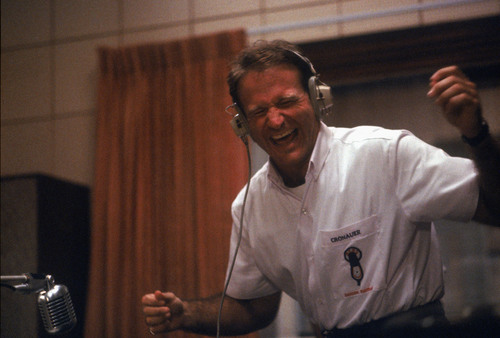
I first encountered him in Good Morning, Vietnam as he portrayed Airman Adrian Cronauer, a DJ for the Armed Force Radio Service. The film has always been my benchmark for his humor and zany voices, as well as his dramatic skills as the horrors of war caught up with Cronauer.

The second major slice of Williams in my life was in Disney’s Aladdin, where his mostly improvised on set lines were the lifeblood of one of my favorite entries from the Mouse House. The third biggest influence on my life from his catalog is the oft-maligned Hook, which grabbed me with the transition from Williams acting like a responsible adult to embracing the bang-a-rang child that is Peter Pan. Robin Williams made Hook work for me.

I adored his comedic turns in films like Happy Feet and Mrs. Doubtfire, and enjoyed his dramatic roles in Dead Poets Society and Good Will Hunting. I deeply enjoyed catching re-runs of Mork and Mindy, and even though his darker roles like One Hour Photo never clicked with me, I was glad to see him trying to break free of comedic typecasting.

Robin Williams made a major impact on both the industry and audiences, and the world is a much darker place without the light of his genius and wit. His death is both tragic and heartbreaking, and has come far too soon.

Godspeed, dearest genie, for you are free. You will be deeply missed.

May you rest in peace.

cc-break

Culture on My Mind is inspired by the weekly Can’t Let It Go segment on the NPR Politics Podcast where each host brings one thing to the table that they just can’t stop thinking about.

For more creativity with a critical eye, visit Creative Criticality.
Culture on My Mind – Protecting our Childhoods

Culture on My Mind

Culture on My Mind
Protecting our Childhoods
July 28, 2014

Jar-Jar-Binks-jar-jar-binks-25900310-500-223

If there’s one thing fans treasure, it’s the memories that their favorite franchises helped them develop. Science fiction is a metaphor for the human condition, and those memories have the power to develop fans into caring and productive members of society starting at childhood. It’s understandable how placing those personality building blocks into another creator’s hands can inspire immediate feelings of revulsion and fear, but it’s far less understandable how a reboot or reimagining is comparable to a violent personal violation.

Ferrell

Let’s presume for the moment that fans actually mean what they say in this case. Rape is a serious crime, and not simply through the books of law. Rape is a physical, mental, and emotional assault that has long-reaching effects in the victim’s life. Rape is a personal violation and an exercise of absolute power over the powerless.

The statistics on sexual assault are staggering. In the United States, another person is sexually assaulted every two minutes. One in six women are victims, as are one in thirty-three men. Sixty percent of sexual assaults are not reported to authorities, and a staggering ninety-seven percent of rapists will never spend a single day in jail for their crimes. Rape victims are three times more likely to suffer from depression, six times more likely to suffer from post-traumatic stress disorder (PTSD, the same disorder found in war veterans), and are four times more likely to contemplate suicide. The effects are so long-reaching that survivors of sexual assault who see references to rape are viscerally reminded of being helpless and powerless and completely at the mercy of a hostile (and often well-known or trusted) force.

There are cases of childhoods that were lived and survived around rape and incest. Those are real lives affected by real crimes, not the pettiness of a bad adaptation of a favorite Saturday morning cartoon. Using rape terminology to describe the latest attempts by Michael Bay, Will Ferrell, George Lucas, or J.J. Abrams to do their jobs trivializes the traumas of real rape victims, as if voluntarily watching the new Teenage Mutant Ninja Turtles adaptation matches in any way with being sexually assaulted.

Using rape terminology to describe feelings over a cherished franchise being revisited is disgusting and insensitive.

Next, let’s presume that when these fans say “rape,” they really mean “ruin.”

We live in an era of geek renaissance. Between the cultural awakening in the mainstream with The Big Bang Theory (one of the most popular panels at conventions) and the financial success of the Marvel Cinematic Universe, geek culture is being catered to with a golden tea set. It’s a digital era dominated by rebirth of cherished franchises once thought dead. Almost anything fans could want to revisit exists on physical or digital media, including BitTorrent. Linked childhood memories are only a click or two away.

Unless the evil creative of choice has a time machine (or fandom are collectively taking mind-altering drugs), both the memories and source material are safe. Quite honestly, the concern behind “ruining” a franchise or childhood memories is a hollow first-world problem dominated by a sense of narcissism and a false sense of ownership over entertainment productions.

As fans, we aren’t owed anything by creators. Hollywood and other entertainment venues are businesses, first and foremost, and those businesses have no contracts to make things exactly the way we want. Entertainment must appeal to the general audience first in order to earn a decent return on investment. If you don’t believe me, take a look at the domestic performances behind Pacific Rim, Sucker Punch, and Watchmen, all of which were niche films designed to attract genre fans and failed to meet their budgets.

Producers, writers, and directors have one job in their fields, and that is to make a generally accepted entertainment product that sells well. To that end, fans are consumers and nothing more, and are not even required to take in entertainment they don’t want to see. Everyone has the freedom to skip entertainment choices that don’t appeal to them.

The argument that modern creatives are ruining properties or memories is a false one. If childhood memories could be destroyed by a lackluster adaptation or vision, there are deeper problems with that childhood than entertainment choices. In that case, I recommend seeking help.

The worst part about either of the arguments about childhood memories being defiled is they both contribute to toxic cultural atmospheres. Both claims infer a personal assault, an act that never truly occurs against any of us, and transform a community based on enjoying, analyzing, and celebrating entertainment and its deeper meanings into a group of pessimists and cynics who tend to find the negative in every minute of film and paragraph of news.

The rape claims do even worse damage by trivializing the horrors of sexual assault and enhancing a culture that uses sexual assault as a punchline. In a community that decries racism, homophobia, and bullying, and is constantly haunted by the stigma of pedophilia and sexism, it is odd that we would so easily laugh off rape.

Science fiction and fantasy often speak of the need for tolerance and open-mindedness, and it is possible for genre fans to be critical of favorite properties without casting themselves as the victims in a fanciful morality play. Modern storytellers won’t have to destroy our childhoods because we are the ones betraying the lessons we claim to have learned.

Our community needs to return to the spirit of acceptance beneath the banner of celebration and wonder, and it needs to stop suffering from prejudice against new perspectives and ideas. We need to stop destroying ourselves in a misguided effort to protect ourselves. Only then will we truly have upheld the legacies of our childhoods.

cc-break

Culture on My Mind is inspired by the weekly Can’t Let It Go segment on the NPR Politics Podcast where each host brings one thing to the table that they just can’t stop thinking about.

For more creativity with a critical eye, visit Creative Criticality.

Culture on My Mind – A Mighty Lady Thor

Culture on My Mind

Culture on My Mind
A Mighty Lady Thor
July 21, 2014

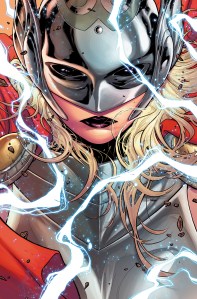
You’re right, a female Thor is a publicity stunt.

It honestly couldn’t be any other way. Marvel is an entertainment company, and the way they make money is by drawing as many eyes to their product as possible. That requires publicity. Everything they do requires publicity. The same goes for every book you read, every television episode you watch, and every movie you see. Even the news pays this game, from your local hometown to global giants like CNN and Al Jazeera. Every last marketing effort is designed to provide a pleasing stimulus to your brain which entices you to spend your time and money with them alone.

Publicity stunts are business as usual in today’s era.

So, if we can’t complain about it being a publicity stunt, it must be some politically correct intrusion on comics fandom, right? Only if you discard the Asgardian superheroes Valkyrie and Sif, or even other strong female characters like Captain Marvel, Storm, Jean Grey, Black Widow, Rogue, Mystique, Peggy Carter, and so on. I firmly believe that comics fandom needs more strong and positive female role models, but to suggest that transferring Thor’s powers into a woman is done only to meet some abstract and non-existent diversity quotient is disingenuous and ignorant.

With those two excuses removed, it must be that Marvel is simply ruining this character’s long-standing tradition and legacy, right? Absolutely not. The pure and simple truth is that comics fandom should be fully embracing this experiment. Comic characters tend to exist for decades, and only because they continually get reinvented, for better or for worse. Batman, Superman, and Wonder Woman have undergone several rebirths and redesigns, and they’ve been around for 75 years. The reason that these characters have such longevity is because they stay socially relevant instead of trapped in time. If you want your heroes and myths to continue to exist, they need to evolve and experiment.

The old stories can only go so far before they become stale or stagnant. As a fan of these characters, I want to see them in new situations that haven’t been told before. I’d love to see more gender-swapped characters in our modern myths if only to experience their stories from a new point of view or in new situations that a new perspective provides.

I love the idea of a black Johnny Storm in a modern non-traditional family with a story not based on previous comics. I love the idea of Lex Luthor being a modern Facebook-style billionaire mogul. I love the idea putting the legacy of a light-hearted red-head teenager in the drama of the real world.

I simply love the idea of a woman being worthy to hold Mjolnir and the power of Thor. It means that Thor’s legacy proudly carries on and our modern myths continue to thrive.

THOR-001_cover

cc-break

Culture on My Mind is inspired by the weekly Can’t Let It Go segment on the NPR Politics Podcast where each host brings one thing to the table that they just can’t stop thinking about.

For more creativity with a critical eye, visit Creative Criticality.