Culture on My Mind – Go at Throttle Up: Thirty Years

Culture on My Mind

Culture on My Mind
Go at Throttle Up: Thirty Years
January 28, 2016

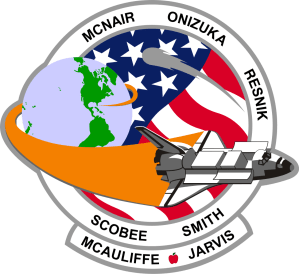
Challenger_flight_51-l_crew

It’s been thirty years.

On January 28, 1986, I was a happy little five-year old watching the Space Shuttle Challenger launch into orbit. It was a special occasion because the first teacher was going into space, and it was inspiring. I don’t remember a whole lot from that day except cheering when the shuttle launched, being shocked when it disintegrated, and seeing my mother cry. That in itself was heartbreaking.

It was a confusing day, but it was that confusion that sparked my desire to study science because I wanted answers. That quest introduced me to Richard Feynman and made me realize that Morton-Thiokol and their rumbling rocket motor tests were essentially in my backyard.

That day also gave me dreams of being an astronaut. I never made it anywhere near being an astronaut, but I did get that physics degree.

Revisiting that day still hurts. To this day, I cannot hear the words “go at throttle up” without getting a lump in my throat.

Footage of the incident from CNN:

President Reagan’s address to the nation:

Godspeed, heroes of the Challenger. You’re still deeply missed.

STS-51-L

cc-break

Culture on My Mind is inspired by the weekly Can’t Let It Go segment on the NPR Politics Podcast where each host brings one thing to the table that they just can’t stop thinking about.

For more creativity with a critical eye, visit Creative Criticality.

Culture on My Mind – Review: Star Wars Smuggler’s Bounty Resistance Box – January 2016

Culture on My Mind

Culture on My Mind
Review: Star Wars Smuggler’s Bounty Resistance Box – January 2016
January 22, 2016

Jan 2016 Box

The Force is still strong with this subscription box.

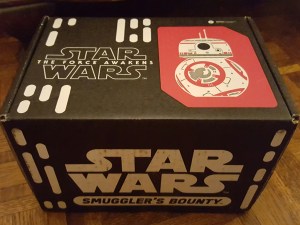
After the success of the First Order box from Funko’s Star Wars subscription box service, it was a no-brainer for me to upgrade from the month-to-month to a full year subscription. This time around, the service was still capitalizing on the global success of The Force Awakens, but they shifted gears from the bad guys to the Resistance.

The box’s form factor is the same as the First Order box, including durability and the treasure chest layout. The UPS driver who serves my route left this one out in the intermittent Georgia winter rain, and even though the box was damp, the contents were unharmed.

Jan 2016 Top Tray

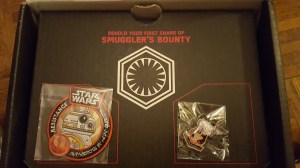
Similar to the last box, the top tray for this go-round contained a patch and a pin. The plastic envelopes were both opened on one side due to what looks like a production issue, and as a result the pin was bouncing around in the box. Since the box is well compartmentalized and the pin is quite durable, nothing was damaged.

Jan 2016 Patch

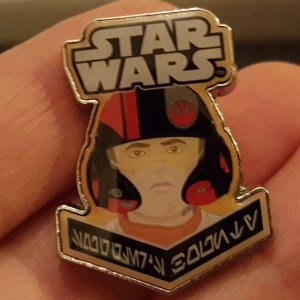
The patch is embroidered with BB-8, the adorable little hero droid from the new movie and the focus of the marketing for this box. When my wife saw it, she beamed, so I know that it’s a winner in our house. The pin is of Poe Dameron, the hot shot star pilot of the Resistance, although at first it kind of looked like Jessika Pava, the female X-Wing pilot from the film. One can dream, right?

Jan 2016 Pin

Under the platform that housed the pin and patch was a navy blue Funko t-shirt. This time, it was a movie-themed shirt focused on the heroes of the Resistance. In my opinion, it is much more attractive than the simple figure shirts from the last box, although I would have liked to see Rey more front and center. Regardless, it is still a nice shirt design. Based on what I’ve been able to find so far, it seems that every box is the same this time, so there are no shirt variations or chase figures.

Jan 2016 shirt

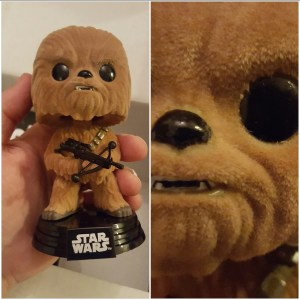
The big ticket items this time were one exclusive Funko Pop figure and a Funko Home ceramic mug. The figure is of Chewbacca with his bowcaster, and while I have never really been impressed with the figures of the Wookiee before, this one really caught my attention. It’s actually furry, and that somehow makes it adorable.

Jan 2016 Chewie

The ceramic mug is modeled after the protocol droid C-3PO, right down to the detail of his red arm as the mug’s handle. It seems like a sturdy, wide 12-ounce mug, but it is hand wash only and not microwave safe. Those two criteria are killers in my house, so I’m not quite sure what I plan to do with this item.

Jan 2016 Mug

In the end, remember that the promise made by Funko is that this $25 box will contain $50 worth of merchandise without any filler. By my estimation, Funko has once again delivered on their promises of value and content. The figure is about $10 in stores, and the t-shirt is in the $15-25 ballpark depending on the vendor. The pin and patch are around the $5 price point each, so the real wild card this time is the mug. Most of the comparable mugs online go for about $10, which places this box in the $45-55 range. All of that without any mini-comics or postcards.

The next box, which is due to arrive in mid-March, is centered on the cantina from A New Hope, and the spotlighted character is Greedo. The order window closes in early March. If you’re on the fence, I recommend the $25 “pirate” plan, but if you really want these kind of items with a Star Wars flair, I fully endorse the annual “smuggler” plan.

cc-break

Culture on My Mind is inspired by the weekly Can’t Let It Go segment on the NPR Politics Podcast where each host brings one thing to the table that they just can’t stop thinking about.

For more creativity with a critical eye, visit Creative Criticality.

Culture on My Mind – Review: Star Wars Smuggler’s Bounty Premiere Box

Culture on My Mind

Culture on My Mind
Review: Star Wars Smuggler’s Bounty Premiere Box
November 22, 2015

Smugglers Box Nov 15 1

The subscription toy box by mail model is nothing new, but it is certainly an expanding one. Popularized by Loot Crate over the last few years, the concept is simple: In exchange for a periodic fee, a box will arrive filled with collectibles focused on a theme. What started as a monthly box of collectibles for geeks has expanded into regular boxes of toys for pets, health food aficionados, doomsday preppers, and even more kinky pleasures. Whatever you want, there’s probably a subscription box for it.

Now there is one for Star Wars fans.

Powered by Funko, the same company behind the adorable cartoonish vinyl bobble-head dolls with oversized noggins, Star Wars: Smuggler’s Bounty promises to deliver completely exclusive items, valued at double the subscription price of $25, with a guarantee of no filler. One of the things that prevented me from investing in Loot Crate or similar boxes were reviews from friends who were disappointed; the boxes tended to have one or two big ticket items like t-shirts or action figures surrounded by the detritus or miniature five-page comics, stickers, and generic paper bookmarks or postcards. Funko’s promise that the entire box would effectively be a big ticket purchase sold me on trying the first installment.

The premiere box, focused on the villainous First Order of The Force Awakens, was shipped via UPS and was transferred to the USPS for delivery, and it made no bones about what it was. It boldly stated on the outside that this was a box full of goods from a galaxy far, far away – or at least as far as the CollectorCorps.com headquarters in Dallas, Texas. The box was very durable and was sealed with a strip of packing tape.

Smugglers Box Nov 15 2

The front flap of the box pulled out and opened the top like a treasure chest, revealing two items attached to an intermediate platform. The first was an embroidered patch showcasing a TIE pilot from the new movie. The second was a collectible Kylo Ren trading pin. Both of these items looked like something of the same quality that is found at the Disney Parks.

Smugglers Box Nov 15 3

The platform folded up to reveal the depths of the bounty, including a simple badge lanyard and a navy blue Funko t-shirt with the First Order stormtrooper, along with two Funko Pop figures. A friend of mine who also signed up for the box received a Kylo Ren shirt instead, so they appear to be randomized around the First Order theme.

Smugglers Box Nov 15 4

I received the chrome-plated Captain Phasma and a pure black TIE pilot, and after looking at the back of the boxes, there is another TIE pilot with red stripes in the series. I wonder if it was randomly packed or if it will be an hard-to-find exclusive available later on.

After it was revealed to be in the box a month ago, the Captain Phasma figure was one of items I was anticipating most. The figures on store shelves are painted a metallic gray, which isn’t quite the same chrome effect we’ve seen on the character in the trailers. The chrome Phasma adds an extra (forgive me) pop to the figure.

The Star Wars Funko figures have all been on attached to a logo-branded pedestal, which is fairly unique in the brand. Other figures I’ve purchased stand alone, and the TIE pilot I received in this box is removable from its pedestal. I don’t know if this is a unique feature, or if it didn’t get a couple of dabs of glue before leaving the assembly line.

Smugglers Box Nov 15 5

By my estimation, Funko delivered on their promises of value and content. The figures go for around $10 in stores, and the t-shirt is of the same quality you’d find at sites like TeeFury for $10-15. Hot Topic sells the Funko Pop shirts for $20-25. The pin, patch, and lanyard all go for about $5 at Disney Parks, and while they are the low end items of the box, they certainly beat the socks off mini-comics and postcards.

In addition to the $25 every other month plan, Smuggler’s Bounty also offers a yearly plan for $150 (payable all at once) with an exclusive gift on the anniversary of subscription. The January box has already been announced with a Force Awakens Resistance theme and a focus on the spherical droid BB-8.

The Force is strong with this box, and I’m definitely willing to take home my share of the bounty once more.

cc-break

Culture on My Mind is inspired by the weekly Can’t Let It Go segment on the NPR Politics Podcast where each host brings one thing to the table that they just can’t stop thinking about.

For more creativity with a critical eye, visit Creative Criticality.

Dragon Con 2015


Dragon Con 2015
September 4th to September 7th
Atlanta, GA

dragoncon_logo


It’s just about time for what I fondly refer to as a family reunion. Every year over Labor Day weekend, Dragon Con, my favorite fan-run convention, invades Atlanta with 65,000+ geeks from across the genre spectrum.

If you plan on being at the party, this is where I plan to be. Stop by and say hi!


Dragon Con Newbies Walking Tours
Thursday 2:30p-5:00p (Marriott A601 – A602)
Want to learn the best ways to get between the hotels? Did you know there’s a food court? Come on a walking tour to find out and meet other newbies.

Dragon Con Newbies Q&A
Thursday 5:30p-6:30p (Marriott A601 – A602)
First Dragon Con? Are you confused or overwhelmed? Several long-time con attendees will share tips & tricks and give you a chance to ask questions.

Dragon Con Newbies 101
Friday 10:00a-11:00a (Hyatt Regency V)
First Dragon Con? Are you confused or overwhelmed? Several long-time con attendees will share tips & tricks and give you a chance to ask questions.

Jaws: The 40th Anniversary
Friday 7:00p-8:00p (Marriott M303 – M304)
This movie is legendary. We’re gonna need a bigger track room.

Classic Sci-Fi Roll-A-Panel
Sunday 10:00a-11:00a (Marriott M303 – M304)
A random roll of a 20-sided die determines this lightning round of mini-panels about classic sci-fi that we didn’t have time to cover this year.

Back to the Future: 30th Anniversary & Costume Contest
Sunday 5:30p-6:30p (Marriott M303 – M304)
Where this celebration is going, we don’t need roads. Hoverboard over for our Back to the Future cosplay contest!

RevCast Live!
Monday 11:30a-12:30p (Hilton 203)
Commentary, criticism, & comedy about movies, TV, & all corners of geeky genres and culture. A sci-fi convention in your pocket. Join them as they wrap up Dragon Con 2015!


See you in one week!

For more information about Dragon Con, visit the official site at DragonCon.org.


Culture on My Mind – A Symbol, for Which it Stands

Culture on My Mind

Culture on My Mind
A Symbol, for Which it Stands
June 23, 2015

The power of symbols is not lost on me, and I often find myself divided between two camps. On the one hand, symbols can carry a tremendous amount of weight and history. On the other, symbols can be repurposed and reclaimed to support anything.

The most obvious historical example is the swastika, which originally was a sign of luck across various cultures that became a symbol of oppression and hatred. Unfortunately, negative connotations often carry more weight than positives, easily rendering the positive meaning impotent. Now, the swastika is avoided in Western culture because of its connection to the Holocaust.

In the United States, the Confederate Battle Flag is a prevalent symbol south of the Mason-Dixon Line, and is used to rally southern pride. Developed during the American Civil War as a distinctive symbol (since the Confederate States of America’s official flag was confusingly similar to that of the United States), each star signified a member state in the new nation, and was indicative of the unified drive for states’ rights that sparked the rebellion. It has two visually similar cousins, the Second Confederate Navy Jack and the battle flag of the Army of Tennessee.

The battle flag of the Army of Tennessee, commonly displayed as the Confederate flag.

As it signified “states’ rights,” I supported the South’s continued use of the flag, even with the understanding that the Civil War was also partly driven by the topic of slavery.  I had no concrete proof that slavery was the prime reason for the tensions, but was instead a secondary concern. Even in 1860, a year or so before the Civil War began, slavery was treated as a states’ rights issue; Southern Democrats endorsed the practice, Republicans denounced it, and Northern Democrats said democracy required the people to decide locally, state by state, territory by territory.

It should go without saying that I do not personally support slavery, but to understand the motivations of the time, I also need to consider the era. It wasn’t necessarily a moral issue, but rather a political one.

Then I found the Cornerstone Address.

The Constitution of the Confederate States of America was adopted on March 11, 1861. Ten days later, Alexander Stephens, the vice president of the new nation, delivered a speech in Athens, Georgia that outlined the fundamental differences between the CSA and the USA. Among those differences was what he called the “immediate cause” of secession and rebellion: Slavery.

Our new government is founded upon exactly the opposite idea; its foundations are laid, its cornerstone rests, upon the great truth that the negro is not equal to the white man; that slavery subordination to the superior race is his natural and normal condition. This, our new government, is the first, in the history of the world, based upon this great physical, philosophical, and moral truth.

Deeper into the address, Stephens elaborates on this fundamental difference, lamenting that the United States was “attempting to make things equal which the Creator had made unequal.”

After applying the lens of modern society to this revelation, I had no choice but to step back from my support of the states’ rights argument: It’s plain as day that the core point of contention between the Blue and the Gray wasn’t state autonomy at all, but instead a policy of oppression and subjugation that we deplore in modern times. In fact, this nation fights against such policies and regimes in foreign countries all the time. Why is it any different when the conflict is here at home?

Historians often ignore this speech, and detractors suggest that it was only one speech by one man over a century ago, so it shouldn’t matter. The problem lies in the man who delivered the address. The Office of the Vice President was nearly identical between both the United States and the Confederate States, and therefore held the same authority when speaking with the power of the position. Consider if any sitting Vice President in the modern era made a similar speech about using executive or legislative policy to enable subjugation of a race. He or she would be castigated, repudiated, and likely forced to immediately resign.

The articles of secession provide further evidence: Four of the states issued additional declarations of cause that strongly defended slavery as a reason to secede. Those four states – Georgia, Mississippi, Texas, and South Carolina – were among the first seven to leave the Union. Texas and two other states – Alabama and Virginia, the fourth and eighth states to secede, respectively – mentioned slavery in their secession acts. Of the six states with slavery as a declared priority, five of them were among the seven state signatories to the Confederate Constitution. That’s a clear majority of the founders of the Confederacy.

It’s clear with respect to history that the Confederacy stood for racism to achieve states’ rights, and the ends cannot justify the means.

I certainly don’t suggest that anyone who uses the symbols of the Confederacy is a racist or supports slavery, but I do believe that the motivations of the past should be considered when voicing support. Boldly proclaiming that “the South shall rise again” takes on a whole new tone when the true aims of the defeated Confederate States are added to the mix.

I believe citizens and governments should honestly deliberate over state-sponsored use of Confederate symbols. These symbols have power and history, and as mentioned before, the negatives tend to outweigh the positives. States speak for their citizens, and should not wave the sins of the past over the families of the oppressed.

I don’t support a full ban of the symbols, as bans create an allure of mystery and taboo. We as a people need to learn from our history and mistakes, and never forget the past. To that end, I believe that the southern states should seriously consider removing the Stars and Bars from flagpoles, and to paraphrase Indiana Jones, place them where they belong – in a museum.

cc-break

Culture on My Mind is inspired by the weekly Can’t Let It Go segment on the NPR Politics Podcast where each host brings one thing to the table that they just can’t stop thinking about.

For more creativity with a critical eye, visit Creative Criticality.

Culture on My Mind – Best Day of Television

Culture on My Mind

Culture on My Mind
Best Day of Television
June 5, 2015

A meme has been making the rounds on Facebook about getting children into nature, claiming that kids “don’t remember their best day of television.” Thankfully, many of the people in my geeky circles have torn it apart with their best life-changing television memories.

Photo originally posted by the Children & Nature Network page on Facebook

Mine was May 23, 1994. The episode was “All Good Things…”, the series finale of Star Trek: The Next Generation. It was the first time I had ever seen a television show do what is now considered a proper wrap-up of story lines from the series, and it still ranks up there with “Goodbye, Farewell, and Amen” from M*A*S*H as one of my favorites farewells in television history.

While the Children & Nature Network has a point in unplugging kids and getting them into the world around them – I spent a great deal of time in nature and away from tech in my youth over many years working on my Eagle Scout award and as a volunteer Trail Patrol member at Antelope Island State Park – this meme easily glosses over the effect that good television has on people. Good stories, regardless of medium, transport your imagination away from the burdens of reality and allow you to dream and hope, and fosters creativity.

Yes, even kids can understand the burdens of the real world and create imaginative wonders to solve them. Anecdotally, I know a successful filmmaker and writer who escaped abuse at home through the wonders of Star Wars. A more concrete example is the duo of Jerry Siegel and Joe Shuster, the high school teens who created Superman to battle the social injustices of the 1930s.

My love of speculative fiction stems from being introduced to Star Trek and Lost in Space by my father, and the plethora of action, adventure, and science fiction that dominated the 1980s television landscape. My imagination is still fueled by those memories to this day.

In the end, kids will remember their best days so long as those days are spent seeking their bliss. The trick is finding out what fuels their passions while guiding them into the world at large. All things in moderation.

cc-break

Culture on My Mind is inspired by the weekly Can’t Let It Go segment on the NPR Politics Podcast where each host brings one thing to the table that they just can’t stop thinking about.

For more creativity with a critical eye, visit Creative Criticality.

Leonard Nimoy (1931-2015)

Culture on My Mind

Culture on My Mind
Leonard Nimoy (1931-2015)
February 27, 2015

It’s difficult to fathom right now, but a legend is truly gone.

Leonard Nimoy, icon of the stage and screen, has died at the age of 83.

Similar to most fans of his work, I knew him best as the stoic Mr. Spock in the Star Trek franchise. In that role, Nimoy portrayed a half-human, half-Vulcan science officer who was (supposedly) devoid of emotions and driven purely by logic. Ironically, he was the lens through which the show could analyze the human condition. His character acted in concert and counterbalance with McCoy’s emotion and Kirk’s authority, and became an Aristotelian trifecta by embodying logos, punctuated by pathos and the ethos of expertise and (later) command. Spock was perhaps the most well-rounded and defined character in the franchise.

Mr. Spock helped me in my youth as a role model for my awkwardness and gracelessness in social situations. Spock was an outsider among the Enterprise crew, but was well-respected for being an expert in his field and was also a valued friend. He was my favorite original crew member.

Of course, Mr. Nimoy was more than Spock. Beyond Star Trek, he was an accomplished actor, both on screen and stage as well as off screen with his fantastic and easily recognizable voice. He also was a director, producer, writer, singer, poet, and photographer.

I had the chance to see him on a panel at Dragon*Con, and his candor and humor was admirable. He sparred quite well with William Shatner on that stage, and his passion for life was palpable.

He was a quick wit, a true artist, and a kind soul.

It’s easy to say that he will be missed. It’s hard to quantify just how much.


Spock Chair

cc-break

Culture on My Mind is inspired by the weekly Can’t Let It Go segment on the NPR Politics Podcast where each host brings one thing to the table that they just can’t stop thinking about.

For more creativity with a critical eye, visit Creative Criticality.

Culture on My Mind – Religion in Science-Fiction

Culture on My Mind

Culture on My Mind
Religion in Science-Fiction
October 21, 2010

Tiffany Vogt at Airlock Alpha recently asked, “Is Religion Killing Good Sci-Fi Shows?”  In her article, she uses three recent series – Lost, Caprica, and the Battlestar Galactica reboot – to prove her point. Now, before I go too much further, I have to admit that I haven’t watched Lost beyond the first season, although I do have the complete series set waiting on me to dive in. I also haven’t had the chance to watch Caprica beyond the pilot, although I do hear mixed reviews from friends.

But, from my experiences with Battlestar Galactica, from the 1979 and recent versions, along with entertainment like Quantum Leap, the Stargate franchise, Star Wars, and Star Trek, I have to argue no. The first thing we have to do is eliminate the “us vs. them” concept of religion and science-fiction. The important part isn’t the gadgets or technology, it’s the story. That’s what religion is based on, isn’t it? Read any holy text and you’ll find it chock full of parables with a lesson attached, much like Aesop’s Fables. Even the trope of preachers delivering the typical fire and brimstone sermon focuses on telling a tale and learning a lesson from it.

So what is science-fiction? It’s the same thing: A story with an embedded lesson or speculation on a topic with a setting different than ours. Star Wars has a mythic story arc based around the Hero’s Journey with a focus on the mystical Force, which may or may not be religious in nature. Did the element of the Force ruin Star Wars? No, it didn’t, and most detractors argue that the series wasn’t harmed until 1999 when George Lucas tried to put a scientific spin on it.

Here comes the counter-argument: Star Wars didn’t tell a story without the Force and then tack it on at the end as a convenient way out of the plot. Fine. What about Quantum Leap?

Quantum Leap tackled this overall concept by changing the setting every episode for five years, while skirting the core issue of whether it was God, Fate, Time, or a botched science experiment that was responsible for bouncing Sam back and forth within his lifetime. The only real matter was that Sam was putting right what once went wrong, and the concept of potential religious ties came second. It only really came to a head in the finale when Sam came face-to-face with what may or may not have been God, who told him the truth about his Leaping. What that a cop-out? I don’t think so at all. First, it was supposed to be a turning point for the series, leading to a sixth season with harder trials for Sam without a guide. Second, as a finale, it works because Sam finally confronts what’s been happening over the last five years and grows from the experience. He gained the confidence to take on the extra challenge that lay ahead of him, whether we saw it on screen or not.

Battlestar Galactica in its original form made no claims to be anything but a show based on religion. Every episode made reference to gods and faith; entire episodes were based around the Colonials battling an incarnation of the Devil and interacting with Beings of Light with god-like powers. The quest for Earth was based on divine prophecies and guided by the Lords of Kobol. The reboot may have been rooted deeper in scientific storytelling, but it did not refute the genesis of the story. Characters on both sides of the conflict prayed to deities and talked about faith. Roslin had drug-induced hallucinations that showed the Colonials and Cylons the path to Earth, and even if the quest was undertaken as a hollow pursuit, it became a voyage of exploration for the psyches of each character. Some characters gave up along the way, some tried to use failures and setbacks as tools for personal gain, and some, like Admiral Adama, discovered potentials that they did not know existed. Even the concept of “what has happened before will happen again” is based in mythological roots of destiny and fate that reach back beyond the religions of Ancient Greece.

Star Trek, which has always shunned religion, even took a stab at religion in a seven-year arc with Deep Space Nine, which I argue is the best of the franchise. I can’t forget the religious threads of Babylon 5, either, but having only seen the series once, I can’t comfortably explore that territory.

I think that most modern views on science fiction are built around the staples of Trek and Stargate, which have inflicted considerable and irrefutable damage with numerous stories of persons with godlike powers who are evil or corrupted, and I believe that to be one of the longest tentpoles in the “us vs them” philosophy.

Religion is, at its base, a mythology. Faith is man-made creation, built around believing in that mythology and adapting it to everyday life. Science-fiction, part of the larger genre of speculative fiction, is a mythology, whether it tells of trips through a portal that takes you to a different planet or a quest based on faith. I can’t speak for Lost, but Galactica has always been an exploration of the human condition through the strength of faith, and I don’t believe that following that exploration to Ronald Moore’s conclusion ruined the journey.

We’re not talking about proving the existence of God here, but rather the basis of sci-fi which was exploring new fantastic frontiers with the power of human ingenuity. I, for one, want to see more science-fiction that goes back to the human condition, which includes faith and religion. Removing faith and religion only serves to strip an aspect from humanity that feeds into everyday decisions, and an exploration of that result ignores crucial motivations. Faith and religion need to be a core element in explorations of human nature because they are a core element in each man, woman, and child, even if they don’t believe in a higher power.

We can’t ignore the science in science-fiction, that’s true, but not every human being is motivated purely by science, and I refuse to believe that the answers to the speculation will all immediately come from science. The religious belief that Earth was the center of the universe motivated scientists to prove it otherwise. The same stands true in part for scientists seeking life on other planets or exploring the mysteries of evolution. Religion and faith are powerful motivators and cannot be ignored or cast aside.

Books like Contact, a well-regarded science-fiction story written by a scientist, have made me realize that neither brute force method of science or religion have all the answers to the questions about humanity. I believe that an exploration based in logical reasoning with an open mind and a faith that not all the mysteries have readily observable answers will reveal more than either approach would by itself. After all, theological exploration by the main character in Carl Sagan’s only fictional work didn’t destroy the story. It made the story complete.

cc-break

Culture on My Mind is inspired by the weekly Can’t Let It Go segment on the NPR Politics Podcast where each host brings one thing to the table that they just can’t stop thinking about.

For more creativity with a critical eye, visit Creative Criticality.

Culture on My Mind – In Memoriam: USS COLE (DDG 67)

Culture on My Mind

Culture on My Mind
In Memoriam: USS COLE (DDG 67)
October 12, 2010

Ten years ago today, two al-Qaeda terrorists committed a suicide attack against the USS COLE (DDG 67) while the destroyer was conducting refueling operations in the Yemeni port of Aden. It has been labeled as the deadliest attack on a United States naval vessel since the USS STARK incident in 1987.

My thoughts today are with those Sailors who save the USS COLE, and with those seventeen who sacrificed their lives in service to our country.

Hull Maintenance Technician Second Class (HT2) Kenneth Eugene Clodfelter
Chief Electronics Technician (ETC) Richard Costelow
Mess Management Specialist Seaman (MSSN) Lakeina Francis
Information Systems Technician Seaman (ITSN) Timothy Gauna
Signalman Seaman (SMSN) Cherone Gunn
Information Systems Technician Seaman (ITSN) James McDaniels
Engineman Second Class (EN2) Marc Nieto
Electronics Warfare Technician Second Class (EW2) Ronald Owens
Seaman (SN) Lakiba Palmer
Engine Fireman (ENFN) Joshua Parlett
Fireman (FN) Patrick Roy
Electronics Warfare Technician First Class (EW1) Kevin Rux
Mess Management Specialist Third Class (MS3) Ronchester Santiago
Operations Specialist Second Class (OS2) Timothy Saunders
Fireman (FN) Gary Swenchonis, Jr.
Lieutenant Junior Grade (LTJG) Andrew Triplett
Seaman (SN) Craig Wibberley

cc-break

Culture on My Mind is inspired by the weekly Can’t Let It Go segment on the NPR Politics Podcast where each host brings one thing to the table that they just can’t stop thinking about.

For more creativity with a critical eye, visit Creative Criticality.

Culture on My Mind – Tuesday Morning

Culture on My Mind

Culture on My Mind
Tuesday Morning
September 10, 2010

It started like any other Tuesday. I had to be at the University of Utah in Salt Lake City by 7:30 for class, and that meant joining the fray with every other commuter who fought the non-stop rush of cars from Davis County to the capitol.   Up early, showered, and fed, I ventured into the temperate September air along the Wasatch Front. The drive was uneventfully normal along the I-15 corridor as I hit 100 South and started east toward the campus, the Todd and Erin morning show playing on the radio.

At about 6:45, Todd and Erin returned from a song to some breaking news: a small twin-engine plane had just flown into the World Trade Center. While I was amazed, I wasn’t too terribly concerned, but I remember hoping that no one was hurt too badly. Minutes later, the story changed. It wasn’t a small Cessna-like plane… it was a commercial airliner.

I reached the university and waited a few minutes before walking to the Naval Sciences building to start my navigation class, but no further news came. When I got to the boxy two-story building, I checked my mailbox – every NROTC midshipman had one to deliver important messages from the battalion – and went upstairs to get ready for class. Once I crossed the threshold, I found the speculation in full gear. Our instructor gave permission to listen to the radio while we worked on our assignment, and that’s when we got the full details.

I remember the sense of fear I had, coupled with anger and frustration. I will admit that I was angry at all Muslims at that point, but that was before I fully understood the details about extremism and terrorism. I now understand, nine years later, that my anger was misdirected. I never acted on those emotions, and I am glad I didn’t. I also am happy that I was able to learn about another complexity in the human tapestry.

In the immediate aftermath, Americans were buoyed up as a single voice under the call to action based on revenge. For every question of “where were you when the world stopped turning,” there was a yell to kick some ass because it’s the “American way.” New legislation that was supposed to protect national security and make us more safe ended up biting back with illegal wiretaps and tracking of born and raised American citizens who had no intention of betraying the red, white, and blue. Now we stand divided amongst ourselves and listening to the screaming voices who still believe that all Muslims stand allied in favor of the actions of extremists.

The scenes nine years ago were certainly shocking and game-changing, but I firmly believe that we should stand together against those who would do us harm, not against a category of people who had no more to do with the attacks than I did. “Patriot Day,” which in my opinion needs to be re-named, should be a day of solemn reflection, not political grandstanding.

I honor those who sacrificed their health or lives in efforts to rescue the fallen. I honor those who sacrificed their lives to prevent United Flight 93 from impacting in Washington, DC. I honor those who were killed in the impacts of American Airlines Flight 11, American Airlines Flight 77, and United Airlines Flight 175. I honor those who died in the aftermath.

I honor those who fight to defend our freedom from those who would take it. I honor those who practice tolerance in the name of those freedoms in lieu of allowing hatred and bigotry to rule their actions. I honor those who rise above petty politics and divisive labels to ensure our freedom persists and help to heal our wounds.

I honor those who remind us that we are all members of the human race, despite our color, religion, sexuality, gender, or other factors are used to divide us.

Above all, I vow to never forget.

cc-break

Culture on My Mind is inspired by the weekly Can’t Let It Go segment on the NPR Politics Podcast where each host brings one thing to the table that they just can’t stop thinking about.

For more creativity with a critical eye, visit Creative Criticality.