
Timestamp #88: The Deadly Assassin

Doctor Who: The Deadly Assassin
(4 episodes, s14e09-e12, 1976)
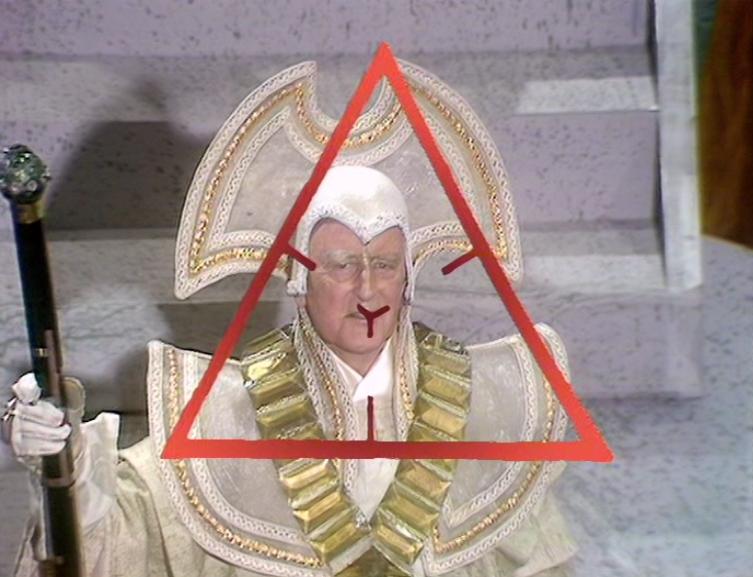
timestamp-088-the-deadly-assassin


This story is an all-around exercise in Tom Baker trying to carry the show by himself, even including a unique introduction.

Through the millennia, the Time Lords of Gallifrey led a life of peace and ordered calm, protected against all threats from lesser civilisations by their great power. But this was to change. Suddenly and terribly, the Time Lords faced the most dangerous crisis in their long history…

Driven by a premonition of the Time Lord President’s assassination, the Doctor returns home. He’s not exactly welcome since he is a convicted criminal – I guess we’re just ignoring the fact that his exile was forgiven? – the Gallifreyans guards plan to arrest on sight. It is, after all, Presidental resignation day, and the Time Lords don’t want any trouble.

We get several bits of new mythology here. First, the TARDIS is a Type 40, and she is obsolete. Second, we get to see the unique chapters and dress of the Time Lords: The Prydonians, of which the Doctor is a member, are devious and wear scarlet and orange; The Arcalians wear green; the Patrexes wear heliotrope; and there are several other “lesser” chapters who don’t get name-checked today.

There’s also the Seal of Rassilon, which we previously saw when it wasn’t the Seal of Rassilon.

The guards force the locks on the TARDIS – that’s a new one for me, since the mythology to date and in the revived series suggested that the lock was impenetrable – and the Doctor sneaks out. He encounters another guard who is immediately killed by an unseen assailant, and the authorities assume that the Doctor is responsible. The Doctor returns to the TARDIS, unaware of a dark figure watching him. The mysterious figure is working for the Master, who looks decayed and worn.

The guards transduct the TARDIS directly into the capitol, which inadvertently allows the Doctor to sneak in under a very formal disguise. At the ceremony, the robed figure takes down a camera operator. He sets up a rifle and surveys the stage through his scope. The Doctor dodges the guards by talking to Runcible, the journalist who is covering the event and refers to regenerations as “face lifts”. The Doctor spots the rifle and bursts through the crowd to the platform. As the President takes the dais, the Doctor takes aim and shoots the president. The guards arrest him shortly thereafter. The president died without naming a successor, and therefore Gallifrey is under constitutional crisis. Chancellor Goth orders both an immediate election to save face on the galactic stage, as well as an immediate trial for the Doctor.

The Doctor explains his premonition, but it is dismissed as impossible. The trial moves swiftly with a strong argument for prosecution, but the Doctor derails the trial by invoking Article 17 and running for president, which (in a moment of plotonium handwavium) guarantees his liberty until the election is over. He is given 48 hours to prove his innocence.

The Doctor inspects the rifle and discovers that the sights are fixed to prevent the shooter from getting an accurate shot. Inspecting the Panopticon, the Doctor finds his shot, which had gone wide. Meanwhile, Runcible reviews his footage from the incident and discovers the cameraman miniaturized inside the camera. The Doctor recognizes it as a tactic of the Master, and realizes that he is due for a final showdown. Meanwhile, Runcible is killed by knife.

Enter: The Matrix. The Master’s biographical data extracts have been deleted from the computer, and the Doctor’s has been tampered with. After a discussion of how the Matrix works – presumably as a repository for brain patterns after Time Lords finish their regenerative cycles – the Doctor deduces that the Master has used it to implant the premonition into the Doctor’s head to draw him to Gallifrey. Sneaky sneaky. The Doctor enters the Matrix to find the Master, and a battle of wills takes place over a rapidly shifting virtual landscape, which taxes both the Doctor’s and the assassin’s physical bodies.

You know, this is a really odd story.

The Doctor’s allies start to believe his story as they watch his physical readings during the Matrix experience, in which the Doctor runs, strategizes, and hides near a random toy spider.

The Master realizes that the Doctor is gaining the upper hand, so he sends an enthralled guard to the Matrix control room to kill the Doctor. The Doctor’s allies stop the threat as the Doctor gains the upper hand and unmasks the assassin: It is Goth. The antagonist tries to drown the Doctor, but the Doctor escapes and leaves the Matrix.

The Doctor and his allies track Goth to the Master’s lair. The Master appears dead – this is one time that I would endorse poking the corpse with stick to verify matters – and Goth is nearly at his end. Goth explains that he found the Master dying on Tersurus, at the end of his regeneration cycle. The Master promised all of his knowledge to Goth if he could return to Gallifrey. The Doctor is cleared of all charges, though Cardinal Borusa puts on his political hat and alters the story to make it more palatable, which makes Goth into a hero.

As if we needed any further evidence as to why the Doctor dislikes his own kind so intensely.

We get a little more mythology here. First, Borusa was the First Doctor’s mathematics instructor at the Academy. Second, Rassilon is established as an ancient Time Lord and founder of Gallifreyan civilization. Third, with repercussions throughout the rest of the franchise, we get the regeneration limit of twelve.

The Doctor presumes that there is more to this whole story, and believes that the secret lies in the ceremonial sash and rod, the keys to the Eye of Harmony, which is the heart of a black hole captured by Rassilon as the source of Time Lord power. That power is hidden under the Panopticon, and the Master plans to use it to restart his regeneration cycle. The Master escapes the morgue, his death a ruse – you really should’ve poked him with a stick –   and secures the sash and rod. He unlocks the Eye of Harmony and begins the process, one which will destroy Gallifrey and several other worlds. You know, go big or go home… or in this case, both.

So, is the Eye of Harmony linked to Omega as well? The lore stated that Omega used the creation of a black hole to give the Time Lords the power of time travel.

At this point, I’m also drawing attention to the Master’s makeup. It is atrocious.

We rush toward the climax as the Doctor pursues and fights the Master, stopping him (with appropriate dramatic tension) just before the last cable is uncoupled. The Master falls through a fissure in the floor as the Doctor stops the chain reaction, literally saving the world.

Cardinal Borusa is appalled at the damage, but congratulates the Doctor on his performance. The Doctor departs, and soon after, the Master does as well in his own TARDIS.

This was a nice experiment, but I was not impressed. The story was pretty bad on its own, and the Doctor desperately needs a companion to even him out. That said, as a primer on Gallifreyan mythology and means to resurrect the Master after so long, this one serves its purpose. It’s also a decent way to keep a nemesis alive after being away for 21 stories, while trying to figure out how to honor Roger Delgado’s performance.

It all settles out to an average score.


Rating: 3/5 – “Reverse the polarity of the neutron flow.”


UP NEXT – Doctor Who: The Face of Evil


The Timestamps Project is an adventure through the televised universe of Doctor Who, story by story, from the beginning of the franchise. For more reviews like this one, please visit the project’s page at Creative Criticality.


Timestamp #67: Frontier in Space

Doctor Who: Frontier in Space
(6 episodes, s10e09-e14, 1973)

Timestamp 067 Frontier in Space


The Time Lords might be regretting restoring the Doctor’s driving privileges. This story starts with an Earth cargo ship getting ready to jump to hyperspace, but the TARDIS nearly collides with the ship before materializing inside it. The humans are already on high alert since there’s a war brewing between them and the Draconians. Almost on cue, Jo spots a ship through the viewport that looks like a derelict, but it changes shape into a Draconian battle cruiser. The human cargo pilot, Stewart, sends a distress call while his co-pilot, Hardy, goes to retrieve their weapons in preparation for repelling boarders. Hardy encounters the Doctor and Jo, but Hardy sees the Doctor as a Draconian. While the Doctor tries to talk Hardy down, Jo freaks out since Hardy appears to her as a Drashig.

Back on Earth, the human president – A woman president on television in the 1970s! – and the Draconian ambassador (who is also the Emperor’s son) are confronting each other as the distress call comes in. The president dispatches General Williams to supervise the rescue attempt, which is becoming a political football as riots break out on the planet over the string of altercations. On the ship, the Doctor and Jo are confined while the pilots deal with the Draconian assault. The sonic hypnosis field they encountered caused Jo and the pilots to see their greatest fears, hence the mistaken identities, but it seems to be only keyed into human physiology. The Draconians break through the airlock, and Hardy tries to use the Doctor and Jo as hostages. The boarders are Ogrons, not Draconians, and they stun the pilots and the Doctor while I wonder if the Daleks are not too far behind.

The Ogrons confine Jo and steal the cargo and the TARDIS, but the Doctor questions their actions after he comes to and releases Jo. The Ogron actions don’t make sense since, while they are mercenaries for hire, they resealed the airlock and left everyone alive. While he muses on this turn of events, an Earth battlecruiser docks with the cargo ship, and the cargo pilots accuse the Doctor and Jo of being Draconian spies. Back to the jail cell they go, which gives Jo the fun opportunity to brainstorm an escape from the cell.

The cargo ship arrives at Earth and the President wants to question the Doctor and Jo in the presence of the Draconian ambassador. The Doctor reasons with the President that a third party is manipulating both sides to induce a large-scale war, and after the general has them taken away, and the sympathetic president takes the political road of lodging a formal protest with the Draconian Emperor.

Speaking of footballs, our heroes certainly fit the role. The Draconians are curious about the Doctor’s claims, so they break the Doctor out and interrogate him, but he escapes only to be re-captured by the humans. The Ogrons show up and try to break them out again, this time under the guise of Draconians, which cements the idea with the humans that the Doctor and Jo are indeed working for the Draconians.

General Williams convinces the President to break off negotiations with the Draconians and expel them from Earth, but she refuses to attack them without proof. Williams uses a mind probe on the Doctor, but it overloads as he keeps telling them the truth and they keep turning up the power. The President tries compassion one last time, but ends up sending the Doctor to the lunar penal colony. On the moon, the Doctor meets Professor Dale, a member of the Peace Party, who shows him around.

The President receives criminal records from Sirius IV for the Doctor and Jo, and the commissioner arrives to extradite them. Thus marks the return of the Master, who explains to Jo that he is working with the Ogrons to overturn humanity, and has only arrived now because (surprise!) his minions brought him the TARDIS.

Back on the moon, Professor Dale is working with an overseer named Cross who has left two spacesuits for escapees to cross the lunar surface and steal a ship to return to Earth. Dale believes the Doctor’s story and asks him to be his accomplice for the escape attempt. But Cross pulls a double as he depressurizes the airlock after sabotaging the spacesuits. The Master ends up saving them and gains custody of the Doctor, fully intent on taking him and Jo to the Ogron homeworld because his employers are very interested in the Time Lord. Jo stages an impressive distraction (including a James Bond reference, which appears to be a constant inspiration for the Pertwee era) as the Doctor breaks out of the cell on the Master’s ship, dons a spacesuit, and crosses the ship’s hull to the flight deck.

I really enjoyed the accurate lack of sound in the spacewalk sequences.

The Master figures out the ruse and threatens to throw Jo out of the airlock, but the Doctor gets the jump on him. During the confrontation, neither of them see the Draconian battlecruiser approach, and they board through the airlock where Jo is being held. The Draconians take all of them hostage and set course for the Draconian homeworld, but of course, the Master signals the Ogrons for help.

The Draconian emperor unwittingly shares the Earth president’s desire of not wanting to start a war without proof, and the Doctor, who is holds a title of nobility on Draconia, tries to convince the emperor of the plot. As luck would have it, they are interrupted by an attacking Earth force, which is really the Ogrons under hypnotic guise. The Ogrons rescue the Master, and as the hypnotic field fades, the emperor is finally convinced of the Doctor’s story. The Doctor, Jo, and the Draconian ambassador take an Orgon prisoner and the Master’s police ship back to Earth to convince the president of the plot, but the Master is following to destroy the evidence. The Master fires on the Doctor’s ship, causing a distraction that allows the Ogron to escape to the flight deck. The Master’s ship docks, and they rescue the Ogron and kidnap Jo.

And the Doctor is using a gun again. Huh.

The Doctor’s ship is intercepted by an Earth battlecruiser. The president hears the tale and while she is sympathetic, the general is unwilling to help the Draconians until a certain revelation is made about his past (and previously unknown) military mistakes. They all set course for the Ogron homeworld, where the Master’s ship has arrived. The Master tries to enthrall Jo and use her and the TARDIS as bait, but she has conditioned herself against the Master’s spell. He also tries the hypnotic sound, but she resists that as well. As she is taken away, she swipes a spoon, which she later uses to escape. She signals the general’s ship as it reaches orbit, but the Master surprises her and explains that she sprung his trap. The transmitter was a short range model, and only the Doctor could have heard her distress call.

The general’s ship lands and his team is ambushed by the Ogrons, who are then driven away by a large creature called the Eater. The Master is angry, and after yet another ship lands, he ambushes the rescue party with the help of his employers: The Daleks.

It was a nice twist that was telegraphed with the presence of the Ogrons, and in this cameo appearance, they conveniently kill all of the rescuers except the Doctor and the Draconian ambassador. It’s at this point that I really missed the old Dalek ray sound and their old voices. The Master convinces the Dalek leader to leave the Doctor unharmed so that his nemesis can see Earth in flames before he is exterminated, and the Doctor gets introduced to yet another jail cell. He escapes after jury-rigging the hypnotic signal, and he sends General Williams and the Draconian ambassador back to Earth with news of the new threat. As the Doctor and Jo make their way to the TARDIS, the Master intercepts the them. The Doctor startles the Ogrons with the hynoptic signal, the Ogrons jostle the Master, the Master shoots the Doctor, and this story ends on an excellent cliffhanger as Jo helps a weakened Doctor to the TARDIS where he contacts the Time Lords and sends a warning.

This story had its moments, but overall it felt like an elaborate setup serial with some excellent performances. Jo was great, and the Master was fun to watch. Looking ahead though, it is sad that Roger Delgado would never reprise that due to his untimely and accidental death. This was a good, yet completely unintentional send-off.


Rating: 3/5 – “Reverse the polarity of the neutron flow.”


UP NEXT – Doctor Who: Planet of the Daleks


The Timestamps Project is an adventure through the televised universe of Doctor Who, story by story, from the beginning of the franchise. For more reviews like this one, please visit the project’s page at Creative Criticality.


Timestamp #64: The Time Monster

Doctor Who: The Time Monster
(6 episodes, s09e21-e26, 1972)

Timestamp 064 The Time Monster


The Doctor has some weird dreams.

Foreshadowing events to come over the next three hours, he has a nightmare about the Master and trident-shaped crystal, which is (1) a bit on the nose symbolically since it comes from Atlantis, and (2) exactly what the Master happens to be holding in his guise of a science professor. Of course, this is the third time Doctor Who has tapped on the Atlantis mythos, and I’m sure it won’t be the last.

The Doctor is concerned about his nightmare, and he tells the Brigadier (who has been laying low since the Daleks waged gorilla on guerilla warfare) to alert UNIT to be on the lookout for the Master. The Brigadier does so sarcastically, and then reminds the Doctor that UNIT is obligated to attend the demonstration of TOMTIT – a project that demonstrates Transmission of Matter Through Interstitial Time and the Master’s desire to spell something silly – but since the Doctor and Jo are waiting for the Master to strike and Captain Yates has the duty, poor Sergeant Benton is ordered to cancel his leave and join the Brigadier at the Newton Institute.

What the Doctor doesn’t realize is that leave is one of the most precious commodities in the world to an enlisted man. I’m not saying that he should watch his back from this point forward, but maybe he should start carrying a rear-view mirror everywhere he goes.

Instead of requisitioning a rear-view mirror, the Doctor builds a time sensor – a TARDIS “sniffer-outer” – that starts going ballistic when the TOMTIT scientists start a rehearsal of the experiment. That Master gets angry that the team started early, but Dr. Ruth Ingram points out that the experiment overloaded its circuits during the teleportation, and the Master determines that the crystal is drawing energy from outside time itself. He decides to skip the traditional post-demonstration wine-and-dine when he sees UNIT arrive for the show.

The Doctor and Jo track the source of the temporal readings in Bessie, which now has a Super Pursuit Mode sans absurd transforming sentient Trans-Am, and we also start seeing the depths of the Doctor’s obsession with Venus. He has programmed the time sensor to read in Venusian miles, requiring a conversion table for each calculation. The sensor spikes as the Master, cleverly disguised in a radiation suit, begins the experiment which turns out to be a front to summon a being called Kronos.

The experiment creates bubbles of time dilation, and when the Doctor arrives, he is slowed down and Jo is frozen. Stuart, the research assistant, has aged sixty years due to radiation exposure as his own personal temporal reference has been accelerated. Dr. Ingram – call her Ruth – mentions Professor Thascalos, and the Doctor’s mastery of Greek uncovers the Master’s identity. The Brigadier orders support troops, the Doctor’s TARDIS, and an evacuation of non-essential personnel from the Institute, and the Doctor investigates the crystal at the heart of TOMTIT. Kronos is a fearsome member of the Chronovore race who live outside of and eat time, and the mythology is an interpretation of actual events. The crystal is the same one that summoned Kronos to Atlantis thousands of years ago, and the rest of it is located in the Vault of Poseidon, deep in the legendary city thousands of years in the past.

The Master’s TARDIS is disguised as a computer in the laboratory, and to get to it, he tricks Benton into leaving the laboratory. Benton sees through the ruse, but gets knocked out upon ambushing the Master. The Master summons an Atlantean priest named Krasis, and the priest possesses a holy seal that contains the secret of summoning Kronos. With all the keys in place, the Master summons Kronos. The mighty creature eats the institute’s director as Stuart de-ages and the Brigadier, Benton, and Ruth get trapped by the temporal field. Kronos proves to be uncontrollable, and the Master returns it to the crystal.

The Doctor makes a temporal jamming device, but it doesn’t last long. As Captain Yates and UNIT arrive, the Master summons opposition from the past in the form of a medieval knight, a squad of Roundheads, and a V1 bomb. The V1 takes out the convoy but everyone is okay, and as Ruth, Stuart, and Benton go to the lab to take on the Master, the Doctor and Jo take to the TARDIS.

The TARDIS has a new desktop – the wash basin roundels are a nice touch – and the Doctor develops a plan to materialize his TARDIS inside the Master’s TARDIS. This concept of a TARDIS inside a TARDIS boggles the mind, but it’s possible. Really tricky, but possible. If the calculations aren’t precise, a time ram will occur that will annihilate both of them.

Jo’s bravery and spunk motivate the Doctor, and the TARDIS lands. The two are linked as the Master’s TARDIS appears to materialize inside the Doctor’s. When he leaves, his TARDIS is inside the Master’s. They leave the Master’s and emerge into the Doctor’s. They are both inside each other, creating a time loop.

When the UNIT troops arrive – Krasis’s temporal ignorance is a fantastic alarm system – and the Master extends a time field to prevent them from interfering. The duo take off for Atlantis, and since the TARDISes are linked, the Doctor and Jo go with him. Meanwhile, Ruth, Stuart, and Benton are trapped in the lab, and they work to deactivate the time field and rescue the Brigadier’s squad. The plan backfires, and Benton gets turned into a baby.

After a sequence that helps develop the franchise’s basis for the TARDIS’s telepathy and language interpretation skills, the Doctor is forced to leave his TARDIS to confront the Master. The Master summons Kronos, which eats the Doctor (setting him adrift in the time vortex) before returning to the crystal. The Master then ejects the Doctor’s TARDIS into the time vortex. After the turbulence, Jo comes to and hears several whispers from the Doctor, but a single, strong voice comes through clearly via the TARDIS. The TARDIS and the Doctor work with Jo to rescue the Time Lord before setting course for Atlantis.

In the legendary lost city, King Dalios holds court, and rabble-rouser Hippias wishes for a return to the glory during the era of Kronos. Dalios attempts to dissuade them, but the Master interrupts him with a grand entry and claims to be an envoy of the gods. When Krasis claims to have seen Kronos, Dalios takes him and the Master into private conference. The Doctor arrives shortly thereafter, and Krasis attempts to kill him but Hippias intervenes. The Doctor and Jo are taken to Dalios instead.

The Master is dismissed after failing to place Dalios under his thrall, and he’s surprised to see the Doctor alive. The Doctor and “Jo Jo Grant” meet with Dalios, and the king sends Jo to meet with his queen, Galleia. Later on, Galleia meets with the Master, who offers him the crystal. Jo attempts to inform the king and the Doctor, but she is turned away. She pursues Hippias, who is tasked with retrieving the crystal for Galleia, but is captured by Krasis and locked in with the crystal’s guardian, the Minotaur.

The Doctor finds out about Jo and goes after her. Hippias tries to save Jo, but the Minotaur kills him, and the Doctor does his best olé by bullfighting the guardian into a wall. As the wall crumbles, the crystal chamber is exposed, and Krasis takes the Doctor and Jo to see the king. Unfortunately, the king has been deposed thanks to Galleia and replaced by the Master. He imprisons the Doctor and Jo, and after the Doctor relates a tale about the blackest day of his life. Behind his home on a mountain was a hermit (a monk, but not The Monk) who spent half his life under a tree. The hermit listened to the Doctor’s woes, and then pointed to a flower, which presented the Doctor a new perspective on life. Afterward, Dalios is imprisoned in the same cell, shares his vision of the Doctor saving Atlantis, and then dies.

Later on, Galleia addresses Atlantis and presents the Master as king, and he offers to summon Kronos. The Doctor reveals to Galleia that Dalios is dead, and she turns on the Master. Kronos is summoned and the Master orders it to destroy Atlantis. The Master escapes with the crystal, but Jo pursues him into his TARDIS. The Doctor chases after them in his TARDIS and threatens the Master with a time ram. The Master calls the Doctor’s bluff, and Jo initiates the time ram, catapulting both TARDISes into a featureless place. They are greeted by Kronos, who was released when the TARDISes collided. She grants the Doctor and Jo a reward for their assistance, and they ask to be returned home. She intends to keep the Master in torment and punishment, but the Doctor asks for leniency. Of course, the Master takes the opportunity to escape.

With the universe saved once again, the Doctor and Jo return to Cambridge as the time field is released and the TOMTIT device explodes. Everything is back to normal, the Brigadier acts as comic relief, and Benton returns to adult form in his vintage birthday suit.

The Doctor might really want to consider that rear view mirror.

This was a pretty good serial, but not quite up to the bar set by the rest of the season. It was certainly fun, but it’s kind of hard to follow The Mutants.

I appreciated that the writers hung a lampshade on the TOMTIT acronym: Almost every time it was mentioned, one of the companions would do a double take, and it’s understandable. The device looks nothing like a small bird or a biplane, and between this and the rather unfortunate shape of the time sensor, I think the creative team was having some fun with this one.

I also liked the symmetry of the Master and the Doctor simultaneously working the overload problem in separate locations. These frenemies (hey, the word’s been around since the 1950s) are really not that different if you strip away their motivations, and if the Master could get over his self-sabotaging need to have his plans overpower him, he’d be nearly unstoppable. I also liked how the Master didn’t engage the TARDIS’s chameleon circuit when he traveled to Atlantis. It added to the shock and awe of seeing a foreign object materialize from thin air.

I enjoyed the humor behind the Doctor showing up the Brigadier and his disdain of Bessie with the car’s super drive. I also liked seeing Dave “Darth Vader” Prowse in something other than Star Wars.

Overall, this was a great story that was perhaps a bit long, and even judged on its own merits is the weakest part of an otherwise spectacular season.


Rating: 4/5 – “Would you care for a jelly baby?”


UP NEXT – Ninth Series Summary


The Timestamps Project is an adventure through the televised universe of Doctor Who, story by story, from the beginning of the franchise. For more reviews like this one, please visit the project’s page at Creative Criticality.


Timestamp #62: The Sea Devils

Doctor Who: The Sea Devils
(6 episodes, s09e09-e14, 1972)

Timestamp 062 The Sea Devils


The Master returns to Doctor Who, scheming and plotting from his island prison cell. The Doctor and Jo pay him a visit, and the Master claims to be rehabilitated, but he refuses to reveal where he parked his TARDIS, so the Doctor is skeptical.

Adding to the Doctor’s uneasy feeling is a recent rash of ship sinkings in the area and Colonel Trenchard, the very odd prison warden who (unbeknownst to the Doctor) is working with the Master to defeat some unknown enemy agents. The Doctor goes to the nearby naval base and enlists the help of the base commander. He and Jo head to the nearby sea fort to investigate, but are stranded as the Sea Devils destroy their boat. The Sea Devils give chase inside the fort, where the Doctor and Jo find a single half-mad survivor before calling for help and escaping.

According to the Doctor, these Sea Devils are related to the Silurians: They are adapted to living underwater, and they share the same motivations as their cave-dwelling cousins.

Trenchard sets the Master free, and he goes to the naval base in the guise of a Navy commander. He steals some sonar equipment, assaults a Chief Petty Officer, and escapes after being spotted by Jo. When the Doctor and Jo return to the prison, the Master is back in his cell as if nothing ever happened. The Doctor sends Jo to inform UNIT as the Master escapes and a random swordfight breaks out. Trenchard arrests the Doctor, and the Master explains his evil plan to take over the world with the Sea Devils.

Meanwhile, the Sea Devils take over a rather spacious submarine. Who knows why at this point, but they do.

The Doctor escapes with Jo’s help and they run for the beach, but are soon trapped among the Master, the colonel’s troops, a minefield, and a Sea Devil summoned by the Master. The Master’s plan goes south as the fearful soldiers attack the Sea Devil, the Sea Devil kills the soldiers, the Doctor and Jo run for the minefield, the Sea Devil enters the minefield, the Doctor triggers a mine to scare the Sea Devil back to the ocean, the colonel questions the Master about the creature who slaughtered his men, and the Master sends a handful of them to attack the prison and kill Trenchard.

Take a moment here to breathe as the secret service Sea Devils take their luxury submarine somewhere. Who knows where are this point, but they do.

The Doctor and Jo go back to the naval base, and the Doctor takes a diving bell to the foundation of the sea fort to investigate. The Sea Devils abduct him and take him to their leader, with whom the Doctor almost brokers peace, but is interrupted by the arrival the Master. Further complicating matters are Parliamentary Private Secretary Walker, a sexist, pompous, arrogant ass who arrives to “solve” the missing ship problem with his depth charges.

The Doctor escapes from the sea devils, rescues the submarine crew, and they all break free from the underwater base in a moment of okay, sure that had me setting aside my background in undersea warfare. At least they wrapped up the dangling plot thread about that stolen sub. Not to be dissuaded, the Master and the Sea Devils take over the naval base, and the Master tries to convince the Doctor to help him revive all of the Sea Devils around the world. The Doctor sabotages the machine, which incapacitates the Sea Devils so the sailors can escape. The Doctor fixes the “mistake” just as the sailors stage an assault to retake the island, but the Master runs with the machine and the Doctor gives chase. They end up back in the waiting fins of the Sea Devils, who are now tired of all of these Time Lord shenanigans. The Doctor sabotages the machine by reversing the polarity of the neutron flow (huzzah!), which creates a bomb that the Master unknowingly activates. The Doctor uses his sonic screwdriver to open the cell, and he and the Master escape. The Sea Devil base explodes, but the Master works his mental magic to escape in a hovercraft.

All of that in six episodes, which normally poses a problem for me, but this story was so well paced that it didn’t matter. Each thirty-minute block just flew by.

Despite the pace, there were a couple of down notes. First, the third episode must have been a bit short since they repeated the whole swordfight from the previous episode. It wouldn’t have been a problem if I wasn’t watching these in rapid succession, but when the episodes are back-to-back, long repeated story points shred the pacing. Second, it’s becoming standard operating procedure for the Master that his eyes are too big for his metaphorical stomach. His plans always double back on him, usually because he’s trying to wield too much power. Don’t get me wrong, it makes sense with the megalomaniacal bag full of cats that is the Master, but it’s become predictable. Especially after an entire season of stories with that common thread.

On the plus side: First, the writers did their homework with all of the naval trappings. Even though the submarine was the standard Hollywood-style hotel underwater, it was still okay with me in practice. Second, Roger Delgado is deliciously evil and melodramatic in this serial, and while Series Eight was decent with his portrayals, for some reason this serial really worked for me. Last, I loved how the Doctor used the sonic screwdriver as a tool to navigate the minefield, set off one of the charges to scare the Sea Devil, and escape from a jail cell. The prop also has a totally ’70s sci-fi vibe, and I adore it.

This fast-paced and fairly tightly written serial shook out to a high 4 when I was done, and I have no problem rounding that up.


Rating: 5/5 – “Fantastic!”


UP NEXT – Doctor Who: The Mutants


The Timestamps Project is an adventure through the televised universe of Doctor Who, story by story, from the beginning of the franchise. For more reviews like this one, please visit the project’s page at Creative Criticality.


Timestamp #59: The Dæmons

Doctor Who: The Dæmons
(5 episodes, s08e21-e25, 1971)

Timestamp 059 The Dæmons


It was a dark and stormy night, almost the setting for a Doctor Who Halloween Special, but aired in early summer.

Professor Horner and his team are excavating a site called Devil’s Hump, and they are surrounded by a series of events that are like magic. The local village witch, Olive Hawthorne, comes out to protest but is ignored, so she returns home and goes to visit the vicar, a new man named Mr. Magister, who is really the Master. Also, she’s immune to his hypnotic powers, unlike everyone else in the town.

Turns out, the Master is attempting to summon a demon. Well, a race of demons. Well, really an alien race that looks like demons that are kind of like scientists that run experiments on civilizations. They’ve been on the planet for 100,000 years, and when the experiments are deemed successful, they spark a technological revolution. When the experiments fail, you get Atlantis.

Anyway, this serial is an exercise in Arthur C. Clarke’s third law of prediction: “Any sufficiently advanced technology is indistinguishable from magic.” The Dæmons have been around for so long that they’ve been worked into our mythology, and when they appear/disappear, it requires a conversion between energy and matter. That energy release when they shrink resulted in a shield dome being constructed around the village. The Doctor helps UNIT cut a hole in it so they can keep the gargoyle Bok busy while the Doctor attends to the larger Dæmon named Azal. The Master and the Doctor negotiate with Azal as to who will serve it best, and it sides with the Master. Jo offers to sacrifice herself to prevent Azal from killing the Doctor, and that somehow short circuits Azal’s brain. Azal explodes, the Master is finally captured by UNIT, the Doctor and Jo dance around the maypole, la fin.

It was an interesting idea, but it felt poorly executed, and I think a lot of that is because of the sensitivity at the time regarding demons and the supernatural on the BBC. This story could be done now and not feel so awkward or ham-fisted, but I think the prevailing culture crippled the story’s potential.

There were some good points, like the realistic special effects (the helicopter shot, originally sourced from From Russia with Love, and the church explosion) and the continuing thread of the Master biting off more than he can chew, but then there were also some really bad points, such as the resolution. The threat was stopped by accident, and if Jo hadn’t been there, the Doctor would have failed to stop the Master from taking over the world. Similarly, the Master was captured by Sgt Benton’s good timing.

This story also has a few potential links to the future of Doctor Who. First, Bok is apparently made of stone. Are the Dæmons precursors or ancestors to the Weeping Angels? Second, the UNIT sergeant who builds the force field defeating contraption is named Osgood. Is he related to the current personal assistant at UNIT who saved the world? Both of them are scientists and they both wear thick-rimmed glasses.

The Master offered the villagers anything they wanted for the price of their servitude, and I heard echoes of Needful Things.

Finally, UNIT needs to stop shooting things. It hardly ever works.


Rating: 2/5 – “Mm? What’s that, my boy?”


UP NEXT – Series Eight Summary


The Timestamps Project is an adventure through the televised universe of Doctor Who, story by story, from the beginning of the franchise. For more reviews like this one, please visit the project’s page at Creative Criticality.


Timestamp #58: Colony in Space

Doctor Who: Colony in Space
(6 episodes, s08e15-e20, 1971)

Timestamp 058 Colony in Space


I really don’t like the Time Lords.

The Master is still mucking about in space and time, and the Time Lords reinstate the Doctor’s mobility to stop the next evil scheme. The Master has stolen the plans for a Doomsday Weapon, and only the Doctor can stop him from acquiring and using the device.

The TARDIS spontaneously dematerializes with the Doctor and Jo inside and travels to the planet Uxarieus, where a colony of humans has been established, but the colonists don’t trust the government back on Earth. In this future, the Earth government is a repressive bureaucracy that thrives on red tape. Meanwhile, the Interplanetary Mining Corporation (IMC) is trying to jump the colony’s claim and mine the planet for duralinium, which is needed on Earth. Since the colonists get in the way, the IMC is trying to scare them off. They call for an adjudicator to settle the issue, and it so happens that they send the Master.

And that’s the weak frame for the rest of the plot.

The story follows that there once was a powerful race of beings on the planet, but they developed the Doomsday Weapon – a device with the power to destroy a star – and then squirreled it away because nobody really needs that much power. The weapon’s presence led to the decline of the society, and they regressed to being primitives that hide in caves. When the Guardian, who leads the remnants of the ancient civilization, hears the tale of the Master and the Doctor, he destroys the weapon and his people to save the universe.

On the upside to this story, Jo visits the TARDIS, gets her “bigger on the inside” moment, and rapidly learns what it means to be a Doctor’s companion. From the story perspective, it was good to see that the writers didn’t rest on the trope of everyone in the party of evil completely believing in the thing that is evil: Caldwell was a great foil for the captain’s plans.

I also thought that the model work was great in this story, and I loved the IMC ship exterior.

Now, the list of negatives. First, the Time Lords, who are just playing games with the Doctor at this point. They reinstate his mobility to serve their needs because… what, they can’t simply pull the Master back by themselves? They can’t meddle in affairs of time and space, but they can send the Doctor, who they exiled as punishment for meddling in time and space?

No wonder he’s bitter about the exile. I would be too if they kept being hypocritical about everything.

The effects with the TARDIS were rather shoddy, from the *poof* materialization/dematerialization (it used to fade in and out) to the remnants of the Troughton-era control room (the roundel wallpaper was okay for the low-res black and white days, but with higher production values, the set deserves better).

This Doctor is a lot more physical, which is fine, but he’s a lot more prone to assaulting people. He uses his Venusian karate/aikido again here multiple times, and while the self-defense argument is on the table, he’s far more aggressive than his predecessors (and the successors with which I’m familiar). It feels like they’re trying to bring in the Bond fans, which almost matches up with the debut of Roger Moore in the famous role. I see a lot of similarities in Roger Moore’s Bond and Jon Pertwee’s Doctor.

Overall, a weak framing story, but a decent showdown with the Doctor, the Master, and a not-quite-dead-yet race of superior intelligence.


Rating: 3/5 – “Reverse the polarity of the neutron flow.”


UP NEXT – Doctor Who: The Dæmons


The Timestamps Project is an adventure through the televised universe of Doctor Who, story by story, from the beginning of the franchise. For more reviews like this one, please visit the project’s page at Creative Criticality.


Timestamp #57: The Claws of Axos

Doctor Who: The Claws of Axos
(4 episodes, s08e11-e14, 1971)

Timestamp 057 The Claws of Axos


It’s Doctor Who in color… again! The Claws of Axos is a short serial that is much more straightforward than The Mind of Evil, which hurts it a little in my opinion.

UNIT is undergoing an inspection from Horatio Chinn, a particularly detestable politician who is throwing a tantrum because he knows nothing about the Doctor, when they detect a spacecraft filled with spaghetti monsters. I’m kidding, of course, since the spacecraft is unique to the franchise and not a bad looking model. UNIT is also hosting Bill Filer, an American agent from an unknown agency, who is investigating the Master. Chinn, ever the diplomat, secures emergency powers and tries to shoot down the spacecraft, but it evades the effort. Strangely enough, Chinn could have been the hero of the tale had he succeeded.

The ship lands and spears a homeless drifter with a Jar Jar Binks-like tongue. UNIT arrives and, with the help of scientists from the nearby power facility, investigate the ship. Filer, after being ejected from the UNIT site by Chinn, arrives on his own, is captured, and discovers the Master is also in captivity.

The Doctor gets scanned by the living ship, and the aliens determine that he is a Time Lord. The Axons appear as humanoids in gold face paint and muted leopard-print leotards, and they claim that they ran out of fuel and need time to recharge and replenish. In exchange for temporary asylum on Earth, they offer a miracle substance called Axonite that can be anything you want it to be. Strangely, they never used it for fuel.

Jo explores the ship on her own after disobeying orders to stay put, and she hears Filer calling for help. She finds a spaghetti monster and screams, drawing the UNIT team to her, but the Axons dismiss her experiences as hallucinations due to the proximity to the power core. Filer and the Master take the opportunity to escape, but are recaptured, and Filer is sent to be cloned.

Chinn calls the Prime Minister for special powers to accept the Axonite, places the UNIT team under military arrest for interfering with his authori-TAH, and sets to distributing the Axonite around the globe. Unfortunately, as the Doctor discovers, the Axonite is the means that the Axons (or really, just Axos, a single consciousness with multiple avatars) plans to use to consume the planet’s energy.

The Master negotiates with Axos for release, and gets his laser gun but not his TARDIS. He steals the Doctor’s TARDIS, has it delivered to the power plant, and works on fixing it so he can escape. After discovering that Axos wants to time travel to expand its feeding base and that they can use the reactor’s power to do so, the Doctor works with the Master to repair the TARDIS under the premise that he’s abandoning Earth as a lost cause. Once operational, the Doctor materializes the TARDIS inside Axos, tricks them into linking their drives with his, and locks them in a permanent time loop. The Master escapes into his TARDIS when he discovers the plan, and all of Axos is materialized into the Doctor’s TARDIS. The Doctor boosts the TARDIS out of it, leaving Axos stranded in the loop, and the TARDIS returns to Earth with an annoyed Doctor on board. Even with the ability to dematerialize now restored, the Time Lords have ensured that it will always return to Earth.

I’m really starting to dislike the Time Lords. Sure, I get the justice for breaking their laws, including making sure that the Doctor doesn’t leave his exile by blocking his knowledge, changing the dematerialization codes, and disabling the circuitry in the TARDIS, but then they show up only long enough to warn the Doctor that the Master is coming and that he’s a bad dude. We know full well that they can stop renegade Time Lords with little effort, but they selectively choose not to interfere in this case.

The Master is definitely worse than the War Chief, yet the latter was brought to trial on Gallifrey for his meddling. In a similar vein, The Monk‘s activities have been outright ignored by the Time Lords.

In other short notes, Paul Grist does a decent job with an American accent, and there was a lot of fun with pyrotechnics in this serial. The Doctor seems to be stepping away from his previous reserve about his past by disclosing his knowledge of time travel to the power plant scientists.

This was an okay story with some great steps forward toward restoring the travel aspects of the show.


Rating: 3/5 – “Reverse the polarity of the neutron flow.”


UP NEXT – Doctor Who: Colony in Space


The Timestamps Project is an adventure through the televised universe of Doctor Who, story by story, from the beginning of the franchise. For more reviews like this one, please visit the project’s page at Creative Criticality.


Timestamp #56: The Mind of Evil

Doctor Who: The Mind of Evil
(6 episodes, s08e05-e10, 1971)

Timestamp 056 The Mind of Evil


The Doctor goes to prison, and the show goes back to black and white. Remind me to never lend the BBC my tape collection.

A new device, the Keller Machine, can apparently extract evil thoughts from the mind and rehabilitate prisoners. The Doctor, while attending a demonstration of the device, thinks himself above the primitive 1970s Earth, and feels vindicated after the demonstration yields one comatose prisoner named Barnham, and later, one dead medical student. Meanwhile, UNIT is running security for a world peace conference, and Captain Chin Lee of the Chinese delegation deceives UNIT to help the Master steal a nerve gas missile.

The machine is intelligent, and it feeds off of negative emotions like fear and aggression. It kills people by making them envision their greatest fears so it can feed, and the Master figures out that the machine will overpower both him and the prison, so he teams up with the Doctor to shut it down.  Starved for evil to feed on, the machine learns how to teleport directly to food sources, but it cannot function around Barnham since he completely devoid of negative emotion.

The Doctor offers to trade the missile for the Master’s dematerialization circuit, and knowing that he can’t allow the Master to roam free in time and space, he tries to trap the Master with Barnham and the mind parasite. The Master gets his circuit back in the ensuing chaos, escapes, and runs down Barnham. The Doctor sets the missile to self-destruct, taking the parasite with it.

This is twice now that the Master’s plans have threatened to overcome him: He goes big when he builds a plan to take over the world. The Doctor’s fear of his enemies is fascinating since he hardly shows it when he’s up against them. The Master’s greatest fear, the Doctor looming over him and laughing in victory, betrays his insecurity.

It’s also interesting how the Doctor is so cautious about exposing himself as a Time Lord, but he never misses an opportunity to denigrate the technology of the era in which he’s trapped. No wonder people dislike him so much.

This was a straightforward story with a couple of twists, and a good continuation of this season’s overarching theme of the Doctor and his nemesis.


Rating: 4/5 – “Would you care for a jelly baby?”


UP NEXT – Doctor Who: The Claws of Axos


The Timestamps Project is an adventure through the televised universe of Doctor Who, story by story, from the beginning of the franchise. For more reviews like this one, please visit the project’s page at Creative Criticality.


Timestamp #55: Terror of the Autons

Doctor Who: Terror of the Autons
(4 episodes, s08e01-e04, 1971)

Timestamp 055 Terror of the Autons


The Nestene and Autons are back. The normal title sequences are back. Liz Shaw is… not.

There are so many profanities, obscenities, expletives, and invectives I could throw out here; I guess Liz Shaw can now be the vice president of the Unceremoniously Canned Companions Club with Dodo as the president and founder. She was only around for four serials, but she deserved a lot better (especially as a strong female character) than to be written off in the off-season.

It’s infuriating!

The Doctor’s back as well, still in his fancy ruffles but with a toned down scarlet jacket. He’s still working on TARDIS and meets Jo Grant, the new assistant. Jo’s no Liz, but she’s very independent and has potential, and she did save the Doctor’s bacon from the mirror-universe-goatee-and-slicked-back-hair E-V-I-L that is the Master. I mean, if you’re gonna save the Doctor’s life, you get extra points for doing it against that guy.

The Master arrives in a TARDIS with a fully functional chameleon circuit, enthralls nearly everyone he meets like the vampires of legend, and steals a Nestene egg to invite the invasion force on down. The Doctor and his team investigate the strange signals from the radio telescope, and the Doctor gets a heads up from a random Time Lord. The Third Doctor’s run has been playing fast and loose with time travel vehicles, and this story is no exception: Time Lords can apparently travel without a TARDIS.

The Master takes the disguise of Colonel Masters and embeds himself in a local plastics factory. After killing the production manager with an inflatable plastic chair, he offs the factory’s retired owner with a demonic plastic doll activated by heat. The only way he could be more evil is by killing a puppy.

The Doctor follows the clues to the circus, but is captured by the Master’s hypnotized followers. Jo rescues him after smuggling away in Bessie, and the Doctor steals the dematerialization circuit from the Master’s TARDIS. One mob scene and thrilling Auton battle later, the escape with the Brigadier and Captain Yates. The dematerialization circuit is too new for the Doctor’s TARDIS, but the good news is that the Master is also stranded on Earth.

The Autons, disguised as cartoonish carnival figures, distribute plastic daffodils to the public as the disguised Master replaces the Doctor’s phone cable in his lab. The Doctor and the Brigadier find the plastic factory office to be abandoned with the exception of an Auton in the safe while Jo and Sergeant Benton dispatch the demon doll, and the Doctor gets wrapped up in a phone call. Okay, that phone cord bit was a good idea on paper, but quite silly in execution.

The daffodils attack Jo and try to asphyxiate her, and the Master arrives to confront the Doctor. He kidnaps the pair and places them in the bus that UNIT is about to bomb, but the Doctor communicates with Morse code through the brake lights on the bus and escapes. The Master starts to bring the Nestene invaders down to the planet, but suddenly understands that they will kill him as well. The Doctor and the Master work together to reverse the polarity of the signal and send the Nestene into deep space, and then the Master sacrifices his last follower to escape.

Let’s start with the negatives (aside from Liz’s canning), of which there are only two: There was a lot of blue-screening in this serial, which was probably reasonable for the era but got really distracting; The camera angles let us see a lot of the TARDIS interior, there’s no control room. Aside from the companion kerfuffle, my complaints are petty.

On the positives, this is a tight story told in four episodes that introduces a continuing conflict with a powerful enemy. I was riveted waiting to see how it resolved, and I want more.


Rating: 5/5 – “Fantastic!”


UP NEXT – Doctor Who: The Mind of Evil


The Timestamps Project is an adventure through the televised universe of Doctor Who, story by story, from the beginning of the franchise. For more reviews like this one, please visit the project’s page at Creative Criticality.