
Timestamp #42: Fury from the Deep

Doctor Who: Fury from the Deep
(6 episodes, s05e29-e34, 1968)
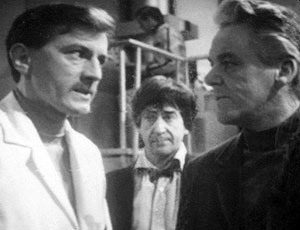
Timestamp 042 Fury from the Deep


The TARDIS arrives in the middle of the ocean, and thankfully it floats. Of course, any danger of drowning in a time machine is casually tossed aside by the Doctor endangering his companions by smearing anomalous sea foam in their faces. How reckless, since that foam is the precursor to the titular fury from the deep.

The pumping station, which moves gas from the platforms in the ocean to the mainland is experiencing both a spy problem and a flow problem. The flow just messes with monthly efficiency ratings and causes the station’s supervisor, Robson, to act like a petulant child. The spy lets an invasive seaweed-and-foam entity into the base to – yawn – take over the base and eventually – yawn – the world.

I tried to judge this serial based on its own merits rather than against the problems of the entire fifth series. They’ve been enjoyable, but this season’s theme of defending the base under siege combined with longer serial formats that could have been seriously slimmed down is getting really hard to ignore. This story was an okay break from the alien of the week formula, but it’s still clichéd.

On the upside, we get a chance for Victoria to directly save the day before taking her leave of the TARDIS. She finally breaks the tradition of companions getting terrible send-offs with Victoria having a strong role in the story and getting a family and home in the end. On the downside, where did all of this concern about Victoria feeling unsafe come from? Before now, she hasn’t voiced much of this concern aside from her incessant screaming.

Other positives include the first use of the sonic screwdriver, actually using the TARDIS and its resources in the middle of a serial, and the excellent use of two of the creepiest looking men I’ve ever seen for the station’s killer spies.

A major drawback was Robson. I seriously wanted to feed him to the seaweed-foam-monster and leave him there. He’s a terrible supervisor.

This story was decent enough, but the real high point (and low point) was saying goodbye to Victoria. I wasn’t happy with her sudden change of heart in this story, but I am happy with her final resolution. I’m also ready to be done with the base siege story format.


Rating: 3/5 – “Reverse the polarity of the neutron flow.”


UP NEXT – Doctor Who: The Wheel in Space


The Timestamps Project is an adventure through the televised universe of Doctor Who, story by story, from the beginning of the franchise. For more reviews like this one, please visit the project’s page at Creative Criticality.

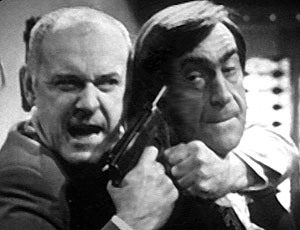
 

Timestamp #41: The Web of Fear

Doctor Who: The Web of Fear
(6 episodes, s05e23-e28, 1968)

Timestamp 041 The Web of Fear


Picking up right after the last serial, we get the return of Professor Travers, the Yeti, and the Great Intelligence. It’s been forty years and two serials since we last saw these guys, and the professor has provided a way for the Great Intelligence to return from being blown up and take over the world.  He kept a control sphere, reactivated it, and there you go.

The TARDIS gets trapped in a web, which is intriguing because it tells me that the Great Intelligence can intercept the ship’s random flight plans. Is it an analogue to a bow wake or propeller noise in the depths of time? It’s never explained. Regardless, the Doctor breaks them free and the TARDIS materializes in the London Underground. And now the cute little reference to London’s subway in The Snowmen makes more sense.

They explore, find it abandoned, and encounter some soldiers. Jamie and Victoria get apprehended by the soldiers, and the Doctor is waylaid by a couple of Yeti who prevent an explosion from destroying the subway tunnels by covering it in the same web that snared the TARDIS.

We get to meet up with Travers again – I absolutely love his revelation that holy crap these are the same people I met forty years and two serials ago – and get introduced to new players Anne (the professor’s daughter) and Colonel Lethbridge-Stewart (hey, I know that guy!).

It turns out that the Intelligence has a mole in the base, and a reporter known as Chorley really wants to get away from the whole situation. Victoria lets slip about the TARDIS, Chorley go in search of it, and the travelers chase after him. I’m presuming that it’s because they don’t want him to die because I assume that the TARDIS is locked. Of course, that’s only because the First Doctor made a habit of locking it when he left, but I don’t know for certain that the Second Doctor has that habit.

The actual plot gets explained by the Great Intelligence: It was impressed that The Doctor defeated it forty years and two serials ago, and instead of destroying such talent, the Intelligence wants to possess it. The Intelligence gives the Doctor twenty minutes to surrender, takes Victoria as incentive, and promises to leave once it has the Doctor’s intellect. Realizing that a full-frontal assault is futile after Colonel Lethbridge-Stewart loses all of his troops, the Doctor rigs a control sphere to control a single Yeti and leaves to meet the Intelligence face to figurative face.

Everyone comes together at the lair of the Intelligence, and the being speaks to everyone through the mole, the now lifeless body of Staff Sergeant Arnold. The Doctor submits to the mind absorption, but Jamie looses the controlled Yeti to disrupt the proceedings and free everyone. The Doctor is angry because he had reversed the headset to absorb the Intelligence, but now it’s free (free fallin’) in space and no longer connected to the Earth. Crisis abated… at least for another 44 years in our world, anyway.

I question the Doctor’s efforts in this one. The Great Intelligence is so immense and powerful, and I don’t know if the Doctor could handle that kind of download to his brain. I feel that 1) it would have killed him, or 2) it would have backfired and given the Intelligence a corporeal form. That’s one hell of a gamble.

It was fun to see the Yeti again, even if it was in a poorly done reconstruction. The reconstructions are starting to wear on me, and while I’m still enjoying the journey, I’m really looking forward to the coming seasons just to see the stories a bit more clearly.

I need to seek out the recently discovered film version (which is still missing episode three), but my enthusiasm to do so is a little less for this one. It was a good story overall, but really slow. It needed to be tightened up and streamlined to four or five episodes. Even with that complaint, it’s still a good missing link in the mythology and a good springboard for things to come, and I did enjoy it.


Rating: 4/5 – “Would you care for a jelly baby?”


UP NEXT – Doctor Who: Fury from the Deep


The Timestamps Project is an adventure through the televised universe of Doctor Who, story by story, from the beginning of the franchise. For more reviews like this one, please visit the project’s page at Creative Criticality.


Timestamp #40: The Enemy of the World

Doctor Who: The Enemy of the World
(6 episodes, s05e17-e22, 1967-68)

Timestamp 040 The Enemy of the World

This was one of the best in the season so far, especially that action-filled pulse-pounding opening sequence.

The TARDIS arrives (in stealth mode, nonetheless – no VROOP!) in a near future dominated by a rising world dictator named Salamander. The twist? The Doctor looks just like him. Despite all the confusion, The Doctor explains that he and his companions don’t know of current world events because they’ve been out of touch for a while… “on ice” if you will. That callback was a nice touch considering the theme of the first three serials in this series.

Since it’s the only way out from between the rock and a hard place, The Doctor agrees to impersonate Salamander. Patrick Troughton, an actor with whom I have no experience outside of Doctor Who, is amazing in this serial. He portrays three distinct characters in this – the Doctor, Salamander, and the fake Salamander – and his acting ability is superb.

Jamie stages an attempt to save Salamander to gain the dictator’s confidence, and as a result gets himself and Victoria hired onto Salamander’s staff. This introduces the crotchety chef, a character that I love, who provides a great humor break in the seriousness of this story.

Benik is deliciously mustache-twirlingly evil and creepy, even though it’s over the top, and the refugees hidden underground are another nice twist. The Doctor also understands the internet: “Strange isn’t it? People spend their time making nice things and other people come along and break them.”

This was an excellent political thriller with a small sci-fi twist, especially since the Doctor refuses to personally act against Salamander without concrete proof that the man is evil. It was a good break from the “defend the base from the invading alien” stories, even with an abrupt ending. Salamander meets a fitting end.

I watched the reconstructed version. It’s now a mission to watch this in the recently recovered full version.


Rating: 5/5 – “Fantastic!”


UP NEXT – Doctor Who: The Web of Fear


The Timestamps Project is an adventure through the televised universe of Doctor Who, story by story, from the beginning of the franchise. For more reviews like this one, please visit the project’s page at Creative Criticality.
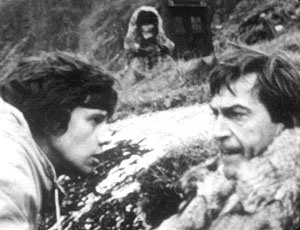


Timestamp #39: The Ice Warriors

Doctor Who: The Ice Warriors
(6 episodes, s05e11-e16, 1967)

Timestamp 039 The Ice Warriors


Traveling through time and space, and it’s like they never left. Except this time, the TARDIS is sideways.

Come to think of it, I’m a little surprised that the TARDIS doesn’t have its own gravity. I mean, sure it makes for great comedy to have the ship fall over and everyone topple, but it seems rather unsafe from the materialization aspect. Imagine that the ship lands, falls off a cliff, and the Doctor wastes a regeneration because he snapped his neck by crashing into the library wall at full speed.

Anyway… I digress.

It’s an ice age in the far future, and people are dependent on computers to such an extent that they can’t even make simple decisions on their own. It’s so bad that the team’s leader, Clent, makes the Doctor prove his qualifications after the Time Lord saves the base and their lives. Part of me wanted the Doctor to just walk away and let this civilization freeze. It seems that the Doctor is a better man than me.

This future came about because of artificial crops, which minimized the need for real plants. As they died off, less carbon dioxide was produced and the Earth’s heat was no longer retained. I’m going to stop here and quote another good doctor: “Now wait just a damn minute!”

It’s been a few years since my high school biology class, but I seem to remember plants consuming CO2 and producing O2. The science was a bit lacking in this episode. I understand that they corrected it in the novelization, which is technically canon, but I’m not pursuing the books or audio dramas at this point.

These humans have discovered something called an Ice Warrior. Long story short: It wakes up and explains that it hails from Mars and has been frozen for millennia, and he needs his warriors to decide whether to invade or leave. It forces Victoria to find a power pack and goes to thaw his compatriots. After Victoria is kidnapped, Jamie and Arden set out to rescue Victoria from the Ice Warriors, but they get ambushed and left for dead. Luckily, Jamie is rescued by scavengers.

The Doctor develops a plan to use ammonium sulfide to incapacitate the Ice Warriors – I loved how he tested the chemical dispenser, since he’s been so skeptical of this civilization, by having it create water – and ventures off to the Martian ship. Of course the humans protest because they can’t afford to lose anyone else, but the Doctor was right: He was superfluous at the base.

The Ice Warriors are fighting the scientists because they think the ionizer, which is used to melt the ice, is a weapon. They’ve decided to leave (good!), but first have to invade the base (bad!) to get fuel for their ship. That plan begins with trying to shatter the base’s protective dome with a sonic gun. After the Doctor incapacitates the Ice Warrior gunner with the ammonium sulfide mix, he and Victoria change some settings and make the sonic gun more likely to hurt the Ice Warriors.

I would have had sympathy for the Ice Warriors because they were trying to leave somewhat peacefully, but then they started being violent to get the fuel. I had no problem with their (probably not so) final fate. The computer can’t help because it’s built to preserve itself and the society, so it short circuits and the scavengers save the day by firing the ionizer at the ship and disintegrating it.

Victoria really did a good job in this episode of carrying her own. Sure, she was a bit of a damsel in distress, but she also was great in moving the plot. I especially loved how she couldn’t describe the specifics of the Ice Warrior ionic engine, not because she was stupid, but because she didn’t have the words based on her temporal reference. I can forgive the earlier scientific snafu for that brilliance.

I can also forgive the generated apathy for the humans. They were supposed to be frustrating in their dependence on a self-serving computer. What’s harder to forgive is the plot convenience of the Ice Warriors actually having enough fuel to start lifting off. That negates any intelligence I attributed to the Ice Warriors because they attacked for no reason. It’s also lazy plot continuity.

Overall, The Ice Warriors is a fun enough story, but the plot and scripting are all over the place. I’d give it a 3.5, but the scoring method is based on whole numbers, and I follow the trend of John and Paul at Cyborgs: A Bionic Podcast by being optimistic when in doubt.


Rating: 4/5 – “Would you care for a jelly baby?”


UP NEXT – Doctor Who: The Enemy of the World


The Timestamps Project is an adventure through the televised universe of Doctor Who, story by story, from the beginning of the franchise. For more reviews like this one, please visit the project’s page at Creative Criticality.


Timestamp #38: The Abominable Snowmen

Doctor Who: The Abominable Snowmen
(6 episodes, s05e05-e10, 1967)

Timestamp 038 The Abominable Snowmen


The Doctor is excited to be back in Tibet, has a Holy Ghanta to return to the local monastery, and the adventure begins with murder. The Doctor’s warm furry coat gets him confused with the real monster of the week, the Yeti, who is actually pretty convincing for the 1960s. Meanwhile, the local monks are battling the Yeti, who is a robot being controlled by Padmasambhava, the High Lama of the monastery, who is himself being controlled by The Great Intelligence.

The Great Intelligence… wait, I know that one! This nemesis has something for the cold, doesn’t it?

It’s a pretty simple story from there: The Great Intelligence wants to take over the world and our heroes unlock the puzzle to stop it. Cue the big explosion at the end to wrap it all up. Victoria continues to grow on me with her desire to explore and strength of character. Jamie is still doing his thing as the vocal compass of the team.

Overall, it’s a good story and an entertaining time.

Rating: 4/5 – “Would you care for a jelly baby?”


UP NEXT – Doctor Who: The Ice Warriors


The Timestamps Project is an adventure through the televised universe of Doctor Who, story by story, from the beginning of the franchise. For more reviews like this one, please visit the project’s page at Creative Criticality.
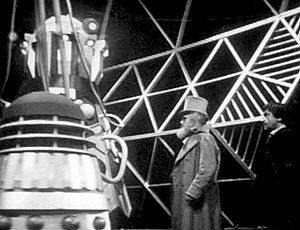


Timestamp #37: The Tomb of the Cybermen

Doctor Who: The Tomb of the Cybermen
(4 episodes, s05e01-e04, 1967)

Timestamp 037 The Tomb of the Cybermen

The fifth series starts right where the fourth left off with Victoria joining the crew.

The travelers arrive on the homeworld of the Cybermen to find an archaeology team researching the titular tomb. It’s a nice parallel to the previous serial, which briefly (re)visited the homeworld of the Daleks. As they explore, they unravel more of the enemy’s background. I had seen the cybermats before on the recent series episodes, so it’s good closure on my end to see where the mechanical caterpillars originate.

The team restores power to the complex and awakens the tomb, but the rocket ship is broken and the pilot is distrustful, so the team is stranded. Of course, the Doctor can leave anytime, but he chooses to remain, and the story continues with members of the exploration team belonging to the Brotherhood of Logicians, who want to add the Cybermen’s power to the Brotherhood’s intelligence.

I like the design of the Cybercontroller with the semi-transparent brain cavity, but those voices are still hard to understand at times. We also discover that these Cybermen are related to those from the assault on the moon base.  Once again, without explanation, they recognize the Doctor despite his new persona, but they do explain that the moon base attack was motivated by fear of becoming extinct thanks to the First Doctor’s actions toward Mondas.

An artifact of the 1960s are the stunt wires, which are plainly visible during the fight on my plasma screen, but were probably easily hidden on CRTs half a century ago.

The companions get some nice beats in this serial. First, Victoria reflects on her family and the terror of the Daleks with counsel from the Doctor. She’s very innocent, but very loyal. Jamie also gets to exploit his very well-developed relationship with the Doctor, especially in one exchange that made me guffaw. When discussing the minds of the cybermats:

“You might say they’ve had a complete metal breakdown.”

“Oooh.”

“Sorry.”

In another mythology-building moment, The Doctor advocates using a firearm to kill as he has no other choice, but then rejects it moments later when he enters the tomb to finish off the Cybermen. He also wraps up this serial with a refusal to make predictions about the end of the Cybermen, even though he was really really sure about the Daleks just days earlier. Spoiler alert, Doctor: They both come back.

I think Series Five has set a high bar with an excellent adventure.


Rating: 5/5 – “Fantastic!”

UP NEXT – Doctor Who: The Abominable Snowmen


The Timestamps Project is an adventure through the televised universe of Doctor Who, story by story, from the beginning of the franchise. For more reviews like this one, please visit the project’s page at Creative Criticality.
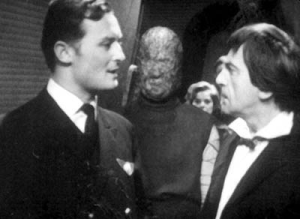
Timestamp #36: The Evil of the Daleks

Doctor Who: The Evil of the Daleks
(4 episodes, s04e37-e43, 1967)

Timestamp 036 The Evil of the Daleks


Grand Theft TARDIS.

Thematically, this one is about human greed and how easily the Daleks manipulate it. Human innovation inadvertently allows the Daleks to invade Earth to kidnap the Doctor and conquer humans by decoding the “Human Factor”. The Doctor forced to cooperate with the Daleks or lose the TARDIS forever.

I did like the trials with Jamie and Kemel as they attempt to rescue Victoria, and how they were used to decode the Human Factor. Jamie’s courage, mercy, instinct, and self-preservation assist the Doctor in turning the tables on his foes and overcoming the new electronic control the Daleks have over people. That brainwashing and (for lack of a better term) assimilation sheds some light on the Dalek agents from the newer episodes, which seemed to come from nowhere.

While I thought that the Factors were silly, it was neat to see the Daleks imprinted with the Human Factor to make them act like innocent children.

Of course, when the Daleks have what they want, they they return to Skaro and destroy the laboratory (and presumably the humans as well). Upon returning to the familiar tunnels and city, I wanted to know where the Thals were hiding. We do get to meet the Emperor Dalek (who was presumably hiding during The Daleks?) and Human Factor MacGuffin is its downfall.

Maxtible and his quest for the secret of alchemy made some sense from the Victorian time era, as did the desire to imprint all of humanity with the Dalek Factor (the Dark Side to the Human Factor’s Light?) once I got past the silliness of the Factors. The entire imprinting technique doesn’t work on the Doctor, because, well, he’s alien.

We get some more teases about what’s inside a Dalek can, and we get a new companion on the TARDIS. There was also an error in the serial reconstruction: The black domed Dalek confronts finds a clearly marked Alpha in the corridor, but the Dalek is referred to as Omega.

The big negative is right back to the problem of The Macra Terror: The Doctor’s actions precipitate what he presumes to be the “final end” of the entire Dalek species. We’re talking genocide for the second time in almost as many serials. That doesn’t seem like something he would do except as a last and final resort, and certainly not without significant remorse, and I can’t help but wonder if this is a hallmark of producer Innes Lloyd or something else.

Overall, this serial could have been an episode or two shorter, but it was still an enjoyable tale with a favorite (if sometimes uneven) enemy.


Rating: 4/5 – “Would you care for a jelly baby?”

UP NEXT – Fourth Series Summary


The Timestamps Project is an adventure through the televised universe of Doctor Who, story by story, from the beginning of the franchise. For more reviews like this one, please visit the project’s page at Creative Criticality.
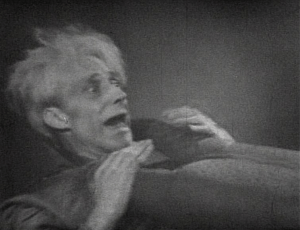


Timestamp #35: The Faceless Ones

Doctor Who: The Faceless Ones
(4 episodes, s04e31-e36, 1967)

Timestamp 035 The Faceless Ones


First, following on from the last review: I love the new theme music as well. It actually sounds a lot better to me than the first arrangement.

This time, we get the Doctor versus the body-snatchers at the airport, and this would be fun to revisit in the post-9/11 era.

The TARDIS materializes right on the airport runway, Polly gets turned into a pod-person after witnessing a murder, and the Doctor and Jamie get the red tape run around. Ah, red tape… Doctor Leonard McCoy was right: The bureaucratic mentality is the only constant in the universe.

I really liked this one, with all of the intrigue and the politics as the travelers tried to solve the mystery. I loved our heroes hiding in the photo booth, especially with the Doctor cheesing it up for the camera. The Doctor maniacally pretending to have a bomb as a distraction reminded me of the modern Doctors. Jamie was especially fun to watch as he was so lost in the modern era, and yet ends up really propelling this story forward.

Of course, Ben and Polly are both captured and don’t appear in much of this serial as a means to facilitate their departure from the show in Doctor Who tradition. At least they get to say goodbye. More on that in a second.

On companions, I’m glad Samantha Briggs didn’t join the group as the production team wanted. I found her kind of irritating even though she saved everyone with her mirror. Jean Rock, on the other hand, would have been fantastic as a companion, and I’m glad to see after a little research, that we get to see Wanda Ventham (mother to Benedict Cumberbatch!) a few more times in Doctor Who.

I found the sexism in the discussion as Samantha decides to investigate the hangar to be excusable: Samantha says she “needs a man” to keep her safe, and Jamie agrees. Samantha doesn’t strike me as very empowered, and Jamie’s temporal basis makes him more prone to strength belonging to men over women. I don’t agree with the sexism, but I recognize that it fits with the time and characters.

There was some really nice humor from the Doctor after he was nearly frozen to death in the same room they’re searching: “Jamie, we’re getting warmer, which is a change from the last time I was here.” I also didn’t mind the common Doctor Who trope of shrinking people for long-term storage as I was engaged in the story.

Polly and Ben leave the TARDIS on the very day they started to travel. The Doctor’s envy is obvious as he can’t go home yet. Ben and Polly have been good companions, even with Polly’s unevenness of character. They were a breath of fresh air, and will be missed. This, of course, leave Jamie as the single companion on the TARDIS with the Doctor, and I don’t mind that arrangement as Jamie as shown to be very capable.

Overall, this was an enjoyable time.


Rating: 4/5 – “Would you care for a jelly baby?”

UP NEXT – Doctor Who: The Evil of the Daleks


The Timestamps Project is an adventure through the televised universe of Doctor Who, story by story, from the beginning of the franchise. For more reviews like this one, please visit the project’s page at Creative Criticality.
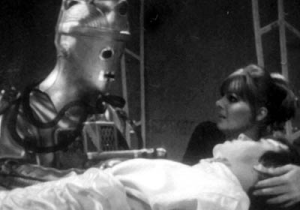


Timestamp #34: The Macra Terror

Doctor Who: The Macra Terror
(4 episodes, s04e27-e30, 1967)

Timestamp 034 The Macra Terror

First things first: I love the new opening with Patrick Troughton’s face in the vortex.

At first, I thought this was a Brave New World tale. It’s an R.E.M. dream of Shiny Happy People having fun, with tightly policed contentment and chemical treatments for those who don’t conform. Chew your soma, kids, because beatings will continue until morale improves.

This society is essentially a cult, with the blind faithful controlled by the Macra to mine the life-providing gas, and the Doctor is here to bring freedom to the enslaved humans. Of course, the travelers are introduced to the brainwashing so they can become part of the cult: Jamie does not succumb, Ben falls for it, Polly has to be convinced, and the Doctor continues to be his whimsical self. I simply adore his trips through the machines that first pressed his clothes, and then unintentionally messed them up again. This Doctor isn’t falling for it.

This Doctor also shows his scientific and mathematical brilliance in deriving the secret equation through examination of the evidence.

All of that said, I have negatives: The minor one is the music, which was really annoying. The major one was the resolution of  the story.

At its core, this story is really more about preserving freedom and abolishing slavery than it is about escape from possibility of death. Sure, freedom is essentially a moral positive and slavery is essentially a moral negative, but the result was the death of the captors instead of any kind of negotiation or compromise. The Doctor didn’t even try negotiation before stepping onto the path of killing the Macra for their crimes against the colony. Granted, such negotiations would have likely failed as they would with pretty much any dedicated cult leader, but I would have liked to see him try at the very least.

It just doesn’t seem like something the Doctor would do, and that knocked a decent story down to a semi-decent one at best.


Rating: 3/5 – “Reverse the polarity of the neutron flow.”

UP NEXT – Doctor Who: The Faceless Ones


The Timestamps Project is an adventure through the televised universe of Doctor Who, story by story, from the beginning of the franchise. For more reviews like this one, please visit the project’s page at Creative Criticality.


Timestamp #33: The Moonbase

Doctor Who: The Moonbase
(4 episodes, s04e23-e26, 1967)

Timestamp 033 The Moonbase


The Cybermen are back, and a bit better designed than their last appearance not so long ago.

The story is about a weather control station on the moon that is being attacked by a mysterious virus. The virus, craftily hidden in their sugar supply, disables the staff of the moonbase so the Cybermen can essentially assimilate the most compatible of the infected and kill everyone on Earth with storms induced by the station’s control system. It’s pretty straightforward.

It turns out that the Doctor is an actual medical doctor who studied under Joseph Lister, and Jamie is safe because he didn’t use the sugar and has a head injury that disqualifies him from being transformed. Ben and Polly acted rather intelligently in fighting the Cybermen with a chemical attack to disable their control systems.

I noted some 1960s sexism: The making of coffee wasn’t an example, but “stay here, Polly, this is men’s work” certainly was. Luckily, Polly is a strong and independent woman… at least in most of her serials with the Doctor.

The Cybermen are a bit hard to understand in this serial. They have new voices, which are heavy treated with audio effects. Also, how do they know the Doctor’s new face? Between them and the Daleks, I’m beginning to think that the Doctor has an aura that every major antagonist recognizes over the face or physical features.

Meanwhile, the internal dialogue with the Doctor was distracting. It wasn’t terrible, but certainly not something I’m familiar with in the franchise.

The depressurization of the dome seemed a bit unrealistic, since the air rushes out, but no one is pulled with it and the coffee is still standing.

Finally, the jumping on the moon with bionic sound effects. Ugh.

Not a bad serial by any stretch, but not a top performer either.

Rating: 3/5 – “Reverse the polarity of the neutron flow.”


UP NEXT – Doctor Who: The Macra Terror


The Timestamps Project is an adventure through the televised universe of Doctor Who, story by story, from the beginning of the franchise. For more reviews like this one, please visit the project’s page at Creative Criticality.