As part of Alex Banayan’s book, The Third Door: The Wild Quest to Uncover How the World’s Most Successful People Launched Their Careers, he interviewed the late Dr. Maya Angelou and received a great deal of good advice. Among it was this standout that she wished that she had penned:
I asked what someone should do when they’re searching for rainbows, but all they see are clouds.
“What I know is that it’s going to be better,” she said. “If it’s bad, it might get worse, but I know that it’s going to be better. And you have to know that. There’s a country song out now, which I wish I’d written, that says, ‘Every storm runs out of rain.’ I’d make a sign of that if I were you. Put that on your writing pad. No matter how dull and seemingly unpromising life is right now, it’s going to change. It’s going to be better. But you have to keep working.”
It’s nothing elaborate, but it’s advice that has special meaning for me of late.
Tangentially, the song that she mentioned is Gary Allan’s “Every Storm (Runs Out Of Rain)” from 2012.
Culture on My Mind is inspired by the weekly Can’t Let It Go segment on the NPR Politics Podcast where each host brings one thing to the table that they just can’t stop thinking about.
Culture on My Mind Film Music Podcasts
February 7, 2020
This week’s “can’t let it go” item is a collection of podcasts about soundtrack music. I’m a big fan of film scores, and I have really fallen for four different podcasts about the history and construction of music.
The Soundtrack Show is billed as “a weekly look at the film scores and soundtracks for some of the most popular movies, TV Shows, Video Games and Theater pieces of all time.” It is hosted by David W. Collins, previously the lead sound designer and voice director at LucasArts. Collins studied theatre and music for both of his advanced degrees before working for LucasArts. While in the industry, he worked on a long list of LucasArts games and voiced roles in Star Wars: The Force Unleashed, Star Wars Battlefront: Renegade Squadron, Star Wars Battlefront: Elite Squadron, and several of the recent Star Wars films. He was also a host at three Star Wars Celebration events.
Using his knowledge of both music and story, Collins has dissected several of the Star Wars films as well as Ennio Morricone’s library, Back to the Future, Ghostbusters, Psycho, and more.
Art of the Score is billed as “an in-depth podcast series discussing the world of film scores.” It is hosted by musicians Andrew Pogson, Dan Golding, and Nicholas Buc.
Andrew Pogson is a twenty-year veteran of the music industry and is the Senior Manager of Special Projects for the Melbourne Symphony Orchestra. Dr. Dan Golding is a senior lecturer in Media and Communications at Swinburne University of Technology, host of Screen Sounds and co-host of the What is Music series for the Australian Broadcasting Corporation, composer of several soundtracks, and author of several pop culture books. Nicholas Buc is a composer, conductor, arranger, violinist, and pianist who studied at the University of Melbourne and New York University.
Their discussions get far more technical, discussing chords, meters, and instruments and how the overall music theory works alongside the rest of the film and story process.
Settling the Score is billed as “an in-depth discussion of a classic film score: what makes it tick, how it serves the movie, and whether it’s, you know, any good. It’s a freewheeling, opinionated conversation with an analytical bent, richly illustrated with musical examples. No expertise required.” It is hosted by Jonathan Dinerstein (a writer for film and television in Hollywood) and Andy Boroson (a pianist and music director) who have been chatting together about movie music for twenty years.
Their friendship is reflected in the podcast discussion. They easily mix the technical elements with the view of two fans sharing opinions over beer or coffee. It is certainly a freeform analytical discussion with a low entry bar for the casual fan.
Score: The Podcast is an extension of 2016’s Score: A Film Music Documentary. It is hosted by Robert Kraft and Kenny Holmes along with the original film’s director Matt Schrader.
Robert Kraft is a songwriter, film composer, recording artist, and record producer who served as the President of Fox Music from 1994 to 2012. During that time, he supervised the music for over 300 films and dozens of television shows. Kenny Holmes is the award-winning producer, cinematographer, and editor who produced the original documentary. Matt Schrader is an Emmy Award-winning producer and the creator of the Blockbuster serialized podcast.
The focus of Score: The Podcast is interviewing film composers to understand their methods and inspirations. It does less with the technical side and more with the people involved in the craft.
Also, if you haven’t listened to Blockbuster – the story of Steven Spielberg, George Lucas, and John Williams surrounding the birth of the 1970s blockbuster movie scene – you really should.
All of these podcasts can also be found on podcatcher services such as Apple, Google, and so on.
Culture on My Mind is inspired by the weekly Can’t Let It Go segment on the NPR Politics Podcast where each host brings one thing to the table that they just can’t stop thinking about.
Culture on My Mind Star Wars: The Clone Wars
January 31, 2020
This week, Star Wars: The Clone Wars is on my mind.
Star Wars: The Clone Wars fills in the gap between the last two installments of the prequel trilogy. I had a few issues with both Attack of the Clones and Revenge of the Sith, but this series helped to smooth things a bit. It doesn’t make those two films perfect by any means, but it helps. It also gave me Ahsoka Tano, one of my favorite complex characters in the Star Wars mythos.
The show started with a theatrical release of the first few episodes in August 2008. On its own, that movie isn’t particularly good, but the series was phenomenal. It ran from 2008 to 2013 on Cartoon Network, then had a limited revival in 2014 on Netflix. Series supervising director Dave Filoni worked with George Lucas to understand the heart and soul of Star Wars, making this series one of the purest expressions of the franchise in the period between the prequel and sequel trilogies.
If you haven’t had the chance yet, I wholeheartedly recommend the series. If anything, start with the first season, then watch the theatrical movie before proceeding into the rest.
The show finally wraps up with the seventh season, which premieres on Disney+ on February 21, 2020.
Culture on My Mind is inspired by the weekly Can’t Let It Go segment on the NPR Politics Podcast where each host brings one thing to the table that they just can’t stop thinking about.
This week, the thing that I can’t let go of are NASA’s latest astronaut graduates. On January 10, 2020, NASA held a ceremony for thirteen graduates, including six women and seven men chosen from 18,000 applicants. Two of the graduates are from the Canadian Space Agency.
Image credit: NASA
The new graduates may potentially be assigned on missions to the International Space Station, the Moon as part of the Artemis program, and eventually Mars in the mid-2030s. Including this class, NASA has 48 astronauts in their corps.
I have a soft spot for astronauts because of my love of science fiction and STEAM disciplines. As a kid, much like many from my generation, I wanted to be an astronaut. I have a lot of respect for anyone who makes it through and serves with honor.
The NASA press release listed the graduates and links to their official biographies. From that press release:
Kayla Barron, a U.S. Navy lieutenant, originally is from Richland, Washington. She graduated from the U.S. Naval Academy with a bachelor’s degree in systems engineering. A Gates Cambridge Scholar, Barron earned a master’s degree in nuclear engineering from the University of Cambridge in the United Kingdom. As a submarine warfare officer, Barron served aboard the USS Maine (SSBN 741), completing three strategic deterrent patrols. She came to NASA from the U.S. Naval Academy, where she was serving as the flag aide to the superintendent.
Zena Cardman calls Williamsburg, Virginia, home. She completed a bachelor’s degree in biology and a master’s degree in marine sciences at The University of North Carolina, Chapel Hill. Cardman was a National Science Foundation Graduate Research Fellow, working at The Pennsylvania State University. Her research focused on microorganisms in subsurface environments, ranging from caves to deep sea sediments. Her field experience includes multiple Antarctic expeditions, work aboard research vessels as both a scientist and crew member, and NASA analog missions in British Columbia, Idaho and Hawaii.
Raja Chari, a U.S. Air Force colonel, hails from Cedar Falls, Iowa. He graduated from the U.S. Air Force Academy with bachelor’s degrees in astronautical engineering and engineering science. He continued on to earn a master’s degree in aeronautics and astronautics from Massachusetts Institute of Technology (MIT) and graduated from the U.S. Naval Test Pilot School in Patuxent River, Maryland. Chari served as the commander of the 461st Flight Test Squadron and the director of the F-35 Integrated Test Force at Edwards Air Force Base (AFB) in California.
Matthew Dominick, a U.S. Navy lieutenant commander, was born and grew up in Wheat Ridge, Colorado. He earned a bachelor’s degree in electrical engineering from the University of San Diego and a master’s degree in systems engineering from the Naval Postgraduate School in Monterey, California. He also graduated from the U.S. Naval Test Pilot School. Dominick served on the USS Ronald Reagan as department head for Strike Fighter Squadron 115.
Bob Hines, a U.S. Air Force lieutenant colonel, attended high school in Mountaintop, Pennsylvania, but considers Harrisburg, Pennsylvania, his hometown. He has a bachelor’s degree in aerospace engineering from Boston University and a master’s degree in flight test engineering from the U.S. Air Force Test Pilot School at Edwards AFB. Hines served as a developmental test pilot on all models of the F-15 while earning a master’s in aerospace engineering from the University of Alabama. He has deployed in support of Operations Enduring Freedom and Iraqi Freedom. Prior to being selected as an astronaut, he was a Federal Aviation Administration flight test pilot and a NASA research pilot at Johnson.
Warren Hoburg originally is from Pittsburgh. He earned a bachelor’s degree in aeronautics and astronautics from MIT, and a doctorate in electrical engineering and computer science from the University of California, Berkeley. He is a commercial pilot, and spent several seasons serving on the Bay Area Mountain Rescue Unit and Yosemite Search and Rescue. Hoburg came to NASA from MIT, where he led a research group as an assistant professor of aeronautics and astronautics.
Dr. Jonny Kim, a U.S. Navy lieutenant, was born and grew up in Los Angeles. He enlisted in the U.S. Navy, then trained and operated as a Navy SEAL, completing more than 100 combat operations and earning a Silver Star and Bronze Star with Combat V. Afterward, he went on to complete a degree in mathematics at the University of San Diego and a doctorate of medicine at Harvard Medical School. Kim was a resident physician in emergency medicine at Massachusetts General Hospital in Boston.
Jasmin Moghbeli, a U.S. Marine Corps major, considers Baldwin, New York, her hometown. She earned a bachelor’s degree in aerospace engineering with information technology at MIT and a master’s degree in aerospace engineering from the Naval Postgraduate School. She also is a distinguished graduate of the U.S. Naval Test Pilot School. Moghbeli came to NASA from Yuma, Arizona, where she tested H-1 helicopters and served as the quality assurance and avionics officer for Marine Operational Test and Evaluation Squadron 1.
Loral O’Hara was born in Houston. She earned a bachelor’s degree in Aerospace Engineering at the University of Kansas and a master’s degree in Aeronautics and Astronautics from Purdue University. Prior to joining NASA, O’Hara was a Research Engineer at Woods Hole Oceanographic Institution in Woods Hole, Massachusetts, where she worked on the engineering, test, and operations of deep-ocean research submersibles and robots.
Dr. Francisco “Frank” Rubio, a U.S. Army lieutenant colonel, originally is from Miami. He earned a bachelor’s degree in international relations at the U.S. Military Academy at West Point, New York, and a doctorate of medicine from the Uniformed Services University of the Health Sciences in Bethesda, Maryland. Rubio has accumulated more than 1,100 hours as a Blackhawk helicopter pilot, including 600 hours of combat and imminent danger time. He was serving as a surgeon for the 3rd Battalion of the Army’s 10th Special Forces Group at Fort Carson, Colorado, before coming to NASA.
Jessica Watkins hails from Lafayette, Colorado. She graduated from Stanford University in Palo Alto, California, with a bachelor’s degree in geological and environmental sciences, then went on to earn a doctorate in geology from the University of California, Los Angeles. Watkins has worked at NASA’s Ames Research Center in Silicon Valley, California, and Jet Propulsion Laboratory in Pasadena, California, and was a postdoctoral fellow at the California Institute of Technology, where she collaborated on NASA’s Mars Science Laboratory rover, Curiosity.
Joshua Kutryk, a Royal Canadian Air Force lieutenant colonel, is from Beauvallon, Alberta. He has a bachelor’s degree in mechanical engineering, as well as master’s degrees in space studies, flight test engineering, and defense studies. Prior to joining CSA, Kutryk worked as an experimental test pilot and a fighter pilot in Cold Lake, Alberta, where he led the unit responsible for the operational flight-testing of fighter aircraft in Canada.
Jennifer Sidey-Gibbons hails from Calgary, Alberta. She holds an honors bachelor’s degree in mechanical engineering from McGill University in Montreal and a doctorate in engineering from the University of Cambridge. While at McGill, she conducted research on flame propagation in microgravity, in collaboration with CSA and the National Research Council Flight Research Laboratory. Prior to joining CSA, Sidey-Gibbons worked as an assistant professor in combustion in the Department of Engineering at Cambridge.
Bravo Zulu, astronauts.
Culture on My Mind is inspired by the weekly Can’t Let It Go segment on the NPR Politics Podcast where each host brings one thing to the table that they just can’t stop thinking about.
This week, the thing that I can’t let go of is a little lesson from RetroBlasting’s recent donation drive to combat the Australian wildfires. The RetroBlasting community did a good thing here. Michael mentioned that, while their effort is literally pennies in comparison to celebrity donations – Chris Hemsworth donated $1 million, Kylie Minogue donated $500k, and several others are chipping in – he referenced the lesson of the Widow’s Offering.
We have an idiom here in the United States: “My two cents.” Derived from the English version, it boils down to the speaker offering a personal opinion. The aim is to depreciate the opinion – it’s only worth two pennies, after all – in order to display politeness and humility while lessening any impacts.
In this day and age, there is often no politeness or humility involved. It’s on the same playing field as “southern hospitality.”
What I didn’t know if how this idiom had evolved from the writings of the Bible, specifically from the Synoptic Gospels.
The tellings from both Mark 12:41-44 and Luke 21:1-4 are similar: In 20-30 AD, around the time that Jesus was teaching in Judea, the smallest and least valuable coin in circulation was the lepton, worth about six minutes of an average daily wage. Crowds were donating money to the offering box, and while the rich were doling out large sums of cash, a poor widow walked up and donated two lepta. The observation was that the poor widow put in more than all of the other contributors since she donated her entire livelihood rather than remaining comfortable in her charity.
In the era of the King James translation, a small coin was called a mite, thus leading to the colloquial update to the “Lesson of the Widow’s Mite.”
Historically, the temple that was the setting of this parable was destroyed in 70 AD. This has led to the cynical view that the gift was for nothing, but I believe that charity is the most important part. Donations of time and money – whether they be a single meal, a pouch for a displaced joey, or a grand million-dollar statement – all make an impact on those who receive them. Donations that come from the figurative widows, such as those from RetroBlasting’s community or the recent #TeamTrees campaign, mean a lot because of the sacrifice involved.
Never underestimate the power of grassroots organizing. Never underestimate your impact on the world. Even two pence means something to someone.
If you want to help Australia in this time of need, there are several ways to do so. PBS NewsHour has a list of places to start, and a Google search revealed several other links. There’s also the Rescue Craft Co on Facebook which has been making soft goods for displaced wildlife, although monetary donations are probably more versatile.
As always, be cautious and do your research when sending money to unknown entities.
My gratitude goes out to Michael French and the RetroBlasting community, not only for their contribution to our friends down under, but also for inadvertently teaching me something new in the process.
Culture on My Mind is inspired by the weekly Can’t Let It Go segment on the NPR Politics Podcast where each host brings one thing to the table that they just can’t stop thinking about.
Culture on My Mind Hans Zimmer Has No Time to Die
January 10, 2020
This week, the thing that I can’t let go of is Hans Zimmer joining No Time to Die, the twenty-fifth James Bond film.
No Time to Die, Daniel Craig’s fifth (and final?) outing as secret agent 007 is due to theaters on April 10th. Surprisingly, according to Variety, the production team has replaced composer Dan Romer (Beasts of No Nation) with Hans Zimmer. The ever-popular Hollywood chestnut of “creative differences” was cited as the reason for the divorce.
According to the Variety piece, Zimmer has a full plate at the moment, including Wonder Woman 1984, Top Gun: Maverick, and Dune. That means that he might need help, to get No Time to Die done before mid-February to meet production deadlines, possibly from collaborators like Benjamin Wallfisch or Lorne Balfe.
No, I’m not forgetting his work in the DC Comics Snyderverse films.
When I think of Bond, my mind goes to David Arnold (who got very synth-heavy at times) and the late John Barry (who scored eleven Bond films). Thomas Newman did well with his two outings, but his scores weren’t my favorites.
Understandably, the shoes of a Bond composer are hard to fill after 58 years of action. If I were driving the Aston Martin, I would have sided with Michael Giacchino, John Powell, Alan Silvestri, Christopher Lennertz, or Rachel Portman.
Hey, you know, even if Lorne Balfe gets the job from Zimmer, his work on Mission: Impossible – Fallout was solid enough for me. In the end, Hans Zimmer wouldn’t have been my first choice, but April 2020 will be a good opportunity to see if he does right by the 007 legacy.
At least it’s not Goldeneye all over again, right?
Culture on My Mind is inspired by the weekly Can’t Let It Go segment on the NPR Politics Podcast where each host brings one thing to the table that they just can’t stop thinking about.
Culture on My Mind The Call of the Wild
January 3, 2020
In this edition of Culture on My Mind, the thing that I can’t let go of is the late November 2019 trailer release for The Call of the Wild.
The Call of the Wild is a 1903 novel written by Jack London. Set in Yukon, Canada during the 1890s Klondike Gold Rush, the story is centered on a dog named Buck. Buck is a large and powerful St. Bernard-Scotch Collie mix, and he is stolen from his California home and sold into service as a sled dog. He becomes more and more feral in the harsh Yukon environment and is forced to fight to survive. By the end of his journey, Buck emerges as a leader in the wild and becomes a legend in his own right.
The novel has been adapted to film and television at least eight times, and a big-budget version directed by Chris Sanders (the creator and voice of Stitch, and the director of How to Train Your Dragon) and starring Harrison Ford, Dan Stevens, Omar Sy, Karen Gillan, and Bradley Whitford should look amazing.
Unfortunately, I’m too distracted by Buck.
Instead of using a live dog in the role supplemented by CGI special effects for dangerous stunts, 20th Century Fox and the creative team decided to use a totally computer-generated dog with cartoonish responses as the story’s lead. It’s particularly disappointing given the long history of family films that include trained animal actors in starring roles. Disney alone has at least 70 titles that fit the bill, including the Homeward Bound/Incredible Journey films, Old Yeller, White Fang, Eight Below, 101 Dalmatians, and Benji the Hunted. Most recently, they released Togo for Disney+ and that film bridged CG and live-action quite nicely.
Even if Fox didn’t want to include Disney’s expertise – The Call of the Wild began development in 2017 and starting principal photography in late-September 2018, right in the middle of the negotiations for the Disney acquisition of 21st Century Fox – the talent and knowledge exists in the industry to make this film work with a live animal actor. Universal did it with two Babe films and three adaptations of W. Bruce Cameron’s work (A Dog’s Purpose, A Dog’s Journey, and A Dog’s Way Home). Columbia Pictures (now part of Sony) brought us The Adventures of Milo and Otis. Warner Bros made Free Willy. Paramount did Charlotte’s Web.
Not to mention the entire Benji franchise, of which only one title was touched by Disney.
Frankly, a story like The Call of the Wild deserves better than being undermined by cartoonish CGI effects. It’s possible that the effects weren’t finalized by the November trailer release, but several scenes certainly played like the cartoon responses were part of the joke. I just expected more of a White Fang than something like this.
The Call of the Wild hits theaters on February 21, 2020.
Culture on My Mind is inspired by the weekly Can’t Let It Go segment on the NPR Politics Podcast where each host brings one thing to the table that they just can’t stop thinking about.
Culture on My Mind The 2015 LEGO Star Wars Advent Calendar December 27, 2019
One of the holiday season traditions in my household is the LEGO Star Wars Advent Calendar. These boxes contain twenty-four unique small builds, many of which are abstract, along with exclusive mini-figures and whimsical winter-themed spins on Star Wars staples. Among my favorites over the years are the winter Chewbacca, the rebel pilot snowman, and the AT-AT and R2-D2 pair with reindeer antlers.
This year’s box spanned the Skywalker Saga through The Last Jedi. A couple of my favorites were the X-Wing build and the mynock, the latter being a unique approach to the advent calendar.
As you can see, the day-to-day images are posted on my Instagram account. Feel free to follow me there for whimsical observations, tons of pictures of my dogs, and this annual tradition.
I hope this holiday season finds you and yours well. Stay warm, stay safe, and see you next year.
Culture on My Mind is inspired by the weekly Can’t Let It Go segment on the NPR Politics Podcast where each host brings one thing to the table that they just can’t stop thinking about.
Culture on My Mind All That Glitters: The Skywalker Saga Commemorative Figures November 8, 2019
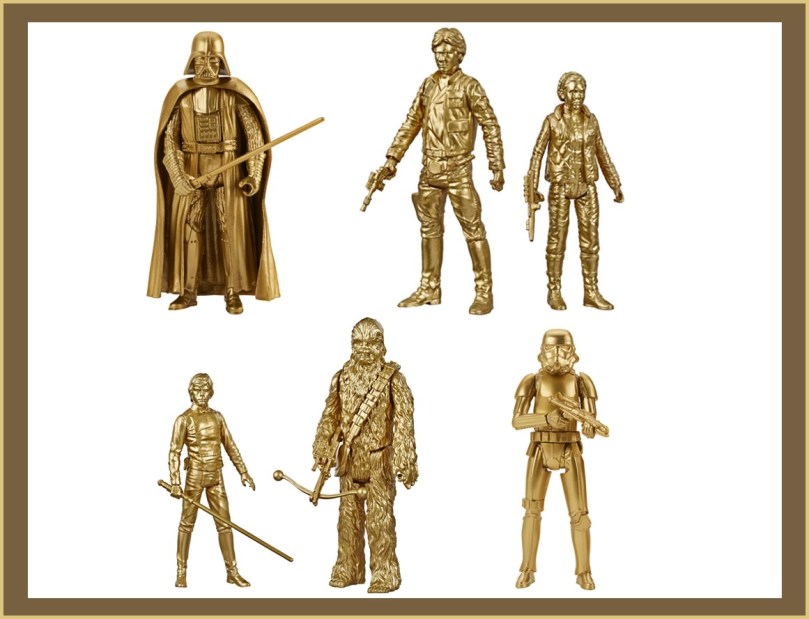
With the release of Star Wars: The Rise of Skywalker this December, the nine-episode Skywalker Saga is coming to a close. To celebrate that milestone, Hasbro announced a set of gold-painted 3.75″-scale action figures, released in two-packs (and one three-pack) to commemorate each film, and exclusive to Walmart stores at $14.99 for each pack.
The original trilogy is represented by Darth Vader and a stormtrooper, Han Solo and Princess Leia, and Luke Skywalker and Chewbacca. The prequels are represented by Yoda and Darth Maul, Mace Windu and Jango Fett, and Anakin Skywalker and Obi-Wan Kenobi. The sequel trilogy gets the expected players of Finn and Poe Dameron, Rey and Kylo Ren, and the trio of C-3PO, R2-D2, and BB-8.
It’s an admirable attempt by Hasbro, but it misses the mark because the figures aren’t particularly special. They’re just repaints of previous releases, many of which had been seen several times before and/or were exclusive to a single outlet.
Starting with the Prequel Era figures in the line—
The Skywalker Saga Yoda figure is the outlier. It was originally the Jedi Master Yoda from 2017’s The Last Jedi Collection. That sculpt was reworked slightly for later release in the 2019 Galaxy of Adventures line.
All told, these Prequel Era figures have appeared multiple times before:
Era of the Force Target 8-pack (2017) – 3
The Last Jedi Collection (2017) – 1
Rogue One Target 8-pack (2016) – 3
The Force Awakens Epic Battles (2015) – 5
The Force Awakens Collection (2015) – 1
Saga Legends Collection (2014) – 2
Saga Legends Collection (2013) – 4
For the Original Trilogy Era figures—
The Skywalker Saga Stormtrooper is a repaint of the 2016 Rogue One series Stormtrooper, which was an all-new sculpt. Collecting site Jedi Business (whose extensive database was immensely helpful in the development of this work) speculated that it was a repaint of the Mimban Stormtrooper (minus the cape) from the 2018 Solo: A Star Wars Story line, but the Mimban helmet sculpt was different. It is possible that the gold Stormtrooper combines the two figures into one for this release.
Along those same lines, both the gold Darth Vader figure and the gold Princess Leia figure are repaints Solo: A Star Wars Story line. Both Darth Vader and Hoth Leia were original sculpts for 2018.
The Skywalker Saga Han Solo figure originally comes from the 2015 Saga Legends series, and was an original sculpt for that line. The gold Luke Skywalker was also an original sculpt for 2017’s The Last Jedi collection. Luke was included in a Target-exclusive three-pack with Emperor Palpatine and an Imperial guard.
The gold Chewbacca is one of the most recent re-releases, coming from the Galaxy of Adventures line in 2018. That figure was minor reworking of the Chewbacca from The Last Jedi, which was original to that line.
Counting up previous appearances, it’s a far smaller list for the Original Trilogy Era figures:
Galaxy of Adventures Collection (2018) – 1
Solo: A Star Wars Story Collection (2018) – 2
The Last Jedi Collection (2017) – 1
Rogue One Collection (2016) – 1
Saga Legends Collection (2015) – 1
It’s interesting that the majority of this set comes from late-2017 and 2018 releases given that Hasbro posted significant losses for that year.
The Skywalker Saga Kylo Ren figure comes from either The Last Jedi or Solo: A Star Wars Movie. Similarly, the Skywalker Saga R2-D2 figure comes from either The Last Jedi or Galaxy of Adventures. In both cases, the latter figure is a rework of the former, but they are virtually identical. The gold R2-D2 does not appear to come with the booster rockets from either of these prior releases.
Since the Sequel Trilogy Era figures primarily stem from either The Force Awakens or The Last Jedi, there’s no need to tabulate them like the previous eras.
It’s evident that there is nothing new nor remarkable about this action figure line. It is a figurative warming up of the leftovers with a new presentation.
I’m trying to avoid the cynical opinion that it would be better to pick up each figure on the secondary market along with a can of gold spray paint. It might be easier given Walmart’s track record with toy exclusives. But, I digress.
While priced lower than current 3.75″ Star Wars figures – a new figure runs nearly $13 today – it’s apparent that the target audience is adults. These are meant for mint-on-card display or for unboxing and standing on a shelf. I can’t imagine a kid choosing a gold version of their favorite character over a more true-to-screen painted option.
Since these are geared more for adult collectors, Hasbro missed a – ahem – golden opportunity to engage the Black Series line and produce a truly remarkable tribute to the movie saga’s milestone. Think about it in terms of who is missing in this set and what holes currently exist in the Black Series line.
How would I have constructed this tribute to make it more meaningful while saving some production costs for Hasbro?
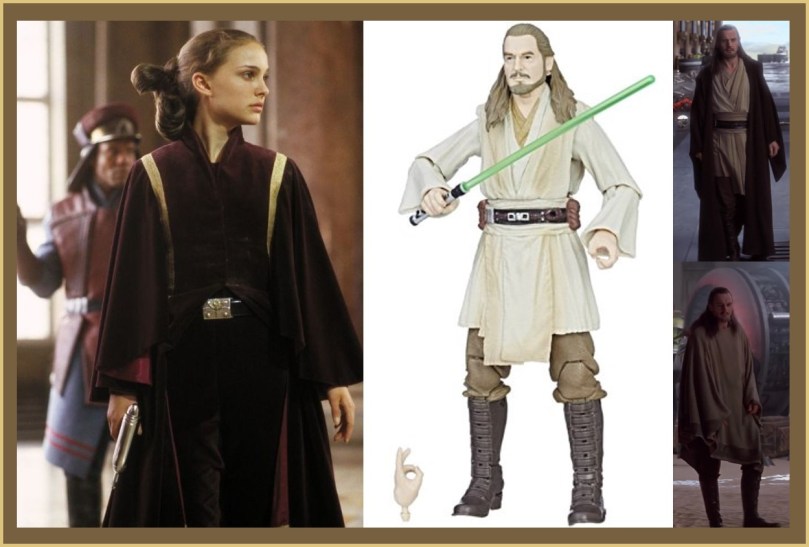
To start, where’s Padmé? For either The Phantom Menace or Attack of the Clones, I would have included her. As the mother of the Skywalker twins, it is a crime to not include her in this tribute to the Skywalker Saga. Additionally, she was at her best as an independent leader and fighter in the first two prequel films. Padmé has only been in the Black Series once and that was in her white bodysuit from the Geonosis scenes in Attack of the Clones. I would have considered including Padmé from the Battle of Naboo in The Phantom Menace.
To accompany Padmé, I would re-release the Black Series Qui-Gon Jinn from 2017, but I would include a soft-goods Jedi robe and poncho combination. Those elements would have been great additions to the original bare-bones release.
Moving to Attack of the Clones, Count Dooku is already rumored for a 2020 release, so just move that figure up in the pipeline. Yes, Darth Maul was far more flashy, but Count Dooku was more manipulative and engineered the Clone Wars. Plus, he was portrayed by the legendary Christopher Lee. To complete the pair, add in Yoda with a cleaner robe and reworked face from his first appearance in the Black Series line, lining him up with the climactic duel from the second prequel episode.
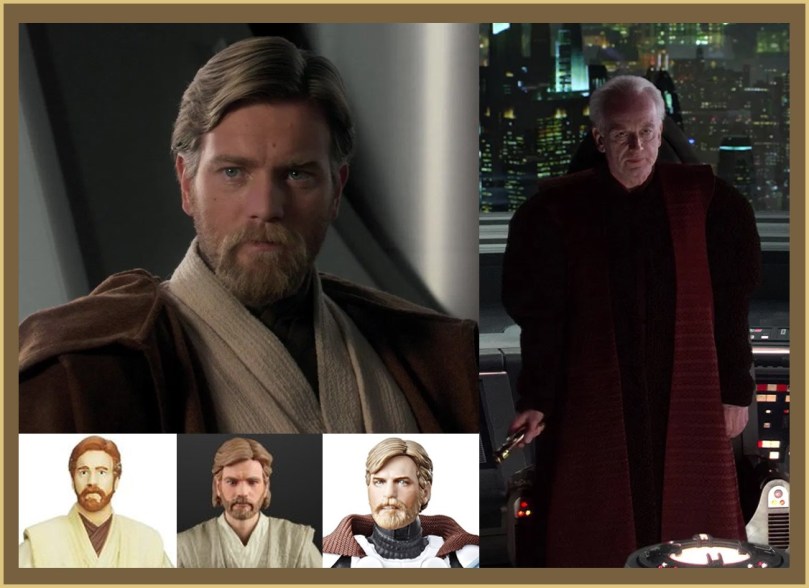
Revenge of the Sith is easy. Palpatine/Sidious has appearedtwice in the Black Series line, both from Return of the Jedi. It would be great to see a figure from the moment when Palpatine reveals himself as a Sith Lord just before executing Order 66. To offset the new figure, add in Obi-Wan Kenobi from the same film. That particular character has been releasedtwice in the Black Series, but it was the same figure each time. Not only did Hasbro neglect a soft-goods robe, but the face sculpt was terrible. Using the lessons learned with the recently released Clone Commander Kenobi and the upcoming Attack of the Clones Kenobi, Hasbro could easily correct the sculpt and offer a much better figure.
When looking at the Original Trilogy Era, things start getting tricky. Luke and Vader have been released several times, and both Han and Chewie aren’t as dynamic when it comes to wardrobe changes. This is where Hasbro has to get creative.
For A New Hope, I would use the 2017 Black Series Han Solo that included the optional black-gloved pilot hands. This time, I would also add the headset that he wears while piloting and fighting in the Millennium Falcon. I would also re-release the 2014 Chewbacca, but include a dejarik table if possible. This would be a large money-saving release for Hasbro so they could channel funds into new sculpts and remasters for this line.
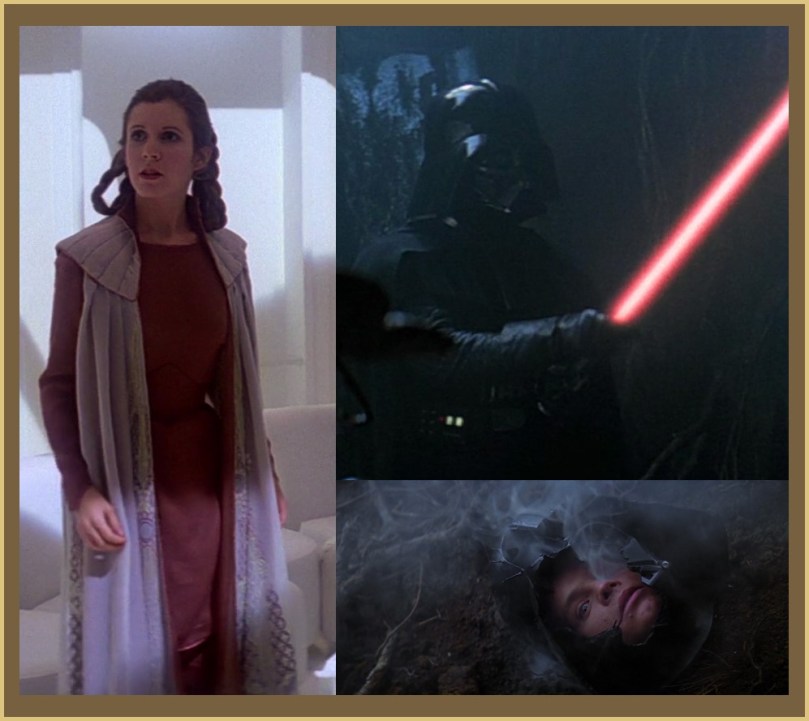
The Empire Strikes Back contains one of my favorite costumes in the Star Wars films, so I’m a little biased here. The Black Series needs Bespin Leia, burgundy and white gown, in soft goods. No question. Back that up with a slightly different Darth Vader than we’ve seen before by tapping into the Dagobah cave trial. Using previous releases, Hasbro could remaster Vader slightly to align the costume to the film. Then create a damaged helmet with Luke’s face as an alternate head, making the figure serve two purposes as either Vader or Force-vision Vader.
For Return of the Jedi, I would start with the forthcoming Luke Skywalker Jedi Knight figure. It’s a great update to the previous release with the addition of a soft-goods robe, but I certainly have issues with it. Primarily, it needs darker hair and robes, a better face sculpt, and an extra lightsaber hilt to clip to the waist.
To cap the original trilogy era, Hasbro could make a special effort for this commemorative set and include the Sebastian Shaw version of Anakin from the pre-Special Edition versions of Return of the Jedi. It’s a deep cut, but a good one. That character has appeared as an action figure three times – 1985, 1998, and 1999 – all of which were in the 3.75″ scale.
A really bad version of the Hayden Christensen Force ghost debuted in 2007.
The sequel trilogy era is much more difficult in terms of originality.
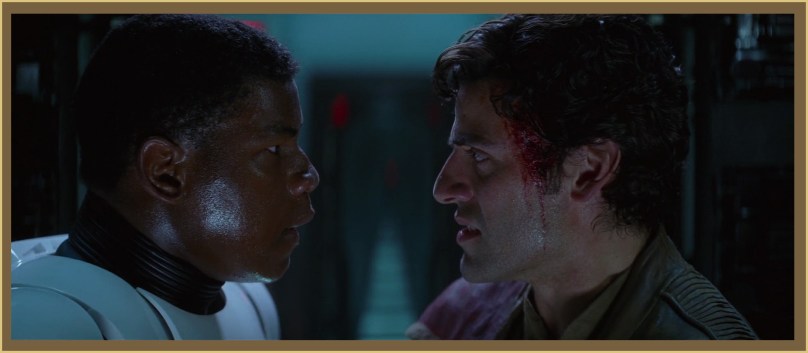
For The Force Awakens, I’d go with a remaster of Poe Dameron from the Escape from Destiny 2-pack. It captured his look from the opening sequences of the film, but it needs work on the face sculpt. For some reason, Hasbro can’t adequately capture Oscar Isaac’s features in plastic. I’d also add a re-release of Finn, either as FN-2187 or in Poe’s jacket from later in the film.
Still image from Star Wars: The Force Awakens.
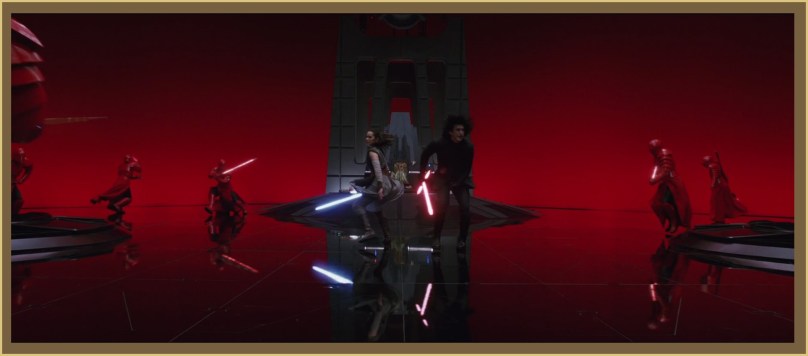
For The Last Jedi, that has to be a re-release of the Walmart-exclusive throne room Kylo Ren (with removable helmet and soft-goods cape) alongside the Crait Base Rey. Rey’s soft-goods clothing would need to be cleaned up quite a bit for this release, so that’s where I’d spend most of the time in remastering this one. Plus, you know, this duo will certainly make the Reylo shippers happy.
Anyone who follows me on social media already knows of my disdain for that couple.
Still image from Star Wars: The Last Jedi.
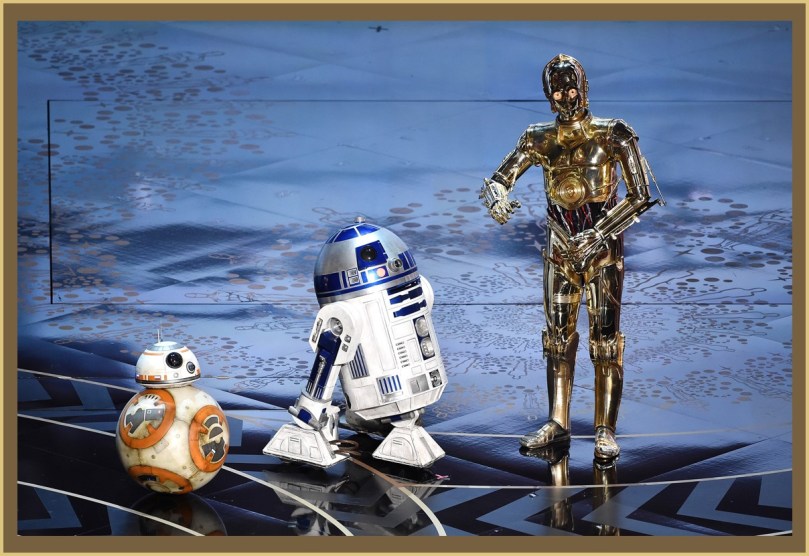
Finally, since we don’t officially know that much about The Rise of Skywalker, I’d follow Hasbro’s lead here with the three droids: C-3PO, R2-D2, and BB-8. I would avoid the “red arm” variant on Threepio, and I’d also use a clean version of BB-8.
Still image from the 2016 Oscars.
In summary:
The Phantom Menace: Padmé (Battle of Naboo) and Qui-Gon Jinn
Attack of the Clones: Count Dooku and Yoda
Revenge of the Sith: Darth Sidious and Obi-Wan Kenobi
A New Hope: Han Solo and Chewbacca
The Empire Strikes Back: Darth Vader (Cave Vision) and Bespin Leia
Return of the Jedi: Spirit of Anakin Skywalker and Jedi Knight Luke Skywalker
The Force Awakens: Finn and Poe Dameron
The Last Jedi: Rey and Kylo Ren
The Rise of Skywalker: C-3PO, R2-D2, BB-8
This lineup covers the spectrum of the saga from the origins of the Skywalker line to the potential end as the nine-episode arc closes.
Honorable mention ideas include a Yavin Throne Room 4-pack with Leia, Luke, Han, and Chewie and something with the twins from the end of Revenge of the Sith. The latter would introduce the Organas and the Lars, each with swaddled infants as accessories, but the new sculpts would drive the cost. The Throne Room set would also be cost-prohibitive.
As far as cost is considered, Black Series figures typically sell for $19.99 each, though Walmart often prices them between $15 and $18 each. With that and the cost savings from reusing existing figures in mind, Walmart and Hasbro could easily move these sets for around $30 per box.
Again, since the gold figures are obviously geared for adult collectors, I built this hypothetical model toward adult collectors.
Thought exercise aside, the point here is simple: Hasbro took the easy way out with a milestone commemorative action figure set. After 42 years and nine films – not even counting the piles of books, comics, games, films, and animated series – a major player in pop culture is coming to a close. The fans deserve so much more than leftover and poorly-selling figures with bad paint jobs.
This was Hasbro’s moment to prove that they respect the franchise and the community, but they fell back into the same old routine that promotes maligned distribution practices and overpriced products. They could have offered Star Wars fans something amazing. Instead, all they did was prove Shakespeare’s The Merchant of Venice right.
All that glitters is not gold.
(Once again, collecting site Jedi Business and its extensive database was immensely helpful in the development of this work. I am grateful for the Jedi Business team and their hard work in cataloging and reviewing modern Star Wars figures.)
Culture on My Mind is inspired by the weekly Can’t Let It Go segment on the NPR Politics Podcast where each host brings one thing to the table that they just can’t stop thinking about.
Culture on My Mind No Laughing Matter November 4, 2019
Humor has a time and place. It’s an art, not a science, and can be therapeutic at times. It also needs to be done carefully.
Concerning jokes about mental illness and seeking therapy, especially so. Let me explain where I come from.
I have talked before, though never at any particular length, about the 2005 collision at sea on the USS Philadelphia. One of the immediate repercussions was losing some members of the crew who would no longer voluntarily go to sea. The event was just too traumatizing and they were sent home to be reassigned. Once we got underway again, those crewmen were the butt of many jokes (never by me, at any measure) for the following weeks. They were denigrated as not “real men” for being unable to tough it out and do their jobs. They were seen as weak for seeking mental self-care and removing themselves from a high-stress situation.
That incident is far from isolated in the military, and definitely not linked to one generation or decade in time. The history of each service is rife with people who have experienced trauma – shell shock, battle fatigue, soldier’s heart, PTSD, etc – but don’t seek therapy or assistance because they fear that it makes them appear weak in one way or another. It has ended relationships, careers, and lives in far too many cases.
It’s endemic in our society. Only recently have I noticed a trend of people openly talking about therapy and mental self-care. Before then – and still today – it was hush-hush for fear of retaliation by family, friends, and employers.
The peer pressure to avoid the appearance of weakness for seeking help is totally real. I’ve been down that road myself, and I know many more who walked it over the years.
I mean, it’s been fourteen years for me and I’m starting to come to terms with it. Imagine those around you – who you interact with on a daily basis – who carry that burden all the time.
It’s why I cringe when I see comments from people (especially friends) that use treatment as a punchline. From telling people who don’t agree with a particular stance that they need mental help to dismissing an opinion as a result of “not taking meds,” it’s a potential manifestation of that pressure. Even if it’s not intentional.
Sometimes humor inflicts damage. That damage can override the ability to “just get over it” or take a joke. It can even also be deadly.
All I’m asking is that people be more careful with their words and more mindful of their actions. Don’t treat mental illness or treatment of it as a targeted punchline to simply shut someone up. Treat the topic with the seriousness it deserves and find another way to make the point.
Culture on My Mind is inspired by the weekly Can’t Let It Go segment on the NPR Politics Podcast where each host brings one thing to the table that they just can’t stop thinking about.