

Culture on My Mind – “A Happy Beginning” by B.A. Richards

Culture on My Mind

Culture on My Mind
“A Happy Beginning” by B.A. Richards
January 22, 2025

Thanks to NetGalley, City Owl Press, and B.A. Richards for providing an advance reader copy. I was invited to read this ARC in exchange for an honest review.

Happy Beginning BA Richards

A Happy Beginning is an urban fantasy romance novel, and the debut novel from B.A. Richards. It is a (literal) fairy tale about an instant connection between Alard, a New Orleans-based lawyer, and Raz, a businessman in town for a conference. What was expected to be a one-night hook-up transforms into an accidental bond that has major repercussions in both of their worlds.

This is a world with vampires, werewolves, and the fae. Richards weaves a beautiful tapestry of vibrant and magical worldbuilding, combining the world we know with another just the other side of the looking glass. It combines classic themes of royal marriages and palace politics with modern diversity and LGBTQ+ representation from across the spectrum. It is an easy and enjoyable read, comparable to a fun popcorn flick or a young adult novel, and sets the hook with enough temptation to read just one more chapter. Who needs sleep anyway?

This is a benefit for someone who doesn’t read a lot of fantasy or gets lost in the flood of details found in something like Game of Thrones or The Wheel of Time. My wife is familiar with the fantasy genre, but I often find it frustrating. This story is easy to follow and has relatable characters drawn from all walks of life. (Given her familiarity with urban fantasy and its subgenres, my wife was a good reference for those genre elements that made me stumble.)

The romance between the main characters does include erotic content, something that I wish had been more “closed door” or “fade to black” style given this novel’s tone. The magical relationship remains believable, but the spicy scenes presented an abrupt tonal shift, pulling this novel away from one that I could recommend to older family members as an entry point to discuss LGBTQ+ issues. Without those scenes, this could easily become a YA novel.

I do wish that this world was more fully fleshed out. Main characters like Alard, Raz, and Meyda have depth but secondary characters (such as the story’s antagonist) often don’t. The majority of the story ends up being told from Raz’s point of view, giving us the fish out of water perspective like John Crichton of Farscape. In fact, the prose shines in that exploration – a favorite chapter was a trip to a major metropolis told from the perspective of a character unfamiliar with the human world – and exemplifies the concept of “drinking from the fire hose” for Raz as he learns a whole new reality in a short period of time. But the tale falls flat in filling the magical world as much as it does the human world, often whisking the reader over interstitial spaces and leaving empty a world that we’re told is full of good, honest, caring people.

The drawbacks don’t detract from the potential provided by worldbuilding and thematic exploration. These are huge strengths, and since this is Richards’s debut work, it shows room for them to grow as they hone their craft. I enjoyed this read and would love to see more from them in the future, especially in these realms.


For more from City Owl Press, please visit their website. For more about B.A. Richards, please visit their author profile.

A Happy Beginning is available via City Owl Press, Amazon, Barnes & Noble, and Books-A-Million as of January 21, 2025. If it’s not in your local store, ask for a special order!

The ebook is available for $0.99 from January 21 through 25, 2025.


cc-break

Culture on My Mind is inspired by the weekly Can’t Let It Go segment on the NPR Politics Podcast where each host brings one thing to the table that they just can’t stop thinking about.

For more creativity with a critical eye, visit Creative Criticality.
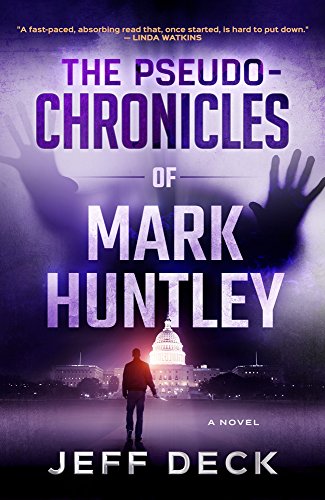
Culture on My Mind – Book Review: “The Pseudo-Chronicles of Mark Huntley” by Jeff Deck

Culture on My Mind

Culture on My Mind
Book Review: “The Pseudo-Chronicles of Mark Huntley” by Jeff Deck
September 9, 2016

Jeff Deck has returned. Following his previous novel, Player Choice, moved into the paranormal thriller realm, but kept a bit of the technological for spice. Welcome to the world of The Pseudo-Chronicles of Mark Huntley.

My name is Mark Huntley. You know, life was a lot simpler when my biggest problem was how to pay for both rent and beer. Now, I’ve apparently got to stop a secret war between otherworldly forces that threatens all of humanity. Oh, and make sure I don’t get any of my friends or loved ones killed in the process. All this while a demonic weapon inside me may slowly be driving me insane.

This should be fun.

Mark Huntley is a political fact-checker in Washington, DC. As the world rapidly approaches the 2004 Presidential Election, Mark runs headlong into destiny. He starts sensing things that he shouldn’t – auras and flashes, smells and emotions, all related to random people – and he doesn’t know who to tell, or even who to trust. So he starts a blog under a pseudonym and tells the world.

Previously published as a four-part serial, the novel is told in epistolary style as each chapter is a new blog entry. Since the story takes place exclusively from Mark’s point of view, the reader gets to ride a wild roller-coaster of intrigue, humor, paranoia, depression, anxiety, and guilt, all while unraveling the mystery as the story dips and twists. The novel is grounded in Jeff’s experiences since he’s familiar with the DC area, and that adds an air of authenticity to the otherwise alien happenings, and it rapidly escalates from the mystery of one man’s life to the challenge of a small group of chosen (yet reluctant) heroes saving the world.

Even though it comes in at nearly 600 pages, the story is quickly paced and exciting, and I had a hard time putting this one down.

Overall, I give The Pseudo-Chronicles of Mark Huntley four stars out of five.

Disclosure: Jeff provided me a free copy of the novel in exchange for an honest review.

Huntley

cc-break

Culture on My Mind is inspired by the weekly Can’t Let It Go segment on the NPR Politics Podcast where each host brings one thing to the table that they just can’t stop thinking about.

For more creativity with a critical eye, visit Creative Criticality.

Culture on My Mind – Book Review: “Player Choice” by Jeff Deck

Culture on My Mind

Culture on My Mind
Book Review: “Player Choice” by Jeff Deck
April 17, 2015

Jeff Deck, co-author of The Great Typo Hunt, recently reached out to me to promote his new novel Player Choice. He provided me a copy in exchange for an honest review.

It’s 2040. With neural implants, people can play games in an immersive virtual reality known as the aether space. Game designer Glen Cullather has a plan for the most ambitious aether game ever imagined: a fantasy epic that gives players the freedom to do anything.

But Glen’s own life is fragmenting into alternate realities. He can’t tell whether his aether game idea has succeeded, or failed miserably. And Freya Janoske is either his biggest rival, or his most intimate partner. Glen must figure out what’s real and what’s, well, fantasy—for his own survival.

Player Choice is a fast-paced gaming sci-fi adventure that dares to ask: What happens when unreality becomes our reality?

The protagonist, Glen Cullather, is a successful game programmer. He lives in a world not too far from our current reality where technology dominates everyday life, from interactive semi-sentient digital assistants to fully-capable AIs who can run entire companies. Gaming is immersive in shades of today’s Oculus Rift and Star Trek’s holodeck technology, and Glen is on his way to pitch a new experience called Novamundas to the company’s board of directors when his entire world goes sideways.

The story is quickly paced and the mystery around the reality of Glen’s situation is exciting. It kept me engaged and drawn back to the pages, as did the cognitive exercise of what else this universe could explore. The characters were diverse and colorful, and the social message was clear as the story drew to a close, warning readers of the potential pitfalls from over-reliance on tech and limited decision making.

Novamundas is built on the philosophy of providing choice to the players by trying to make them think beyond the hack-and-slash that dominates the gaming scene, even to the point of making violent problem-solving in the virtual world a chore rather than a quick means to drive the game’s story.

This is in contrast to the game’s creator, who is limited by his own tortured past: Glen’s own agency is limited by mental trauma that he hasn’t worked through, which leaves him as man who treats women and himself poorly. For that reason, I had a hard time identifying with Glen. It was necessary for the hero to be a flawed character, but he was not a hero that I could cheer for.

Similarly, Freya Janoske was hard to identify with because of how she was filtered through Glen’s experiences. Since this story is told entirely from Glen’s point of view, every interaction is laced with his prejudices and biases. Again, it’s a great way to tell Glen’s story, but it also becomes difficult to develop a sympathetic relationship for supporting characters when every interaction before the final three chapters is completely subjective.

The second half of the story is dominated by the aether world of the game as Glen’s goals start to coalesce. The game itself is quite interesting, and the dynamics of emphasizing creativity over violence are intriguing, but the story is bogged down in the nuts and bolts of skills, attributes, and gaming mechanics. It made sense to me as a casual gamer, but the details and gamer lexicon might potentially derail the story’s flow for anyone not well-versed in the gaming world, which adds an accessibility hurdle to the moral message.

The pacing is more evident in the second part, especially once the characters realize the urgency of their situation. The actual core conflict and the goals of the antagonists – yes, bad guys with actual goals and moderately complex motivations! – was very fun to think about. Unfortunately, I think the pace hindered Glen’s character growth as he is forced to react quickly to each development and never gets a chance to really reflect on what he’s learned about himself or resolve his inner demons. The story actually ends at the beginnings of his healing process, which left me feeling like I’d been cheated out his complete arc.

What this story did do for me is make me think. From a morals, messages, and meanings standpoint, it leaves several avenues to explore in how a society exists in a world dominated by technology. While it’s far from being neatly wrapped with a big red bow, that aspect of science fiction exploring the human condition through allegory was refreshing.

Overall, I give Player Choice three and a half stars out of five. For Goodreads and Amazon, which don’t deal in halves, I’ll bump it to four.

cc-break

Culture on My Mind is inspired by the weekly Can’t Let It Go segment on the NPR Politics Podcast where each host brings one thing to the table that they just can’t stop thinking about.

For more creativity with a critical eye, visit Creative Criticality.

Culture on My Mind – Page to Screen: “Sahara” by Clive Cussler

Culture on My Mind

Culture on My Mind
Page to Screen: “Sahara” by Clive Cussler
July 16, 2014

SAHARA

Clive Cussler hadn’t really popped up on my radar before a good friend of mine gave me his collection of novels. I knew that Cussler existed, and that he wrote adventure thrillers, but that’s as far as it went. When my friend piled his collection into my car, he told me that Cussler was what he grew up on and that they were fun but not terribly deep adventures. Before that moment, I had seen the movie version of Sahara, and was eager to read the original novel to see how well they both stacked up.

The premise of the story centers around a rapidly expanding contamination that is threatening the Sahara region and the world. In the book version, this contamination is a red algae bloom that is spreading across the ocean and will absorb the planet’s oxygen supply in short order. Protagonists Dirk Pitt and Al Giordino race to find the source of this algae, which they determine is coming from an underground river system in the Sahara and is being driven by a mad general and a businessman with a solar reactor. Meanwhile, secondary characters Eva Rojas and a UN scientific team are trace a disease stemming from the same contamination source as it ravages the Malian people. The two teams eventually come and chaos ensues. The book is far more complex than the film, and in general, the multiple threads detract from the story. The book deals with the CSS Texas, a buried political conspiracy from the late days of the American Civil War, the mystery of a missing aviator, the red algae, and the Mali illness in conjunction with a corrupt government. The algae/illness thread takes center stage, with Pitt and Giordino driving the story as they uncover the origins and try to stop it. The aviator and the Texas lines take a backseat and are added for spice, with the latter being resolved as a mind-bending (but ultimately hollow) afterthought.

The movie version also centers on Pitt and Giordino, but their motivation is the novel’s tertiary plotline of finding the long-lost American Civil War ironclad CSS Texas. Rojas and Frank Hopper (one of her teammates from the book) are tracking down the same illness, and the movie focuses on trying to resolve that thread while Pitt seeks out the ship. The movie is a straightforward action adventure film with Pitt (played by Matthew McConaughey) and Giordino (played by Steve Zahn) playing Indiana Jones and Sallah seeking treasure. The illness thread comes into play as the pair enter Mali during their search, and Rojas (played by Penélope Cruz) joins Pitt to resolve both plotlines in a rather explosive manner.

The downside to the book is Pitt’s superhero status. He always has the solution to the myriad of situations they land in, quite often making the cinematic James Bond an everyday citizen in comparison. The man is even injured by gunfire, beatings, and severe dehydration, yet always seems to spring back with minor detriment to his skills and abilities. In the movie, he’s still an action star, but he’s a bit more believable with McConaughey’s charm to interpret Pitt’s wit. In both versions, Giordino takes second seat to Pitt, but he’s a slightly better character as a gunslinger in the book rather than the comic relief in the movie. Eva Rojas is a damsel in distress in both instances, but is more empowered in the movie.

The movie drops the Civil War political conspiracy and the missing aviator threads, and also notably drops the book’s cameo by the author. Yes, Cussler wrote himself into the novel for a short period, and the character even shared his name. That moment, which cues the novel version of Pitt into the Texas story, nearly made me set the book down in disgust.

Overall, both versions of the story were fun, but nothing more significant than beach or popcorn fare. I have a soft spot for empty entertainment calories, so that’s not a big hit against either. The book takes a hit from secret agent Super Pitt, where the movie stumbles by changing Pitt’s motivations from ecology to treasure hunting. While the plot of the entire world being in peril is a bit extreme for a maritime ecologist, the movie version seems to be working for NUMA just for the scuba diving. Between the two versions, I prefer the film, although I will continue to read the Cussler novels to further explore Dirk Pitt’s adventures.

Novel rating: 3.0/5
Goodreads rating: 3.92/5

Movie rating: 6.0/10
IMDb rating: 6.0/10

cc-break

Culture on My Mind is inspired by the weekly Can’t Let It Go segment on the NPR Politics Podcast where each host brings one thing to the table that they just can’t stop thinking about.

For more creativity with a critical eye, visit Creative Criticality.

Culture on My Mind – Book Review: “Gone Girl” by Gillian Flynn

Culture on My Mind

Culture on My Mind
Book Review: “Gone Girl” by Gillian Flynn
May 30, 2014

It’s the story that failed to capture me due to unremarkable and uninteresting characters.

Gone Girl is a tale of tepid unrepentant characters who torture themselves and everyone around them with overwhelming selfishness and bull-headed ignorance. The first-person point-of-view that alternates from chapter to chapter is a unique “he said, she said” style, and the brilliance of the scheming by the antagonist is a big highlight, but none of that can completely overcome the character problem.

The characters are all self-centered and lacking in both empathy and sympathy. More than that, the only characters that weren’t bathing in a toxic mixture of smugness and cynicism were the two detectives. By the time the plot twist that so many other readers are celebrating rolled around, I had lost all interest in the protagonist and his plight. After soldiering through the first half of the book, watching as Nick made stupid mistake after stupid mistake, outright ignoring advice to the contrary from even his most trusted friends and family, I couldn’t dredge up even the slightest amount of interest in his plight. I didn’t care if he made it out, dead, alive, or otherwise.

Does that mean that I celebrated the villain? Only in the depth of how deeply the chess game was framed. Other than that, the villain’s intended plot was derailed based on the most simple of events that emphasized how much the character was lacking in even the basic street smarts one could attain from watching a police procedural on television. The entirety of the protagonist-antagonist relationship is built upon trying to find the way out of an emotional hole by continuing to dig straight down. To drag in the overly clichéd pseudo-quote that haunts every corner of the internet, these people keep doing the same thing over and over, honestly and sincerely expecting a different result each time. They are well beyond insane.

Reading this book became the same exercise in patience and endurance that was reading Twilight. In both cases, popular opinion told me that it was great and wonderful, so I fought to the end looking for that treasure. Alas, I never found the wild goose.

At the end of the day, the big plot twist doesn’t justify a cavalcade of uninteresting and uncaring characters. I just don’t see the draw in this story, and it certainly won’t be enough to draw me to the theater, despite how much as I like Rosamund Pike, when the cinematic adaptation opens in October 2014.

cc-break

Culture on My Mind is inspired by the weekly Can’t Let It Go segment on the NPR Politics Podcast where each host brings one thing to the table that they just can’t stop thinking about.

For more creativity with a critical eye, visit Creative Criticality.
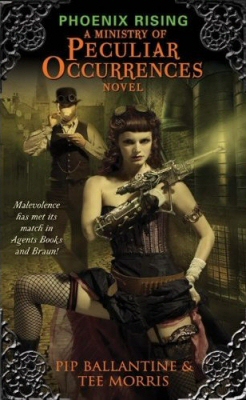
Culture on My Mind – Phoenix Rising: In Which Tee and Pip are My First Steampunk

Culture on My Mind

Culture on My Mind
Phoenix Rising: In Which Tee and Pip are My First Steampunk
June 10, 2011

Imagine the gritty world of Blade Runner, with all of its fantasy and science and punk vision of society. Now change the setting from a future Los Angeles to Victorian-era England.  Now take the replicants and hovercars and weaponry and imagine if they were all powered by pressurized steam instead of electrons.

That’s the way I’ve been able to understand the subgenre of steampunk.

I’ve been curious for some time about the allure of this science-fiction/fantasy subgenre, from buzzing on the internet to the plethora of costumes at events like Dragon*Con. When authors and podcasting giants Pip Ballantine and Tee Morris released their new novel, Ministry of Peculiar Occurrences: Phoenix Rising, I decided to take the plunge into the world of cogs, corsets, and airships.


The story itself is rather simple and linear, but that’s not a bad thing. In fact, it’s quite refreshing for what is essentially a spy novel, complete with action, suspense, and a hearty degree of intellect. Modern espionage tales try to layer double-crosses and intrigue to the point that all those plot twists shroud the very essence of the plot. I never felt that Phoenix Rising was trying to mislead me or confuse me at any point.

The tale focuses on our two heroes, Wellington Books and Eliza Braun, both secret agents in a clandestine branch of the Monarchy that investigates the peculiar, be it the occult or the supernatural. I thought of it as Indiana Jones and the Torchwood Institute combined with Her Majesty’s Secret Service from the James Bond series.

Agent Books is the embodiment of Q, a master of gadgets and gizmos, working as a librarian—pardon me, Archivist—in the bowels of the Ministry. Agent Books doesn’t seek action or adventure because he finds it in the case files he meticulously organizes like clockwork, nine to five, Monday through Friday. He’s prim and proper head-to-toe, armed with a dry wit, and sips a lot of tea. On the surface, Wellington Books is a rather boring guy.

Books is balanced with the spirited Agent Braun from New Zealand, who is the James Bond of the story. Quite honestly, she starts the story as more of a Daniel Craig than a Sean Connery. She goes into action like she’s a one woman wrecking crew, armed to the teeth while wearing a bulletproof corset, and takes no prisoners. She loves her drinks and loves her job, but she’s scarred by the loss of her former partner and her methods get her in trouble with her boss.

Yes, ladies and gentlemen, the Crown’s fate rests in the hands of a renegade and a librarian.

The story revolves around a secret society that threatens the sanctity of the Empire. Eliza has firsthand knowledge of the case because it was what drove her former partner—with whom she was incredibly close—to become a permanent resident in the local asylum. After her scolding for the events of the first chapter, she’s relegated to the less action-packed Archives to learn about the other side of the Ministry from Agent Books. While there, she discovers that the case that claimed her partner is still unsolved and that both she and Books are linked to the happenings. The plot elegantly progresses from there.

The story shifts into high gear from the very beginning and stays there for 400 pages. Tee and Pip swap chapters, bouncing points-of-view from Books to Braun while including very deep character development and growth. The story is also presented in more of the proper British English format, keeping the U in “flavour” and really immersing readers in the Victorian setting. It also keeps the reader in the same mindset as the protagonists, discovering each clue as they do. The only breaks from that formula are the short chapters that expand on the antagonists and their shadowy machinations. These interludes also lay down hints and threads for potential sequels, which are rumored to be in production now.

For my first foray into steampunk, I’m very impressed. I’ll definitely be picking up the sequels as they arrive.


Ministry of Peculiar Occurrences: Phoenix Rising is available in bookstores everywhere in both physical and digital formats. This review is based on a personally-purchased copy.

cc-break

Culture on My Mind is inspired by the weekly Can’t Let It Go segment on the NPR Politics Podcast where each host brings one thing to the table that they just can’t stop thinking about.

For more creativity with a critical eye, visit Creative Criticality.