The Thing About Today – November 4

November 4, 2020
Day 309 of 366

November 4th is the 309th day of the year. It is Flag Day in Panama.

In the United States, today is “celebrated” as National Chicken Lady Day, National Candy Day, and National Stress Awareness Day (which is typically observed on the first Wednesday in November).

Historical items of note:

  • In 1783, Wolfgang Amadeus Mozart’s Symphony No. 36 was performed for the first time in Linz, Austria.
  • In 1847, Sir James Young Simpson, a Scottish physician, discovered the anesthetic properties of chloroform.
  • In 1879, actor and screenwriter Will Rogers was born.
  • In 1916, journalist, voice actor, and producer Walter Cronkite was born.
  • Also in 1916, businesswoman Ruth Handler was born. She created the iconic Barbie fashion doll.
  • In 1924, Nellie Tayloe Ross of Wyoming became the first woman elected as governor in the United States.
  • In 1937, actress and singer Loretta Swit was born.
  • In 1950, actress Markie Post was born.
  • In 1952, the United States government established the National Security Agency, also known as the NSA.
  • In 1953, English animator, director, and producer Peter Lord was born. He co-founded Aardman Animations.
  • In 1961, actor Ralph Macchio was born.
  • In 1969, actor and producer Matthew McConaughey was born.
  • In 1973, the Netherlands experienced the first Car-Free Sunday caused by the 1973 oil crisis. Highways were used only by cyclists and roller skaters.
  • In 2001, Harry Potter and the Sorcerer’s Stone premiered. I really enjoy the books and movies, but their creator… not at all.
  • In 2008, Barack Obama became the first person of biracial or African-American descent to be elected President of the United States.

November 4th is Community Service Day in Dominica.

Community Service Day, also known as National Day of Community Service or Community Day of Service, is a public holiday focused on a nationwide clean-up that follows Independence Day celebrations.

On November 4th, or the following Monday or Tuesday if Community Service Day falls on a weekend, Dominicans from all around the island participate in community projects. Notably, the government of Dominica provides assistance to communities, encouraging them to undertake specific projects. Ultimately, communities are free to choose any project to engage in.

The day has also focused on beautification initiatives, including through improvement committees and village councils. National Day of Community Service aims to promote volunteering, especially among young people, and the building of stronger communities.

The Thing About Today is an effort to look at each day of 2020 with respect to its historical context.

For more creativity with a critical eye, visit Creative Criticality.

The Thing About Today – November 3

November 3, 2020
Day 308 of 366

November 3rd is the 308th day of the year. It is Independence Day in several locations, including Panama (celebrating Separation Day from from Colombia in 1903), Dominica (from the United Kingdom in 1978), and the Federated States of Micronesia (from the United States in 1986).

In the United States, today is “celebrated” as National Housewife’s Day and National Sandwich Day.

Historical items of note:

  • In 1749, Daniel Rutherford was born. He was the Scottish chemist and physician who isolated nitrogen in 1772.
  • In 1783, the American Continental Army was disbanded.
  • In 1793, French playwright, journalist, and feminist Olympe de Gouges was guillotined.
  • In 1817, the Bank of Montreal, Canada’s oldest chartered bank, opened in Montreal.
  • In 1838, The Times of India, the world’s largest circulated English language daily broadsheet newspaper, was founded as The Bombay Times and Journal of Commerce.
  • In 1868, John Willis Menard (a Republican from Louisiana) became the first African American elected to the United States Congress. Because of an electoral challenge, he was never seated.
  • In 1910, actor Richard Hurndall was born. He was the second actor to officially portray the First Doctor on Doctor Who.
  • In 1911, Chevrolet officially enters the automobile market in competition with the Ford Model T.
  • In 1921, soldier and actor Charles Bronson was born.
  • In 1933, English-American composer and conductor John Barry was born.
  • In 1936, Franklin D. Roosevelt was re-elected President of the United States.
  • In 1948, Scottish singer-songwriter and actress Lulu was born.
  • In 1952, voice actor Jim Cummings was born.
  • In 1953, actress and producer Kate Capshaw was born.
  • In 1956, The Wizard of Oz was first televised on CBS.
  • In 1957, the Soviet Union launched Sputnik 2. On board was the first animal to enter orbit, a dog named Laika.
  • Also in 1957, Swedish actor, director, producer, screenwriter, and martial artist Dolph Lundgren was born.
  • In 1973, NASA launched the Mariner 10 toward Mercury. On March 29, 1974, it became the first space probe to reach that planet.
  • In 2014, One World Trade Center officially opened. It is the replacement for the World Trade Center Twin Towers, in New York City, after the towers were each destroyed by airplanes during the attacks of September 11, 2001.

November 3rd is Culture Day (文化の日) in Japan, a national holiday held for the purpose of promoting culture, the arts, and academic endeavor.

Culture Day was first held in 1948 to commemorate the announcement of the post-war Japanese constitution on November 3, 1946. The date of November 3rd was first celebrated as a national holiday in 1868, when it was called Tenchō-setsu (天長節), a holiday held in honor of the birthday of the reigning Emperor (Emperor Meiji), and following his death in 1912, the date ceased to be a holiday until 1927. At that point, Emperor Meiji’s birthday was given its own specific holiday (Meiji-setsu, or 明治節) which was subsequently discontinued with the announcement of Culture Day in 1948.

The Thing About Today is an effort to look at each day of 2020 with respect to its historical context.

For more creativity with a critical eye, visit Creative Criticality.

The Thing About Today – November 2

November 2, 2020
Day 307 of 366

November 2nd is the 307th day of the year. It is Dziady in Belarus.  Дзяды in Belarusian, Деды in Russian, and Діди in Ukrainian, it is an ancient Slavic feast that commemorates dead ancestors. The Polish, Belarusian, Russian and Ukrainian word means “grandfathers”, leading to the English translation as Forefathers’ Eve.

In the United States, today is “celebrated” as National Deviled Egg Day, National Ohio Day, Color the World Orange Day (typically observed on the first Monday in November), Job Action Day (typically observed on the first Monday in November), and Traffic Directors Day (typically observed on November 2nd unless the day is on a weekend, in which case it moves to the following Monday).

Historical items of note:

  • In 1734, American hunter and explorer Daniel Boone was born.
  • In 1755, Marie Antoinette was born. She was the Austrian-French queen consort of Louis XVI of France.
  • In 1868, New Zealand officially adopted a standard time to be observed nationally.
  • In 1912, Bulgaria defeated the Ottoman Empire in the Battle of Lule Burgas, the bloodiest battle of the First Balkan War, which opened the way to Constantinople.
  • In 1913, actor Burt Lancaster was born.
  • In 1914, actor Ray Walston was born.
  • In 1920, KDKA of Pittsburgh started broadcasting as the first commercial radio station. The first broadcast is the result of the 1920 United States presidential election.
  • In 1927, author and illustrator Steve Ditko was born.
  • In 1936, the British Broadcasting Corporation initiated the BBC Television Service, the world’s first regular, “high-definition” service. High definition at that point was defined as at least 200 lines. The service was renamed as BBC1 in 1964 and the channel still runs to this day.
  • Also in 1936, the Canadian Broadcasting Corporation (CBC) was established.
  • In 1942, actress Stefanie Powers was born.
  • In 1947, designer Howard Hughes performs the maiden (and only) flight of the Hughes H-4 Hercules (also known as the “Spruce Goose”) in California. It was the largest fixed-wing aircraft ever built.
  • In 1949, author Lois McMaster Bujold was born.
  • In 1959, as part of the quiz show scandals, Twenty-One game show contestant Charles Van Doren admitted to a Congressional committee that he had been given questions and answers in advance.
  • Also in 1959, the first section of the M1 motorway, the first inter-urban motorway in the United Kingdom, was opened between the present junctions 5 and 18, along with the M10 motorway and M45 motorway.
  • In 1960, Penguin Books was found not guilty of obscenity in the trial R v Penguin Books Ltd, also known as the Lady Chatterley’s Lover case.
  • In 1961, Canadian singer-songwriter, producer, and actress k.d. lang was born.
  • In 1965, Norman Morrison, a 31-year-old Quaker, set himself on fire in front of the river entrance to the Pentagon to protest the use of napalm in the Vietnam war.
  • In 1966, actor David Schwimmer was born.
  • In 1983, United States President Ronald Reagan signed a bill creating Martin Luther King, Jr. Day.
  • In 1984, Velma Barfield became the first woman executed in the United States since 1962.
  • In 1988, the Morris worm, the first Internet-distributed computer worm to gain significant mainstream media attention, was launched from MIT.
  • In 1992, actress Naomi Ackie was born.

November 2nd is the International Day to End Impunity for Crimes Against Journalists.

The day draws attention to the low global conviction rate for violent crimes against journalists and media workers, estimated at only one in every ten cases. As these individuals play a critical role in informing and influencing the public about important social issues, impunity for attacks against them has a particularly damaging impact, limiting public awareness and constructive debate.

To commemorate the day, organizations and individuals worldwide are encouraged to talk about the unresolved cases in their countries, and write to government and intra-governmental officials to demand action and justice. UNESCO organizes an awareness-raising campaign on the findings of the UNESCO Director-General’s biennial Report on the Safety of Journalists and the Danger of Impunity, which catalogues the responses of states to UNESCO’s formal request for updates on progress in cases of killings of journalists and media workers.

UNESCO and civil society groups throughout the world use the day as a launch date for other reports, events, and other advocacy initiatives relating to the problem of impunity for crimes against freedom of expression.

The Thing About Today is an effort to look at each day of 2020 with respect to its historical context.

For more creativity with a critical eye, visit Creative Criticality.

The Thing About Today – November 1

November 1, 2020
Day 306 of 366

November 1st is the 306th day of the year. It is Independence Day in Antigua and Barbuda, celebrating their separation from the United Kingdom in 1981.

In the United States, today is “celebrated” as National Authors’ Day, National Brush Day, National Calzone Day, National Cinnamon Day, National Deep Fried Clams Day, National  Cook For Your Pets Day, National Family Literacy Day, and National Vinegar Day.

Also, remember to set your clocks back an hour unless you live in one of those lucky places that doesn’t observe Daylight Saving Time. It ends for another season at 2:00am today.

Historical items of note:

  • In 1512, the ceiling of the Sistine Chapel, painted by Michelangelo, was exhibited to the public for the first time.
  • In 1520, the Strait of Magellan, the passage immediately south of mainland South America connecting the Pacific and the Atlantic Oceans, was first discovered and navigated by European explorer Ferdinand Magellan during the first recorded circumnavigation voyage.
  • In 1585, Jan Brożek was born. A Polish polymath, he was a mathematician, astronomer, physician, poet, writer, musician, and rector of the Kraków Academy.
  • In 1604, William Shakespeare’s tragedy Othello was performed for the first time, at Whitehall Palace in London.
  • In 1611, Shakespeare’s play The Tempest was performed for the first time, at Whitehall Palace in London.
  • In 1800, John Adams became the first President of the United States to live in the Executive Mansion. It was later renamed as the White House.
  • In 1848, Boston Female Medical School opened in Boston, Massachusetts. It was the first medical school for women, and later merged with the Boston University School of Medicine.
  • In 1870, the Weather Bureau made its first official meteorological forecast in the United States. It was later renamed as the National Weather Service.
  • In 1894, Nicholas II became the new (and last) Tsar of Russia after his father, Alexander III, died.
  • In 1896, a picture showing the bare breasts of a woman appeared in National Geographic magazine for the first time.
  • In 1897, the first Library of Congress building opened its doors to the public. The library had previously been housed in the Congressional Reading Room in the United States Capitol.
  • In 1922, the last sultan of the Ottoman Empire, Mehmed VI, abdicated.
  • In 1926, actress Betsy Palmer was born.
  • In 1928, the Law on the Adoption and Implementation of the Turkish Alphabet replaced the Arabic alphabet with the Latin alphabet.
  • In 1938, Seabiscuit defeated War Admiral in an upset victory during a match race deemed “the match of the century” in horse racing.
  • In 1946, special effects artist Dennis Muren was born.
  • In 1949, actress and acting coach Belita Moreno was born.
  • In 1953, astronaut Jan Davis was born.
  • In 1955, the Vietnam War began.
  • In 1957, The Mackinac Bridge opened. It was the world’s longest suspension bridge between anchorages at the time, and it opened to traffic connecting Michigan’s upper and lower peninsulas.
  • In 1960, while campaigning for President of the United States, John F. Kennedy announced his idea of the Peace Corps.
  • In 1963, the Arecibo Observatory officially opened in Arecibo, Puerto Rico. It housed the largest radio telescope ever constructed.
  • In 1968, the Motion Picture Association of America’s film rating system was officially introduced. The original ratings were G, M, R, and X.
  • In 1972, actress Toni Collette was born.
  • In 1982, Honda became the first Asian automobile company to produce cars in the United States with the opening of its factory in Marysville, Ohio. The first car produced there was a Honda Accord.
  • In 1984, English actress Natalia Tena was born.
  • In 1993, the Maastricht Treaty took effect, formally establishing the European Union.
  • In 1997, Titanic premiered.

November 1st is International Lennox-Gastaut Syndrome Awareness Day.

Lennox–Gastaut syndrome (LGS) is a complex, rare, and severe childhood-onset epilepsy. It is characterized by multiple and concurrent seizure types, cognitive dysfunction, and slow spike waves on an electroencephalogram (EEG).

Typically, it presents in children between 3 to 5 years of age and can persist into adulthood. It has been associated with several gene mutations, perinatal insults, congenital infections, brain tumors and malformations, and genetic disorders such as tuberous sclerosis and West syndrome. The prognosis for the condition is poor with a five percent mortality in childhood and persistent seizures into adulthood.

LGS was named for neurologists William G. Lennox (from Boston, Massachusetts) and Henri Gastaut (from Marseille, France), both of who, independently described the condition.

The Thing About Today is an effort to look at each day of 2020 with respect to its historical context.

For more creativity with a critical eye, visit Creative Criticality.

The Thing About Today – October 31

October 31, 2020
Day 305 of 366

October 31st is the 305th day of the year. It is the Día de la Canción Criolla, and a Peruvian celebration of the criollo culture.

In the United States, today is “celebrated” as National Trick or Treat Day (for obvious reasons), National Doorbell Day, National Caramel Apple Day, National Knock-Knock Jokes Day, National Magic Day, and Girl Scout Founder’s Day.

Historical items of note:

  • In 1517, Martin Luther posted his 95 Theses on the door of the Castle Church in Wittenberg.
  • In 1587, Leiden University Library opened its doors after its founding in 1575.
  • In 1614, the first performance of Ben Jonson’s comedy Bartholomew Fair by the Lady Elizabeth’s Men company occurred at the Hope Theatre in London.
  • In 1860, Juliette Gordon Low was born. She was the founded the Girl Scouts of the United States of America.
  • In 1913, the Lincoln Highway was dedicated. It was the first automobile highway across United States.
  • In 1923, the first of 160 consecutive days of 100° Fahrenheit began at Marble Bar, Western Australia.
  • In 1930, astronaut Michael Collins was born.
  • In 1931, journalist Dan Rather was born.
  • In 1939, actor Ron Rifkin was born.
  • In 1940, the Battle of Britain came to an end. The result was the United Kingdom preventing a possible German invasion during World War II.
  • In 1941, the destroyer USS Reuben James (DD-245) was torpedoed by a German U-boat near Iceland, killing more than 100 sailors. It was the first United States Navy vessel sunk by enemy action in World War II.
  • In 1942, actor David Ogden Stiers was born.
  • In 1950, Canadian actor, producer, and screenwriter John Candy was born.
  • In 1961, New Zealand actor, director, producer, and screenwriter Peter Jackson was born.
  • In 1976, actress and producer Piper Perabo was born.
  • In 1993, actress Letitia Wright was born.
  • In 1999, yachtsman Jesse Martin returned to Melbourne, Australia after 11 months of circumnavigating the world, solo, non-stop, and unassisted.
  • In 2000, Soyuz TM-31 launched, carrying the first resident crew to the International Space Station. The ISS has been crewed continuously since then.
  • In 2002, a federal grand jury in Houston, Texas indicted former Enron chief financial officer Andrew Fastow on 78 counts of wire fraud, money laundering, conspiracy and obstruction of justice related to the collapse of his former employer.
  • In 2011, the global population of humans reached seven billion. This day is now recognized by the United Nations as the Day of Seven Billion.
  • In 2014, the VSS Enterprise, a Virgin Galactic experimental spaceflight test vehicle, suffered a catastrophic in-flight breakup during a test flight and crashed in the Mojave Desert, California.

October 31st is Halloween, including all of its related celebrations.

Halloween (or Hallowe’en, the contraction of Hallows’ Even or Hallows’ Evening), is also known as Allhalloween, All Hallows’ Eve, or All Saints’ Eve. It is a celebration on the eve of the Western Christian feast of All Hallows’ Day. It begins the observance of Allhallowtide, the time in the liturgical year dedicated to remembering the dead, including saints (hallows), martyrs, and all the faithful departed.

One theory suggests that many Halloween traditions originated from ancient Celtic harvest festivals, particularly the Gaelic festival Samhain, which may have had pagan roots and that Samhain itself was Christianized as Halloween by the early Church.

Halloween activities include trick-or-treating (or the related guising and souling), attending costume parties, carving pumpkins into jack-o’-lanterns, lighting bonfires, apple bobbing, divination games, playing pranks, visiting haunted attractions, telling scary stories, and watching horror films.

The holiday also includes Christian religious observances of All Hallows’ Eve, including attending church services and lighting candles on the graves of the dead, although elsewhere it is a more commercial and secular celebration. Some Christians historically abstained from meat on All Hallows’ Eve, a tradition reflected in the eating of certain vegetarian foods on this vigil day, including apples, potato pancakes, and soul cakes.

In Cornwall, it coincides with Allantide, also known was Saint Allan’s Day, the Feast of Saint Allan, Kalan Gwav (first day of winter in Cornish), Nos Kalan Gwav (eve of the first day of winter), and Dy’ Halan Gwav (day of the first day of winter).

In the Isle of Man, it includes Hop-tu-Naa, the Celtic festival celebrating the traditional Celtic festival of Samhain, the start of winter (Oie Houney). It is thought to be the oldest unbroken tradition in the Isle of Man.

Samhain occurs at this point in the year in the Northern Hemisphere, while Beltane is the related celebration in the Southern Hemisphere. Both begin at sunset on October 31st.

Finally, it is the first day of the Day of the Dead in Mexico, a multi-day holiday associated to the Catholic celebrations of All Saints’ Day and All Souls’ Day that involves family and friends gathering to pray for and remember friends and family members who have died.

The Thing About Today is an effort to look at each day of 2020 with respect to its historical context.

For more creativity with a critical eye, visit Creative Criticality.

The Thing About Today – October 30

October 30, 2020
Day 304 of 366

October 30th is the 304th day of the year. Today is Thevar Jayanthi in India, the annual commemoration of the birthday of Pasumpon Muthuramalingam Thevar, a significant political figure in the state of Tamil Nadu.

In the United States, today is “celebrated” as National Speak Up For Service Day, National Publicist Day, National Candy Corn Day, National Pharmacy Buyer Day (typically observed on the Friday of the last full week in October), National Frankenstein Friday (typically observed on the last Friday in October), and National Breadstick Day (typically observed on the last Friday in October).

Historical items of note:

  • In 1485, King Henry VII of England was crowned, beginning the Tudor reign.
  • In 1831, Nat Turner was arrested for leading the bloodiest slave rebellion in United States history.
  • In 1864, the Treaty of Vienna was signed, by which Denmark relinquished one province each to Prussia and Austria, thus ending the Second War of Schleswig.
  • In 1925, John Logie Baird creates Britain’s first television transmitter.
  • In 1938, Orson Welles broadcasted his radio play of H. G. Wells’s The War of the Worlds, causing anxiety in some of the audience in the United States. You can find a discussion about it in this article by the Smithsonian.
  • In 1945, Jackie Robinson of the Kansas City Monarchs signed a contract for the Brooklyn Dodgers, breaking the major league baseball color line.
  • Also in 1945, actor, comedian, director, and producer Henry Winkler was born.
  • In 1946, astronaut Robert L. Gibson was born.
  • In 1953, United States President Dwight D. Eisenhower approved the top-secret document NSC 162/2 concerning the maintenance of a strong nuclear deterrent force against the Soviet Union.
  • In 1961, the Soviet Union detonated the Tsar Bomba, the most powerful explosive device ever detonated.
  • In 1970, television personality and Mythbuster Tory Belleci was born.
  • In 1973, the Bosphorus Bridge in Turkey was completed, connecting the continents of Europe and Asia over the Bosphorus for the second time.
  • In 1985, Space Shuttle Challenger lifted off for mission STS-61-A, its final successful mission.
  • In 2003, Wicked premiered on Broadway at the Gershwin Theatre starring Idina Menzel and Kristin Chenoweth.
  • In 2012, The Walt Disney Company purchased Lucasfilm Ltd and its rights for Star Wars and Indiana Jones for $4.05 billion.

October 30th is the Day of Remembrance of the Victims of Political Repressions (День памяти жертв политических репрессий), an annual day of remembrance for victims of political repression in the Soviet Union.

The commemoration is held on the date of the Day of the Political Prisoner in the USSR, an initiative from 1974 by imprisoned Soviet dissidents, led by Kronid Lyubarsky for the recognition of inmates’ status as political prisoners.

The official date was introduced in April 1991 and gradually been adopted all over Russia as a Day of Remembrance for those “repressed” (arrested, exiled, sent to the camps, or shot) during the collectivization of agriculture, in the forced-labor camps of the Gulag, and shot in their tens of thousands during the Great Terror of 1937 to 1938.

As new political prisoners appear in Putin’s Russia, there have been objections to the appropriation by the State of an unofficial day of protest, that started among dissidents in camps for “political” offenders. Even a separation between the two, with the emergence of the unofficial “Restoring the Names” ceremony, has not satisfied all critics.

The Thing About Today is an effort to look at each day of 2020 with respect to its historical context.

For more creativity with a critical eye, visit Creative Criticality.

The Thing About Today – October 29

October 29, 2020
Day 303 of 366

October 29th is the 303rd day of the year. It is Coronation Day in Cambodia, celebrating the anniversary of King Sihamoni’s coronation in 2004.

In the United States, today is “celebrated” as National Cat Day, National Oatmeal Day, National Hermit Day, and World Stroke Day.

Historical items of note:

  • In 1390, the first trial for witchcraft in Paris led to the death of three people.
  • In 1618, English adventurer, writer, and courtier Sir Walter Raleigh was beheaded for allegedly conspiring against James I of England.
  • In 1675, Gottfried Wilhelm (von) Leibniz, a prominent German polymath and one of the most important logicians, mathematicians and natural philosophers of the Enlightenment, made the first use of the long s (∫) as a symbol of the integral in calculus.
  • In 1787, Mozart’s opera Don Giovanni receives its first performance in Prague.
  • In 1863, eighteen countries met in Geneva and agreed to form the International Red Cross.
  • In 1888, the Convention of Constantinople was signed, guaranteeing free maritime passage through the Suez Canal during war and peace.
  • In 1929, the New York Stock Exchange crashed in what became known as “Black Tuesday”, ending the Great Bull Market of the 1920s and beginning the Great Depression.
  • In 1938, director, producer, and screenwriter Ralph Bakshi was born.
  • In 1942, artist and television host Bob Ross was born. I really love his philosophies on life.
  • In 1947, actor and activist Richard Dreyfuss was born.
  • In 1948, actress, director, and producer Kate Jackson was born.
  • In 1957, actor, voice artist, comedian, singer and producer Dan Castellaneta was born.
  • In 1960, Cassius Clay (who later took the name Muhammad Ali) won his first professional fight in Louisville, Kentucky.
  • In 1964, a collection of irreplaceable gems, including the 565 carat Star of India, was stolen by a group of thieves from the American Museum of Natural History in New York City.
  • In 1967, English actor Rufus Sewell was born.
  • In 1969, the first-ever computer-to-computer link was established on ARPANET, the precursor to the Internet.
  • In 1971, actress and producer Winona Ryder was born.
  • In 1972, actress and producer Gabrielle Union was born.
  • In 1991, the Galileo spacecraft made its closest approach to 951 Gaspra, becoming the first probe to visit an asteroid.
  • In 1998, Space Shuttle Discovery blasted off on mission STS-95 with 77-year-old John Glenn on board, making him the oldest person to go into space. During this mission, ATSC HDTV broadcasting in the United States was inaugurated in conjunction with the launch.
  • In 2008, Delta Air Lines merged with Northwest Airlines, creating the world’s largest airline and reducing the number of United States legacy carriers to five.
  • Also in 2008, Quantum of Solace premiered. It was the twenty-second James Bond film, and was widely criticized in many aspects, one of which was its title. It followed the events of Casino Royale, which ended with Bond suffering a very traumatic loss, this one ended with him finding a measure of resolution. One might say, while armed with a thesaurus, a quantum of solace?
  • In 2012, Hurricane Sandy hit the east coast of the United States, killing 148 directly and 138 indirectly, while leaving nearly $70 billion in damages and causing major power outages.
  • In 2015, China announces the end of One-child policy after 35 years.

In 1923, Turkey became a republic following the dissolution of the Ottoman Empire. Mustafa Kemal Atatürk made the declaration, but Turkey had de facto been a republic since April 23, 1920, upon the establishment of the Grand National Assembly of Turkey, but the official confirmation came three-and-a-half years later. The status of the nation as a republic was declared and its official name was proclaimed to be Türkiye Cumhuriyeti (“the Republic of Turkey”).

After that, a vote was held in the Grand National Assembly, and Atatürk was elected as the first President of the Republic of Turkey

The anniversary is marked by the celebration of Republic Day (Cumhuriyet Bayramı), a public holiday lasting 35 hours and starting at 1:00 pm.

The Thing About Today is an effort to look at each day of 2020 with respect to its historical context.

For more creativity with a critical eye, visit Creative Criticality.

Timestamp #207: The Waters of Mars

Doctor Who: The Waters of Mars
(Autumn Special, 2009)
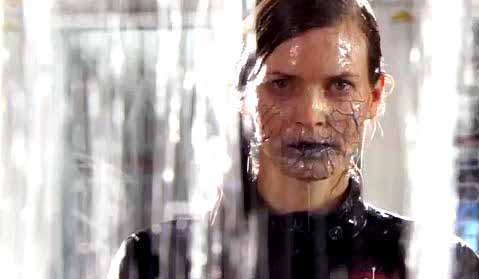
Is there any way to slake your thirst in the dust of the Red Planet?

Adelaide Brooke, the commander of Bowie Base One on Mars, tries to call home but loses contact. While her scientific teams have some fun on the planet’s surface, the Doctor arrives in the TARDIS.

He’s soon found and held at gunpoint by a flimsy robot named Gadget as a trespasser.

Once inside, Brooke demands to know his name, rank, and intention. He replies “The Doctor, doctor, fun,” before asking that she lower her gun and trust him. Brooks wonders if he’s a spy from a rival space agency, but the Doctor realizes that this mission is the one fated to end in a mysterious explosion with all hands lost. Unwilling to break the laws of time and subvert a fixed point in history, he apologizes with all of his hearts and tries to leave.

In the hydroponic farm, Andy Stone and Maggie Cain encounter a problem. Stone is infected by a mysterious life form and turns into a zombie-like creature that gushes water and attacks Cain.

As the crew investigates the mystery, the Doctor is forced to help Brooke when she locks up his spacesuit. As the crew walks to the hydroponic dome, the Doctor muses about robots – Gadget is controlled by Junior Technician Roman Groome – and asks Brooke if the mission is worth it. She says yes, with what the Doctor calls “starlight in her soul.”

They discover Cain and call for medical help. She is alive and taken to isolation while Brooke, physician Tarak Ital, and the Doctor look for Stone. Cain has no idea what happened to her, but she’s required to be isolated for twenty-four hours. Meanwhile, Ital finds Stone and is infected. Cain turns soon afterward.

Cain, controlled by the mysterious lifeform, discovers that Earth is mostly water. They should like that world.

Brooke and the Doctor find Stone and Ital. Talking to them fails, so they run for the airlock. Stone shoots a stream of water at the airlock door but none enters the chamber. Instead, both infected crewmen start probing the airlock door with water. They break through and continue the chase through the tunnels, hijacking Gadget along the way to act as a supercharged go-kart. The three of them return to the central base, but the Doctor warns her that water is patient and always wins.

Back in the base, they check in with Cain in the infirmary. The Doctor tries speaking in ancient North Martian, to which Cain reacts positively. He surmises that the ice fields, the source of the colony’s water, is contaminated. El Gold convinces Brooke to evacuate the base and the remaining crew start preparations. The Doctor reminds her that, since they’ve all been drinking from the same supply, they may all be infected already.

Swayed by his argument, Brooke leaves to investigate the ice fields. The Doctor debates leaving again, but joins her. Cain is left alone in the medical dome and immediately starts breaking out. With a scream, she sends a message to her infected comrades.

At the ice fields, the Doctor muses about the Ice Warriors and hypothesizes that they may have frozen the virus as a means of defeating it. Brooke asks why the Doctor is so keen to leave and he explains what a fixed point in time is. Brooke tells him about her inspiration: When she was ten years old, the Earth was stolen and moved across the universe, and she saw the Daleks from her window. She knew that she would follow them to the stars.

The Doctor tells her that, in doing so, she has created history. Brooke’s granddaughter, Susie Fontana Brooke, will be inspired by her story to pilot the first lightspeed craft, paving the way for generations of her descendants to explore the galaxy, with one even falling in love with an alien prince and creating a whole new species.

But the tale is only a consolation.

The moment is broken by a log entry from Stone. A filter was broken earlier in the day, allowing the virus to enter the water supply. Since the water isn’t available yet for the crew, the survivors are able to leave for Earth. While they continue preparations, the Doctor debates whether or not he should leave.

The crew discovers that Stone and Ital have scaled the base, surviving the elements, and are burrowing into the ceiling. It’s now a raise against time, and the Doctor knows that the fixed point has not changed.

He considers leaving. After he’s suited up and standing in the airlock, Brooke locks the system until he explains what happens next. He asks her to imagine Pompeii and how any action she took would only precipitate the event. He tells her about her destiny, how she destroys the base for reasons unknown but her sacrifice saves Earth, but Brooke refuses to die. She asks for help to change the future, but the Doctor refuses. He wonders if the Dalek knew when it saw her so many years ago.

Brooke releases him with a whispered “Damn you” and rushes away as the water enters the base. The Doctor listens as the crew tries to fight it… as Steffi Ehrlich plays a message from her daughters as she succumbs to the virus… as the shuttle is prepped for departure but fails as Cain breaks through… as Roman falls from one drop on his face… as Ed destroys the shuttle to prevent an incursion on Earth…

It’s the tragedy of a Time Lord. Of knowing everything and being powerless to change it.

But the Time Lords no longer exist. Their rules are gone forever. Nothing remains to restrain the Doctor. He can make his own rules.

So he decides to change it.

Knowing that the end of his song will be heralded by four knocks, he returns to save the crew, proclaiming that the laws of time are his and that they will obey him.

The environmental controls are destroyed. The spacesuits are damaged. The infected are breaking the ice. But the Doctor has a funny robot.

Using Gadget, the Doctor tries to bring the TARDIS to the crew as Brooke starts the self-destruct countdown. Gadget enters the TARDIS and sets the controls, piloting the time capsule to the base as the nuclear device explodes.

The TARDIS materializes on a snow-covered street. Brooke, Bennett, and Kerenski, and Gadget have survived, but the robot shuts down as it loses its control signal. Bennett can’t handle the stress and runs off. Kerenski follows while Brooke confronts the Doctor with the consequences of his actions. The future the Doctor told her about will be broken, but she tells him that no one should have that much power.

The Time Lord Victorious is wrong.

Brooke enters her house, but as the Doctor walks away, she commits suicide with her laser pistol. Bennett and Kerenski will still tell the tale of how she bravely saved Earth. The future is saved.

The Doctor realizes that he’s gone too far, witnessing a vision of Ood Sigma as he wonders if his time has come.

The Cloister Bell sounds. His time is near. But with a defiant “No”, the Doctor sets the TARDIS in motion once again in an effort to outrun his destiny.


What we see here are the depths of the Doctor when unrestrained by neither the conservatism of the Time Lords nor the humanity of the companions. We’ve seen the darkness of the Doctor before – the Tenth Doctor’s rage manifested in The Runaway Bride, the Sixth Doctor let it slip through in post-regeneration psychosis, and the Fourth Doctor displayed how easily he’d wield absolute power in the absence of companions – and we know just how important it is that the Doctor be tempered.

The maxim is true: Power corrupts, and absolute power corrupts absolutely.

That is one of the Doctor’s weaknesses. Another is love and compassion, which is played in concert with the temptation of power, resulting in this excellent character study of someone who wants to do so much.

It certainly earned that 2010 Hugo Award. The story was competing against its own, of course, but I’d side with this one.

Taking a look at the franchise’s history, this is the second time that the TARDIS has heralded the Doctor’s regeneration through the Cloister Bell. It did this in Logopolis, but in that instance, the Fourth Doctor was willing to wait for the inevitability whereas the Tenth Doctor pretty much fears the coming milestone.

The nod to K9 was amusing, owing to the Doctor’s long-standing love for his canine companion.

We also have quite the focal point in the mythology here. By live action standards in 2009, the next story is Tennant’s finale, The End of Time. Come 2013, The Day of the Doctor would get wedged in between the two, and if we expand to the animated specials (which we do on the Timestamps Project), Dreamland is also on the table.

This story’s placement gets even more complicated this year with the Time Lord Victorious multimedia event, which (naturally) incorporates this story into its narrative.

Finally, there’s an important companion note related to this story and actress Lindsay Duncan. As of this story, she became both the oldest actress and oldest individual to travel in the TARDIS. She’ll forfeit the latter title to Bernard Cribbins in The End of Time.

Rating: 5/5 – “Fantastic!”


UP NEXT – Sarah Jane Adventures: The Gift

cc-break

The Timestamps Project is an adventure through the televised universe of Doctor Who, story by story, from the beginning of the franchise. For more reviews like this one, please visit the project’s page at Creative Criticality.

The Thing About Today – October 28

October 28, 2020
Day 302 of 366

October 28th is the 302nd day of the year. It is the Day of the Establishment of an Independent Czecho-Slovak State, which celebrates the independence of Czechoslovakia (now the Czech Republic and the Slovak Republic) from Austria-Hungary in 1918.

In the United States, today is “celebrated” as National Internal Medicine Day, National Chocolate Day, and National First Responders Day.

Historical items of note:

  • In 1636, the Massachusetts Bay Colony voted to establish a theological college, which would later become Harvard University.
  • In 1664, the Duke of York and Albany’s Maritime Regiment of Foot, later to be known as the Royal Marines, were established.
  • In 1726, the novel Gulliver’s Travels – also known as Travels into Several Remote Nations of the World. In Four Parts. By Lemuel Gulliver, First a Surgeon, and then a Captain of Several Ships – by the Irish writer and clergyman Jonathan Swift was published.
  • In 1893, Tchaikovsky’s Symphony No. 6 in B Minor, Pathétique received its première performance only nine days before the composer’s death.
  • In 1919, the United States Congress passed the Volstead Act over President Wilson’s veto, paving the way for Prohibition to begin the following January.
  • In 1941, English actor and writer Ian Marter was born. He portrayed Harry Sullivan on Doctor Who.
  • In 1942, the Alaska Highway first connected Alaska to the North American railway network at Dawson Creek in Canada.
  • In 1948, Paul Müller was awarded the Nobel Prize in Physiology or Medicine for his discovery of the insecticidal properties of DDT.
  • In 1952, actress Annie Potts was born.
  • In 1955, businessman, philanthropist, and co-founder of Microsoft Bill Gates was born.
  • In 1956, Elvis Presley received a polio vaccination on national television.
  • In 1962, actress Daphne Zuniga was born.
  • In 1963, actress Lauren Holly was born.
  • In 1967, actress and producer Julia Roberts was born.
  • In 1971, Prospero became the only British satellite to be launched by a British rocket.
  • In 1978, English actress Gwendoline Christie was born.
  • In 1982, actor and Eleventh Doctor Matt Smith was born.
  • In 2009, NASA successfully launched the Ares I-X mission, the only rocket launch for the short-lived Constellation program.
  • In 2014, a rocket carrying NASA’s Cygnus CRS Orb-3 resupply mission to the International Space Station exploded seconds after taking off from the Mid-Atlantic Regional Spaceport in Virginia.

October 28th is International Animation Day, an international observance proclaimed in 2002 by the International Animated Film Association (Association Internationale du Film d’Animation, also known as ASIFA) as the main global event to celebrate the art of animation.

It commemorates the first public performance in 1892 of Charles-Émile Reynaud’s Théâtre Optique at the Grevin Museum in Paris. In 1895, the Cinematograph of the Lumière brothers outshone Reynaud’s invention, driving him to bankruptcy, but his public performance of animation still predates the camera-made movies in cinematic history.

In recent years, the event has been observed in more than 50 countries with more than 1000 events, on every continent, all over the world. During International Animation Day, cultural institutions are also invited to by screening animated films, organizing workshops, exhibiting artwork and stills, providing technical demonstrations, and organizing other events helping to promote the art of animation. Such a celebration is an outstanding opportunity of putting animated films in the limelight, making this art more accessible to the public.

ASIFA also commissions an artist to create an original art poster announcing the event each year. It is then adapted for each country in order to guarantee a worldwide view of the event. Previous editions involved the work of animators such as Iouri Tcherenkov, Paul Driessen, Abi Feijo, Eric Ledune, Noureddin Zarrinkelk, Michel Ocelot, Nina Paley, Raoul Servais, Ihab Shaker, and Gianluigi Toccafondo.

The Thing About Today is an effort to look at each day of 2020 with respect to its historical context.

For more creativity with a critical eye, visit Creative Criticality.

The Thing About Today – October 27

October 27, 2020
Day 301 of 366

October 27th is the 301st day of the year. It is Independence Day in Saint Vincent and the Grenadines, commemorating their separation from the United Kingdom in 1979.

In the United States, today is “celebrated” as National American Beer Day, Navy Day, and National Black Cat Day.

Navy Day, you say? Wasn’t the birthday of the Navy on October 13th? More on that in a minute.

Historical items of note:

  • This day in 1275 marks the traditional founding date of the city of Amsterdam.
  • In 1682, Philadelphia was founded in the Commonwealth of Pennsylvania.
  • In 1795, the United States and Spain signed the Treaty of Madrid, which established the boundaries between Spanish colonies and the United States.
  • In 1838, Missouri governor Lilburn Boggs issued the Extermination Order, which decreed that all Mormons were to leave the state or be killed.
  • In 1858, American colonel and politician Theodore Roosevelt was born. He was a Nobel Prize laureate and the twenty-sixth President of the United States.
  • In 1904, the first underground New York City Subway line opened. It was later designated as the IRT Broadway–Seventh Avenue Line.
  • In 1922, actress and poet Ruby Dee was born.
  • In 1936, Mrs Wallis Simpson obtained her divorce, which would eventually allow her to marry King Edward VIII of the United Kingdom and force his abdication from the throne.
  • In 1939, actor, comedian, screenwriter, and producer John Cleese was born.
  • In 1946, Slovak-Canadian actor, director, and producer Ivan Reitman was born.
  • In 1947, You Bet Your Life with Groucho Marx premiered on ABC radio.
  • In 1953, actor, director, and screenwriter Robert Picardo was born.
  • In 1954, Benjamin O. Davis, Jr. became the first African-American general in the United States Air Force.
  • Also in 1954, illustrator Jan Duursema was born.
  • In 1961, NASA tested the first Saturn I rocket in Mission Saturn-Apollo 1.
  • In 1971, the Democratic Republic of the Congo was renamed Zaire.
  • In 1992, United States Navy radioman Allen R. Schindler, Jr. was murdered by shipmate Terry M. Helvey for being gay. This precipitated debate about gays in the military that resulted in the United States’ “Don’t ask, don’t tell” military policy.
  • In 1994, Gliese 229B became the first Substellar Mass Object to be unquestionably identified.

So, Navy Day.

In the United States, the Navy League of the United States organized the first Navy Day in 1922, holding it on October 27 because it was the birthday of President Theodore Roosevelt. Roosevelt was a naval enthusiast, promoter of sea power, and former assistant Secretary of the Navy just before the Spanish–American War of 1898.

The event met with mixed reviews in the first year, but the next year brought over 50 major cities participating. The United States Navy sent a number of its ships to various port cities for the occasion. In 1949, Louis A. Johnson, the second Secretary of the newly merged and created Department of Defense, directed that the Navy’s participation occur on the newly established Armed Forces Day for the unified and coordinated uniformed services in May. As a private civilian organization, the Navy League was not affected by this directive, so they continued to organize separate Navy Day celebrations.

In the 1970s, historical research found that the “birthday” of the earlier Continental Navy during the American Revolutionary War was determined as October 13, 1775. Chief of Naval Operations Admiral Elmo R. Zumwalt worked with the Navy League to define October 13th as the new date of Navy Day, but it is still largely recognized as October 27th.

The Thing About Today is an effort to look at each day of 2020 with respect to its historical context.

For more creativity with a critical eye, visit Creative Criticality.