

Culture on My Mind – Ten Films of Vivid Memory

Culture on My Mind
Ten Films of Vivid Memory

April 10, 2020

This week’s “can’t let it go” is a Facebook meme.

Let’s face it, most of the “I’m bored so let’s make a list of things” Facebook memes are more than likely (often successful) attempts at social engineering. That data can be compiled over time by the right wrong people to hack accounts and spoof identities.

That said, one popped up on my radar courtesy of Zaki Hasan and Michael Bailey: “Saw this going around and thought it sounded fun. 10 films I vividly remember seeing in the theater pre-college.”

Since I’ve never been asked movie-specific questions as security thresholds, I feel comfortable putting mine out there for public consumption. I’m even going for a bit of extra credit because there are eleven titles encompassing ten experiences on this list.

Song of the South (1946)
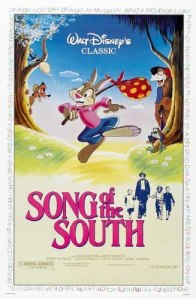
People consider me strangely when I mention this movie memory. My family remembered this film well, and they took me to the 1986 re-release when I was young. I have little memory of the live-action sequences, but the songs and animated vignettes have stuck with me over the years, even considering the racial insensitivity of the presentation.

The movie is based on the Uncle Remus folktales as compiled by Joel Chandler Harris in 1881. He was a journalist in post-Reconstruction Atlanta, and he wrote the stories to represent the struggle in the Southern United States. He tried to do so by framing the stories in the plantation context, but he also wrote them in a dialect which was his interpretation of Deep South African-American language of the time.

Walt Disney wanted to produce a movie based on these tales, but since its Atlanta premiere at the Fox Theater in November 1946, it has been the subject of controversy for propagating racial stereotypes and representing plantation life as idyllic and glorious. Ironically, Atlanta was still segregated at the time of premiere.

Despite its financial success, it is one film of the Disney catalog that has never received a full release in the United States due to the controversy. However, it does live on at the Disney Parks as the animated characters and their stories are showcased on Splash Mountain.

It was during the 1986 re-release, which commemorated the film’s 40th anniversary and promoted the opening of Splash Mountain, that I saw it. I do want to see it again, nearly 35 years later with the eyes of a knowledgeable adult, but the only way I’ll be able to do so is via bootleg.

The Great Outdoors (1988) and Dragnet (1987)
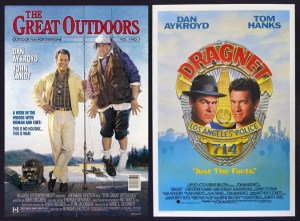
My next two movie memories were a Dan Aykroyd double feature. When The Great Outdoors was released in 1988, the (now demolished) Davis Drive-In presented it alongside Dragnet.

I count this as my true introduction to comedy and satire, as well as my interest in drive-in movie theaters. My parents would often show me the pop culture of their childhoods, and the drive-in format was one such gem.

Starting just after dusk, the double feature led with The Great Outdoors, a John Hughes film about two families spending time on vacation in Wisconsin. It starred Dan Aykroyd, John Candy, Stephanie Faracy, and (in her feature film debut) Annette Bening.

From the ghost stories of a bear that was made bald by buckshot to the zany antics of both family and coming of age, this is one film memory that I cherish. The thread of sharing movie memories with my parents would come back ten years later.

The second half of the night was Dragnet, a parody and homage of the long-running police procedural series from radio and television. It starred both Aykroyd and Tom Hanks, as well as Harry Morgan and Alexandra Paul. I knew of Harry Morgan from re-runs of M*A*S*H, which was a staple in my childhood home, and the comedy stuck with me. My most vivid memory is Sgt. Friday’s foot being run over by the car, an act that my parents assured me was fake despite what the Looney Tunes cartoons said otherwise.

Jurassic Park (1993)

I didn’t go to the theater much as a kid. They were expensive trips for a family that didn’t have a lot of money, and most of the movies I saw as a kid were on television. So, it would be five years until the next movie that spurred a vivid cinematic memory, and it was a big one.

I grew up loving dinosaurs, and, behind the Star Wars trilogy, the child-centric films of Steven Spielberg were among my favorites. So it only seemed logical to see how the two would mesh.

Instead of going to the local megaplex, my parents took my sister and me to a classic theater in nearby Riverdale. The Cinedome 70 featured two domed auditoriums, both with 70-foot curved screens.

It was magnificent, from the majesty of the John Williams score to the amazing visuals and pulse-pounding drama. I lost track of time and was surprised when the credits rolled.

It was one of the first movies that prompted me to buy a special anniversary boxset. It’s one that I revisit quite often.

The Last Action Hero (1993)

In the same month as Jurassic Park, my brother invited me to join him for a small birthday celebration. It included a movie that he was very excited about: The Last Action Hero starring Arnold Schwarzenegger.

I remember this experience in disjointed images, but the particular memory that stands out is how this film broke the fourth wall in a way that I had never experienced. Basically, teenager Danny loves the Jack Slater film series, and he ends up magically transported into one of them to have a little adventure.

This is another one that I need to revisit (27 years down the road) to really appreciate, but it stands out because of the time I got to spend with my brother doing something that he enjoyed. That was a rarity of its own in my younger days.

The Three Musketeers (1993)

Given that trips to the movies were a rare treat as a kid, I was overjoyed about winning sneak preview tickets to a new action film. Our local independent television station played the Disney Afternoon lineup every day, and to drive interest in their programming, they had a “kids’ club” with giveaways and contests.

Along with a He-Man Powersword roleplay toy, some foam quarterstaffs, and a Darkwing Duck action figure – none of which do I still possess, unfortunately – I won a pair of tickets to The Three Musketeers.

Starring Charlie Sheen, Kiefer Sutherland, Chris O’Donnell, Oliver Platt, Tim Curry, and Rebecca De Mornay, much of it went over my head on first viewing. The action was fun and the wit was quick, but it took later viewings to fully enjoy the scenery-chewing skill of Tim Curry and the underlying meaning of De Mornay’s “with a flick of my wrist, I could change your religion” repartee.

There are certainly better interpretations of this work by Alexandre Dumas, but this one has a level of cheesy lightheadedness and swashbuckling derring-do that provided a suitable introduction to sword and shield fantasy-adventure.

Besides, who can forget Bryan Adams, Rod Stewart, and Sting teaming with Michael Kamen on “All For Love”? Pure ’90s cheese!

8 Seconds (1994)

When I was a boy, I had dreams of being a rodeo bull rider. My father was a bull rider and a rodeo clown, and my mother was a barrel racer, and while I was growing up, they offered professional photography for local circuits.

I grew up in the shadow of amazing athletes like Charlie Sampson (the first African American cowboy to win a World Title in professional rodeo) and Brazilian bull riding legend Ariano Morães, and I even dabbled in the sport myself. I even had my own riding rope which I used on several occasions.

When 8 Seconds was released, my family eagerly went to the theater to see it. Starring Luke Perry, the movie is a biographical film about rodeo legend and bull riding champion Lane Frost. Frost was the 1987 World Champion of the Professional Rodeo Cowboys Association (PRCA) and the only rider to score qualified rides from the 1987 World Champion and 1990 ProRodeo Hall of Fame bull Red Rock.

He drew a Brahma bull named Takin’ Care of Business at the Cheyenne Frontier Days Rodeo in 1989. After scoring 91 points, he dismounted and landed in the dirt arena. The bull turned and hit him in the back with his horn, breaking several of his ribs and puncturing his heart and lungs. He died at the hospital at the age of 25.

The reception in our audience that night was one of respect for Frost’s legacy and a humbling of some of the younger cocky cowboys who thought themselves invincible. I personally carried that same respect and sense of caution, eventually giving up my dream after cowboys that I personally knew died doing what they loved.

The Star Wars Trilogy: Special Edition (1997)
Star Wars: Episode IV — A New Hope
Star Wars: Episode V — The Empire Strikes Back
Star Wars: Episode VI — Return of the Jedi

This one seems like a no-brainer, but it was a milestone in my life and fandom.

Like so many in my generation, I grew up on pan-and-scan VHS versions of the Star Wars trilogy. The trailer for the special edition releases tapped into the spirit of that ethos, starting with a tiny screen before showing an X-Wing blasting out of its confines to a full theatrical presentation. It was the perfect commercial to sell the idea of seeing these films again for the first time.

The opportunity to see three of my favorite and most influential movies on the big screen was too good to pass up. The Special Editions were my first experience with Star Wars in theaters. More than that, it was my opportunity to pay my parents back for introducing me to those films. I saved up the money to buy opening night tickets for each of the films for the family, and those presentations were heaven for me.

I had seen each of them on worn-out videotapes so many times, but I was enthralled in that January theater. So entranced, in fact, that when Luke fired his proton torpedoes and the Death Star exploded, I cheered. When I realized what I had just done, I found my parents staring at me with grins on their faces.

I know that they’re critiqued now for being too shiny and modernized, but the Special Editions will always hold a place in my heart.

From a certain point of view, they were my step into a much larger universe.

I have written about these films before as part of the Seven Days of Star Wars series in 2015:

Star Wars: Episode I — The Phantom Menace (1999)
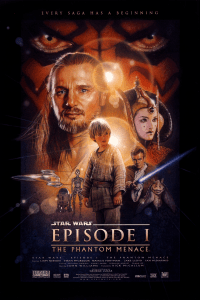
Following on the heels of the Special Editions and my love of the expanded universe of novels and comics, I was overjoyed to see new stories in the Star Wars universe.

It was once again an opening night event for the family and me, and I really enjoyed what I saw with Jedi Knights defending the Republic and paving the way for the trilogy that was a cornerstone of my childhood.

I know that others had buyer’s remorse when it came to this movie and the other two prequels, but I did not. I saw it three or four times on my limited income and found my fandom blossoming from the experience.

There are warts, to be sure, but I had a deep appreciation for what this film represented on the cusp of a new chapter in my life.

I have written about this film before as part of the Seven Days of Star Wars series in 2015: Day Four – The Phantom Menace.
cc-break

Culture on My Mind is inspired by the weekly Can’t Let It Go segment on the NPR Politics Podcast where each host brings one thing to the table that they just can’t stop thinking about.

For more creativity with a critical eye, visit Creative Criticality.

The Thing About Today – April 10

April 10, 2020
Day 101 of 366


April 10th is the 101st day of the year. It is International Siblings Day.

It is also Good Friday, a Christian holiday commemorating the crucifixion of Jesus and his death at Calvary. It is observed during Holy Week, preceding Easter Sunday, and coincides this year with Passover.

In the United States, today is “celebrated” as National Cinnamon Crescent Day, Encourage a Young Writer Day, and National Farm Animals Day.


Historical items of note:

  • In 837, Halley’s Comet made its closest approach to Earth at a distance of 3.2 million miles.
  • In 1710, the Statute of Anne, the first law regulating copyright, came into force in Great Britain.
  • In 1886, the American Society for the Prevention of Cruelty to Animals (ASPCA) was founded in New York City by Henry Bergh.
  • In 1872, the first Arbor Day was celebrated in Nebraska.
  • In 1912, RMS Titanic set sail from Southampton, England on her maiden voyage. It would also be her only voyage.
  • In 1915, actor Harry Morgan was born.
  • In 1925, The Great Gatsby by F. Scott Fitzgerald was first published in New York City.
  • In 1929, actor Max Von Sydow was born.
  • In 1954, actor Peter MacNicol was born.
  • In 1963, the nuclear submarine USS Thresher (SSN-593) was lost at sea. One hundred twenty-nine sailors were lost when key systems failed during deep-diving tests. The incident was the first loss of a nuclear submarine in history, and resulted in the development of the SUBSAFE program, a rigorous submarine safety maintenance standard.
  • In 1970, Paul McCartney announced that he was leaving The Beatles for personal and professional reasons.
  • In 1971, in an attempt to thaw relations with the United States, China hosted the United States table tennis team for a week-long visit.
  • In 1975, actor David Harbour was born.
  • In 1982, actress and singer Chyler Leigh was born.
  • In 1984, actress and singer Mandy Moore was born.
  • In 1988, actor Haley Joel Osment was born.
  • In 1992, actress Daisy Ridley was born.
  • In 1998, the Good Friday Agreement was signed in Northern Ireland. The pair of agreements ended most of the violence of the Troubles, a political conflict in Northern Ireland that had been ongoing since the 1960s.
  • In 2019, scientists from the Event Horizon Telescope project announced the first-ever image of a black hole, located in the center of the M87 galaxy.


This year, April 10th is the National Day of Silence.

National Day of Silence in April is a student-led movement to protest bullying and harassment of LGBTQIA+ students and those who support them. The observance brings awareness and illustrates to schools and colleges how intimidation, name-calling, and general bullying has a silencing effect. Participating students take a day-long vow of silence.

Bullying and harassment come in several forms, from verbal and physical to damage to property, manipulation, intimidation, and long-term micro-aggressions that build over time. Whether it comes in a physical or verbal form, both are harmful and leave lasting damage.

No matter the form, the effects on the individual and surrounding community can be destructive. It behooves us all to fight against bullying and harassment for the safety and health of our communities overall.


The Thing About Today is an effort to look at each day of 2020 with respect to its historical context.

For more creativity with a critical eye, visit Creative Criticality.


The Thing About Today – April 9

April 9, 2020
Day 100 of 366


April 9th is the 100th day of the year. It is National Former Prisoner of War Recognition Day in the United States.

In the United States, today is “celebrated” as National Cherish an Antique Day, National Chinese Almond Cookie Day, National Name Yourself Day, National Unicorn Day, National Winston Churchill Day, and National Alcohol Screening Day. The last one is typically observed on Thursday of the first full week in April.


Historical items of note:

  • In 1784, the Treaty of Paris was ratified by King George III of the Kingdom of Great Britain. It has previously been ratified by the United States Congress on January 14th, and the document formally ended the American Revolutionary War. Copies of the ratified documents would be exchanged on May 12th.
  • In 1860, Édouard-Léon Scott de Martinville made the oldest known recording of an audible human voice on his phonautograph machine.
  • In 1865, Robert E. Lee surrendered the Army of Northern Virginia (nearly 27,000 strong) to Ulysses S. Grant at Appomattox Court House, Virginia. This action effectively ended the American Civil War.
  • In 1937, Canadian screenwriter and producer Marty Krofft was born.
  • In 1945, the United States Atomic Energy Commission was formed.
  • In 1947, the Journey of Reconciliation began through the upper American South. It was the first interracial Freedom Ride and took place in violation of Jim Crow laws. The riders wanted enforcement of the United States Supreme Court’s 1946 Irene Morgan decision that banned racial segregation in interstate travel.
  • In 1959, NASA announced the selection of the United States’ first seven astronauts: Alan Shepard, Gus Grissom, Gordon Cooper, Wally Schirra, Deke Slayton, John Glenn, and Scott Carpenter. They were quickly dubbed as the “Mercury Seven”.
  • In 1979, actress Keshia Knight Pulliam was born.
  • In 1991, Georgia declared independence from the Soviet Union.


In 1939, African-American singer Marian Anderson gave a concert at the Lincoln Memorial after being denied the use of Constitution Hall by the Daughters of the American Revolution.

Anderson became an important figure in the struggle for black artists to overcome racial prejudice in the United States during the mid-twentieth century. In 1939, the Daughters of the American Revolution (DAR) refused permission for Anderson to sing to an integrated audience in Constitution Hall in Washington, DC. At the time, Washington, D.C., was a segregated city and black patrons were upset that they had to sit at the back of Constitution Hall. The venue also did not have the segregated public bathrooms required by DC law at the time for such events. The District of Columbia Board of Education also declined a request to use the auditorium of a white public high school.

The incident thrust her into the spotlight of the international community on a level unusual for a classical musician.

Charles Edward Russell, a co-founder of the National Association for the Advancement of Colored People (NAACP) and chair of the DC citywide Inter-Racial Committee, convened a meeting the next day and formed the Marian Anderson Citizens Committee (MACC) composed of several dozen organizations, church leaders and individual activists in the city. The committee elected Charles Hamilton Houston as its chairman and on February 20, the group picketed the board of education, collected signatures on petitions, and planned a mass protest at the next board of education meeting.

As a result of the ensuing furor, thousands of DAR members, including First Lady Eleanor Roosevelt, resigned from the organization. Roosevelt wrote: “I am in complete disagreement with the attitude taken in refusing Constitution Hall to a great artist … You had an opportunity to lead in an enlightened way and it seems to me that your organization has failed.”

With the aid of the First Lady and President Franklin D. Roosevelt, Anderson performed a critically acclaimed open-air concert on Easter Sunday, April 9, 1939, on the steps of the Lincoln Memorial in the capital. She sang before an integrated crowd of more than 75,000 people and a radio audience in the millions.

Two months later, in conjunction with the 30th NAACP conference in Richmond, Virginia, Eleanor Roosevelt gave a speech on national radio and presented Anderson with the 1939 Spingarn Medal for distinguished achievement.

Anderson continued to break barriers for black artists in the United States, becoming the first black person, American or otherwise, to perform at the Metropolitan Opera in New York City on January 7, 1955. Her performance as Ulrica in Giuseppe Verdi’s Un ballo in maschera at the Met was the only time she sang an opera role on stage.

She worked for several years as a delegate to the United Nations Human Rights Committee and as a “goodwill ambassadress” for the United States Department of State. She participated in the civil rights movement in the 1960s, singing at the March on Washington for Jobs and Freedom in 1963. Among her various awards and honors, she was awarded the Presidential Medal of Freedom in 1963, the Congressional Gold Medal in 1977, the Kennedy Center Honors in 1978, the National Medal of Arts in 1986, and a Grammy Lifetime Achievement Award in 1991.

She died on April 8, 1993, at the age of 96.


The Thing About Today is an effort to look at each day of 2020 with respect to its historical context.

For more creativity with a critical eye, visit Creative Criticality.


The Thing About Today – April 8

April 8, 2020
Day 99 of 366


April 8th is the ninety-ninth day of the year. It is International Romani Day, which is a day to celebrate Romani culture and raise awareness of the issues facing Romani people.

In the United States, today is “celebrated” as National All is Ours Day, National Empanada Day, and National Zoo Lovers Day.

The Jewish holiday of Passover (or Pesach) begins tonight and runs until the evening of April 16th.


Historical items of note:

  • In 1730, Shearith Israel was dedicated. It was the first synagogue in New York City.
  • In 1820, the Venus de Milo was discovered on the Aegean island of Milos.
  • In 1904, Longacre Square in Midtown Manhattan was renamed Times Square after The New York Times.
  • In 1906, Auguste Deter died. She was the first person to be diagnosed with Alzheimer’s disease.
  • In 1913, The Seventeenth Amendment to the United States Constitution became law. It requires the direct election of Senators rather than relying on the states to nominate their own.
  • In 1955, actor and stuntman Kane Hodder was born. He’s probably best known for his five-time portrayal of Jason Vorhees in the Friday the 13th film franchise.
  • In 1959, a team of computer manufacturers, users, and university people led by Grace Hopper met to discuss the creation of a new programming language. It would come to be called COBOL.
  • In 1960, actor and singer John Schneider was born.
  • In 1966, actor, producer, and director Robin Wright was born.
  • In 1974, Hank Aaron hit his 715th career home run (at Atlanta–Fulton County Stadium) to surpass Babe Ruth’s 39-year-old record.
  • In 1980, actress Katee Sackhoff was born.
  • In 1992, retired tennis great Arthur Ashe announced that he has AIDS, which he acquired from blood transfusions during one of his two heart surgeries.
  • In 2008, the construction of the world’s first skyscraper to integrate wind turbines was completed in Bahrain.


April 8th is celebrated as National All Is Ours Day.

The day takes observers along three views to appreciation.

The first approach can be looked at as a time to reflect on all of the beauty of nature and all the wonderful things in life. It can be as simple as observing the variety of birds that inhabit your local ecosystem or discovering what a local park or trail system has to offer. Basically, taking in your surroundings is the gift.

The second way to celebrate is by appreciating everything we have. This approach encourages thought about what we do have and avoiding thinking about the things we do not have.

The third approach is sharing all that we have. Many of the things that we have gain value by sharing the experiences and the memories associated with them. The greatest times and the greatest things in life are those that are shared.

The origins and creator of this holiday are unknown, but the sentiment is one that I appreciate and enjoy. Despite our current world crisis, we can still find creative ways to celebrate it.


The Thing About Today is an effort to look at each day of 2020 with respect to its historical context.

For more creativity with a critical eye, visit Creative Criticality.


The Thing About Today – April 7

April 7, 2020
Day 98 of 366


April 7th is the ninety-eighth day of the year. It is Genocide Memorial Day in Rwanda, as well as the International Day of Reflection on the 1994 Rwanda Genocide as established by the United Nations. The Rwandan genocide was a mass slaughter of Tutsi, Twa, and moderate Hutu between April 7 and July 15, 1994, during the Rwandan Civil War. The massacre was perpetrated by the Hutu government and related militias, and the attacks were racially motivated. Estimates of those murdered range between 500,000 and 1,074,016.

In the United States, today is “celebrated” as National Beer Day, National Coffee Cake Day, National Girl Me Too Day, and National No Housework Day. It is also recognized as the SAAM Day of Action, a day during Sexual Assault Awareness Month (SAAM) to stop sexual assault, harassment, and abuse before they happen through education. The day is typically observed on the first Tuesday in April.


Historical items of note:

  • In 529, the first draft of the Corpus Juris Civilis – recognized as a fundamental work in jurisprudence – was issued by Eastern Roman Emperor Justinian I.
  • In 1141, Empress Matilda became the first female ruler of England, adopting the title “Lady of the English”.
  • In 1724, Johann Sebastian Bach’s St John Passion, BWV 245, held its premiere performance at St. Nicholas Church, in Leipzig, Germany.
  • In 1805, Ludwig van Beethoven’s Third Symphony premiered at the Theater an der Wien in Vienna, Austria.
  • In 1827, English chemist John Walker sold the first friction match. He had invented the device in the previous year.
  • In 1906, Mount Vesuvius erupted and devastated Naples, Italy.
  • In 1915, singer-songwriter and actress Billie Holliday was born.
  • In 1927, the first long-distance public television broadcast occurred. It was from Washington, D.C., to New York City, and it displayed the image of Commerce Secretary Herbert Hoover.
  • In 1928, actor, singer, and producer James Garner was born.
  • In 1931, activist and author Daniel Ellsberg was born.
  • In 1933, the prohibition on alcohol in the United States was repealed for beer of no more than 3.2% alcohol by weight. Prohibition was a nationwide constitutional ban on the production, importation, transportation, and sale of alcoholic beverages starting in 1920 with the Eighteenth Amendment. The repeal happened eight months before the ratification of the Twenty-First Amendment and is now celebrated as National Beer Day in the United States.
  • Also in 1933, actor Wayne Rogers was born. He played Captain “Trapper” John McIntyre on M*A*S*H.
  • In 1939, director, producer, and screenwriter Francis Ford Coppola was born.
  • In 1940, Booker T. Washington became the first African-American to be depicted on a United States postage stamp.
  • In 1945, the battleship Yamato, one of the two largest ever constructed, was sunk by American aircraft during Operation Ten-Go.
  • In 1946, special effects designer and makeup artist Stan Winston was born.
  • In 1949, the Rodgers and Hammerstein musical South Pacific opened on Broadway. It would run for 1,925 performances and win ten Tony Awards.
  • In 1954, martial artist, actor, stuntman, director, producer, and screenwriter Jackie Chan was born. (No, he doesn’t do all of his own stunts: Look up Mars (Cheung Wing-fat), one of Jackie Chan’s best friends, who was first credited as his stunt double in 1983’s Project A.)
  • In 1955, Winston Churchill resigned as Prime Minister of the United Kingdom amid indications of failing health.
  • In 1964, actor Russell Crowe was born.
  • In 1983, astronauts Story Musgrave and Don Peterson performed the first Space Shuttle spacewalk during Mission STS-6 on Challenger.
  • In 2001, Mars Odyssey was launched.


In 1948, the World Health Organization (WHO) was established by the United Nations. Its main objective is ensuring “the attainment by all peoples of the highest possible level of health.”

The WHO’s broad mandate includes advocating for universal healthcare, monitoring public health risks, coordinating responses to health emergencies, and promoting human health and well being. It provides technical assistance to countries, sets international health standards and guidelines, and collects data on global health issues through the World Health Survey. Its flagship publication, the World Health Report, provides expert assessments of global health topics and health statistics on all nations. The WHO also serves as a forum for summits and discussions on health issues.

World Health Day, the celebration of the organization’s birthdate, is a global health awareness day sponsored by the WHO. The organization brings together international, regional and local events on the day related to a particular theme. World Health Day is acknowledged by various governments and non-governmental organizations with interests in public health issues, who also organize activities and highlight their support in media reports, such as the Global Health Council.

World Health Day is one of eight official global health campaigns marked by WHO, along with World Tuberculosis Day, World Immunization Week, World Malaria Day, World No Tobacco Day, World AIDS Day, World Blood Donor Day, and World Hepatitis Day.

The theme for World Health Day 2020 is the support of nurses and midwives.


The Thing About Today is an effort to look at each day of 2020 with respect to its historical context.

For more creativity with a critical eye, visit Creative Criticality.


The Thing About Today – April 6

April 6, 2020
Day 97 of 366


April 6th is the ninety-seventh day of the year. It is the International Day of Sport for Development and Peace (IDSDP), an annual celebration of the power of sport to drive social change, community development and to foster peace and understanding. The date was chosen to commemorate the inauguration of the first Olympic Games of the modern era, which took place in Athens, Greece in 1896.

In the United States, today is “celebrated” as National Caramel Popcorn Day, New Beer’s Eve, National Sorry Charlie Day, National Student-Athlete Day, National Tartan Day, and National Teflon Day.


Historical items of note:

  • In 1320, the Scots reaffirmed their independence by signing the Declaration of Arbroath.
  • In 1652, Dutch sailor Jan van Riebeeck established a resupply camp at the Cape of Good Hope. It eventually became Cape Town.
  • In 1712, the New York Slave Revolt began near Broadway.
  • In 1808, John Jacob Astor incorporated the American Fur Company. The company would eventually make him America’s first millionaire.
  • In 1861, the first performance of Arthur Sullivan’s incidental music for The Tempest debuted. It was a success, and led to a career that included the famous Gilbert and Sullivan operas.
  • In 1869, celluloid was patented.
  • In 1889, George Eastman began selling his Kodak flexible rolled film for the first time.
  • In 1895, Oscar Wilde was arrested in the Cadogan Hotel in London after losing a libel case against the Marquess of Queensberry.
  • In 1896, the first modern Olympic Games opened in Athens, Greece. This was 1,500 years after the original games were banned by Roman emperor Theodosius I.
  • In 1917, the United States declared war on Germany in World War I.
  • In 1929, film composer and pianist André Previn was born.
  • In 1937, actor Billy Dee Williams was born.
  • In 1947, the first Tony Awards were presented for theatrical achievement.
  • Also in 1947, actor and director John Ratzenberger was born.
  • In 1953, Scottish composer Patrick Doyle was born.
  • In 1965, Early Bird was launched. It was the first commercial communications satellite to be placed in geosynchronous orbit.
  • In 1969, actor Paul Rudd was born.
  • In 1973, the Pioneer 11 spacecraft was launched.
  • In 1974, the Swedish pop band ABBA won the Eurovision Song Contest with the song “Waterloo”. This moment launched their international career.
  • In 1975, actor, director, producer, and screenwriter Zach Braff was born.
  • In 2009, the Star Trek reboot film directed by J. J. Abrams premiered in Austin, Texas.


The Declaration of Arbroath – Declaration o Aiberbrothock in Scots, Declaratio Arbroathis in Latin, and Tiomnadh Bhruis in Scottish Gaelic – was the declaration of Scottish independence on April 6, 1320.

It was sent in the form of a letter in Latin to Pope John XXII to confirm Scotland’s status as an independent, sovereign state and defending Scotland’s right to use military action when unjustly attacked. Generally believed to have been written in the Arbroath Abbey by Bernard of Kilwinning, then Chancellor of Scotland and Abbot of Arbroath, and sealed by fifty-one magnates and nobles, the letter is the sole survivor of three created at the time.

The others were a letter from the King of Scots, Robert I, and a letter from four Scottish bishops which all made similar points.

National Tartan Day is a North American celebration of Scottish heritage, set on the date upon which the Declaration of Arbroath was signed. It originated in Canada in the mid-1980s. It spread to other communities of the Scottish diaspora in the 1990s.

This year Scots would be celebrating the 700th anniversary of the Declaration of Arbroath with events of various kinds, but the COVID-19 pandemic will likely result in multiple cancellations.


The Thing About Today is an effort to look at each day of 2020 with respect to its historical context.

For more creativity with a critical eye, visit Creative Criticality.


The Thing About Today – April 5

April 5, 2020
Day 96 of 366


April 5th is the ninety-sixth day of the year. It is Sikmogil in South Korea. Also known as the Korean Arbor Day, Sikmogil was established to celebrate forestry and the development of national history. The day of April 5 was chosen for its historical significance, the day upon which Silla achieved the unification of the Three Kingdoms of Korea.

It is also known to fans of Star Trek as First Contact Day. The eighth film in the franchise, Star Trek: First Contact, established the date of first contact between the people of Earth and the Vulcans as April 5, 2063. Fans have celebrated the date since the film premiered in 1996.

In the United States, today is “celebrated” as National Caramel Day, National Deep Dish Pizza Day, National Flash Drive Day, National Go For Broke Day, National Nebraska Day, National Raisin and Spice Bar Day, National Read a Road Map Day, and Geologists Day. The last one is typically observed on the first Sunday in April.


Historical items of note:

  • In 1722, Dutch explorer Jacob Roggeveen discovered Easter Island.
  • In 1792, United States President George Washington exercises his authority to veto a bill. This was the first time this power is used in the United States.
  • In 1856, educator, essayist, and historian Booker T. Washington was born.
  • In 1900, Archaeologists in Knossos, Crete, discover a large cache of clay tablets with hieroglyphic writing in a script they call Linear B.
  • In 1904, the first international rugby league match was played between England and an Other Nationalities team comprised of Welsh and Scottish players in Central Park, Wigan, England.
  • In 1908, actress Bette Davis was born.
  • In 1909, Albert R. “Cubby” Broccoli was born. An American film producer, he co-founded Eon Productions, home of the James Bond franchise.
  • In 1916, actor, producer, and activist Gregory Peck was born.
  • In 1922, the American Birth Control League, the forerunner of Planned Parenthood, was incorporated.
  • In 1933, actor Frank Gorshin was born. He played the Riddler in the 1966 Batman television series.
  • In 1949, a fire at St. Anthony’s Hospital in Effingham, Illinois, killed 77 people. The tragedy led to nationwide fire code improvements in the United States.
  • Also in 1949, astronaut Judith Resnik was born.
  • In 1950, writer Ann C. Crispin was born.
  • In 1952, actor Mitch Pileggi was born.
  • In 1958, Ripple Rock was destroyed. The underwater mountain was a threat to navigation in the Seymour Narrows in Canada, and it was removed in one of the largest non-nuclear controlled explosions of the time.
  • In 1982, actress Hayley Atwell was born.
  • In 1994, Kurt Cobain of the band Nirvana committed suicide by shooting himself in the head at his home in Seattle. His body wasn’t discovered until three days later by an electrician who had arrived to install a security system.
  • In 1998, the Akashi Kaikyō Bridge opened to traffic in Japan, becoming the longest bridge span in the world.
  • In 2008, Apple’s iTunes overtook supermarket group Wal-Mart to become the largest music retailer in the United States.


April 5th is Gold Star Spouses Day.

Families of United States service members are able to fly and display service flags. These flags have a white field with a large red border, inside of which are a number of blue stars corresponding to the number of family members serving during a period of time. A gold star (with a blue edge) represents a family member who died during military operations, typically during engagements during and after World War I. The flags and their usage are codified by law in the United States Code.

The families who fly the flags are referred to as Blue Star and Gold Star Families. Therefore, the spouse of a fallen service member is referred to as a Gold Star Wife or Husband, and Gold Star Spouses Day is a day to commemorate their sacrifices.


The Thing About Today is an effort to look at each day of 2020 with respect to its historical context.

For more creativity with a critical eye, visit Creative Criticality.


The Thing About Today – April 4

April 4, 2020
Day 95 of 366


April 4th is the ninety-fifth day of the year. It is Independence Day in Senegal, commemorating their freedom from French rule.

In the United States, today is “celebrated” as National Chicken Cordon Bleu Day, National Hug a Newsperson Day, Jeep 4×4 Day, National School Librarian Day, National Vitamin C Day, National Walk Around Things Day, National Love Our Children Day, and National Handmade Day. The last two are typically observed on the first Saturday in April.

Today is also National Education and Sharing Day, which is typically observed on the 11th of Nissan in the Israel Calendar and therefore shifts annually on the Gregorian calendar.


Historical items of note:

  • In 1147, Moscow was mentioned for the first time in the historical record when it was named as a meeting place for two princes.
  • In 1581, Sir Francis Drake was knighted for completing a circumnavigation of the world.
  • In 1818, The United States Congress, affirming the Second Continental Congress, adopted the flag of the United States with 13 red and white stripes and one star for each state. At that time, there were twenty states.
  • In 1850, Los Angeles was incorporated as a city.
  • In 1887, Argonia, Kansas elected Susanna M. Salter as the first female mayor in the United States.
  • In 1922, composer and conductor Elmer Bernstein was born.
  • In 1923, actor, director, producer and screenwriter Gene Reynolds was born.
  • In 1928, poet and memoirist Maya Angelou was born.
  • Also in 1928, singer-songwriter Monty Norman was born. He is best known for composing the James Bond theme.
  • In 1944, actor, director, and producer Craig T. Nelson was born.
  • In 1956, screenwriter and producer David E. Kelley was born.
  • In 1960, actor and producer Hugo Weaving was born.
  • In 1964, The Beatles occupied the top five positions on the Billboard Hot 100 pop chart.
  • In 1965, actor, producer, and screenwriter Robert Downey Jr. was born.
  • In 1968, Martin Luther King Jr. was assassinated by James Earl Ray at a motel in Memphis, Tennessee.
  • Also in 1968, NASA launched Apollo 6, the final uncrewed Apollo test mission.
  • In 1969, Dr. Denton Cooley implanted the first temporary artificial heart.
  • In 1973, the Twin Towers of the World Trade Center in New York City were officially dedicated.
  • In 1975, Microsoft was founded as a partnership between Bill Gates and Paul Allen in Albuquerque, New Mexico.
  • In 1979, actor Heath Ledger was born.
  • In 1983, the Space Shuttle Challenger made its maiden voyage into space on Mission STS-6.
  • In 2012, Tardar Sauce was born. The feline was better known as Grumpy Cat, a popular internet meme.


In 1841, William Henry Harrison died of pneumonia, becoming the first President of the United States to die in office.

Harrison was the last president born as a British subject in the Thirteen Colonies before the start of the Revolutionary War in 1775. He served in the military, participating in the 1794 Battle of Fallen Timbers, an American military victory that effectively ended the Northwest Indian War. Later, he led a military force against Tecumseh’s Confederacy at the Battle of Tippecanoe in 1811, was promoted to major general in the War of 1812, and in led American infantry and cavalry at the Battle of the Thames in Upper Canada in 1813.

Harrison began his political career in 1798 when he was appointed Secretary of the Northwest Territory. In 1799, he was elected as the territory’s delegate in the House of Representatives. Two years later, President John Adams named him governor of the newly established Indiana Territory, in which he served until 1812. After the War of 1812, he moved to Ohio and was elected to represent the state’s 1st district in the House in 1816. In 1824, the state legislature elected him to the United States Senate, but his term was cut short by his appointment as Minister Plenipotentiary to Gran Colombia in May 1828.

He returned to private life in North Bend, Ohio until he was nominated as the Whig Party candidate for president in the 1836 election, during which he was defeated by Democratic vice president Martin Van Buren. He tried again four years later with John Tyler as his running mate, touting the campaign slogan “Tippecanoe and Tyler Too”. They defeated Van Buren, making Harrison the first Whig to win the presidency.

Harrison was the oldest person elected to the office, a record he held until President Ronald Reagan was inaugurated in 1981. Harrison served as the Ninth President of the United States for 31 days until he died of typhoid, pneumonia or paratyphoid fever, setting the record for the briefest administration in American history.

His death ignited a brief constitutional crisis regarding succession to the presidency because the Constitution was unclear as to whether the vice president should assume the office or merely execute the duties of the vacant office. John Tyler claimed a constitutional mandate to become the new president and took the oath of office, setting the precedent for an orderly transfer of power when the previous president fails to complete the elected term.

The first vice president to succeed to the presidency without election, John Tyler served longer than any president in U.S. history not elected to the office. He served the remainder of Harrison’s four-year term before being succeeded by James K. Polk in 1845.


The Thing About Today is an effort to look at each day of 2020 with respect to its historical context.

For more creativity with a critical eye, visit Creative Criticality.


Culture on My Mind – Slipped Discs and Squid Ink

Culture on My Mind
Slipped Discs and Squid Ink

April 3, 2020

My apologies for skipping last week’s post. It’s been a bit crazy around here.

This week’s “can’t let it go” is a quick plug for new home media releases if you’re looking for a distraction from the plague-ridden world.

Gary Mitchel – longtime friend of Creative Criticality, raconteur, and gamemaster extraordinaire – hosts his own blog called Squid Ink on RevolutionSF. One of his regular features is Slipped Discs, a heads-up on what nerdy film fare is available to arrive on your doorstep each week.

His most recent edition covered the releases for March 31st, including the plethora of Star Wars material that dropped on store shelves and doorsteps alike.

If you’re on the lookout for new releases on physical media to keep you moving, consider sparing a few minutes each week with Gary and RevolutionSF.
cc-break

Culture on My Mind is inspired by the weekly Can’t Let It Go segment on the NPR Politics Podcast where each host brings one thing to the table that they just can’t stop thinking about.

For more creativity with a critical eye, visit Creative Criticality.

The Thing About Today – April 3

April 3, 2020
Day 94 of 366


April 3rd is the ninety-fourth day of the year. It is World Party Day, a day of global celebration and joy. Under the circumstances, we should all party with our friends and families virtually, maybe over Skype or Zoom, or even through an online gaming platform. I wish you a bright celebration of life today.

In the United States, today is “celebrated” as National Chocolate Mousse Day, National Film Score Day, National Find a Rainbow Day, and National Tweed Day.


Historical items of note:

  • In 1783, Washington Irving was born. He was the American short story writer, essayist, biographer, historian who wrote Rip Van Winkle and The Legend of Sleepy Hollow, and encouraged other American authors such as Nathaniel Hawthorne, Henry Wadsworth Longfellow, Herman Melville and Edgar Allan Poe through his successes in Europe.
  • In 1860, the first successful United States Pony Express run from St. Joseph, Missouri, to Sacramento, California, began.
  • In 1865, Union forces captured Richmond, Virginia, the capital of the Confederate States of America. The American Civil War would end just over a month later.
  • In 1885, Gottlieb Daimler was granted a German patent for his engine design.
  • In 1888, the first of eleven unsolved brutal murders of women committed in or near the impoverished Whitechapel district in the East End of London occurred. These murders were attributed to the mysterious Jack the Ripper.
  • In 1895, the trial in the libel case brought by Oscar Wilde begins. The trial would eventually result in his imprisonment on charges of homosexuality.
  • In 1922, singer and actress Doris Day was born.
  • In 1926, astronaut Gus Grissom was born.
  • In 1934, English primatologist and anthropologist Jane Goodall was born.
  • In 1946, Japanese Lt. General Masaharu Homma was executed in the Philippines for leading the Bataan Death March.
  • In 1948, President Harry S. Truman signed the Marshall Plan, authorizing $5 billion in aid for 16 countries.
  • In 1955, the American Civil Liberties Union announced that it would defend Allen Ginsberg’s book Howl against obscenity charges. Howl denounced what Ginsberg saw as the destructive forces of capitalism and conformity in the United States, as well as reflecting his own sexual orientation while describing heterosexual and homosexual sex at a time when sodomy laws made homosexual acts a crime in every state.
  • In 1958, actor, comedian, and producer Alec Baldwin was born.
  • In 1959, actor and activist David Hyde Pierce was born.
  • In 1961, actor and comedian Eddie Murphy was born.
  • In 1969, actor Ben Mendelsohn was born.
  • In 1973, Martin Cooper of Motorola made the first handheld mobile phone call to Joel S. Engel of Bell Labs.
  • Also in 1973, actor Jamie Bamber was born.
  • In 1975, Bobby Fischer refused to play in a chess match against Anatoly Karpov, giving Karpov the title of World Champion by default.
  • In 1980, the United States Congress restored a federal trust relationship with the 501 members of the Shvwits, Kanosh, Koosharem, and the Indian Peaks and Cedar City bands of the Paiute people of Utah.
  • In 1982, actress Cobie Smulders was born.
  • In 1989, the United States Supreme Court upheld the jurisdictional rights of tribal courts under the Indian Child Welfare Act of 1978 in Mississippi Choctaw Band v. Holyfield.
  • In 1996, the “Unabomber”, Theodore Kaczynski, was captured at his Montana cabin. Between 1978 and 1995, he killed three people and injured 23 others in an attempt to start a revolution by conducting a nationwide bombing campaign targeting people involved with modern technology. In 1998, a plea bargain was reached under which he pleaded guilty to all charges and was sentenced to eight consecutive life sentences in prison without the possibility of parole.
  • In 2010, Apple Inc. released their first iPad tablet computer.


In 1968, Martin Luther King Jr. delivered his “I’ve Been to the Mountaintop” speech in Memphis, Tennessee.

The speech primarily concerned the Memphis Sanitation Strike, calling for unity, economic actions, boycotts, and nonviolent protest, while challenging the United States to live up to its ideals. At the end of the speech, he discussed the possibility of an untimely death. He would be assassinated the very next day.


Well, I don’t know what will happen now. We’ve got some difficult days ahead. But it really doesn’t matter with me now, because I’ve been to the mountaintop. And I don’t mind. Like anybody, I would like to live – a long life; longevity has its place. But I’m not concerned about that now. I just want to do God’s will. And He’s allowed me to go up to the mountain. And I’ve looked over. And I’ve seen the Promised Land. I may not get there with you. But I want you to know tonight, that we, as a people, will get to the Promised Land. So I’m happy, tonight. I’m not worried about anything. I’m not fearing any man. Mine eyes have seen the glory of the coming of the Lord.


The Thing About Today is an effort to look at each day of 2020 with respect to its historical context.

For more creativity with a critical eye, visit Creative Criticality.