Timestamp: Twelfth Series Summary

Doctor Who: Twelfth Series Summary

Timestamp Logo Third 2


The Twelfth Series marked the debut of the Fourth Doctor, and it is a strong performer.

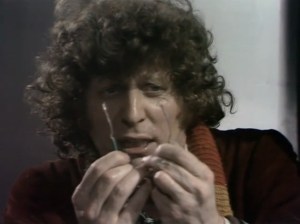
The series kicked off with the regeneration and introduction of Tom Baker as the Doctor, and I fell in love immediately. The rude (almost cynical) nature of the Third Doctor is gone as the Fourth Doctor follows his own advice in being grown up while acting childish. In fact, he uses it much like the Second Doctor did as a method to drill into a situation while looking innocent or incompetent. He’s less of a threat to evil plans, and he can observe without being observed.

As much as I came down on the topic of convenience with the Third Doctor, there is one aspect of it that I’m glad was maintained: The Doctor’s pockets. It adds to the air of whimsy to have a wild assortment of random objects trapped in those nearly extra-dimensional pockets, and feeding both the Doctor’s character and the humor that keeps the show light while it tackles serious topics.

The other character I have really grown to love is Sarah Jane Smith. She proved herself with the Third Doctor, but she has an undeniable chemistry with the Fourth Doctor that exceeds the previous stories. These two characters just click, almost on the level of the Third Doctor and Jo in her later stories, and the show is better for it.

The main sticking point for me is Harry. He’s competent as a doctor, but he’s an extraneous imbecile otherwise. His continued sexism is annoying, especially since Sarah Jane tells him to knock it off at least once (if not more) per story. I get that he’s a product of the era, but four decades later he’s irritating.

The loose Nerva Beacon arc was fun, if not uneven, and did a fine job of driving the characters without the TARDIS around. I did miss the Doctor’s silent partner, but at least there was some motivation for the characters to stick around and solve the problems instead of ducking out. There are some obvious production growing pains, from the shark-jumping Robot and somewhat scientifically baffling Sontaran Experiment – if humans haven’t inhabited the planet in centuries/millennia, why exactly is the Sontaran running experiments on their capabilities? – to the lackluster Revenge of the Cybermen. However, in between those rough moments were beauties like The Ark in Space and Genesis of the Daleks.

This series ranks fourth overall, only being surpassed by the Fifth, Eleventh, and Ninth, in ascending order. It was fun and a little uneven, but gives me more than enough hope for a good run with Tom Baker’s Doctor.


Robot – 5
The Ark in Space – 4
The Sontaran Experiment – 4
Genesis of the Daleks – 4
Revenge of the Cybermen – 3


Series Twelve Average Rating: 4.0/5


UP NEXT – Doctor Who: Terror of the Zygons


The Timestamps Project is an adventure through the televised universe of Doctor Who, story by story, from the beginning of the franchise. For more reviews like this one, please visit the project’s page at Creative Criticality.

Timestamp #79: Revenge of the Cybermen

Doctor Who: Revenge of the Cybermen
(4 episodes, s12e17-e20, 1975)

Timestamp 079 Revenge of the Cybermen


It has been a long time since we encountered the Cybermen. That break ends as the Time Ring delivers our heroes back to the Nerva Beacon, just not exactly as they left it a few weeks ago.

As they investigate the station, they discover several dead bodies, some of which are obviously mannequins. Harry estimates that they have been dead for a couple of weeks. In that time, the station has been ravaged by a plague and is under quarantine, and is being protected by the few remaining survivors. Those survivors are also trying to fulfill the station’s mission as a warning buoy for a nearby hazard to navigation: The Voga asteroid.

The Doctor determines that this is the Nerva Beacon before it became the Ark in Space as a cybermat creeps by undetected. The team unlock a door using a screwdriver (but not the sonic one) and reach the control room just after the cybermat kills operator Warner and Professor Kellman, a planetary surveyor, alters the communication logs. Those logs hold evidence that the asteroid is inhabited, which Kellman claims isn’t true. The Doctor and his companions are captured by the station’s crew, and they examine Warner while being under suspicion of bringing the plague to Nerva. As the Doctor investigates the virus and Voga, Kellman spies on them with a makeshift receiver and then transmits a message to a waiting Cyberman spacecraft.

The Vogans, who share a common seal with the future Rassilon, are debating their situation. The one called Vorus is in control of the mines, and they assume that the reason they haven’t been contacted by their agent is that the Cybermen are monitoring their communications. The Cybermen were last heard from centuries before. They vanished right after attacking Voga near the end of the Cyber War.

Following his suspicions, the Doctor investigates Kellman’s quarters and finds gold, which Voga has in abundance. Kellman returns and the Doctor hides under the bed, but Kellman sets a trap that electrifies the deck plating and locks the Doctor in the room. Sarah Jane reviews the station’s logs and is attacked by the cybermat. The Doctor escapes Kellman’s quarters and rushes to Sarah Jane’s aid after killing the cybermat, but she’s already been bitten. The Doctor rushes her to the transmat, which will filter the poison from her blood, but the device has been sabotaged. Kellman overhears the conversation and the plans to arrest him, so he arms himself.

The Doctor jury-rigs the transmat, and it beams Sarah Jane and Harry to the asteroid, saving Sarah Jane’s life. As Harry finds the abundance of gold, the Vogans capture the travelers. Meanwhile, the station crew captures Kellman. The crew and the Doctor interrogate Kellman as the Cyberman ship approaches. The Cyberman Leader is identified by a black headpiece. Gold can kill the Cybermen by suffocation, explaining why they want to destroy Voga. The crew threaten Kellman with a cybermat using a control box they found in his quarters, coercing him to give up the transmat control drive.

The Vogans prep a device called the Sky Striker for use against the Cybermen. Councillor Tyrum, a leader of the Vogans, has dispatched troops to take over the mines and stop Vorus’s plans to re-emerge on the galactic market. Tyrum fears that they will be attacked again. Vorus plans to kill the humans and hide the Sky Striker from Tyrum. Harry and Sarah Jane escape just as the execution team arrives, and Tyrum’s militia arrives to force the Guardians to stand down.

You know, the Vogan politics are a bit of a drag on the story at this point.

The Doctor repairs the transmat but cannot locate his companions. The Cyberman ship docks with Nerva and board the station. The crew tries to repel them, but are struck down by cannons in the heads of the intruders. They also take down the Doctor. They are all merely stunned, and Kellman tries to find information on the Doctor but only comes up with an apple core and jelly babies. Meanwhile on Voga, Sarah Jane and Harry are taken before Tyrum and explain themselves. The mention of the cybermat sparks Tyrum’s interest in confronting Vorus.

As Kellman outlines his plan for the Leader, it is explained that his reward for destroying Voga is rule over the solar system. Kellman is sent to Voga to verify that the transmat is functional, and he is taken captive by the Vogans. The Doctor and humans, with a Cyberman escort, are to take bombs to the mines and set them, after which they will have fourteen minutes to escape. They cannot be defused, and they will kill the carriers if the harness is removed. The Vogans ambush the bomb team, but the Cybermen make short work of them.

Kellman is taken to Tyrum and explains that he was working with Vorus to destroy the Cybermen with the Sky Striker. This will result in the destruction of the Nerva Beacon as well, and the companions plan to warn/rescue the Doctor. Sarah Jane beams up to Nerva and overhears that the Cybermen have lied about the fourteen minute delay.

Kellman and Harry try to intercept the bombs as the Doctor and his team make their way to the center of the asteroid. They meet up as Kellman causes a cave-in the kills him and knocks out the Doctor’s team. They stop Harry from unbuckling the harness, and the Doctor humorously declares that Harry is an imbecile. The team makes a plan to attack the Cybermen while one of them continues on to confuse the trackers on their harnesses. Their plan is foiled by the sheer strength of the Cybermen, but one of the crew unbuckles his harness and destroys the enemies with the suicide switch. As the tracker signal is lost, the Leader orders a manual detonation, and Sarah Jane rushes them. They brush her off and attempt the detonation, but the Doctor has overridden the communications link and disabled the bombs.

Sarah Jane explains to the Cybermen how Kellman betrayed them. The Doctor convinces the Vogans to wait just long enough for him to rescue Sarah Jane. The Cybermen develop an alternative plan to crash Nerva into Voga with bombs and Sarah Jane onboard, and the Doctor frees Sarah Jane and then uses the remote control cybermat to ambush the Cybermen with gold dust.

As the Nerva Beacon races toward Voga, Vorus launches the Sky Striker as he shot by the militiamen. The Doctor and Sarah Jane are captured and are tied up as the remaining Cybermen leave in their ship. The Doctor frees himself and Sarah Jane, reasons with the Vogans on how to change the rocket’s course, and then overrides the gyros to park Nerva on the other side of the Voga asteroid. Just as the station stabilizes, the TARDIS finally arrives to meet the Doctor, and Harry returns to Nerva via transmat. They leave at the summons of the Brigadier who communicated an emergency through the space-time telegraph.

Overall, it was a decent story, but not particularly strong. I liked the Cyberman side of it, but the internal Voga politics dragged on the story. The last two episodes nearly made up for it with the action, but the setup took far too long and was way to choppy and erratic as the writers tried to make the Voga stuff fit.

All in all, I consider it a so-so return that should have been better.


Rating: 3/5 – “Reverse the polarity of the neutron flow.”


UP NEXT – Twelfth Series Summary


The Timestamps Project is an adventure through the televised universe of Doctor Who, story by story, from the beginning of the franchise. For more reviews like this one, please visit the project’s page at Creative Criticality.


Culture on My Mind – Ghostbusters: Ain’t Afraid of No Ghosts

Culture on My Mind

Culture on My Mind
Ghostbusters: Ain’t Afraid of No Ghosts
July 18, 2016

gb2016logo

I can’t remember the first time I saw Ghostbusters.

The first film in the franchise hit theaters in June of 1984, which means that I was three years old and far too young to understand the magnitude of what I was seeing. My first real viewing was probably an edited-for-content-and-time version on non-premium cable, I have vague recollections of the big tickets from the classic: The cards flying out of the catalog drawers in the library, the eggs frying on the counter, Venkman and Slimer in the hotel, “we came, we saw, we kicked it’s ass!”, shutting down the containment unit and Mick Smiley’s “Magic”, Gozer’s dogs, the fight against Gozer, and, of course, the march of the Stay-Puft Marshmallow Man. I didn’t really get the full context of some of the jokes (including the late night ghost dream “encounter” for Ray) until I bought the DVD and immersed myself in it.

Most of my memories from the franchise are from Saturday mornings spent with The Real Ghostbusters cartoon series, and that’s really where my Ghostbusters fandom percolated and grew. It’s heretical to say after thirty-ish years, but the Ghostbusters film wasn’t an instant hit with me.

Three decades on, the jokes and quotable lines are the stuff of legends, but looking at the film itself, it’s definitely a slow build production with a ton of the dry and often risqué humor that Aykroyd, Ramis, and Murray specialized in. It’s the story of three down on their luck parapsychologists and a blue-collar dude who investigate the rise of the paranormal against the grain of the normal world around them, and the story really takes a long time to get moving as the guys build their support base. In fact, the gears on the main plot don’t really start turning until after about an hour of origin story. It’s full of technobabble, but also filled with the rich culture of immense world-building, from Tobin’s Spirit Guide to a massive pantheon of powerful spirits in the planes beyond.

One thing I respect about the film was how it let the characters be themselves. Egon was an unabashed nerd, Ray was a goofball idiot, Peter was a manipulative sexist pig, and Winston was a hard-working religious man. Even if I don’t love the elements of particular characters – Egon is a bit too much of the stereotypical nerd for me, and Peter’s sexism grates on me from time to time – I still love how sincere and fleshed out they are. This extends to the supporting cast as well, especially Janine, Louis, and Dana.

My enjoyment of the original film comes from watching it multiple times and reveling in how it embraced the 1980s metropolitan culture and comedic style. It’s an experience locked in time, and is just off-the-wall fun.

gb1984cast

It’s the fun aspect of the franchise that helps me enjoy Ghostbusters II. Again, that’s heresy in the fandom, but I don’t share the venom and hatred that most people do for the 1989 sequel.

My big problem with Ghostbusters II is how the cynics won the battle even after the team saved the world five years earlier. The first movie was full of cynics and skeptics, but at the end they were all celebrating. It doesn’t ring true when real-world events like 9/11 are considered since, nearly fifteen years later, we still celebrate the people who put everything on the line to save innocent lives that day. Was the giant marshmallow man just a group delusion invoked by sewer gas?

Ghostbusters II also loses the more risqué humor elements, mostly because of the audiences they were trying to attract. The franchise’s popularity skyrocketed with The Real Ghostbusters, and the studio wanted to capitalize on that. I don’t necessarily miss the dirty jokes, but I do miss the reality that it adds to the characters. But, it also helped to make Ghostbusters II the film that hooked me in one viewing as a kid.

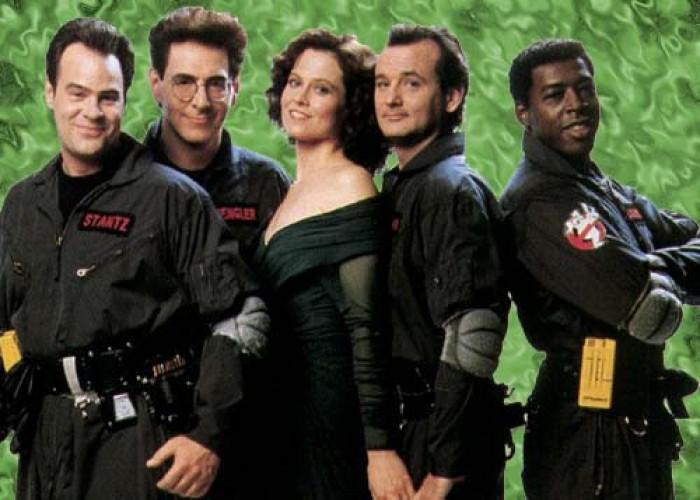
One of the elements that I loved was Louis Tully’s character. He stood up for his friends at the trial, and he did exactly what I wanted to and became a Ghostbuster. I wasn’t too keen on the Janine/Louis relationship, but I loved his initiative. Another element I loved was the expression of hope in humanity. Sure, the Statue of Liberty sequence was pretty hokey, but the message that we can still put aside our differences and come together under a common cause spoke to me.

I also adored how Sigourney Weaver’s Dana was essentially elevated to a main character. She’s a strong actress and I have enjoyed her performances throughout her career. I would have liked a bit more resolution on the baby storyline – Who’s your daddy, Oscar? –  but giving her more power in the film was a nice addition.

I also occasionally break into an impression of Janosz Poha: “Why am I dripping with goo?” Peter MacNicol’s acting was silly but fun.
gb1989cast

As I said before, I was a big fan of The Real Ghostbusters, enjoyed the 1988 Ghostbusters game for the Nintendo, and even tried Ghostbusters: The Video Game on both Wii and Xbox 360. The last one was especially fun since it reunited the core actors, but I still can’t get past the library level. The one series that I haven’t watched yet is Extreme Ghostbusters, but based on recommendations, it’s on my list of things.

For years I had heard rumors that something new was on the horizon for the franchise, but when Dan Aykroyd started talking about delays and then when Harold Ramis died in 2014, I figured that those dreams were done. I was pleased and excited when the Ghostbusters reboot was announced, and doubly so when they decided to shift gears and headline an all-female team.

Even with the whining in fandom about a female Ghostbusters team ruining everyone’s childhoods, or even the vocal sexist minority that is hell-bent on derailing the movie, my excitement has not diminished. In fact, it has only grown after watching the new film.

The 2016 Ghostbusters shares quite a few things with the 1984 Ghostbusters, but it is definitely not a remake. To me, a remake takes the same characters, settings, and plots and tells a similar story to the source material. A reboot takes a basic premise – even with the same characters like Star Trek from 2009 – and heads in a different direction. This Ghostbusters is the story of a successful scientist who, due to spoilery circumstances, joins two down on their luck scientists and a New York metro worker to investigate the rise of the paranormal against the grain of the normal world around them. Just like the 1984 version, this film is pretty slow in the beginning, but the plot has plenty of the spirit world mythology helping it ramp up to a somewhat cheesy and heart-warming conclusion, and it also uses contemporary humor to soften the scares. The special effects are just as awesome, even if they are less practical and more computer generated.

It also has cameos from most of the original cast, including all of the big four. One of them is definitely a blink-and-you’ll-miss-it moment, but it was very touching.

But this version also has plenty of originality to bring to the table. The main four have elements of the original cast scattered throughout their characters, but they all bring a unique take to the ensemble. Kristen Wiig is more of the comedic straight woman, Melissa McCarthy shares Egon’s nerdiness without going deep into stereotype, Leslie Jones embodies the blue collar to a tee, and Kate McKinnon has mad scientist down to an art. McKinnon is worth the price of admission alone, especially with her character’s barely restrained enthusiasm over the ghost busting tech.

The end credits have a ton of extras built into them, including a fun sequence that involves the scrolling credits in the hijinks, and cap the film with a final hook that might lead into a sequel.

There were a few of things I wasn’t entirely happy with. The main villain is the stock rejected oddball character, and the receptionist (played by Chris “Thor” Hemsworth) is fun for a little while but rapidly becomes superfluous. In fact, I honestly wonder if they should have merged these two characters. The humor was rough at first, including a couple of toilet humor gags, but it evened out later on and certainly never reached the risqué levels of the original film. The other negative was in the setting: The 1984 film went to great lengths to showcase New York City, effectively making it a silent character in the film, but the 2016 film takes the setting for granted.

I went into this one with an open mind and zero expectations, spent the first twenty minutes wondering where they were going, and finally kicked back as I realized that this was the ideal update to a classic. It matches up well with the 1984 film, and will probably take a few watches to really grow on me.

All told, the ladies and their director, Paul Feig, captured the original spirit quite nicely.

gb2016cast

The strong spirit of today’s Ghostbusters gives me hope for the future.

We’ll all see a lot of buzz in coming days about how the film is a failure because it didn’t make back the $144 million budget on opening weekend, but that honestly doesn’t matter. Ghostbusters is the highest-grossing premiere for the Paul Feig/Melissa McCarthy team, and that’s success enough for Sony to consider future installments. In fact, the 1984 film opened to almost $14 million, which is about $35 million when adjusted for inflation. The 2016 film has already beat that, even though it came in second place to The Secret Life of Pets.

(By the way, if we want to play the box office game in an attempt to take down the 2016 film, even Ghostbusters II debuted higher than the first film. So maybe, just maybe, box office performance is more nuanced and relative rather than being a stark win/loss dichotomy.)

We’ve already seen the fallout from original generation fans that can’t get over change, ranging from unfounded pre-release ratings on IMDb – the lowest I saw the star rating on opening weekend was 4.1 – to so many angry rants on YouTube. I honestly get the aversion to change with as much as those fans love the classic film, but I’ve also seen the Ghostbusters fan-base at Dragon Con who have accepted all fans into their ranks with variations on the uniforms, vehicles, and gear. They truly understand that Ghostbusters is for everyone, and I’m looking forward to seeing the new fans because of the movie.

The 2016 Ghostbusters is important because it’s a passing of the torch between generations. Violet Ramis Stiel, daughter of Harold Ramis, recently wrote about that and acceptance of change. The new film keeps the franchise alive, and it keeps the memory alive as well. I’m excited about seeing these women in another adventure, as well as the potential multiverse that Sony is possibly building. We may yet see the passing of the torch by the 1984 team to a new one. We may yet see Ghostbusters movies (live action and/or animated) or television shows set in Chicago, San Francisco, Atlanta, or Salt Lake City. We may yet see any degree of imagination because the sky is the limit. The potential alone is amazing.

The 2016 Ghostbusters is important because it’s a paradigm shift in Hollywood. It’s a high-budget action film showcasing four women over 30 in an industry where they’re normally considered over the hill. These four women are in starring comedic roles in an industry that doesn’t consider women to be funny. Every shot in the film highlights the action and their roles, not their bodies and their sexuality like Megan Fox from Transformers. These women go into business for themselves and grow beyond the need for validation and approval by the institutional systems of academia and government.

The 2016 Ghostbusters is important because it is a signal that the tide may be changing. In an era with Rey (Star Wars: The Force Awakens), Jyn (Star Wars: Rogue One), and Anna and Elsa (Frozen), the Hollywood dynamic is evolving, and it’s about time.

The 2016 Ghostbusters is important because it is the future.

Ignore the negative buzz and go see it. Even better, take someone along who is young and excited by science, technology, engineering, and math. Answer the call.

Ratings
Ghostbusters (1984): 7.5
Ghostbusters II (1989): 7.0
Ghostbusters (2016): 7.0

cc-break

Culture on My Mind is inspired by the weekly Can’t Let It Go segment on the NPR Politics Podcast where each host brings one thing to the table that they just can’t stop thinking about.

For more creativity with a critical eye, visit Creative Criticality.

Timestamp #78: Genesis of the Daleks

Doctor Who: Genesis of the Daleks
(6 episodes, s12e11-e16, 1975)

Timestamp 078 Genesis of the Daleks


The last story was an experiment in splitting six-part serials into smaller pieces to remove story padding. That two-parter is followed by this six-parter, which would be ironic if not for that fact that it’s one of the most beloved stories in classic Who. When I ask classic fans what the Doctor means to them, this is usually the story they point to.

Because of that, I was really excited to watch this one.

The Doctor and his companions have departed future Earth after defeating the Sontarans, but they don’t arrive as expected on Nerva. Instead, they are on misty planet drowning in a battle that echoes World War II. In short order, the Time Lords arrive and reveal that they redirected the Doctor to Skaro in the distant past. The Doctor is upset about the manipulation, but acquiesces when the Time Lords tell him about his mission: To interfere in the development of the Daleks. They provide him a Time Ring to return to the TARDIS after his mission is complete.

The travelers soon find a warrior, who is soon killed in an artillery barrage, and note the distinct anachronisms in everything around them. They continue on, stumble into a minefield, and eventually discover a large domed city surrounded by trenches. The Doctor theorizes that the anachronisms are due to the battle raging on so long that technology has regressed as resources were depleted. The trench is attacked by chemical gas rockets, and the Doctor and Harry are spirited into a bunker and transported into the city.

The attackers are the Thals, and the Doctor’s captors are the Kaleds, a very Nazi-like organization. The Doctor surprises the Kaled commander, who keeps referring to the Doctor as a “muto”, and takes him captive. The Doctor and Harry return to the wasteland, but Sarah Jane has already recovered and moved on, and the duo are surprised by Security Commander Nyder, who raises the alert in the base. The pair of travelers are soon captured and interrogated by Nyder, who refers to Davros, the greatest scientist of the Kaled people. He also explains that the mutos are Kaleds who have been genetically scarred by the war, and that they are exiled to keep the Kaled race pure.

They are laying this Nazi allegory on thick.

Meanwhile, Sarah Jane is on the surface being pursued by the mutos as night falls. She comes across a weapons test led by Davos, a scarred man with a third eye in a robotic chair. The test is of a Dalek, which isn’t quite autonomous yet. After the test, Davros departs, and Sarah Jane is nearly spotted by the Kaleds before being abducted by the Mutos. The Mutos fight over whether or not to kill Sarah Jane since she is a “norm.” They are interrupted by a Thal patrol who take Sarah Jane and the Muto Sevrin for physical labor.

Back in the bunker, the Doctor and Harry are delivered to the holding area where they are scanned. The scanner detects the time ring, which is physically removed under the Doctor’s protest. As scientific examiner Ronson examines the Doctor and Harry, he discovers that they are aliens to Skaro. That discussion is interrupted by Davros, who demonstrates the Dalek – known at this point as a Mark III Travel Machine – for the assembled scientists. When shifted to automatic mode, it detects the Doctor and Harry and almost exterminates them until Ronson interrupts the experiment. A furious Davros gives Ronson the night to investigate the travelers, but it must be done from their holding cells.

The Doctor discovers from his interrogation that the Kaled scientists were formed as an elite group for research, but over the years they became more powerful and influential. Ronson notes that the Doctor used the term “Dalek” well before Davros called the machine by the same name, and the Doctor reveals that he is from the future. Ronson discloses his fear that the Kaleds are becoming more evil and immoral, including experiments by Davros to create the final form the Kaled mutation. The travel machine, the Dalek, is the vehicle to house and propel that being. Ronson believes that if the government knew about any of this, they would shut down the entire program, and engineers an escape into the cave system surrounding the bunker.

The Thals are using the slave labor to pack a rocket with distronic explosives, but they are not provided any shielding or protection, so the workers will die from exposure to the material. After the first shift of rocket loading, Sarah Jane attempts to spark a rebellion and plots escape through the top of the dome. She distracts the guard and the prisoners flee. The guard sounds the alarm as the prisoners climb, and the Thals open fire, killing several of the prisoners. Sarah Jane loses her grip and falls, landing on a lower platform unharmed. Sevrin helps her recover and pushes her onward, and they nearly escape before the Thals catch up to them.

The Doctor and Harry reach the city tell the Kaled Council about the Daleks and the future. The Council won’t shut down the bunker entirely, but decide to inspect and audit the programs. As the Council adjourns, the Doctor and Harry learn about Sarah Jane’s whereabouts and set out after her. Davros discovers that the Councilors are meeting in secret and that the travelers were in attendance. He agrees to the investigation, but in secret begins his plan for complete extermination of the Kaled people by arming the Daleks with the mutations.

The Doctor and Harry infiltrate the Thal dome to discover Davros petitioning the Thal Council for peace, claiming that the Kaled Council is not interested in ending the conflict. Davros provides the Thals the means to weaken the Kaled dome and exterminate the Kaled people with their rocket. The Doctor and Harry jump two guards and steal their suits – “Excuse me, can you help me? I’m a spy.” – before rescuing Sarah Jane and the captives. Harry leads them out of the city as the Doctor works to sabotage the rocket. One of the guards triggers an anti-intrusion system and captures the Doctor.

The Doctor wakes up in the Thal dome’s control room with the bombardment of the Kaled dome underway. They launch the rocket as the Kaled scientists watch in dismay, and the Kaled dome is destroyed. Davros calls in the Daleks and orders them to exterminate Ronson before declaring their rise as the ultimate supreme race. The Doctor is freed in the Thal celebration, and the Thals see Davros as a hero of the people. After Davros orders changes to the Daleks that will remove their consciences completely, the Daleks attack the Thal dome and exterminate with prejudice. The Doctor and a Thal woman, Bettan, escape the dome and she decides to raise a rebellion.

A temporal inconsistency: These Daleks don’t require the static tracks like they did in the Hartnell era, which falls after this war’s conclusion. Did something change in the timeline to remove this detail?

The Doctor makes his way to the Kaled bunker to retrieve the time ring, and is attacked by Mutos and saved by Sarah Jane and Harry. Scientists begin to foment a rebellion against the Dalek program, but are interrupted by Nyder and Davros just as the travelers break into the city and are subsequently captured. Davros discusses time travel with the Doctor and demands that he disclose exactly how he defeats the Daleks in the future. When the Doctor refuses, Davros uses the threat of harm to the companions as leverage. I see where the Daleks get their stunning personalities and penchant for temper tantrums. The Doctor yields to Davros and provides a litany of Dalek defeats which are recorded for the future. As they take a break, Davros trusts the tape to Nyder as he sits down to confer with the Doctor. The Doctor tries to persuade Davros to abandon the Dalek project, but Davros is not swayed. Convinced that Davros is insane, the Doctor seizes control of the leader’s chair and threatens to disable it and kill him if he doesn’t shut down the program. He nearly succeeds before Nyder stops him.

Kavell, one of the leading scientists, breaks Sarah Jane and Harry out of the confinement cells. Nyder escapes, and the Doctor warns that Davros knows what Kavell is planning. The travelers set out to retrieve both the time ring and the recording of the future. Meanwhile, the Daleks have destroyed all resistance in the Thal city, and all that remains is Bettan’s rebellion. Inside the bunker, rebellion also breaks out, but Davros surprisingly orders Nyder’s forces to surrender. Davros tells Nyder that this is a ruse, as is the conference to listen to the rebellion’s demands. At that conference, the rebellion demands that the Dalek project be terminated. Davros asks for time to consider the demands, and agrees to the demands on the condition that the military and scientific elite present the demands to a vote before him.

The Doctor discovers plastic explosives and detonators, and plots commit genocide by destroying the Dalek embryos in the incubation room. He enters the chamber to place the charges, and emerges with Dalek tentacles wrapped around his throat. After being freed, he holds the conductors in his hands but cannot detonate the explosives. Does he have the right? Killing them would secure freedom and peace for the future, but the action would make him no better than the Daleks themselves. He pulls the plug on the plan when he hears that Davros is willing to discuss the demands.

That epic moment in the franchise was worth the price of admission alone. Tom Baker sells it with passion.

The travelers attend the discussion, secretly returning the Doctor’s possessions to him. Davros shows his opponents a button that will destroy the entire bunker — seriously, a big red button to destroy everything? — but no one will press it, which Davros sees as an argument in his favor because it shows weakness. Meanwhile, he has been maneuvering the Daleks to assault the rebels, and Bettan’s forces set charges to seal the bunker permanently.

Nyder sneaks out during the vote, and the travelers follow him. In the ensuing altercation, the Doctor drops the time ring, but convinces Nyder to take them to the tape recording. As the travelers destroy the tape, Nyder escapes and locks them in the office. They bring up the camera feed of the vote as the Daleks roll in and kill everyone. The travelers are soon rescued by Sevrin and start running from the Daleks, and the Doctor sends the companions with Sevrin and the rebels while he returns to destroy the incubator chamber. At this point, he’s at his last straw, and it seems that he’s willing to become the villain to save countless lives. His efforts are thwarted by a Dalek who fires on him, but the Dalek rolls over the conductors, completes the circuit, and destroys the chamber and itself.

The Daleks start the assembly line without Davros’s approval, and kill Nyder as he attempts to shut it down. They rebel against Davros, apparently exterminating him as he attempts to destroy the bunker with that big red button. The travelers escape as Bettan’s forces seal the bunker and use the time ring to return to the TARDIS.

This was a really good story, and it earns the admiration that fans bestow on it. On the downside, it is a bit padded and long, but that easily washed out by the quality and performances.

Rating: 4/5 – “Would you care for a jelly baby?”


UP NEXT – Doctor Who: Revenge of the Cybermen


The Timestamps Project is an adventure through the televised universe of Doctor Who, story by story, from the beginning of the franchise. For more reviews like this one, please visit the project’s page at Creative Criticality.


Timestamp #77: The Sontaran Experiment

Doctor Who: The Sontaran Experiment
(2 episodes, s12e09-e10, 1975)

Timestamp 077 The Sontaran Experiment


Before watching this serial, I read up a little on this short story. The TARDIS wiki entry tells the tale: “Script editor Robert Holmes was not a fan of six-part stories, believing that they were padded, so for season twelve, he decided to have one four-part story and one two-part story.”

After some of the reviews on The Timestamps Project, I can attest to that. I respect him for going out on a limb like that.

This one picks up right after The Ark in Space. The Doctor and his companions teleport down to Earth with only a few hiccups, and the Doctor sets to work on fixing the refractor units. The companions venture off to explore as Harry corrects his demeaning banter with Sarah Jane. For now, anyway. Within no time at all, the Doctor is in the crosshairs of a hunter’s rifle, Harry takes a tumble into a disguised trap, and Sarah Jane goes for help.

One of the hunters is chased by a robot, and falls off a cliff. The Doctor goes to help, and the other hunters mistake the Doctor for the perpetrator and stun him into submission as another human in a spacesuit, Roth, watches from the brush. Sarah Jane returns to the refractors and finds only the sonic screwdriver, so she returns to Harry, but he’s no longer there. In the interim, Harry has fled after being attacked. Roth sneaks up behind Sarah Jane and saves her from the robot, and he explains that the trap was set for the robot, who is an agent for an alien in the rocks that is trapping the human explorers and torturing them.

In a twist on that theme, the Doctor is being interrogated by the explorers. It seems that the Nerva Station has become legendary as a lost colony. These explorers are from another colony, GalSec, and being monitored by the alien. There were nine of them on a military expedition, and they were stranded when the alien destroyed their ship. The explorers are serious about the interrogation, but the Doctor is not, and his overall attitude about it is amusing. He’s freed in short order as Roth stages a diversion and Sarah Jane rushes to the Doctor’s rescue. They head back to the hole trap and investigate, and the Doctor jumps into the hole as the robot arrives. The Robot takes Sarah Jane and Roth to the alien, which Harry has just located, and the reveals himself as a Sontaran.

That explains the title.

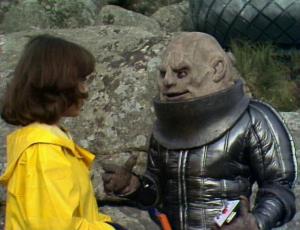
Sarah Jane is surprised to see the Sontaran since he look just like the one who died in 13th century England. Sure, Sarah Jane, they both look like a potato in armor, but Linx looked more like an undead zombie potato in armor. This Sontaran, Field Major Styre, reveals that he looks the same – no he doesn’t! – but he is not the same because they are a species of clones bred to fight wars. As Sarah Jane ponders this, Roth tries to escape and Styre kills him.

Back at the hole trap, the Doctor climbs out and into the arms of his previous captors, who are subsequently captured by the robot. The Doctor dives back into the hole and finds the tunnel that Harry used. Speaking of, Harry explores the area around the ship, finds a captive, and tends to him. Keeping the story’s title honest, the Sontaran is experimenting on humanity to determine their limits and weaknesses in preparation for an invasion of Earth. After Styre interrogates Sarah Jane, revealing that she should not exist since she was not among the humans on the planet at the time of the catastrophe, he reports his results to his commanders and begins a fear-based experiment on Sarah Jane. Harry locates Sarah Jane, calls her “old girl” again because the old boy never learns, and tries to free her but cannot. After Harry departs, the Doctor arrives, disables the force field, frees Sarah Jane, and confronts the Sontaran. He tries to escape, but the Sontaran shoots him before returning to his ship to deal with the rest of the human explorers.

Harry returns to the unconscious Sarah Jane and Doctor, and in a fit of anger and determination, he nearly strikes the Sontaran before the Doctor stops him. The Doctor was saved by his own contradictory nature – “Never throw anything away,” but remember that “It’s a mistake to clutter your pockets” – and he devises a plan after disabling the robot and listening in on the invasion plans. The Doctor decides to confront Styre in hand-to-hand combat, which will tire the Sontaran and force him to recharge at the ship, which Harry and Sarah Jane will sabotage. The battle is so-so, but the Doctor’s use of the Sontaran’s pride against him is just awesome. As planned, Styre wears himself out, returns to the ship, and melts away as the ship reverses the recharge sequence. The Doctor solves the Sontaran threat with a bluff, and beams himself and the companions away.

To Robert Holmes’s credit, this was a much tighter story than most. On the downside, it was a little too fast-paced for this era and writing staff, and the storytelling shortcuts were obvious. Despite that, I think it was still a good adventure.


Rating: 4/5 – “Would you care for a jelly baby?”


UP NEXT – Doctor Who: Genesis of the Daleks


The Timestamps Project is an adventure through the televised universe of Doctor Who, story by story, from the beginning of the franchise. For more reviews like this one, please visit the project’s page at Creative Criticality.


Timestamp #76: The Ark in Space

Doctor Who: The Ark in Space
(4 episodes, s12e05-e08, 1975)

Timestamp 076 The Ark in Space


After this one started, I realized that I had seen it before as part of the “greatest hits” one-story-per-classic-Doctor series on Netflix. Just like The Aztecs in that same series, it didn’t make a whole lot of sense on my first watch.

How does it fare this time? You’ll find out shortly.

The TARDIS, sporting a different look (maybe?) with the backlit “POLICE BOX” label, arrives on a space station with people hibernating in stasis tubes. Harry Sullivan is shocked after his first trip in the TARDIS, and amusingly, the Doctor checks gravity with a yo-yo. I’ve missed the whimsy so much since Patrick Troughton. As the team investigates the strange station, Sarah Jane is divided from the group and trapped in a room that is losing oxygen. Harry and the Doctor discover her after she’s lost consciousness, but they also fall into the same trap. Just in time, the Doctor discovers that the cables have been chewed through, and he uses his sonic screwdriver to repair the circuit.

As Sarah Jane recovers, the Doctor and Harry are attacked by a security robot and they seek cover under a table. The Doctor tries to distract the robot with his hat and scarf – created for him by that “witty little knitter” Madame Nostradamus – and finally uses his sonic screwdriver to unfasten the table from the deck and move across the room like a turtle to the security panel. They distract the robot and shut it down.

Meanwhile, Sarah Jane is teleported away and processed by the automated system. As Harry and the Doctor look for Sarah Jane, they find a skulking creature that leaves a slime trail. They discover the processing room, which leads the Doctor to conclude that they are in a cryogenic repository and ultimate human library. A literal ark in space.

Hence, the story’s title.

They discover banks upon banks of suspended humans, as well as the slime trail, and this leads Harry to Sarah Jane, who is also in suspended animation. Harry looks for a resuscitation unit and finds a large dead insect. Shortly afterward, one of the humans revives. Her name is Vira, and she is a First Med-tech. She helps to revive Sarah Jane, and then moves to their leader, Noah. His real name is Lazar, but he is named after the myth of the Biblical Ark. They took to the stars after solar flares threatened the Earth, anticipating only 5,000 years in suspension. Evidently, they slept far longer.

The power fails as Noah is being revived, and the Doctor goes to the control room to restore the systems. He investigates the failure in the solar stacks and finds substantial contamination from the grubs. When Noah comes to, he is concerned that the travelers will contaminate their carefully selected gene pool. He tracks the Doctor to the solar stacks after arming himself. He finds the Doctor in the control room and refuses to believe the Time Lord’s story, and he shoots the Doctor.

A note on Harry: He just doesn’t learn. Sarah Jane has asked him not to call her “old girl,” yet he continues to do so. He also calls Vira the same and touches her shoulder when it’s clearly not desired. The Doctor sees something in him, so I’m giving him a chance, but come on, Lieutenant.

Anyway, Vira traces the slime trail in the hibernation chambers to a capsule once occupied by a technician named Dune. On the other side of the station, Noah goes to the solar stacks as Harry and Sarah Jane attend to the Doctor. Noah finds the broken solar stack chamber, and is attacked by the grub. The Doctor comes to and the travelers follow Noah to the solar stacks, but he intercepts them and escorts them back to the hibernation section.

Vira revives a technician name Libri, who reacts strangely to Noah’s presence as though he saw a creature. Noah leaves the captives to Libri, and then orders a shutdown of the station, claiming to be Dune as well as Noah. The Doctor advises Libri to stop Noah, then investigates Dune’s pod and finds evidence that the dead insect embedded larvae in Dune, just like creepy real-world parasitic wasps, which consumed him and absorbed his knowledge. Libri confronts Noah, but Noah disarms and kills him before revealing that he is metamorphosing into the insect. His hand is covered in painted bubble wrap. In a moment of lucidity, Noah fights the alien presence and transfers command to Vira with an order to get back to the planet as soon as possible. He discloses that the aliens are the Wirrn, and that they will absorb the humans.

Another note on Harry: He calls Sarah Jane a chauvinist for feminism. I’m really starting to dislike him. He’s competent, but he’s an ass.

The Doctor and Vira track down Noah, but he’s nearly consumed by the Wirrn. Vira is saddened because she and Noah were pair-bonded for the new Earth. Meanwhile, Harry and Sarah Jane begin to awaken the crew. Vira wants to awaken everyone and send them to Earth, but the Doctor convinces her to delay until he can stop the invasion.

Harry and the Doctor perform an autopsy/necropsy on the insect, and the Doctor tries to download the Queen’s memories into the station computer. When that fails, he downloads the memories directly into his own mind. As that happens, the Wirrn break into the hibernation chamber and kill one of the technicians. Vira orders the remaining men, Harry and Rogin, to be armed, and they drive the Wirrn back into the ventilation ducts.

The Doctor discovers in the Queen’s memories that she was killed by the automatic robot guard, and the Doctor decides to electrify the station’s infrastructure to defeat them. Trapped in the room by the Wirrn, the Doctor uses the transmat to move everyone to the control room, but it fails after only Harry and Rogin are transported since the Wirrn shut down the power systems. The Doctor braves the station to restore power, but encounters a nearly metamorphosed Noah. He is saved by Vira and Sarah Jane, and the Wirrn explain that they are seeking vengeance since human explorers displaced them from their breeding grounds in Andromeda. They plan to absorb all of the knowledge on the Ark become a superpower, but offer sanctuary for people on board if they leave immediately.

The team devises a plan to electrify the station using the transport shuttle, and Sarah Jane volunteers for the most hazardous task: routing the cable through the ventilation ducts. She gets stuck at one point, and the Doctor provokes her into fighting her way free, after which he praises her. I enjoyed that clever moment.

With the normal routes to the hibernation chamber cut off, the Wirrn attempt alternate entries. The Noah-Wirrn negotiates with the Doctor by holding the oxygen supply hostage. The Doctor appeals to his remaining humanity, but fails. The Wirrn attempt to take the shuttle bridge through the cargo bay, and the Doctor has the team return to the ark and the shuttle take off automatically. The Doctor’s attempt to sacrifice himself to release the locks is thwarted by Rogin who bravely takes his place. The swarm is ejected from the station in the shuttle, and Noah-Wirrn deliberately destroys the shuttle in his last gasp of humanity.

With the shuttle destroyed, the transmat is the only way to get the humans back to Earth, but the Doctor notices that the system is faulted. He, Sarah Jane, and Harry beam down to Earth to fix them as Vira begins awakening the ark.

This one was a fun romp with the typical monster-of-the-week and cliffhanger ending of the early years. Even with Harry’s bone-headedness, it was still enjoyable, much better on this go-round with some franchise context, and a good full intro to this Doctor.

Rating: 4/5 – “Would you care for a jelly baby?”


UP NEXT – Doctor Who: The Sontaran Experiment


The Timestamps Project is an adventure through the televised universe of Doctor Who, story by story, from the beginning of the franchise. For more reviews like this one, please visit the project’s page at Creative Criticality.


Timestamp #75: Robot

Doctor Who: Robot
(4 episodes, s12e01-e04, 1974-75)

Timestamp 075 Robot


It’s never easy changing Doctors, but I think I’m going to like this one.

Things start out with another new title sequence, which is great, but I kind of miss the warp stars. The story itself kicks off with a delirious Doctor who mentions previous adventures as Lieutenant Harry Sullivan, UNIT’s staff physician, takes the Time Lord to the infirmary. Congratulations are also in order as Benton’s been promoted to Warrant Officer. That’s one big wetting-down party.

As the heroes get sorted out, a robot infiltrates a military facility. It kills a dog, so we know it’s bad, and steals top secret disintegrator gun plans. Back at UNIT, Sarah Jane asks the Brigadier for a pass to tour the Think Tank research facility, and as they leave the lab, the Doctor sneaks in, finds his TARDIS key in his predecessor’s shoe, and almost makes it into the TARDIS before Doc Sullivan catches him.

At this point, we get our first really good look at the Fourth Doctor. His eyes are wild and fun, and so it his youth. He reminds me so much of Christopher Eccleston’s Ninth Doctor.

The Doctor tricks Sullivan and ties him up before trying to leave in the TARDIS, but Sarah Jane stops him and discusses the need for him to investigate the mysterious theft. The Doctor, still unstable, almost shrugs off this duty, but he stops as he remembers the Brigadier and Sarah Jane. The Doctor tries various wardrobe options to match his new persona – including a Viking ensemble, a royal outfit, and a clown suit – before settling on his trademark scarf, coat, and hat. After that, the game is afoot.

Sarah Jane arrives at Think Tank for her tour, and the franchise continues to be progressive with a female director, Hilda Winters, at the facility. Sarah Jane doesn’t expect it, and mistakes assistant Arnold Jellicoe for the director. The Think Tank facility has a robotics division, but the only roboticist, J. P. Kettelwell, left in a very public spectacle. As Sarah Jane chases that lead, the Doctor, Sullivan, and the Brigadier set a trap at the next piece for the disintegrator gun. The robot avoids them by burrowing underneath and stealing the part.

Sarah Jane interviews the roboticist, but that lead is a dead end, so she sneaks back into Think Tank and discovers the robot in the lab. The facility’s director claims that the robot, Experimental Prototype Robot K1, is completely for show, and demonstrates that the robot cannot kill based on the prime directive that it can never harm humanity. The First Law of Robotics lives on, at least in a fashion. Sarah Jane is coerced by the director to keep her experience secret. Of course, the first thing she does is tell the Doctor and the Brigadier.

Winters and Jellicoe reset the robot again – hello, modified Zeroth Law! – and send it out after Cabinet Minister Joseph Chambers. The Brigadier decides to send Sullivan on a James Bond-style mission into Think Tank while the Doctor decides to interview Kettlewell. The robot breaks into Chambers’s home, kills him, and steals some documents. The Brigadier, the Doctor, and Sarah Jane discuss the incident and the Think Tank’s association with the Scientific Reform Society, a group that advocates societal rule by the scientific elite.

The robot visits Kettlewell in a disoriented state, explaining that his orders conflict with his prime directive and seeking help. Sarah Jane visits the Scientific Reform Society while the Doctor and the Brigadier investigate Think Tank. Director Winters claims that the robot has been dismantled, and the Doctor uses his scarf to sweep the floor for clues. They are escorted out just as Sullivan arrives disguised as a medical inspector. Kettlewell later calls the Doctor and informs him that the robot is there, but Winters and Jellicoe arrive first.

The dressing of the Scientific Reform Society was a bit on the nose with the Nazi-like uniforms, attitudes, and symbology. They are bad guys. Like, really bad guys.

The Doctor leaves a note for Sarah Jane and Benton, then takes Bessie to meet the professor. The Doctor encounters the robot, who attacks him under orders. The Doctor tries to escape, but the robot knocks him down. It is about to kill him when Sarah Jane arrives and intervenes. K1 recognizes her and enters its logic loop once again, but UNIT arrives and opens fire. It flees Kettlewell’s lab under UNIT assault, and the professor is found tied up in a storage locker.

Sarah Jane tends to Kettlewell, and he tells her of the robot’s construction. It is made from a living metal, but fear not, because Kettlewell has also discovered a virus that can destroy the metal. Kettlewell mentions that he is a member of the Scientific Reform Society, but that he only visited once. Together, they make a plan to sneak Sarah Jane inside.

We also find that a stunning plot convenience – the combined nations of Russia, China, and America have entrusted the locations and launch codes for their nuclear arsenals to Great Britain – is now the key to the entire conflict. The robot stole that information from Chambers, and now Winters and Jellicoe likely have it.

At the SRS meeting, Winters introduces K1 and Kettlewell as allies, which shocks Sarah Jane. Even more shocking is their betrayal, which the Doctor disrupts after incapacitating the guards with his antics and scarf. Kettlewell’s goals are simple: With the Society’s help, he can finally make humanity to stop ruining the environment.

Wait. That’s it? Okay.

Winters orders the execution of the Doctor and Sarah Jane, but the Brigadier and UNIT arrive in explosive fashion. Winters, Jellicoe, and Kettlewell escape with the robot and Sarah Jane, and the antagonists uncover Sullivan when he calls the Brigadier. The entire Think Tank is moved to an underground atomic bunker. UNIT tries to storm the site, but Winters deflects them with the automated defense system. She demands the Brigadier’s surrender within 30 minutes, otherwise she will destroy the world in a nuclear holocaust. Having none of it, the Brigadier sends Benton to destroy the machine gun emplacements, and the Doctor uses his sonic screwdriver to detonate the landmines and open the bunker door. Director Winters arms K1 with the disintegrator gun and sends it out to deal with UNIT, where it kills one soldier and destroys a (toy) tank. That effects cheat makes sense since they spent so much on the visuals and new titles.

The action sequences were nice, but the Doctor’s youthful charm and comedic antics were the highlight. They’re kind of refreshing after the seriousness of Pertwee’s Doctor.

Director Winters tasks Kettlewell with unlocking the launch codes and linking the missiles to a worldwide network. She starts the countdown to launch, but Kettlewell stops it and escapes with Sarah Jane and Sullivan. Sarah Jane tries to reason with the robot, and it almost works, but the programming forces it to fire on Kettlewell, and murdering its creator sends it into a logical shutdown.

UNIT invades the bunker, but Winters has already transmitted the launch commands. The director runs while the Doctor reprograms the computer and stops the countdown. Sarah Jane wanders off and is taken by the robot, who is trying to reason out its logical conflict and decides to destroy humanity per Kettlewell’s desire. On a positive note, it chooses to save Sarah Jane.

The Brigadier wishes that he could meet an alien threat that wasn’t immune to bullets – Thank you, Brig! – and Benton tells the team about the living metal and the virus. The Doctor and Sullivan head to Kettlewell’s lab to find the virus as K1 locks the bunker and restarts the countdown. The countdown is thwarted by the fail-safes for each superpower’s warheads, so K1 takes Sarah Jane to the surface. The Brigadier shoots K1 with the disintegrator, but the plan backfires as K1 grows to immense size.

Note: Insert shark to jump here. The Fourth Doctor can borrow the Ninth Doctor’s leather coat.

K1 King Kongs Sarah Jane to a rooftop for her safety, then engages the UNIT troops in a terrible special effects spectacular. The Doctor and Sullivan arrive with the virus, and drive Bessie to K1’s feet and deploy the virus. The virus shrinks K1, then dissolves it completely.

Back in the lab, Sarah Jane is upset over K1’s destruction. The Doctor offers her a jelly baby to snap her out of her reverie, and then offers to take her away in the TARDIS.

I love his quote here: “There’s no point in being grown-up if you can’t be childish sometimes.”

Doctor Sullivan arrives just as they were about to leave, and he invites Sullivan along. The “bigger on the inside moment” is priceless as the Doctor is off once again.

With the story and the acting alone, this serial was scoring as a high 4 until the entire super robot fight. Even after that, it’s still good. Baker is delightful as the Doctor, and his companions have great chemistry. I settled on a 4 before adding in the regeneration handicap.


Rating: 5/5 – “Fantastic!”


UP NEXT – Doctor Who: The Ark in Space


The Timestamps Project is an adventure through the televised universe of Doctor Who, story by story, from the beginning of the franchise. For more reviews like this one, please visit the project’s page at Creative Criticality.


Timestamp: Eleventh Series and Third Doctor Summary

Doctor Who: Eleventh Series and Third Doctor Summary

Timestamp Logo Third 2


The Eleventh Series bounces back from the slight dip in the Tenth Series, but that’s not without caveats. Two of the stories were easy marks: The Time Warrior was a straight-up 5, and The Monster of Peladon – rest in peace, brave Aggedor – was a solid 4. But each of the other ones in this series took a little, shall we say, extra consideration. Invasion of the Dinosaurs and Death to the Daleks benefitted from optimistic mathematics, but Planet of the Spiders only scored well because of the regeneration handicap and the addition of franchise mythology in an already heavily padded story.

This season heralded the passing of the torch for the Third Doctor’s run: UNIT is phased out more and more as one of the strongest companions so far gets introduced. Sarah Jane Smith is so fantastic, from her journalistic inquisitiveness to her proactivity and fiery nature. She definitely has not let me down.

Out of the Third Doctor’s run, this one was the second highest rated behind the Ninth Series. It’s also the second highest rated for the entire Timestamps Project to date, barely edging out the Fifth Series. But I think a lot of the turbulence for me in this series has a lot to do with one major component of the Third Doctor’s era: Convenience.


The Time Warrior – 5
Invasion of the Dinosaurs – 4
Death to the Daleks – 4
The Monster of Peladon – 4
Planet of the Spiders – 4

Series Eleven Average Rating: 4.2/5


Timestamp Third Doctor


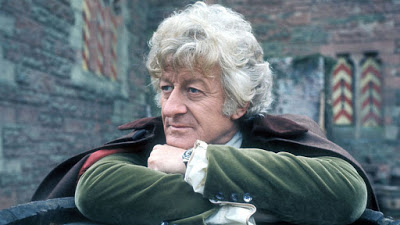
Remember how I referred to William Hartnell and Patrick Troughton as anchors for the audience? I think it still holds here. Jon Pertwee’s introduction ushered in a lot of changes for the franchise, and it meant that the Doctor had to change a bit as well. If the First Doctor is the Wise Grandfather and the Second Doctor is the Sly Jester, then the Third Doctor is the Secret Agent Scientist.

The James Bond influence is strong in Pertwee’s run, from the Lazenby-style ruffles to the ad hoc gadgets and super-powered vehicles. Unfortunately, those efforts to appeal to modern audiences come at the price of adding convenience to the franchise. I wanted to know how often I called out the convenience in the stories, so I searched the Timestamps Project for the term and came up with sixteen hits. Of those, half of them were in the Third Doctor’s run alone.

In The Ambassadors of Death, it was the antagonist’s communicator and a gadget on Bessie. In The Curse of Peladon, it was the plot device that removed the TARDIS as an escape vector and the Time Lord interference that sent the Doctor there. In Carnival of Monsters, it was Jo’s skeleton keys. In Frontier in Space, it was the quick clearing-of-the-stage appearance of the Daleks. In Planet of the Daleks, it was the secret information that the Time Lords provided to the Doctor about the large Dalek force. In Invasion of the Dinosaurs, it was the selective nature of the time bubble machine. In Planet of the Spiders, it was both the Whomobile’s sudden flight mode and the ability of Yates and Tommy to survive a blast that essentially killed a Time Lord.

In the one that I can excuse, The Three Doctors kept an infirm William Hartnell confined to a time eddy.

But that’s still seven occurrences in five series related to one Doctor. Hartnell and Troughton each had four hits on my search, and I’m willing to admit that it’s probably more prevalent, the fact remains that it really stood out during this Doctor’s run. To me, that represents a substantial change in the franchise overall. This isn’t the same Doctor Who as it was under Hartnell and Troughton.

That’s not necessarily a bad thing.

Doctor Who had been running for seven years before the Third Doctor, and those seven years were, for the most part, pretty consistent. Television shows these days are lucky to get three or four years unless they’re medical procedurals (ER, Grey’s Anatomy), crime procedurals (Law & Order, Bones), or Supernatural. Star Treks generally got seven seasons (arguably, four of which were consistent). Babylon 5 ran for five years (and some extras) and Farscape ran for four years (and a miniseries). Closer to the 1960s, the original Star Trek only got three years, and depending on who you ask, it was consistent for two.

With those odds, it made sense that Doctor Who would have to evolve (regenerate) in order to survive. It will likely happen again.

So, what did I think of the character? I liked him, though not as much as the scores would indicate. In my opinion, the Third Doctor’s episodes were generally superior to those of his predecessors, but the character himself suffered from his exile. He was frequently snotty, condescending, and downright rude, and while that made sense to the story, those aren’t character traits that I admire. I loved that he brought science back to the forefront with his constant experimentation and exploration, but he didn’t really start to shine for me until he got his keys back.

He’s a man defined by his wheels – Bessie, the Whomobile, the TARDIS – and that makes him kind of shallow.

And I seriously hope that one of those, the Whomobile, stays in the garage.

The Third Doctor’s run consistently has some of my favorite work in the series, and it scores the highest as a result, but outside of the numbers I still favor the Second Doctor as a character.


Series 7 – 3.8
Series 8 – 3.4
Series 9 – 4.8
Series 10 – 3.8
Series 11 – 4.2

Third Doctor’s Weighted Average Rating: 4.00


Ranking (by score)
1 – Third (4.00)
2 – Second (3.67)
3 – First (3.41)

Ranking (by character)
1 – Second Doctor
2 – Third Doctor
3 – First Doctor


UP NEXT – Doctor Who: Robot


The Timestamps Project is an adventure through the televised universe of Doctor Who, story by story, from the beginning of the franchise. For more reviews like this one, please visit the project’s page at Creative Criticality.

Timestamp #74: Planet of the Spiders

Doctor Who: Planet of the Spiders
(6 episodes, s11e21-e26, 1974)

Timestamp 074 Planet of the Spiders


I don’t like spiders. I’ll try not to let that color my commentary.

Mike Yates, who we haven’t seen since his betrayal of UNIT and the Doctor, is recuperating at a Buddhist meditation center led by a man named K’anpo and his assistant, Cho Je. He finds a secret group in the basement that may be up to no good, so he calls Sarah Jane and they investigate matters. On the way back to the center, Sarah Jane is convinced of the fascinating tale when they get run off the road by an imaginary tractor. The leader of the secret group, Mr. Lupton, meets the cinematic standard of a villain since he physically abuses and bullies Tom, a man with a mental disability.

The Doctor is at a comedy show of some sort with the Brigadier. He’s there to see a psychic, Professor Herbert Clegg, who he invites to UNIT. Clegg is a very powerful clairvoyant, and he submits to some experiments to determine his full strength. One, for example, summons experiences from the sonic screwdriver and displays them on a monitor. During this evaluation, a package arrives from Jo Grant containing the crystal from Metebilis III, which is an odd way to re-gift a wedding present. Professor Clegg has a violent psychic reaction to the crystal, resulting in a fatal fear-induced heart attack. Simultaneously, Lupton’s group summons an intelligent and powerful spider from another dimension, and that spider merges with Lupton’s body. Sarah Jane and Yates witness this event, and she returns to UNIT and relays the tale to the Doctor.

The Doctor gazes into the crystal, sees the hermit who lived behind his childhood home, and relays the story to the Brigadier. Meanwhile, Lupton is driven by the spider to seek the crystal at UNIT HQ. He forces his way in and steals the crystal, which prompts an extensive chase. Lupton steals the Whomobile, so Sgt. Benton, Sarah Jane, and the Brigadier follow in Bessie, while the Doctor provides air support in a small, one-man helicopter. After the whole group breaks some local speed laws, a police officer joins the chase in a moment of levity. After they all stop at an airport, Lupton steals the helicopter, and the Doctor and Sarah Jane continue pursuit in the Whomobile, which (conveniently) can now fly. The ground chase gives way to a water chase involving a hovercraft and a speedboat, which results in a several rather obvious reveals of the Jon Pertwee’s stunt double. When the Doctor finally catches up to the speedboat, Lupton has vanished.

Take a moment and catch your breath.

Lupton apparates back to the retreat and is seen by Tommy, who only has eyes for the crystal and covets it for his collection of “pretties.” As the Doctor and Sarah Jane track Lupton back to the retreat, the Lupton-Spider calls home to the spider community on Metebilis III and conspires to take over Earth. The spider attempts to coerce Lupton through telepathic pain, but Lupton levels up and reverses the effect on the spider. Meanwhile, Tommy steals the crystal and hides it in his cupboard under the stairs.

I found the fact that he lives under the stairs to be quite interesting. It’s part of the Madwoman in the Attic trope, where the socially undesirable member of the house is locked away from public view to save face. In some cases, this person ends up being the hero of the story of a fulcrum to pivot the plot and enable the hero to save the day. Three of my favorite examples are Boo Radley in To Kill a Mockingbird, Scorpius in Farscape, and Harry Potter in the franchise of the same name.

Tommy takes Sarah Jane to look at the crystal, but Sarah Jane overhears Lupton and follows him to the basement. She asks Tommy to relay her plans to Yates and watches Lupton apparate to Metebilis III. She inadvertently follows him and gets captured by a group of humans who are subjects to the queen spider and her society of Eight Legs. The queen just happens to visit the village and Sarah Jane is discovered. The Doctor gives chase in the TARDIS and arrives just as the queen discovers Sarah Jane. The Doctor gets into a fight with the queen’s human guards, and is eventually incapacitated and left for dead as the queen and her retinue depart. During the fracas, Sarah Jane hides in the crowd.

Back on Earth, Tommy gets into an altercation with Lupton’s comrades. He returns to his cupboard and gazes into the crystal, which heals his brain. On Metebilis III, Lupton realizes that he is a only a cog in the overall Eight Leg machine designed to overthrow the queen. Sarah Jane retrieves a machine from the TARDIS to help heal the Doctor, but she is captured by the Eight Legs. One of the indentured humans uses the machine to help the Doctor as Sarah Jane learns the history of Metebilis III from a fellow captive named Sabor. The humans are descendants of a crashed spaceship, and the Eight Legs are spiders that were on the ship and were mutated by the crystals.

The Doctor investigates different types of stones around the human village and finds one that negates the energy attacks of the Eight Legs followers. He infiltrates the spider fortress and is captured, but escapes using techniques learned from Harry Houdini. As the Doctor makes his way to the lair of the Great One, the supreme spider, the queen takes Sarah Jane and confides in her that the queen wants peace with humanity. Sarah Jane agrees to get the crystal if the humans are all released.

The Doctor reaches the lair of the Great One, but she warns him not to go any further due to intense radiation. She wants the crystal, the last perfect crystal of power, but the Doctor doesn’t yield. The Great One telepathically forces the Doctor to march about like a tin soldier (to music very reminiscent of the march of the Cybermen), before releasing him so he can retrieve the crystal. He escapes with Sarah Jane, who has apparently learned how to apparate from the queen, and they return to Earth.

Lupton’s followers open the gateway to the spiders, who transport to Earth. The spiders attack Cho Je and Yate, and then possess the followers. They then attack the Doctor and Sarah Jane, who are saved by Tommy before being taken to K’anpo. During their discussion, K’anpo is very impressed with the Doctor’s knowledge of Tibetan customs, and the Doctor feels that K’anpo is familiar to him.

In the interim, the spiders track the crystal to Tommy, and they fire on him with their Force lightning energy beams. At this point, it’s painfully obvious how much padding this serial has. The recaps in each episode are pretty long, but the last one is the proverbial straw that breaks the camel’s back with significant re-editing to reveal things that would have spoiled the cliffhanger. I’m sure it was different back in 1974 when the break between episodes was a whole week, but when they’re watched back-to-back, the extensive recaps become painful. Regardless, this whole serial could be cut down into three or four episodes instead of six.

Anyway, the spiders track the crystal to Tommy because Tommy delivered it to K’anpo. At this point, we find out that Sarah Jane is under the control of the queen, who has tricked her to retrieve the crystal. K’anpo and the Doctor free her with the crystal, and the queen dies as she apparates back to Metebilis III. In a twist, K’anpo is revealed as the hermit from the Doctor’s childhood. He is a Time Lord as well, but chose not to follow the path of others like the Doctor, having regenerated and left Gallifrey to live in Tibet. Cho Je is merely a projection of K’anpo’s mind.

Here we are with some important mythology points: We learn the name for regeneration, as well as getting another reference to the Doctor stealing the TARDIS and running from Gallifrey.

The Doctor communes with K’anpo and realizes that he must take the crystal to the Great One. His greed for knowledge and his theft of the crystal set all of this in motion, and only he can stop it by facing his fears.

Outside, Tommy is resisting the spider lightning, so Lupton’s followers channel power from the spider council on Metebilis III and use it to attack Tommy. He resists the first blast, and Yates dives in to take the second. The followers burst into K’anpo’s chambers just as the hermit tells the Doctor how to apparate. The followers shoot K’anpo before running for the basement, but the Doctor is too quick for them. He returns to Metebilis III, but is betrayed by the villagers who are under the influence of the spider council. The Doctor easily convinces the council that he will return the crystal to the Great One alone, and they allow him to leave. Afterward, the Eight Legs kill Lupton for his insolence.

Back on Earth, Yates and Tommy have (conveniently) survived, the former being protected by his compassion, and the latter by his innocence. Given that the same blasts force K’anpo to regenerate into Cho Je, I think that Yates and Tommy should have died. It certainly would have given Yates a bit of redemption after his betrayal.

The Doctor enters the lair of the Great One, who desires the perfect crystal to complete a telepathic weapon that will saturate the universe with her mind. She takes the crystal and puts it in place, but the device overloads and destroys her and the Eight Legs civilization. The Doctor escapes, but is weakened from the large dose of radiation he absorbed.

Three weeks later, the Doctor is still missing. As the Brigadier and Sarah Jane discuss the Doctor’s absence, the TARDIS materializes. The Doctor falls out of the TARDIS, just as he did when he first arrived, after being lost in the time vortex. He has received a fatal dose of radiation and is dying. He says his goodbyes to Sarah Jane, and then regenerates.

Tucked into his farewells is the phrase “Where there’s life, there is hope,” which comes from the Roman play Heauton Timorumenos, but also has roots all over mythology. It’s a universal theme, and very relevant to the character of the Doctor, a being who brings hope everywhere he goes spanning lifetime after lifetime.

Overall, I had a hard time with this story. If it were presented on its own, I’d score it as a 2. It’s far too spread out and padded, especially in the recaps, but it gains some salvation in the ties into the franchise’s mythology, especially for reaching into our hero’s childhood once again. Adding a point for those ties and another for the regeneration handicap, and this one comes to a total of 4, but I still think that it’s a pretty bad way for the Third Doctor to end his era.


Rating: 4/5 – “Would you care for a jelly baby?”


UP NEXT – Eleventh Series and Third Doctor Summary


The Timestamps Project is an adventure through the televised universe of Doctor Who, story by story, from the beginning of the franchise. For more reviews like this one, please visit the project’s page at Creative Criticality.


Timestamp #73: The Monster of Peladon

Doctor Who: The Monster of Peladon
(6 episodes, s11e15-e20, 1974)

Timestamp 073 The Monster of Peladon


The Doctor returns to Peladon, and that means we get more Aggedor! Well, kind of.

As this serial gets rolling, I hadn’t noticed before now that the opening credits have a glitch. When the Third Doctor transforms into a silhouette and joins the wormhole effect, the zooming leaves an artifact in the lower left corner of the screen until the Doctor Who logo appears. I can’t un-see it now.

Anyway, back to Peladon. Three miners are moving a device called the sonic lance when they are attacked by something called the “Spirit of Aggdeor”. It’s no surprise that the miners are afraid and refuse to work any longer, and it’s also no surprise that it’s time for the Doctor to arrive. Right on cue, the Doctor brings Sarah Jane to Peladon to show her “one of the most interesting places” he knows, and they are almost immediately apprehended.

They are taken before the queen, the daughter of the king we saw on the Doctor’s last trip to Peladon, who is working with the Federation delegates to keep mining production moving. Our travelers arrived in the height of war between the Federation and Galaxy Five, and their appearance correlates with fears of enemy spies being implanted in the Federation. It’s been fifty years since the Doctor was last on Peladon, but the queen knows the legends of the Doctor, and his life is saved by old friend Alpha Centauri, who vouches for the Doctor.

Sarah Jane is fiery. So awesome!

The miners are extracting a mineral for the war effort, and are upset with their way of life which hasn’t improved in the last fifty years. Their leadership is split between Gebek (who negotiates with the queen for improvement) and Ettis (who relies on violence, including taking over a Federation armory), and they have some unintentionally hilarious hairstyles.

After the Spirit attacks again, the Doctor appeals to the queen to let him investigate before she takes rash action against the rebels. The queen sends her champion with the Doctor to investigate the last site of the Spirit’s appearance when Ettis sets off an explosion. The Spirit appears, kills the champion, and then vanishes. Gebek uses the sonic lance to free the Doctor, who escapes just before the Spirit attacks again, and the Doctor and Gebek strike a deal for the good of Peladon to continue the investigation. The Doctor promises to convince the queen to improve conditions and the miners can get back to work. As the guards attack, the miners and the Doctor escape together.

Sarah Jane has gone to find the Doctor and gets lost, tripping a defense system near the refinery after seeing someone sneaking about inside. She is rescued by Alpha Centauri and Eckersley, a human miner. Meanwhile, Chancellor Ortron (mirroring High Priest Hepesh from the last Peladon adventure) convinces the queen that the Doctor is in league with the miners, and recommends that the Doctor be executed.

Ettis attacks Eckersley and forces Alpha Centauri and Sarah Jane to open the armory. After Alpha Centauri sounds the alarm, Ettis escapes with Sarah Jane, who then is captured by the palace guards. Ortron orders her taken to the temple and pins the rebellion on her and the Doctor. He throws them both into the pit to be disposed of by the real Aggedor.

Oh, Aggedor, I have missed you.

The Doctor uses the “God Rest Ye Merry Gentlemen” lullabye on Aggedor, which works just like it did fifty years before, and they are released by the queen. Thank the Maker that the queen is finally standing up for herself! She asks the Doctor to have Gebek meet with her and discuss the miners’ grievances. The Doctor departs on his mission, but asks Sarah Jane to remain and advise the queen in how to stand up for herself. Her advice: “There’s nothing ‘only’ about being a girl.”

Yes! She’s like Jo turned up to eleven.

Gebek tries to rally the miners to a peaceful situation, but Alpha Centauri has requested Federation military support, which may exacerbate the situation. As the Doctor gets ready to assuage that problem, Ortron orders the Doctor to remain in the Citadel, and when he tries to sneak out to meet with Gebek, Ortron has him arrested. Alpha Centauri and the queen lobby for his release, but Ortron declines. The queen orders that Sarah Jane is to remain free, and Ortron agrees since, as a female, Sarah Jane cannot be a problem.

When Ortron talks about the Doctor’s “rebel friends,” he rolls the R and enunciates much like Peter Cushing as Grand Moff Tarkin in Star Wars: A New Hope. It must be part of classical British acting classes.

Sarah Jane relays the Doctor’s message to Gebek, whose men have just secured the sonic lance by force. She later confers with the queen in the presence of Alpha Centauri and Ortron on how to dissuade the incoming Federation troops, who (by procedure) cannot be recalled once summoned. Sarah Jane heads for the dungeon to release the Doctor, but Gebek offers to go in her stead. Once free, the Doctor accompanies Gebek to the refinery as the miners set up the sonic lance and prepare to lay siege on the Citadel. During all of that, Alpha Centauri contacts the Federation troops, who sound a lot like Ice Warriors, and gets an update on their deployment.

Ortron puts the plan in action by appealing to the miners to return to work and promises that after the troops leave, the queen will listen to their grievances. They agree, but are immediately attacked by the Spirit. As they run, the Doctor finishes hotwiring the refinery door and reveals two Ice Warriors.

Wait. Aren’t the Ice Warriors supposed to be friendly on Peladon? Not anymore, it seems. They take the Doctor and Gebek captive and impose martial law on Peladon. All of the players are taken to the throne room, and the Ice Warrior commander, Azaxyr, summarizes the entire affair so that he has a clear picture. He returns the miners to work under Peladonian armed guards: If the miners fail to work, they will be killed, and if the miners and guards fail to follow the plan, the Ice Warriors will execute the hostages they have taken as collateral. The Ice Warriors claim to be a Federation force operating under wartime rules of engagement.

Ettis and his miner army storm the throne room to rescue Gebek, but are immediately slain by the Ice Warriors. Only Ettis escapes, and Azaxyr decides to execute the Doctor, but is convinced by Sarah Jane, Alpha Centauri, and Eckersley that only the Doctor can convince the miners to return to work. After the Ice Warriors leave to inspect the worksite, the Doctor reasons with Sarah Jane that the figure she saw in the refinery must have been the Ice Warrior guard Sskel, and that Azaxyr and Sskel must have been on the planet before the Federation troops arrived.

Sneaky, sneaky.

The Doctor returns to the throne room and asks the miners to return to work, but the Peladonians are united as a whole against the Ice Warriors. So he asks them to pretend to work until he can solve the problem, and they agree. The miners return to work as asked: They cooperate with Azaxyr exactly as they did with Ortron. Meanwhile, the Doctor raises the temperature in the mines to weaken the Ice Warriors and give the miners a fighting chance against them. The miners attack, but Gebek learns of Ettis’s plan to destroy the Citadel with the sonic lance. The Doctor goes after Ettis while Gebek keeps Sarah Jane safe, but Sarah Jane is captured by Sskel and interrogated by Azaxyr.

The Doctor fights Ettis and is defeated, but when Ettis tries to activate the sonic lance, a self-destruct circuit — one that Azaxyr enabled when he detected the rebels moving the machine into position — destroys the machine. Ettis is killed, and the Doctor is presumed dead. Azaxyr returns the mines to normal temperature and disables the ventilation system. The Doctor wakes up from the explosion and returns to the mines. He catches Gebek up on the situation, and the Doctor heads to the refinery to restore ventilation.

Sarah Jane stages a diversion to free the queen, Ortron, Alpha Centauri, and herself from the throne room, but only Alpha Centauri and Sarah Jane escape. Ortron is killed in the attempt while trying to protect the queen. Alpha Centauri and Sarah Jane take refuge in the communication room where the ambassador sends a general distress call and Sarah Jane discovers that Eckersley is conspiring with Azaxyr to corner the market on the minerals and ship it all to Galaxy Five. Eckersley is also controlling the Spirit of Aggedor, which is a matter projection of a statue with a directional heat ray. Sarah Jane sees the Doctor on the screen and runs to join him at the refinery.

That’s two serials in a row to use the combination of a galactic emergency, essential minerals, and cornering of markets to leverage power.

Eckersley and Azaxyr return to the Citadel, and Sarah Jane distracts the refinery guard long enough for the Doctor and Gebek to incapacitate him. Azaxyr discovers Alpha Centauri in the communications room, and the ambassador is sent back to the throne room where Azaxyr intimidates the queen and Alpha Centauri reveals the truth about Eckersley and Azaxyr. The ambassador is forced to reveal Sarah Jane’s whereabouts, and Sskel is dispatched to apprehend the team at the refinery. The Doctor defeats the Ice Warriors at the refinery door with the Spirit of Aggedor, and Sskel returns to Azaxyr.

Gebek rallies the miners and the guards while the Doctor controls the Spirit from the refinery, but Eckersley amplifies the security system until it drives Sarah Jane out of the refinery and overpowers the Doctor. The miners storm the Citadel with help from the Spirit of Aggedor. Sarah Jane returns to the Citadel and holds Eckersley at gunpoint until he disables the security system. He disarms her when she sees the unconscious Doctor on the screen, and Eckersley locks her in the communications room.

The miners storm the throne room to find Azaxyr holding the queen at gunpoint. The miners lay down their swords, but then attack the Ice Warriors hand-to-hand and kill them all. The queen sends Alpha Centauri to send a message to the Federation, where the ambassador frees a morose Sarah Jane who goes to the refinery. Meanwhile, Eckersley takes the queen hostage.

The Doctor wakes up, having placed himself in a sensory withdrawl trance, and shocks Sarah Jane. He mocks her for her concern, but they return together to the throne room and learn of the queen’s peril. The Doctor dispatches the real Aggedor like a bloodhound, and the creature finds and kills Eckersley. Sadly, it dies in the assault, and the Doctor mourns his friend’s death.

I mourn as well. I’m going to miss that critter.

A short time later, the Doctor, Sarah Jane, and the queen are gathered in the throne room where Gebek is named as the new chancellor and Alpha Centauri brings news of Galaxy Five’s surrender. As the Doctor and Sarah Jane leave, she ribs him over the queen’s offer to remain as her advisor, and he playfully pushes her into the TARDIS as they head off to the next adventure.


Rating: 4/5 – “Would you care for a jelly baby?”


UP NEXT – Doctor Who: Planet of the Spiders


The Timestamps Project is an adventure through the televised universe of Doctor Who, story by story, from the beginning of the franchise. For more reviews like this one, please visit the project’s page at Creative Criticality.