
Timestamp #53: The Ambassadors of Death

Doctor Who: The Ambassadors of Death
(7 episodes, s07e12-e18, 1970)

Timestamp 053 The Ambassadors of Death


I spent a good part of this serial trying to figure out if the aliens were the Ice Warriors again.

A recovery capsule attempts to rendezvous with a Mars capsule that has lost contact with Earth and the whole world knows because, a concept completely (and sadly) foreign to us today, the mission is being televised. Over that broadcast, the Doctor (who has somehow removed the TARDIS control console from the blue box and is playing some crazy plot-filler shenanigans with Liz Shaw and micro-trips to the future) hears a sound that he recognizes. He and Liz make haste to the mission control center to figure it out.

Mars: Check. Time Lord familiarity: Check. It could be the Ice Warriors…

The Doctor determines that this sound is an encrypted transmission, and the slightly different version that pings back is a reply message. It’s certainly not a deep conversation; if this were a texting relationship, it would be like “hey” followed by “what up (smiley emoticon)”. There are a couple of investigations around the source of the reply and the freshly landed recovery capsule and gun fights break out. Meanwhile, General Carrington, the head of the Space Security Department, pulls a Homeland Security Department move and extracts the astronauts before UNIT arrives. He has removed the astronauts because of radiation exposure, but the astronauts now feed on it. They also emit it like a virus, which could potentially spread like a plague. The astronauts are not the humans, but rather legitimate aliens, and a criminal named Reegan and a disgraced Cambridge professor named Lennox are tending to them. The aliens don’t have enough radiation to consume and are weakening.

So, not the Ice Warriors, but instead an attempt at domestic terrorism on a large scale by way of a government cover-up, right?

By way of a convenient communications device, the antagonists send the aliens on a raid of the space center. It fails, and the Doctor goes into space to investigate astronauts he believes are still in orbit. He dodges an assassination attempt, docks with the capsule, gets intercepted by an incoming alien saucer, and learns that the aliens on Earth are ambassadors to fulfill a peace treaty with humanity.

Not a domestic terror plot. I didn’t see that twist coming.

In a far too quick resolution for an already thinly stretched plot, it turns out that Carrington met the aliens when he piloted the previous Mars probe, and he signed the peace treaty to lure them to Earth and stop what he interpreted as an invasion. The Doctor takes the ambassadors to space center to stop the general’s plan and exchange the aliens for the missing astronauts. The day is saved. The end.

Can I have the Ice Warriors instead? Please?

No, really. I felt like this story was just all over the place and had no idea where it really wanted to go. Seven episodes is just far too long for that kind of song and dance. There were some fun moments with the Doctor being all scientific again, but there were also some real groaners in here. For one, the strange titles – Main titles, teaser footage, return to the titles for “The Ambassadors… OF DEATH!” with some really bad sound editing – were annoying. For two, the “transmigration” of an object? Ugh. Far too magical despite the Doctor’s magician outfit. For three, the convenience of magic side panels on the escape van. I love my Bond moments, and I get the license plates spinning to conceal the car, but the side panels should have been a more realistic change.

Speaking of Bond, what good is an “anti-thief” device on Bessie if it’s clearly labeled, required to be switched on to immobilize the thieves, and frees the perpetrators after a short time? A thief could just steal the car and not touch the switch. Achievement unlocked: Grand Theft Bessie – +30G.

Finally, the episodes shift in and out of black and white because of more missing master tapes. I don’t hold it against the episode since I survived the first six seasons of the show, but it seems that the BBC certainly has a hard time learning from their mistakes. Especially after what comes across as a significant investment in the show’s future with color, higher production values, and so on.

But, yeah, just like the plot, my attention for this one was touch and go. At the end, I was just happy to see it go.


Rating: 3/5 – “Reverse the polarity of the neutron flow.”


UP NEXT – Doctor Who: Inferno


The Timestamps Project is an adventure through the televised universe of Doctor Who, story by story, from the beginning of the franchise. For more reviews like this one, please visit the project’s page at Creative Criticality.




Timestamp #52: Doctor Who and the Silurians

Doctor Who and the Silurians
(7 episodes, s07e05-e011, 1970)

Timestamp 052 Doctor Who and the Silurians


Nothing good ever comes from spelunking in genre shows.

This serial focuses on a cyclotron proton accelerator being used to research atomic power for the country. It is having security, personnel, and scientific problems, and who else do you call in for such things than a paramilitary organization, a Ph.D., and a time traveling alien? The facility has been having major power drains, which have been covered up in an attempt to help a race known as the Silurians. These reptilians aren’t really aliens per se, since they were really the planet’s original inhabitants before the rise of humanity. People who have encountered the Silurians are either killed by fear or sent into a catatonic state. Additionally, their very presence seems to have affected the cyclotron’s staff, all of whom suffer from fear-based neuroses. The Silurians retreated into hibernation chambers when they saw a strange planet crashing toward the Earth – that “planet” turned out to be the Moon falling into its orbit – but couldn’t be revived again without a sufficient power source like the cyclotron.

The Doctor eventually encounters the leaders of Silurians and nearly brokers a peace that would allow them to be assimilated into the modern Earth population, but a younger impatient upstart kills the leader and unleashes a bacterial infection on the planet to kill humanity and leave the planet for the Silurians alone. They also plan on eliminating the Van Allen Belt and irradiating the planet. Go big or go home, eh?

The Doctor tricks the Silurians by overloading the reactor and threatening to irradiate the area for at least 25 years. He stops the overload after the Silurians leave, and the younger Silurian is killed in defending the Doctor. The rest are placed in hibernation, and the Doctor wants to study them and negotiate a peaceful resolution. The Brigadier instead destroys all of them, which (rightfully so) disgusts the Doctor.

This Doctor is much harder to judge emotionally based on his reactions. He seems shocked to see the Silurian, but instantly turns congenial. Is he good at playing shocked, or good at rapidly overcoming it? I also liked his new wheels: The canary yellow Edwardian roadster named Bessie, complete with registration of “WHO 1”. He also can’t find his sonic screwdriver, and I couldn’t quite figure out if he was using it to fix Bessie or if it was lost in the fallout from The War Games.

I wondered about the dinosaur that the Silurians kept in the cave network. Was it also kept in hibernation? I assume so, since it wouldn’t have survived so long without a food source, but then why did they pick that particular dinosaur? I’m imagining a family of Silurians running for the hibernation chambers, and one of the kids won’t leave without the family pet Dino.

The Doctor mentions that he’s “beginning to lose confidence for the first time in my life, and that covers several thousand years.” The Doctor’s age is a wildly contentious item in the mythology. Is that travel time given the other estimates of his biological age throughout the franchise, or is he calculating on a different solar period?

The Doctor developing the antidote really emphasizes his scientific knowledge, something lightly touched on in the first two iterations. He really has nothing else to do since he’s grounded and waiting for the plot to come to him.

In minor notes, the music is odd in this one. It’s too whimsical for the dramatic tale, and doesn’t seem to fit with the story at all. The Silurian makeup is pretty cool, but it’s also impressive how far they’ve come to Madame Vastra in the modern years. It’s also the first use of “neutron flow” catch phrase.

The ongoing question will be how the Doctor can trust the Brigadier from this point forward. The Brigadier committed genocide – admittedly, in defense of the planet – which obviously disgusted the Doctor. The Doctor is pretty much locked into indentured servitude until he can unlock the TARDIS, so he can’t not work with UNIT, but can he really trust UNIT and the Brigadier?


Rating: 4/5 – “Would you care for a jelly baby?”


UP NEXT – Doctor Who: The Ambassadors of Death


The Timestamps Project is an adventure through the televised universe of Doctor Who, story by story, from the beginning of the franchise. For more reviews like this one, please visit the project’s page at Creative Criticality.



Timestamp #51: Spearhead from Space

Doctor Who: Spearhead from Space
(4 episodes, s07e01-e04, 1970)

Timestamp 051 Spearhead from Space


It’s Doctor Who, now in color!

There’s a nice new opening to take advantage of that fact, although the projector sheet is pretty obvious. They also spoil the surprise of the Doctor’s new face in the opening credits, which is odd because they tease it for a good portion of the first episode. The budget has also obviously skyrocketed and the pace is a whole lot faster for what is looking more and more like a soft reboot of the series.

It’s really nice to see the Brigadier and UNIT again. He reminds the audience that we’ve met him twice before, and this is obviously his playground. He’s also dismayed because he doesn’t recognize the Doctor’s new face. We also get a new companion with Doctor Elizabeth Shaw. She’s really gruff with everyone except the Doctor, with whom she seems quite enamored. She’s quite an empowered woman, and certainly less of a damsel in distress than previous companions. She also demands respect by not putting up with the Doctor’s subterfuge when the Time Lord tricks her into retrieving the TARDIS key. Of course, he subsequently pulls a Millennium Falcon with the blue box. (No, it wouldn’t help if Liz got out and pushed.)

This story also cleanly brings Doctor Who into the era of the 1970s, which was the modern era for the production. You have civilians like the porter and the poacher acting exactly as they would in the time, which makes the show a fun little time capsule.

This Doctor kicks things off with a lot of heart – two, actually, as we establish that part of the mythos – and comedy. He acts crazy about his shoes as a ruse to get the TARDIS key he secreted away, and then he escapes in a wheelchair after almost being kidnapped, makes a break for the TARDIS, and gets shot. He should be more careful with this new body. I also laughed a lot about the clever sight gag with the doctor’s locker room sign (“Doctors Only”) and his escape from the hospital, during which he steals a rich doctor’s clothes and figures out how to steal a car. He really is a doctor of “pretty much everything.”

The plot isn’t half bad either. Meteorites crash to Earth, but they’re made of blinking and ringing plastic and draw Autons like ants. They’re impervious to gunfire (but the UNIT soldiers just keep slinging lead because that’s what they’re scripted to do) and are replacing key members of local leadership to (what else?) take over the world.

Channing, a character played to apathetic creepy perfection by Hugh Burden, is the avatar of the Nestene Consciousness, a force that has colonized planets like a virus across the universe and has now focused on Earth. The Doctor and crew stop them with a jury-rigged device, and after a brief technical difficulty and a battle with tentacles, the Doctor fries the Consciousness. Anyone for calamari?

The Doctor agrees to stay on with UNIT in exchange for facilities, technology to repair the TARDIS, Liz’s help with all of it, and a car. He also starts going by the pseudonym John Smith.

This serial hit the ground running, introduced a new Doctor, and made me like him right away. According to the rules of the Timestamps Project, regeneration episodes get an automatic +1 handicap, but this story certainly doesn’t need it.


Rating: 5/5 – “Fantastic!”


UP NEXT – Doctor Who and the Silurians


The Timestamps Project is an adventure through the televised universe of Doctor Who, story by story, from the beginning of the franchise. For more reviews like this one, please visit the project’s page at Creative Criticality.
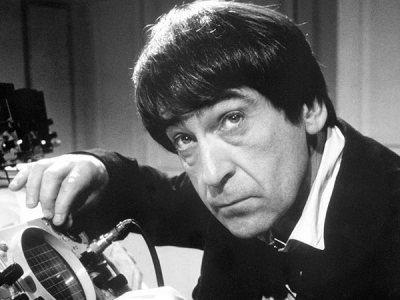


Timestamp: Sixth Series and Second Doctor Summary

Doctor Who: Sixth Series and Second Doctor Summary

Timestamp Logo Second


This was a rough collection of serials. It stopped the rise of the Second Doctor over the fourth and fifth seasons, and took the lowest series average of the Second Doctor’s run. The episodes overall were mostly average with a couple of standouts on both sides of the spectrum.

It was a series that truly brought UNIT to the front of the stage and re-introduced Brigadier Lethbridge-Stewart, both of which will be big pieces of the show’s ensemble as it rolls on. It also brought some light to the background of the Doctor himself, including what species he is and why he’s out in the universe. It was also a series that brought an era of the franchise to a close as it showcased the last black and white episodes and the last reconstructed episodes, the latter of which makes me very happy after struggling with so many lost stories.


The Dominators – 3
The Mind Robber  – 3
The Invasion – 5
The Krotons – 2
The Seeds of Death – 4
The Space Pirates – 1
 The War Games – 5

Series Six Average Rating: 3.3/5


This serial also brings the end of the main run for Patrick Troughton as the Second Doctor. He was a Doctor of many faces, and he was far more comical than the First Doctor. He was also more devious, as his humor was often used as a means to disarm his opponents and make him look less threatening. I can see now where a lot of the influences for the Tenth, Eleventh, and Twelfth Doctors comes from.

I really fell in love with this Doctor, and that’s not to say that I didn’t like the First because that’s not true. Like I mentioned in the Fifth Series Summary, the Doctor’s incarnations seem to be developed around what the show needs to survive. Hartnell was a strong force even in the face of some mediocre stories, and that provided an anchor for an audience to rely on. In the Troughton years, the whimsical innocence masking a strong devious nature made the lead more relatable with the team, especially with Zoe and Jamie. Troughton made his fellow travelers into companions on the journey instead of wards that needed protection, and that pushed characters like Zoe and Jamie into stronger roles. That carried the Hartnell-era theme relating the viewers to the companions and transformed it into relating to the team overall.

That’s part of the reason that The War Games feels like a cheat in the end. It tore the team apart and erased years of development from the companions (only one for Zoe, but almost three for Jamie), in essence signaling the end of the show as it stood for the last six years. Maybe that was the point. What follows from this point is effectively a soft reboot of the show: It transitions from monochrome to color, starts airing shorter seasons, and even appears to increase production values and budgets.

What’s amazing is that it hurts so much over forty-six years later.


Series 4 – 3.6
Series 5 – 4.1
Series 6 – 3.3

Second Doctor’s Weighted Average Rating: 3.67


Ranking
1 – Second (3.67)
2 – First (3.41)


UP NEXT – Doctor Who: Spearhead from Space


The Timestamps Project is an adventure through the televised universe of Doctor Who, story by story, from the beginning of the franchise. For more reviews like this one, please visit the project’s page at Creative Criticality.

Timestamp #50: The War Games

Doctor Who: The War Games
(10 episodes, s06e35-e44, 1969)

Timestamp 050 The War Games


We’re back to a regeneration episode and we have nowhere to go but up after The Space Pirates.

The TARDIS arrives in a war zone with a really nice shot of the materialization reflected in a puddle. The war is similar to World War I in 1917, and the travelers find themselves in an artillery barrage, discovered by Lady Jennifer Buckingham, taken prisoner by Germans, and finally liberated by British and Lieutenant Jeremy Carstairs. Strangely, both Buckingham and Carstairs have gaps in their memories.

General Smythe, the area commander with mind control glasses, has a transmitter that may be alien in nature. He asks an unknown entity for more specimens and disappears from his office. When he gets back, he holds a kangaroo court-martial for the travelers, finds them all guilty, and sends the Doctor to be executed. At the firing squad, a surprise sniper saves the Doctor, and both he and Zoe escape.

Speaking of surprises, General Smythe has what appears to be a TARDIS. Wait… what?

Jamie, assumed to be a deserter from the Highlanders, gets placed under guard with a Redcoat prisoner who thinks it is 1745 instead of 1917. Though it’s not explicitly stated, this Redcoat was apparently abducted from the same foggy battle where Jamie originally left with the Doctor.

After some shenanigans, the traveling trio escape with Buckingham and Carstairs, travel through the mists, and encounter a phalanx of Roman soldiers. After coming to the conclusion that this strange world is a combination of zones segregated by crucial wars in Earth history, they escape back to the 1917 zone and try to get a map. With the map (and an amusing sequence at the Chateau) they head toward the blank triangle zone in the center of the matrix and get captured by the Germans, commanded by another officer (von Weich) with a mind-controlling eyepiece.

They escape from that predicament and roll on to the American Civil War zone, but get besieged by a Confederate soldier and have to take refuge in a barn. A TARDIS arrives, disgorges fresh Confederate troops, and then dematerializes with a curious Doctor and Zoe inside, leaving Jamie with Lady Buckingham to be ping-ponged between Union and Confederate troops, the latter of which are commanded by von Weich. That dude gets around.

It turns out that Smythe and von Weich are engaged in a tactical competition, supervised by someone known as the War Chief. The War Chief and his peers (Chief Scientist and Security Chief) are under the command of the War Lord, who is attempting to distill a superior warrior class by pitting humanity’s soldiers against each other which he can use to spread an era of peace by might throughout the universe. May the odds be ever in their favor. In a twist, the War Chief is neither human nor whatever species the other chiefs and War Lord belong to (which the wiki refers to as the War Lords), but is instead a Time Lord.

A Time Lord: The same species as the Monk, Susan, and the Doctor. Oh, boy.

It also turns out that the TARDISes being used by the War Lords aren’t actual TARDISes, but rather are SIDRATs. They have very limited lifespans, can be manipulated from the outside, and follow the ’60s sci-fi conceit of being almost like the hero vehicle but spelled backwards. The War Chief wants the Doctor to join his cause because he really needs a better vessel to complete the War Lord experiment, and the Doctor has just the thing, which we found out that the Doctor stole from his home planet because he was bored.

Meanwhile, the companions discover that there is a resistance force among the humans. These rebels cannot be reprogrammed by the War Lords, and in his passion to track them all down, the Security Chief flashes all of the known agents across Zoe’s pretty much eidetic memory. After she escapes from the War Lords, she and Jamie spearhead a campaign to assemble the resistance forces and assault the Central Command.

The separate story lines finally collide when everyone converges on Central Command and dismantles the whole shebang. In the process, the War Chief kills the Security Chief, and the War Lord kills the War Chief. I seriously expected the War Chief to regenerate, and since he disappeared from view so quickly, I’m almost expecting that thread to come back at some point.

So, in the end, the Doctor is left with a world full of humans stranded out of time and no remaining SIDRATs to take them all home. After a lot of hand-wringing, the Doctor decides to call upon his people for help… and then runs like hell. He’s been violating Time Lord law by interfering in time since he stole the TARDIS, and his reckoning has finally come. The Time Lords return all of the humans to their homes, take the War Lord into custody to stand trial for his crimes, and drag the Doctor kicking and screaming to their door.

The War Lord’s trial ends with an attempted escape and hostage situation, but the Doctor outwits the War Lord. The Time Lords find the War Lord and his posse guilty, and the punishment is complete removal from time as if they never existed. The Time Lords then try the Doctor for his crimes. Rightfully so, the Doctor is proud of his interferences and justifies his fight against evil.

As they decide his fate, the Time Lords allow the Doctor to say goodbye to his companions before they send them home. Zoe and Jamie are allowed to remember only the first time they met the Doctor, but nothing more. They accept that the Doctor will continue to fight against evil, but he cannot be allowed to travel any longer, so he is exiled to Earth without the ability to dematerialize the TARDIS. They will also force him to regenerate.

On the plus sides, Jamie and Zoe show fantastic character in driving the resistance solution. It was also really nice to see both John Smith and the sonic screwdriver make their returns. There was also a quote in there somewhere about the Time Lords being curators over their museum of time, which seems really interesting in light of certain events in The Day of the Doctor.

On the down side, the Mexican resistance leader, Arturo Villar, was a caricature in racism. The sexism makes sense with the era, but the actor is obviously a white dude with a Speedy Gonzales accent. It made my skin crawl.

Considering the goodbyes and the regeneration, I feel so incomplete. Zoe and Jamie, two of the most likeable companions in the series so far, had all of their development erased in single moment. Only the Doctor remembers how their travels influenced their lives, but the influence and resulting changes are gone forever. The lack of proper goodbye also extends to the Doctor, where the last we see of him is a swirl into darkness. The character of the Doctor continues on, but the Second Doctor just ends.

Remember when I said that regeneration episodes were tough? This one was especially so. By the Timestamps rules, regeneration stories get an automatic +1 on the rating to compensate, but this story didn’t need it.

I still feel cheated out of a proper goodbye.


Rating: 5/5 – “Fantastic!”


UP NEXT – Sixth Series and Second Doctor Summary


The Timestamps Project is an adventure through the televised universe of Doctor Who, story by story, from the beginning of the franchise. For more reviews like this one, please visit the project’s page at Creative Criticality.


Timestamp #49: The Space Pirates

Doctor Who: The Space Pirates
(6 episodes, s06e29-e34, 1969)

Timestamp 049 The Space Pirates


It’s the last reconstruction (yay!), but it’s a colossal let down (boo!).

Six torturous episodes short: Pirates are destroying Earth beacon stations for their argonite. Obviously, the Earth Space Corps wants to stop them, but can’t reason their way out of a paper bag. After a mess of a story that can’t decide if it’s a murder mystery, a heist thriller, or a western parody – and completely fails at reaching any of them – the good guys win and the bad guys lose.

Really, the western motif did not work for me at all, and I like westerns. Milo Clancey and the Old West-style accent were annoying, and that would be fine if it was the only acting problem in this one, but General Hermack’s character (portrayed by Jack May) makes the Shatner trope look Emmy-worthy.

The Earth Space Corps uniforms are absolutely ridiculous, as is their attitude on what makes a leader: “All this for an old man. You’re not taking any chances, are you?” gets a reply of “That is why I’m a general.” The Earth Space Corps isn’t worth a whole lot, is it?

At least the spacewalk scenes were convincing enough. They look like they were filmed with the actors suspended from wires in the studio’s ceiling with a rotated camera.

Final note: Recently, it seems that Jamie has been treating these adventures like some kind of pleasure cruise. If a place looks even vaguely inhospitable, he recommends immediately running away and going somewhere else. In his defense though, they would have been much safer during the station explosion had they hidden in the TARDIS instead of running through the station.

This was a badly executed parody of the western genre rather than a tip o’ the ten gallon toward it. I’m not keen to revisit it again.


Rating: 1/5 – “EXTERMINATE!”


UP NEXT – Doctor Who: The War Games


The Timestamps Project is an adventure through the televised universe of Doctor Who, story by story, from the beginning of the franchise. For more reviews like this one, please visit the project’s page at Creative Criticality.


Timestamp #48: The Seeds of Death

Doctor Who: The Seeds of Death
(6 episodes, s06e23-e28, 1969)

Timestamp 048 The Seeds of Death


In the near future, the TravelMat (T-Mat) has become the system to move things around in the future. Humans, supplies, evil alien fungal spores…

That last one is a major problem since the Moonbase, which operates as the hub for the planet’s T-Mat system, has been seized by the Ice Warriors. I’ll admit that this serial nearly lost my attention as soon as it unveiled the “base under siege” trope because over how overused it was in the last season. Luckily, this one works differently.

The TARDIS arrives in a space museum on Earth, the travelers get a convenient info dump in the T-Mat presentation, and then get confronted by Professor Eldred. He is upset that the travelers are trespassing, and is (conveniently) the only one who can pilot the rocket to the Moon after the T-Mat is cut off. His bitterness toward the T-Mat program, despite having an entire presentation dedicated to it in his museum, is based on how it ended space travel after planetary travel was made too convenient.

Commander Radnor and Miss Kelly, the upper leaders of the T-Mat program, come to solicit the professor’s help, but Eldred can’t make the flight due to his age. In his place, the Doctor, Zoe, and Jamie pilot the rocket.

Meanwhile, the Ice Warriors have the repaired the emergency cublicles on the Moonbase and trick Earth into sending repair crews to fix the entire system. Once it’s back up, they send the evil alien fungal spores to consume all of the oxygen, destroy the climate, and kill all the humans. The “base under siege” trope is broken by having the Doctor and crew moving back and forth between Earth and the moon to stop the threat. Thank the Maker!

After defeating the spores with a torrential rain storm (that’s a lot of soap bubbles and one clean countryside), the Doctor solves the problem by spoofing the Ice Warrior homing signal and sending the entire fleet into the sun. A bit extreme, but in this case it was probably the only solution.

The comical theme for this Doctor continues with a chase through the Moonbase that includes a passageway constructed of fun house mirrors. I get what they were trying for there, but the effect tore me away from the narrative and the drama. On the other hand, Zoe and Jamie get a chance to really shine when the Doctor is injured and the companions have to fight the invasion on their own.

Watching Patrick Troughton act like he was dying in all those bubbles was kind of humorous. I was still in the story at that point, but when I realized that he was essentially a kid at bath time at that point, I giggled.

When the Doctor is revived, he calls out for Victoria: Does he regret something about how her story played, or does he miss her? In my opinion, Zoe’s a much better companion.

Finally, on an engineering note, the T-Mat cubicle doors would be much more effective if they opened outward vice inward. Even better would be for them to slide open so they can be locked but not stand in the way of arrivals or loading.


Rating: 4/5 – “Would you care for a jelly baby?”


UP NEXT – Doctor Who: The Space Pirates


The Timestamps Project is an adventure through the televised universe of Doctor Who, story by story, from the beginning of the franchise. For more reviews like this one, please visit the project’s page at Creative Criticality.


Timestamp #47: The Krotons

Doctor Who: The Krotons
(4 episodes, s06e19-e22, 1968-1969)

Timestamp 047 The Krotons


The run of entertaining serials had to come to an end sometime, I suppose.

This one opens with a young man and woman being selected to be the companions of the Krotons. When they emerge on the other side of the door they entered in the Learning Hall, the man is vaporized and the woman is saved by the Doctor and his companions. When they visit the city to tell the people what they witnessed, they get greeted by spears and fisticuffs, which excites Jamie to no end because he’s spent most of his time on the TARDIS waiting to punch someone.

The planet was the site of a war with the Krotons that nearly destroyed the Gonds and ruined the landscape. The Krotons have been hiding in their organic ship (the Dynatrope) and haven’t been seen since, but demand the top students as companions. As it turns out, they’ve been using the mental energy of these excelling academics to recharge their systems, which the Doctor and Zoe discover after being accidentally selected by the Krotons.

Thing is, the Dynatrope is already dying without the energy from the Doctor and Zoe. Downside: The resulting explosion will devastate the city and surrounding area. Jamie escapes the Dynatrope and goes to work helping to create sulfuric acid. Zoe pours a bottle into the tank that the Krotons are using for survival, and Jamie pours a large quantity over the Dynatrope. The Gonds are free and the Krotons are dead.

I really like the subtle competition between Zoe and the Doctor. I don’t like the HADS (Hostile Action Detection System) as much, although it could explain the supposed indestructibility of the craft.

Once the story’s mystery unwrapped, it’s a basic run-and-gun base under siege with the twist of a primitive uprising. It had promise, but this one was just boring.


Rating: 2/5 – “Mm? What’s that, my boy?”

UP NEXT – Doctor Who: The Seeds of Death


The Timestamps Project is an adventure through the televised universe of Doctor Who, story by story, from the beginning of the franchise. For more reviews like this one, please visit the project’s page at Creative Criticality.


Timestamp #46: The Invasion

Doctor Who: The Invasion
(8 episodes, s06e11-e18, 1968)

Timestamp 046 The Invasion


This one starts with the ending I expected from the last serial, and it kicks things off with a bang.

After the jump to the Land of Fiction and back, the TARDIS is malfunctioning. It materializes near the moon, and has to immediately dodge an incoming missile. The visual stabilizer circuit has gone bad and causes the TARDIS to turn invisible. The travelers leave to go find Professor Travers in what they think is 20th century London. They hitch a ride and the driver tells them about International Electromatics (IE), an electronics company that has bought out the locals and caused some of them to vanish without a trace. The travelers escape the IE compound, but the pursuing security guards kill the driver outside of their jurisdiction.

Professor Travers has moved to America, but his flat is occupied by Professor Watkins and his niece Isobel (played by Sally Faulkner, no relation). Watkins works for IE, but no one can reach him, so the Doctor and Jamie go there to investigate. They are subdued and meet Tobias Vaughn, non-official Bond villain and managing director of IE, who eventually gets the TARDIS circuitry to go with the strange alien computer in his closet. That computer recognizes the duo from Planet 14 (where?) and determines that they must be eliminated.

Jamie and the Doctor leave Vaughn and are promptly followed by suits in cars. It turns out that they are from the United Nations Intelligence Taskforce (UNIT), and work for recently promoted Brigadier Lethbridge-Stewart, who we last saw in The Web of Fear. It’s been four years since the Yetis, and the Brigadier and UNIT are investigating IE. I absolutely loved how the Doctor and Jamie try to escape, realize that they can’t, so accept their situation and start playing cards in the street.

Zoe determines that if there is trouble, the Doctor and Jamie are in it (I love this!), and she pulls a Captain Kirk on the reception computer by causing it to try solving an unsolvable problem. It goes boom, and she and Isobel are captured shortly thereafter. The Doctor and Jamie return to IE to search for the ladies, and are also captured.

After this, it’s a very Bond-flavored cat and mouse game with moles in the government and staying one step ahead of Vaughn’s plans for world domination. How is he trying to take over the world? Cybermen.

I have a long list of things I love from this serial. The Doctor’s pockets are like miniature TARDISes and are a source of unending amusement as he pulls random items from their depths. It goes well with his overall character, especially with his comic running from the shooting Cyberman and jumping at each explosion. I love seeing a modern (for the serial) era feminist working with a strong female character from the future, especially when it compares with Jamie’s period-specific sexism that seems to be integral to his character. The dynamic is fantastic, and the chemistry really makes it work.

The Bond feel is a reflection of the era and the country, and it extends beyond Vaughn to the technology and the setting overall. I like the James Bond movies, so this was fun to watch. I also like the pop culture nods (“Kilroy was here” and “Teddy Bears’ Picnic“) and the in-universe “Bad Wolf” nod in the animated reconstruction.

The march of the Cybermen from St. Paul’s Cathedral was also very similar to the march in Dark Water and Death and Heaven. It’s good to see the inspiration for those scenes. It’s also good to see the links between those modern episodes and the classic ones: The Cybermen corpses in this serial are used by UNIT to develop defenses for future invasions, and that iteration of UNIT is being led by the Brigadier’s daughter. Speaking of the Brigadier, he’s an awesome character. I’m looking forward to seeing more of him in coming series.

Finally, since this is the last appearance of the Cybermen for a while, I should mention the music. I haven’t really keyed in on a lot of the background music, but I really enjoyed the theme for the Cybermen. It’s so simple, but menacing at the same time. It’s also very mechanical without taking the use of creaking and beeping sound effects. I’m going to miss it.

The only two drawbacks to this serial are writing related: First, why does UNIT continue to attack the Cybermen with pistols and rifles when only grenades and rockets are working? Second, the final rocket strikes and wrap-up scenes are kind of anti-climatic compared to the rest of the episode.

Overall, this one get a 4.5, and I round up.


Rating: 5/5 – “Fantastic!”


UP NEXT – Doctor Who: The Krotons


The Timestamps Project is an adventure through the televised universe of Doctor Who, story by story, from the beginning of the franchise. For more reviews like this one, please visit the project’s page at Creative Criticality.
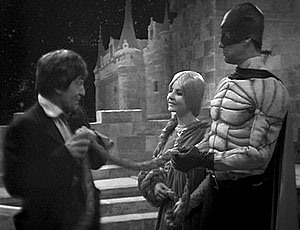


Timestamp #45: The Mind Robber

Doctor Who: The Mind Robber
(5 episodes, s06e06-e10, 1968)

Timestamp 045 The Mind Robber

Picking up right where the last one ended, the fluid links go nuts again. I wonder if they’re still under warranty. As a result, the TARDIS goes nowhere. I mean, actually to a place the Doctor calls “nowhere,” but we find out later is the Land of Fiction.

Each companion sees their home on the scanner and are lured into the setting where characters from fiction are real. The TARDIS is unavailable because it appears to have exploded. The travelers are separated and start looking for each other, solving riddles along the way to find a way out of this odd little story that was actually quite entertaining once it got past the first couple of episodes.

The use of a different actor for Jamie two episodes was a nice cover for Frazer Hines, who took time off after contracting chicken pox. I also liked the stop motion for Medusa’s head, as well as the twist with the Karkus, who cannot be proven fictional (and therefore nullified) by the Doctor since he has never heard of the character. Zoe kicks some butt and saves the Doctor.

The Doctor looks like he recognizes the name “The Master”, and even seems amused by the charge of treason – “Treason, again, really?” – It’s not the same character, but, knowing the future, the coincidence is neat. This Master is an Earth-based author who was abducted and forced to rule this land. He’s looking for a replacement, but the Doctor refuses, so the Master decides to simply take over the Earth if he does not comply. The Doctor uses the power of the fictional characters against the Master to destroy the Master Brain (which controls this little pocket universe), save the companions, and escape the Land of Fiction.

Overall, the first couple of episodes were pretty bad, but the serial resolves nicely in a battle of imagination and wits. I was disappointed by the ending, or really, lack thereof. The TARDIS reappears and… credits.

At eighteen minutes, one would think that with the shortest episode ever in the history of this show, they could have spared an additional couple of minutes to write a proper ending and set up the next serial. Alas, no.


Rating: 3/5 – “Reverse the polarity of the neutron flow.”

UP NEXT – Doctor Who: The Invasion


The Timestamps Project is an adventure through the televised universe of Doctor Who, story by story, from the beginning of the franchise. For more reviews like this one, please visit the project’s page at Creative Criticality.