
Timestamp Special #11: Shada (Eighth Doctor)

Doctor Who: Shada (Eighth Doctor)
(6 episodes, 2003)
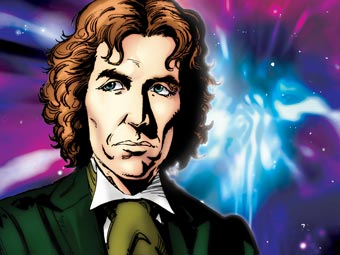
 

A new look on a once unfinished classic.

The story opens on Gallifrey with the Eighth Doctor paying a visit to Romana and K9. Romana has been elected Lord President and has not regenerated since taking her second incarnation, and the Doctor has intentionally breached the transduction barriers to steal his former companion away for an adventure from their past. He talks of their travels together four of his regenerations ago – collecting the Key to Time, defacing da Vinci’s artwork, and punting on the River Cam – and Romana mentions their bout in stasis during their trip to Cambridge. It seems that neither Romana nor K9 remember the visit to Professor Chronotis, and together they believe that they landed in Cambridge, sailed the river, were put in stasis, and then immediately set course for Brighton.

It was only because of a vision… a dream… that the Doctor even thought of this point in his history, and now he wants answers.

Across the universe, the Institute for Advanced Scientific Studies drifts through space under quarantine. The station has suffered an accident, and scientists Skagra and Caldera discuss the situation and a familiar sphere. Skagra demonstrates the sphere’s ability to consume minds, much to Caldera’s horror.

On Earth, Chris Parsons visits Professor Chronotis (who is housing the TARDIS in his office) to borrow books on carbon dating. Parsons picks up a book with mysterious writing, gathers the carbon dating references, and departs in a hurry. Chris travels to his lab to meet a woman named Claire, and when he analyzes it, he calls Claire right away to seek her advice.

Elsewhere, the Doctor and Romana wander the university’s grounds on their way to the professor’s office. Romana hears a babbling of voices as Skagra and his sphere lurk in the shadows. They also meet Mr. Wilkin, who still remembers the Doctor and the honorary degree in 1960. Wilkin remembers the Doctor’s three visits (1964, 1960, and 1955), but has no recollection of the fourth visit thanks to the events of The Five Doctors. The Time Lords arrive in Chronotis’s office, and this time it is no surprise that the professor is also a Time Lord. The Doctor tells the professor that they came at his summons, but the professor says that he didn’t send the signal. After a little prodding, the professor remembers that he summoned the Time Lords to help find the missing book.

Skagra, having spoken to Wilkin, follows his previous actions: He hitches a ride with a stranger (in a Ford Prefect in honor of Shada writer Douglas Adams), assaults the stranger with the sphere, and steals the car. The event echoes to our Time Lord trio as they hear voices.

The professor explains that the missing book is The Worshipful and Ancient Law of Gallifrey, dating from the era of Rassilon. The Doctor is beside himself: The book is one of the powerful artifacts, and the professor stole it from the Panopticon Archives upon his retirement. As Time Lords past and present continue to search the professor’s library, Skagra absorbs massive amounts of data about the Doctor, continuing the same path as before.

Skagra’s ship is beautiful in this incarnation, and he’s not wearing the sun hat and flowing silver cape from 1979-80 which is a plus. Also, despite it being pompous, I did like the expanded mythology of the Time Lord Academy and their induction oath: “I swear to protect the ancient Law of Gallifrey with all my might and brain. I will to the end of my days, with justice and with honor, temper my actions and my thoughts.”

Carrying on, the Doctor and Romana briefly discuss Salyavin, a Gallifreyan criminal and one of the Doctor’s heroes. When the Doctor asks Chronotis about Salyavin, the professor scrounges up Chris Parsons’s identity from his spotty memory. The Doctor goes to find Parsons while Romana stays with the professor.

In the laboratory, Claire (who no longer resembles Sarah Jane like she did in the original Shada) and Chris are analyzing the book. As they puzzle over it, Skagra returns to Cambridge and pesters Wilkin for directions to the professor’s office. The professor runs out of milk (after brewing his tenth pot of tea), and as Romana looks in the TARDIS for some, Skagra arrives in contemporary clothes and demands the book. When Chronotis refuses to yield, Skagra’s sphere attacks.

Chris returns to the professor’s office as Romana and K9 (after a brief discussion of milk in the console room) examine Chronotis. The professor has had part of his mind extracted, resulting in severe mental trauma. Romana sends Chris into the TARDIS for a medical kit while she tends to the professor, placing him on life support with the kit Chris retrieves.

After the Doctor arrives at the lab, he and Claire analyze the book and determine that it is 20,000 years old. Meanwhile, in his ship, Skagra analyzes the professor’s mental data. After it doesn’t pan out, he pursues the Doctor. In office, K9 and Romana tend to the professor. Sadly, he is in a vegetative state, but he does send a message in Gallifreyan morse code (via his heartsbeat) warning them of the spheres, Skagra, and Shada before dying.

Skagra intercepts the Doctor and the book. The Doctor is pursued through Cambridge by the sphere, losing the book in the chase. Skagra retrieves the book, but the Doctor is captured by the sphere and it starts to drain his mind. This version of the chase loses the situational humor and impact of the original version, which is just as well given the limited visual effects of the animation.

Romana arrives in the TARDIS and rescues the Doctor. They return to the professor’s offices just after the retired Time Lord disappears – no regeneration or anything, which makes the Doctor think that Chronotis was on his last life – and the Doctor vows vengeance. K9 scans for the sphere as the Time Lords and Chris wait in the TARDIS.

Claire heads to the professor’s offices with a printout just as the TARDIS dematerializes in pursuit of the sphere. The capsule arrives in the field where Skagra’s ship is located – K9 is displeased about navigating the pasture – and Skagra welcomes the group aboard before taking them prisoner. Skagra reveals that he was only interested in the professor’s mind, not his life, and he demands that the Doctor decode the book. When the Doctor stalls and delays, the sphere attacks him. In their cell, Romana, K9, and Chris look for a way out. They can find nothing, and K9 cannot blast out. The robotic dog does detect the voices, including a new addition in the Doctor’s voice. Romana is transmatted from the cell and forced by Skagra to pilot the TARDIS.

Claire, in search of the professor, finds Wilkin and explains that the book is absorbing energy. She returns to the office while Wilkin looks for Chronotis, and as she looks about, she inadvertently sets off an explosion that results in a time vortex filling the space.

The Doctor awakens on the ship and reveals to the vessel’s computer that since he was playing dumb, the sphere only copied his mind. He convinces the ship that he is dead to secure freedom for him and his companions, and it replies by shutting off the air supply.  When Chris and K9 are transmatted into the corridor, the ship promptly restores life support. Just as it was in the original, this moment was a cheap cliffhanger.

Following the original story closely, the TARDIS travels and Skagra reveals that he is after the criminal Salyavin. Thus, he needs Time Lord technology to find him. They materialize on the Krarg carrier ship, and Romana discovers that only a Time Lord can decipher the book. Back on Earth, the Doctor pilots Skagra’s ship into space, setting the course for Think Tank, and it dematerializes just like a TARDIS as he boosts the power. There’s also a Krarg on the ship.

Claire awakens inside the professor’s office to discover Professor Chronotis. The office is a TARDIS, Claire has activated it, and the capsule restored him in the accidental temporal convergence. Oh, and the book… yeah, the book is revealed to be the key to Shada, a Time Lord prison.

Back on the carrier, Skagra plows through the Doctor’s memories but is unable to crack the code. As the Doctor’s ship arrives at the Think Tank, he and Chris board the ship while K9 holds the Krarg at bay. On the carrier, Skagra and Romana retreat to the Doctor’s TARDIS. As Skagra turns the pages and continues his study, the TARDIS operates, and he deduces that turning the last page will unlock the code.

The Doctor and Chris discover the aged members of the Think Tank, and the Doctor connects Chris to the machine. This restores the Think Tank members, and the lead scientist, Caldera, explains the group’s history with Skagra. The evil scientist intends to use his intellect to dominate humanity by merging everything into himself, but needs Salyavin to do so. The Doctor is interrupted by K9, who has no choice but to release the Krarg, and the crystalline creature attacks the group. In the process it destroys the central computer column. In the smoke, the Doctor, K9, and Chris escape to Skagra’s ship and escape just in time. Sadly, the Think Tank members die as their ship explodes. The Doctor feels guilty, but K9 assuages him by reporting that only the Doctor and Chris were still alive when the Krarg attacked.

The professor’s TARDIS is wedged between two irrational time interfaces, and Chronotis and Claire attempt to fix the capsule (with a sonic screwdriver!). The retired Time Lord telepathically focuses on Claire’s mind and transfers his knowledge into her. Meanwhile, Skagra’s ship arrives at the carrier, and in the attempt to rescue Romana, the Doctor, Chris, and K9 end up inside the professor’s newly repaired TARDIS. While everyone catches up, Skagra pilots the Doctor’s TARDIS to Shada using the book and start searching for Salyavin. The Doctor and Chronotis soon follow in the professor’s TARDIS, and when they arrive, they leave Chris and Claire in the time capsule while they search for Skagra.

Skagra starts the revival process in the prison, but Salyavin’s not there. The other two Time Lords arrive and Chronotis reveals that he is Salyavin. Chris and Claire come to the same conclusion and leave the TARDIS to confront him.

Skagra drains Salyavin’s mind, and not even K9 can slow it down. The sphere deposits fragments of all the minds it holds into the Krarg army, starting Skagra’s plan of the universal mind. The sphere attacks Chris and adds him to the collective. K9 builds a wall of ricocheting laser blasts, and the Doctor uses the distraction to escort Romana, Claire, and K9 to the professor’s TARDIS. As the Doctor attempts to find a solution, Romana reminds him that all of the captured minds are in the melting pot, including the Doctor’s.

Romana is wearing a TARDIS key around her neck like a choker. How interesting.

Skagra takes his legion to the Doctor’s TARDIS, preparing to dispatch them throughout the universe. The Doctor, Romana, and Claire use the professor’s TARDIS to generate a force field as they pursue Skagra, capturing the phone box in the time vortex. The Doctor attempts to pass across to his TARDIS, but the force field fades, threatening to toss the Doctor into the vortex. The professor’s TARDIS ends up a shambles, but the Doctor is dumped into his workshop. He formulates a plan, including a helmet with familiar markings and the Second Doctor‘s hat.

Both TARDISes arrive on the carrier ship as the Doctor struggles for control of the joint mind. The Krargs self-destruct, restoring Chris’s mind, and Romana teams with K9 to destroy the Krarg generators. Seeing that he has lost, Skagra retreats to his ship, but the computer incarcerates him after deciding to serve the Doctor. The heroes travel to Shada and restore Salyavin’s mind to his body. The Doctor tries to decide Salyavin’s fate, deducing that Salyavin covered his escape by erasing the memory of Shada from the collective Time Lord memory, including stealing the key. Romana uses her executive authority to sentence Salyavin to Earth, acting once again as Professor Chronotis.

The TARDISes return to Earth. The return of the professor’s offices stumps Wilkin, who has summoned a policeman to report the “stolen room,” as the professor entertains his guests to tea. The Doctor and Romana depart, stymieing the policeman as the TARDIS dematerializes.


My feelings on Shada in its entirety are complicated. When I first covered the story, I gave it a solid four out of five rating, calling it an enjoyable romp. Even here, the story remains solid, and it is only amplified  by including Paul McGann, bringing back K9, and advancing the story of Romana following her last appearance in E-Space. Romana’s story is even more special as she has finally surpassed her mentor in nearly every way.

But, while it’s entirely possible to do so, I have a hard time acknowledging it as part of the continuity. I would love to, but this makes the story of Shada so much more complicated than it needs to be. I mean, look at it on the real world timeline:

  • 1979-80 – Shada is intended to serve as the Season 17 finale, but a production strike stops the completion of the story.
  • 1983 – The Five Doctors premieres, in which each incarnation of the Doctor is pulled from (and replaced within) their respective timelines except the Fourth Doctor because Tom Baker didn’t want to participate. Using footage from the unfinished Shada, the Fourth Doctor and Romana are removed from the story during the river punting scene.
  • 1992 – Shada premieres, completed with narration by Tom Baker (sort of in character) over the missing segments. A reasonable viewer could conclude that the events of Shada took place regardless of The Five Doctors: The Doctor and Romana arrived in Cambridge, got abducted by President Borusa, were returned, and then completed the Skagra/Salyavin mission without a hitch.
  • 2003 – This version of Shada premieres. It acknowledges that the Fourth Doctor and Romana arrived in Cambridge, but after their abduction by Borusa, they immediately left Cambridge for Brighton. Presumably, since Skagra couldn’t get access to the Time Lords – assuming that he didn’t have the fortitude to invade Gallifrey and none of the other traveling Time Lords in Doctor Who mythology were available to be brain-sucked by the sphere – the ability to open Shada was lost and the threat was stopped. But, the Eighth Doctor found the hole in his memories and responded to the (what seems to be a fixed constant) call from Chronotis/Salyavin to find the Shada key and stop Skagra, so that means that the threat is still serious enough.

So, why not just stick with the assumption from 1992, especially considering that Shada was finally completed with animation in 2017?

To me, that makes this version an alternate telling of events.

The highlights were having more Paul McGann and furthering the Romana/K9 story. I was a bit put off by the animation and its limits, particularly in the chase sequences and some of the narrative shortcuts that were more powerful visual sequences in the original. Overall, though, it’s still a good tale.


With this post – excluding future revisits to Power of the Daleks, The Enemy of the World, The Web of Fear, and Shada thanks to their recovery and reconstruction – the Timestamps Project has covered the entirety of the classic era of Doctor Who. This leg of the journey has taken approximately four and a half years to complete, but the adventure is far from over.

It’s time to revisit the modern era with the understanding of the classic era in my mind.


Rating: 4/5 – “Would you care for a jelly baby?”


UP NEXT – Doctor Who: Rose


The Timestamps Project is an adventure through the televised universe of Doctor Who, story by story, from the beginning of the franchise. For more reviews like this one, please visit the project’s page at Creative Criticality.
 

Timestamp Special #10: Scream of the Shalka

Doctor Who: Scream of the Shalka
(6 episodes, 2003)


I wouldn’t trade Christopher Eccleston for the world, but this is an interesting case of what could have been for the Ninth Doctor.

After a rather upbeat opening sequence, the adventure begins a meteor strike near a volcano. Two nearby observers follow the meteor, their curiosity paid out with death. Elsewhere, the TARDIS materializes and a rather cross (and gothic) Ninth Doctor takes a look around. He’s there against his will and locked out of the TARDIS, so he has no choice but to explore.

He pops into local pub and meets Alison Cheney, a woman who is less scared than her peers to speak about whatever is going on in the area. The Doctor leaves, and Alison reassures someone in the shadows that they’re all being good. As the Doctor encounters a homeless woman and a lava statue, the Earth opens near Alison’s feet and swallows the TARDIS. Before the woman can shed any light on the mystery, a mysterious force kills her.

The Doctor is furious, and he tracks Alison to the home that she shares with her boyfriend Joe. The Time Lord questions her and discovers that the ground is the key. Alison shares what she knows while Joe denies everything: The aliens want the humans above ground to remain as quiet as possible. Within minutes, the floor bursts open and creatures scream into the room. The Doctor reflects the screams back at the creature, using the sound as a diversionary weapon to stage an escape. In a storage closet nearby, they improvise an explosion that destroys two of the creatures and stops the rumbling underground.

The Doctor attempts to leave, but his TARDIS is still missing, so he calls in UNIT. The Doctor explains that the creatures seem to be interested in the special volcanic rock and provides the UNIT commander with a map in exchange for their help in retrieving the TARDIS. They all descend into the caves, and the Doctor separates himself from the UNIT detachment to find the aliens without military interference.

Underground, the aliens attempt to take the TARDIS by force, but they find the Master standing at the console and are soon ejected from the capsule. So, they take another approach: They kidnap Alison. The Doctor arrives shortly thereafter and encounters Prime, war chief of the Shalka confederacy and leader of the aliens. Prime considers the humans to be primitive and subject to domination, and she calls the Doctor on his ploy to act dumb by taking advantage of his attachment to humanity, tipping his hand and forcing him to comply.

He leads Prime into the TARDIS and deactivates the Master, who turns out to be nothing more than an android security system almost like Antimony. Prime sees the Doctor as a primitive and kicks him out of the TARDIS, leading to a touching one-on-one between the Time Lord and Alison. Later, Prime forces the Doctor into a space-time wormhole (converted to a black hole for waste removal) that they have created. As he plummets into it, he uses his mobile phone to summon the TARDIS and eject the Shalka, who have since reactivated the Master-bot. Meanwhile, the Shalka have (mysteriously) returned Alison to the surface, but with a wound on her forehead and severe headache.

The Doctor overrides the Master-bot, whom he has programmed to always leave the Doctor’s young, human female friends behind, and materializes the TARDIS in the UNIT commander’s office. There he learns that Alison has survived and that UNIT has captured a Shalka after it was immobilized by pure oxygen. The Doctor takes the opportunity to analyze the Shalka, linking the rampant cases of laryngitis to the Shalka’s mental control. He also learns that the refugees from the town never made it to their shelters.

In the woods, all of the refugees are reunited and Alison discovers that her head wound is really a small Shalka under her skin. That Shalka forces the refugees (and similarly, around the world) to march. The Doctor and UNIT troops arrive in the TARDIS and confront Alison’s group, and the Doctor extracts the Shalka and stops the local conflict. When he recovers, he develops a plan with UNIT and explains the sore throats, which are the Shalka using the humans to emit subsonic screams in Earth’s atmosphere while they change the planet to suit their needs.

The Doctor and Alison (to Joe’s annoyance) leave to stop the threat. The Master, who cannot leave the TARDIS, stays behind as the Doctor and Alison confront Prime in the Shalka lair. They are confined, break free, and confront the Shalka as the Doctor swallows the mini-Shalka that was in Alison’s head. He bonds with it long enough understand their screams and engage in a sonic duel with the Shalka. He tricks Prime into standing near the wormhole, which he shifts to black hole-mode long enough to send Prime on a one-way trip to her doom.

With consent, he regurgitates the Shalka and reconnects it with Alison so she can shut down the slaves and Shalka worldwide. She succeeds, but he stops her just before the Shalka can be used to completely heal the planet because she cannot be allowed to wield that much power. After a brief exploration of the Doctor’s faults against his philosophies, the Time Lord invites her for tea on the TARDIS.

Alison and the Master-bot chat about how the Doctor would love to invite her to be his first living companion in a long time, but the Time Lord will not ask. His last companion was killed on the adventure that led to the Master’s consciousness being embedded in an android and the Doctor entering a self-imposed exile.

The Doctor escorts Alison back to Joe and UNIT, intent on saying goodbye. Alison decides to travel with the Doctor, and Joe reluctantly gives her his blessing.

And off they go.


This Doctor is very quippy and aggressive, bridging the Ninth and Tenth Doctors that we know from the revival era. He’s also reluctant to act and ready to die if need be, making me wonder what happened near the end of the Eighth Doctor’s life to drive him to this point. That does drive one question, though: Who or what locked the Doctor out of the TARDIS? Was it the Master-bot, was it the TARDIS herself?

I would love to see more of this alternate Doctor.

Richard E. Grant (The Doctor) last appeared in The Curse of Fatal Death, and will appear again in the future. Similarly, we’ll see Sophie Okonedo (Alison), Derek Jacobi (The Master-bot), and David Tennant (uncredited as the Caretaker) again.


Before we get back on the regular timeline, we have one last stop to make with the Eighth Doctor.


Rating: 4/5 – “Would you care for a jelly baby?”


UP NEXT – Doctor Who: Shada (Eighth Doctor)


The Timestamps Project is an adventure through the televised universe of Doctor Who, story by story, from the beginning of the franchise. For more reviews like this one, please visit the project’s page at Creative Criticality.


Timestamp Special #9: The Curse of Fatal Death

Doctor Who: The Curse of Fatal Death
(4 episodes, 1999)


Five Doctors in twenty minutes: That must be a record.

Starting off with a little backstory, this was shown as part of the 1999 Comic Relief Red Nose Day telethon. This comedic special starred Rowan Atkinson (Mr. Bean, Blackadder) as the ninth incarnation of the Doctor, Richard E. Grant (Scream of the Shalka, Logan) as the “quite handsome” tenth incarnation, Jim Broadbent (Harry Potter and the Half-Blood Prince, Paddington) as the slapstick shy eleventh incarnation, Hugh Grant (Four Weddings and a Funeral, Notting Hill) as the (not “quite”) handsome twelfth incarnation, and Joanna Lumley (On Her Majesty’s Secret Service, Sapphire & Steel) as the thirteenth incarnation.

Alongside all those Doctors, we also had Jonathan Pryce (Tomorrow Never Dies, Brazil) as an over-the-top version of the Master and Julia Sawalha (Absolutely Fabulous, Chicken Run) as companion (in more ways than one) Emma, and the adventure was penned by Steven Moffat, who would go on to Coupling before coming back to Doctor Who.

Got all that? There may be a quiz later.

On to the story…

After a revival of the Fourth Doctor’s title sequence, we watch as The Master chases the Doctor through the temporal vortex, maniacally blustering about his evil plan to kill the Doctor and spoiling the important parts through his inability to operate a speakerphone. The Doctor and his companion Emma meet the Master on Tersurus – the planet was previously inhabited by a race that was peace-loving, shunned because they communicated by passing gas through precision modulation, and were self-exterminated after they discovered fire – and of course the Master traps them by arriving early. The Doctor and Emma trade traps with the Master, each party having arrived earlier than the other. Emma interrupts the roundabout party with a revelation: The Doctor has found love with Emma and plans to retire, get married, and settle into domestic bliss.

The Master is disgusted, and he travels back in time to convince the castle’s architect to install a trap door to the sewers. The Doctor turns the tables again by going back even further to place the trap door under the Master. Before they can leave, an aged Master arrives (after three centuries trying to escape the sewer) with Daleks to exact his vengeance. The Doctor traps the Master in the sewers twice more, and a chase commences with the Daleks and an even more aged Master.

The Daleks capture the travelers for the Master (now rejuvenated by superior and firm Dalek technology), who has promised them the means to conquer the universe. Of course, the Daleks plan to exterminate the Master, and the Doctor informs the Master of this double-cross in Tersuran. The Daleks figure it out anyway and shoot the Doctor, who then regenerates from his ninth body into his tenth.

After a brief memory refresher, the Daleks ask the Doctor to stop the overload that they started, but a few crossed wires results in another regeneration, exchanging the tenth incarnation for the eleventh. Another short circuit causes another regeneration, and a residual discharge forces another (which needs a little prompting from Emma, the Master, and the Daleks).

In a moment of foreshadowing, the Doctor’s new body is female.

Unfortunately, Emma is not keen on marrying the Doctor in her new form, but the Master and the Doctor spark something special and walk off into the end credits together.


This was certainly funny (in the British comedy tradition of sex and bodily function humor) but not particularly deep. Honestly, there’s no particular need for depth since it’s played for laughs to spur donations. That’s the whole drive of Comic Relief after all.

The element of the Doctor finding romance is still a key element, but it’s hard to tell if Steven Moffat and company are spoofing the idea or trying to further it in the franchise. The continual ramping up of the Doctor’s sexuality in this twenty-minute segment points to the joke, but we certainly know what he’ll think of the concept in years to come.

And even though this was a BBC-authorized television production bridging the gap between the TV movie and the 2005 revival, I certainly disagree with his notion that this could have been a legitimate continuation of the franchise.


Rating: 3/5 – “Reverse the polarity of the neutron flow.”


UP NEXT – Doctor Who: Scream of the Shalka


The Timestamps Project is an adventure through the televised universe of Doctor Who, story by story, from the beginning of the franchise. For more reviews like this one, please visit the project’s page at Creative Criticality.


Timestamp: Eighth Doctor Summary

Doctor Who: Eighth Doctor Summary


The Eighth Doctor was immense creative power in a limited television run.

Sure, he only had two outings on screen, but they were jam-packed with character – nearly polar opposites between the two, showcasing in a limited time just how much this Doctor experienced and how much it impacted him – and certainly piqued my interest in his further adventures.

The Eighth Doctor we saw in the television movie was fresh from regeneration and full of child-like wonder as he learned who he was. It was a follow-through from the Seventh Doctor (without the dark edges) and, for me, a welcome shift. It was a look into the Doctor’s soul, seeing the playful energy and wonder mixed with a strict determination to save the universe from evil. And that brief romantic streak? How much time to we have to discuss the Doctor and love?

Around the 50th anniversary, Craig Ferguson aired a Doctor Who episode of The Late, Late Show in which he summarized the franchise: “It’s all about the triumph of intellect and romance over brute force and cynicism.” Time and time again, the Doctor has shown an emotional attachment – well beyond the analytical, well beyond the mission of simply defeating evil – to the people of Earth and the causes of justice and good. The Doctor brings light to the darkness, and I argue that love is but one of the ways that darkness is vanquished.

The Doctor is a student of human philosophy, and that philosophy throughout our history is replete with thoughts, discussions, and musings on love. The ancient Greeks, for example, identified five different types of love: Familial (storge), friendly (philia), romantic (eros), hospitality (xenia, also known as “guest love”), and divine (agape, such as devotion to a chosen deity or faith). Before the televised movie, the Doctor had exercised four of those five – the Doctor’s faith, and thus divine love, is to that of good triumphing over evil – and to understand the human condition it only made sense to understand the fifth as well.

As for arguments that we don’t need to see the Doctor in a sexual light, a commonality across philosophy is that romance can lead to sex, but does not need to pertain to sex. For the Doctor to find romantic (read: deep or passionate) love marks one step closer to understanding what the Doctor fights for.

The tragedy comes in the Eighth Doctor’s final adventure, and this is where the Eighth Doctor’s journey strikes me in parallel to that of Anakin Skywalker in the Star Wars films. Both the Doctor and Anakin (before he became Darth Vader) were deeply compassionate people. Both characters maintained their ideals on compassion – “Compassion, which I would define as unconditional love, is essential to a Jedi’s life. So you might say, that we are encouraged to love.” – and the fight against evil, but both also succumbed to darker aspects in search of their goals.

Anakin saved Palpatine and embraced the Dark Side in order to learn forbidden knowledge to save Padmé (and was deceived in the process), and the Doctor embraced the warrior ways to stop the destruction of the universe. I’m not saying that the Doctor is about to slay an entire room of children with a lightsaber (or sonic screwdriver), but I know that war changes people. The callouses the Doctor develops from this point forward will be visible for some time.

This is science fiction reflecting the human condition. This is science fiction at its most powerful.

Now we watch the Doctor walk back from the brink: Intellect and romance over brute force and cynicism.


Following tradition…

The First Doctor was a wise grandfather, the Second a sly jester, the Third a secret agent scientist, the Fourth an inquisitive idealist, the Fifth an honorable humanitarian, the Sixth a squandered cynic, the Seventh a curious schemer…

…and the Eighth Doctor is a classical romantic.


Doctor Who: The Movie – 4
The Night of the Doctor –  5

Eighth Doctor’s Weighted Average Rating: 4.50


Ranking (by score)
1- Eighth (4.50)
2 – Third (4.00)
3 – Second (3.67)
4 – Fourth (3.67)
5 – Seventh (3.54)
6 – First (3.41)
7 – Fifth (3.20)
8 – Sixth (2.73)

Ranking (by character)
1 – Second Doctor
2 – Eighth Doctor
3 – Third Doctor
4 – Fourth Doctor
5 – Seventh Doctor
6 – First Doctor
7 – Fifth Doctor
8 – Sixth Doctor


From here, the project will make As noted before, the project will makes three more non-canon classic-era stops – The Curse of Fatal Death, Scream of the Shalka, and the Eighth Doctor’s version of Shada – before moving into the Ninth Doctor’s tenure (and the modern era) with Rose.


UP NEXT – Doctor Who: The Curse of the Fatal Death


The Timestamps Project is an adventure through the televised universe of Doctor Who, story by story, from the beginning of the franchise. For more reviews like this one, please visit the project’s page at Creative Criticality.
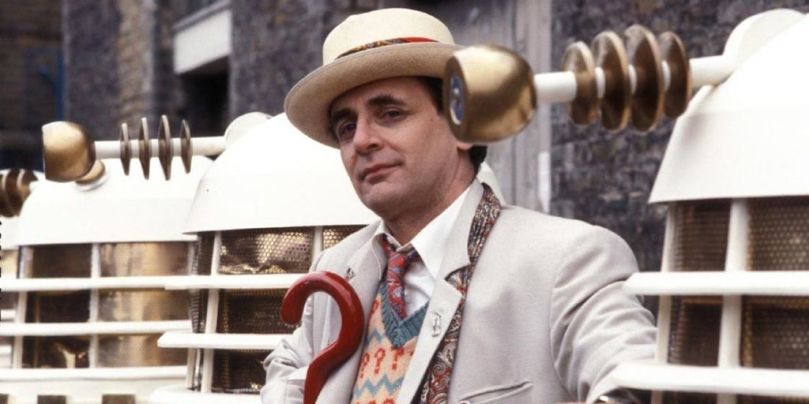
Timestamp #161: The Night of the Doctor

Doctor Who: The Night of the Doctor
(1 episode, 2013)


The last plank bridging the classic and modern televised eras of Doctor Who.

A crippled spaceship careens through space, piloted by a woman named Cass who is bantering with the onboard computer for assistance. When she asks for help, the computer offers a doctor, and one arrives… but not the one she expected. The Eighth Doctor attempts to rescue her – she stayed with the ship when everyone else teleported away in panic, and I love that her reason for staying behind was that everyone else was screaming – but she rejects his help when she figures out that he is a Time Lord. She believes that he is part of the ongoing Time War and wants no part in it.

Cass locks the Doctor in the hold with his TARDIS and the ship crashes on the nearby planet. In a coincidence, the planet is Karn, home of the Sisterhood of Karn. Unfortunately, the crash killed everyone onboard, including the Doctor. And that would be the end of things if not for the Elixir of Life.

The sisters move the Doctor to an altar and restore his life for a mere four minutes. They offer him the chance to live again, to regenerate, because the Time War threatens the whole of reality without escape. They plead with him to fulfill his mission to help the people of the universe, offering a custom regeneration to suit the task: Fat or thin, young or old, man or woman, fast or strong, wise or angry. The Doctor chooses the form of a warrior to fight the battle, asking if the process will hurt. He takes comfort in knowing that it will.

He salutes the companions that we never get to see on screen – CharleyC’rizzLucieTamsin and Molly are all Big Finish audio companions – and drinks deep from the elixir. Almost instantly, he glows with explosive regeneration energy. Moments later, he dons Cass’s bandoleer and offers her a final farewell, gazing upon his new face in a distorted reflection: “Doctor, no more.”


This was a beautiful farewell for Paul McGann’s Eighth Doctor, a fantastic 50th anniversary treat, and a nice way to tie the classic and modern eras together. I remember watching this when it first came out and gasping when he appeared on the screen. His humor still shines through even in the darkness of this short story.

It’s also a fantastic but tragic reminder of what war can do to even the most peaceful of people.


Rating: 5/5 – “Fantastic!”


UP NEXT – Eighth Doctor Summary


The Timestamps Project is an adventure through the televised universe of Doctor Who, story by story, from the beginning of the franchise. For more reviews like this one, please visit the project’s page at Creative Criticality.


Timestamp: Seventh Doctor Summary

Doctor Who: Seventh Doctor Summary


I’m going to miss this incarnation.

After the Sixth Doctor’s run, I was a bit worried about the future of the franchise. Even though the classic era technically ends with the Seventh Doctor, I’m glad that we got Sylvester McCoy in the role.

I could tell that things were going to be different from the jump when I was grinning ear-to-ear during Time and the Rani. Even though the stories varied wildly in quality and entertainment value, I feel like this incarnation’s run really struck gold with the combination of McCoy and Sophie Aldred’s Ace. Those two together was perfect chemistry, and I would love to see more of their adventures before the TV movie.

I’m seriously considering diving into the Virgin New Adventures at some point.

With the TV movie, we got to see the Seventh Doctor in what I call his early retirement years. He was still traveling the universe, but his console room was his living room, complete with record player, library, and jelly babies. He’s tackled the Cybermen, the Daleks, and the Master, and between the last two, even struck peace with one to help bring the other to justice.

Following tradition, if the First Doctor was a wise grandfather, the Second a sly jester, the Third a secret agent scientist, the Fourth an inquisitive idealist, the Fifth Doctor an honorable humanitarian, and the Sixth Doctor a squandered cynic, then the Seventh Doctor is a curious schemer.


Series 24 – 3.0
Series 25 – 2.5
Series 26 – 3.0
The Movie – 4.0

Seventh Doctor’s Weighted Average Rating: 3.54


Note that if I don’t count the TV movie in the mix, the average comes to 3.50, so it’s not that significant of a difference.


Ranking (by score)
1 – Third (4.00)
2 – Second (3.67)
2 – Fourth (3.67)
4 – Seventh (3.54)
5 – First (3.41)
6 – Fifth (3.20)
7 – Sixth (2.73)

Ranking (by character)
1 – Second Doctor
2 – Third Doctor
3 – Fourth Doctor
4 – Seventh Doctor
5 – First Doctor
6 – Fifth Doctor
7 – Sixth Doctor


UP NEXT – Doctor Who: The Night of the Doctor


The Timestamps Project is an adventure through the televised universe of Doctor Who, story by story, from the beginning of the franchise. For more reviews like this one, please visit the project’s page at Creative Criticality.
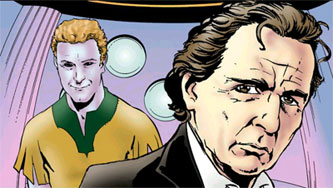
Timestamp #160: Doctor Who (The Movie)

Doctor Who: The Movie
(1996)


It’s a major turning point: The gateway between the classic era and the modern. But first, the Doctor must face Y2K.

The Master finally came to trial for his litany of crimes on the planet Skaro as part of a treaty between the Daleks and the Time Lords. Over cat eyes, we learn that the Master’s final request was for the Doctor to carry his remains back to Gallifrey for final disposition. The Doctor places the Master’s urn in a lockbox and secures it with a new sonic screwdriver before settling in with “In a Dream” on the gramaphone, The Time Machine in his hands, and a bowl of jelly babies. The control room is massive and gorgeous, and reflects the Seventh Doctor’s twilight years to a tee.

The Master breaks out of the urn and the lockbox, moving as a shadowy snake form to the TARDIS console and shorting it out, forcing the Doctor to make an emergency landing on Earth, San Francisco, New Years Eve, 1999. The TARDIS materializes in the middle of a gang fight, saving a young survivor in the process. Unfortunately, the Doctor (who didn’t use the scanners, I guess) steps into the fight and is shot. As Chang Lee calls for an ambulance, the Master escapes through the TARDIS lock.

The Doctor (on the record as John Smith) is rushed to the hospital, but modern medicine fails him. The x-ray accurately reflects his two hearts, and the bullet wounds are not particularly life-threatening (one in the shoulder, two in the leg), but the heart readings require a cardiac specialist. Enter: Grace Holloway.

The Doctor wakes up on the operating table to the sound of Madame Butterfly, pleading with Grace to stop the surgery and get him a beryllium atomic clock. The surgical team ups the anesthetic and proceeds, but human surgery on Time Lord physiology proves fatal. The Seventh Doctor dies on the operating table. Grace reviews the x-rays before informing Lee of the bad news, and Lee runs off with the Doctor’s personal effects.

We are treated to a double Time Lord resurrection: On the other side of the city, the Master has hitched a ride home with an ambulance driver named Bruce. As he snores away, preventing his wife from sleeping, Bruce is taken over and killed by the Master. Bruce’s wife is happy for the silence. At the hospital, the Doctor’s body is loaded into the morgue and regenerates in parallel with the 1931 version of Frankenstein. The Doctor bangs at the door and breaks out of the freezer, scaring the on-duty attendant. The Eighth Doctor finds a mirror (or thirteen… see what they did there?) in a broken room (seriously, what?) while humming Madame Butterfly. In shock, he screams and questions who he is.

As morning dawns, we find Grace Holloway in her office, the Doctor rifling through lockers for clothing (and discarding a replica of the Fourth Doctor’s scarf), and Lee trying to figure out what a sonic screwdriver does (as well as examining a yo-yo, the Doctor’s pocketwatch, and the TARDIS key). The Doctor finds a Wild Bill Hickok costume (intended for the New Years Eve costume party), discarding the gun belt and hat in the process. Meanwhile, the Master awakens (with glowing green eyes) and kills Bruce’s wife.

Pete, the morgue attendant, shows Grace what happened the night before. She walks right by the Doctor, who is still suffering from the effects of his regeneration, before meeting with the hospital administrator. The administrator tries to cover up the events of the botched surgery, and she quits her job as a result. As she’s leaving, the Doctor joins her in the elevator and follows her to her car. He begs her for help, pulling the abandoned cardiac probe from his chest as Grace drives him away.

The Master arrives at the hospital and demands to see the Doctor’s body, but finds out that the corpse is missing and that Lee has the Doctor’s possessions. Meanwhile, Grace and the Doctor arrive at her home to find that her boyfriend has left her (and taken her furniture). She examines the Doctor and his heartbeats as his memory fades back in. Grace is upset and confused by the whole affair, but the Doctor comforts her in his awkward way.

Lee finds his way to the TARDIS and steps inside, having one of the most amazing “bigger on the inside” moments. Unfortunately, he also finds the Master, who somehow entered before without the TARDIS key. The Master enthralls Lee and takes the Doctor’s things before demanding that Lee help him find the Time Lord. The Master tells Lee a false tale of how the Doctor stole his regenerations, offering the human gold dust and a tour of the TARDIS, including the Cloister Room. In the depths of the Cloister Room is the Eye of Harmony, the heart of the TARDIS, and Lee is able to open it with a little coercion. The Eye shows the Master and Lee the Doctor’s Seventh and Eighth incarnations, and the image of a human retina leads the Master to believe that the new Doctor is half-human.

That’s an important note to make: The Master makes the assumption that the Doctor is somehow half-human. While the Master – who has known the Doctor for a really, really long time – should presumably know better, the Doctor’s lineage is not a statement of fact. It is a wild assumption.

The Doctor finishes getting dressed (and finally removing his toe tag) as Grace examines his blood. They take a walk to clear their minds, jogging the Doctor’s memories of his own childhood. The joy of this incarnation is amazing. As the Eye of Harmony is opened, he remembers that he is the Doctor and kisses Grace, making this the first romantic moment for the Doctor in the franchise.

I’m okay with that. New face, new body, new Doctor.

With the Eye of Harmony open, the Doctor and the Master can share vision through the Eye. The Doctor closes his eyes and gives Grace the download on who he is. Lee also hears this, chipping away at the Master’s thrall. Grace runs away in shock and locks the Doctor out of her house. Despite the Doctor’s protests, Grace calls for an ambulance, but the Doctor shows her that the Eye of Harmony is tearing the planet apart by walking through a window without breaking it. The Master and Lee oblige her request by hijacking an ambulance and taking it to meet the doctor (and the Doctor).

The Doctor watches the news while they wait for the ambulance, learning that a local institute is unveiling a beryllium atomic clock, which is exactly what he needs to close the Eye. The doorbell rings, and it’s the Master calling. Grace has no idea, but the Doctor obviously recognizes the Master, and nevertheless, they all pile into the ambulance and hit the road. Eventually, the Doctor unmasks the Master and runs with Grace. They hijack a police motorcycle with jelly babies and race for the institute with the Master in pursuit.

Notably, the Doctor does use a gun once again, but it’s a distraction instead of a threat.

Lee knows a shortcut – of course he does – so they beat the Doctor and the doctor to the clock. They proceed inside and look for a way to the clock, passing the Doctor off as “Dr. Bowman” and meeting Professor Wagg, the inventor of the device. In the meantime, the Doctor explains more about himself, and distracts the professor with a joke about being half-human while swiping his badge. They take a piece of the clock, distract a guard with a jelly baby, and spot the Master before running. They race to the roof (understandably, the Doctor is afraid of heights) and use a fire hose to drop to the street before heading to the TARDIS.

They use a spare key to open the TARDIS, have a humorous moment with a police officer driving in and out of the time capsule, and go inside to install the clock component in the console. Unfortunately, the Eye has been open too long and the cosmos are in danger. The TARDIS also has no power. They attempt to jump-start the TARDIS, but Grace is enthralled by the Master as he arrives. She knocks the Doctor out and together, she and Lee take him to the Eye. The Master supervises as Grace places a device on the Doctor’s head to prop his eyes open. The Doctor pleads with Lee, and Lee refuses to open the Eye when the Doctor points out the Master’s lies. The Master kills Lee by snapping his neck, then enthralls Grace into opening the Eye.

Apparently, only a human’s eyes can open the Eye. Which is weird, but kind of plays into a theory of mine… more on that later.

The Eye’s light is focused on two points, designed in this case to channel the Doctor’s regenerative energy into the Master and extend the villain’s lifespan. The light of the Eye breaks Grace’s trance, and she runs to the console to reroute the power. At the very last second, Grace jump-starts the TARDIS and they travel into a temporal orbit. She releases the Doctor, but the Master throws her off the balcony and kills her. The two Time Lords fight over the eye, but the Doctor is triumphant and the Master falls into the Eye. The Doctor tries to rescue him, but the Master refuses and is (apparently) killed.

The Doctor places Lee and Grace on a balcony in the Cloister Room, and the energy of the Eye infuses with them, bringing them back to life courtesy of the TARDIS and its sentimentality. The Doctor shows them Gallifrey from a distance before returning midnight on January 1, 2000. Lee departs with the gold dust and a little advice after returning the Doctor’s stuff, and the Doctor offers Grace the opportunity to travel with him. Grace declines, and the Doctor departs for a new adventure.


This presentation is deeply flawed, but it does have a lot of things working for it. I love the theme music (even if they don’t credit Ron Grainer or Delia Derbyshire) and I do love the humor and Doctor/Grace banter. On the other hand, it is swimming in the cheesiness that defined televised American science fiction in the 1990s, and a lot of those elements fall flat in the spirit of Doctor Who. I mean, can we get that hospital a little more funding for the entire floor full of broken junk?

The story also has a fixation on people stealing people’s stuff. Was there a major trend of kleptomania in the mid-90s?

Paul McGann is simply a joy to watch, and his energy and joy shines in this story. It’s also interesting to watch the “half-human” controversy play out: The Master takes it seriously based on scant evidence, but the Doctor plays it as a joke. I have often wondered if Gallifreyans are some sort of evolved human being – it’s definitely possible given that the default appearance is always human, most medical exams show only the two hearts as a physical difference, and that whole Eye of Harmony key thing – but I don’t think that the Doctor is any more human than that. The evidence just doesn’t support it.

All in all, this story would fall into the average range, which is a shame since Paul McGann deserved so much better. Of course, this was also a regeneration story, so it gets a little boost per the rules of the Timestamps Project.


Rating: 4/5 – “Would you care for a jelly baby?”


UP NEXT – Seventh Doctor Summary


The Timestamps Project is an adventure through the televised universe of Doctor Who, story by story, from the beginning of the franchise. For more reviews like this one, please visit the project’s page at Creative Criticality.


Timestamp Special #8: Death Comes to Time

Doctor Who: Death Comes to Time
(5 episodes, 2001-2002)


One more round with Sylvester McCoy before returning to the canon timeline.

After a brief introduction filled with metaphor and symbolism, we are witness to a massive and bloody battle in space. General Tannis decimates the fleet and destroys the city of Annit, obliterating nine million people before Admiral Mettna surrenders unconditionally. Thus begins the Canisian invasion of the Santine Republic. The admiral is killed despite her surrender, the Santinian president is assassinated by Tannis himself, and the Republic falls.

As Tannis begins his reign of terror, the Seventh Doctor and his companion Antimony arrive. Antimony knocks out the guard as the Doctor meets Senator Sala, the leader of a blossoming resistance. The Doctor takes the survivors away and works out a plan with them to stop the threat. When the Doctor spots burning trees, he realizes that someone wants to contact him and the travelers depart.

Elsewhere, a being identifying himself as a “God of the Fourth” arrives on a spaceship, enthralls the guards, and rescues a prisoner.

That prisoner is Ace.

Her mysterious benefactor is named Casmus, and he rescued her in order to teach her. He’s very much a Yoda to her Luke Skywalker.

As the Doctor and Antimony travel to the Temple of the Fourth on the planet Micen Island, the Doctor has a premonition which he ascribes to a nightmare. In the temple, they find statues of long dead Time Lords with an inscription: “We serve the many, for the many are One, until twilight falls and death comes to Time.”

The Doctor is met by a fellow Time Lord named the Minister of Chance, and he is the one who sent the fiery message. The Minister informs the Doctor that two Time Lords, the Saints Antinor and Valentine, have been murdered on Earth. The Minister fears a greater evil at work, and he takes over the Santine crisis while the Doctor investigates the threat to their kind.

Tannis punishes his guards for their failures: The lost resistance group nets one guard a bullet while Ace’s disappearance results in her guard Golcrum being exiled to the barren world of Animapersis. As he muses on how even Time Lords die, he reveals bigger plans in motion.

The Doctor and Antimony arrive at a radio telescope analysis center as the Time Lord delivers a lesson in temporal philosophy and mentions an encounter with an allosaurus. They meet with Dr. Kane, who explains that Valentine and Antinor were killed by animals, presumably a dog or large cat. The Doctor asks her what they were investigating, discovering that black holes are being created and expanding at a drastic rate. The fabric of space-time has been torn.

Antimony investigates the crime scene and encounters two policemen, Campion and Speedwell. They grill him before meeting with the Doctor, and Speedwell is called away to another animal attack in the East End. The Doctor accompanies the officer, but Antimony is left behind in handcuffs. The Doctor finds bite marks on the woman’s neck, her corpse drained of blood. They also find the body of a policeman and a bar with twenty additional corpses. A dark figure flees the scene, and back at the laboratory, Antimony encounters Campion in a similar state, and discusses the event with a dispassionate Kane.

Across the universe, Ace wakes from a dream about the edge of a whirlpool and a friendly yet dangerous man. Casmus teaches her how to remember dreams – perceptions uncluttered by shadows of matter – and tells her that they will soon visit the Kingmaker at Mount Plutarch to test her abilities. On Santine, the Minister of Chance arrives, dodges Tannis’s troops, and meets with the leaders of the resistance.

Back on Earth, the Doctor and Speedwell find more corpses and note that there are two distinct styles of killing. Some are for feeding, but others are were just in the way and used as a distraction. The pair dive into a manhole and track down the killer, the vampire Nessican. The police officer’s gun proves useless since severing the spine is the only way to kill a vampire. Nessican attacks the Doctor, but the Time Lord had eaten garlic so his blood poisoned the vampire. The pair get a call pointing them back to Kane, and they arrive at the lab just in time to kill her too. With her dying moments, she tells the Doctor that the tear in time is the work of a Time Lord.

Before his death, Nessican sent a message to Tannis: Earth is rich in resources and defenseless. Tannis is overjoyed by this report.

The Minister of Chance takes Senator Sala to the Canisian army. Captain Carne, the detachment commander, suspects a trap but accepts the gift and sends her away to be tortured. He also plans to kill the Minister at a later time. On the Canisian homeworld, Premier Bedloe and Tannis announce the defeat of the Santine Republic. Simultaneously, Tannis’s troops have surrounded the city and taken Bedloe’s child hostage. When Bedloe confronts the general, Tannis explains that he intends to use the leader as a front while Tannis conquers the universe. Premier Bedloe is left in the care of Major Bander with orders to kill the leader on command.

The Doctor analyzes the black holes and realizes that the tears in space-time could only be caused by another Time Lord misusing his powers. Antimony wonders whether it could be the Minister of Chance, but the Doctor thinks otherwise, planning to strike on Alpha Canis while the Minister occupies Tannis on Santine.

Sala is tortured and returned to her cell with the Minister. The Time Lord heals her wounds, enabling her to infiltrate the base and find the other political prisoners. The Minister sets a trap for Carne.

As Ace and Casmus travel to Mount Plutarch, her lessons continue. There is no true chaos in the Universe, just an order of greater complexity than can be easily perceived.

When the captain interrogates the Minister, he is told that the Santine resistance plans to attack a prison at Luria. The reaction reveals that the prison really exists, which they had not known with certainty. They spring the trap by threatening to inform the general’s incoming envoy – the Fleet Pilot – that Carne revealed the secret, so Carne shows them a prison map in exchange for their silence. The Minister tells him where the resistance intend to attack, then uses a word of power to crash the planetary computers. In the confusion, the Minister and Sala flee while Carne deals with his own skeptical troops.

The Minister has a lot of strange powers that seem overboard for Time Lords.

The Doctor and Antimony arrive on Alpha Canis, and the Doctor explains why they can’t just kill the general outright. The Doctor plans to turn Premier Bedloe against Tannis, and he surrenders himself to the authorities under the pretense that he has kidnapped Bedloe’s children. The Doctor’s ruse works out, but his presence is reported to Tannis. Bedloe questions the Doctor personally, and the Doctor strikes a deal to rescue the children from the general’s personal villa in exchange for Tannis.

After dispatching Captain Carne, the Fleet Pilot reports the Minister’s activities to Tannis. The general orders the Time Lord located so he can deal with the threat personally. Elsewhere, Ace and Casmus stargaze while the human woman realizes that she will never have normal relationships with other humans again. She now has a special relationship with time and is introduced to the loneliness of being a Time Lord.

Nice. She’s being trained as a Time Lord.

The Doctor and Antimony break into the villa, rescue the child, and return him to Bedloe. Unfortunately, their deal is broken when Tannis strikes a new bargain with Bedloe.

On Santine, the Minister of Chance and Sala try to find their way back to the resistance. Sala asks about his name, which he explains is given perhaps by what they did but is unpronounceable by her tongue. In the end, she just calls him “Snake”. The path is treacherous and she is still weakened from the interrogation, so the Minister uses his healing power once again. When she questions why the Minister doesn’t use his powers to save everyone’s lives, he explains that she cannot understand his people’s position. They are soon intercepted by a resistance member and share the intelligence about the Lurian prison camp.

Ace is subjected to a test known as the “Cavern of Infinite Death”, wherein she must pass through the cave on the stalagmites without touching the red liquid covering the floor. Ace gives it the old college try, but falls in nonetheless. When she panics, Casmus reveals that the liquid is benign. The lesson: Soon she will be able to break the rules of the universe, but such power can easily be misused even with the best intentions.

In this particular story, Time Lords guard time and can manipulate it with a thought. The power is that over creation itself, and the place of a Time Lord is only to fight evil, not destroy it with a single stroke.

This is rather intriguing.

General Tannis threatens to shoot the Doctor or Antimony, and then reveals his secret: He is a Time Lord. Of course, unlike the Doctor, the Minister, or any of the other Time Lords, he wants to use his powers to rule the Universe. The Doctor tells Antimony to run, but the companion refuses, and Tannis suggests that Antimony sees the Doctor as his father. The next big reveal: Antimony is a robot, which Tannis displays by shooting the companion multiple times. Having seen so many companions leave or die, the Doctor built a companion who would always stay with him. Unfortunately, while Tannis taunts the Doctor, the general shoots Antimony in the head and leaves the Doctor to watch his companion die.

Tannis returns to Santine and discusses the Minister with his Fleet Pilot. Tannis realizes that the Minister cares for Sala, and he explains why he’s concerned about the Time Lord. One time, Tannis dropped a plague on a particularly obstinate planet to exterminate the population, but three days later, the plague was gone and the population was unharmed. Later, Tannis discovered a cult dedicated to a god they called “Manaster,” whom the general presumed was the Minister.

The Santine resistance mount their attack on the Luria prison, but Tannis traps them with a fleet and orbital fire. Sala pleads with the Minister to use his powers to save them, and he refuses until Sala is killed. The Minister loses his self-control and unleashes a hellish rage upon Tannis’s ships. Despite his extensive losses, Tannis orders retreat and decides to visit Earth.

Finally arriving at the home of the Kingmaker, an old woman who watches over the Time Lords, Ace is tested with a mission to Animapersis, the same world where Golcrum was exiled, a planet ravaged by biological and psychic warfare. She is tasked with restoring the planet to its rightful inhabitants without abusing her new powers. She is given a TARDIS and a wand, the latter of which she is told can manipulate time, but is warned against using. Casmus promises to wait for her, but the Kingmaker knows his time is nearing an end.

Ace arrives on Animapersis to find a cave filled with terrified survivors. She declares that she intends to defeat the ghosts and reclaim the planet, and a young woman named Megan offers to guide her to the nearby crater.

While he waits for his student, Casmus is visited by Tannis. The general explains that he has killed off the rest of the Time Lords and set the Doctor and the Minister at odds against each other. Tannis demands to know where the girl from his ship is located, and Casmus tells him that she is on Animapersis. Casmus toys with Tannis, explaining that the more important discussion is what Ace has become. She means something to both Casmus and the Doctor, which is why Tannis wants her dead.

She is a Time Lord not because of anatomy or appearance, but because of what she embodies and does. She is the envoy of a new age.

On Animapersis, Ace and her companion reach the edge of the crater and descend into its depths, facing the entrancing whispers of the spirits within. The spirits threaten to take Ace’s TARDIS and terrorize the universe unless she gives them Megan. Ace is overwhelmed and collapses, awakening on her TARDIS with a strange but talkative man who we know as Golcrum. The survivors are missing, and Ace realizes that she has killed the spirits and survivors with her newfound powers.

The Doctor visits Mount Plutarch, distraught and pleading with the Kingmaker for help in stopping Tannis. Since the general has not broken any laws of time despite amassing power and weapons, the Kingmaker refuses to interfere. She also points out that Tannis is the mirror of the Doctor’s power, and that the Doctor was summoned here to destroy the Minister for his violations.

Ace and Golcrum return to Casmus’s garden to find her mentor dead. The Doctor reunites with his former companion and brings word that Tannis killed Casmus. In turn, she reveals what she did on Anamapersis. The Doctor consoles her with the revelation that it was a test, and that every person there was an illusion. It was a Kobayashi Maru-style scenario designed to instill a memory of failure in recruits and remind them of the scope of their power, a power that that Ace does not yet possess. She mentions the wand, but the Doctor has her look at it again with new eyes. The wand is nothing more than a fancy stick.

The Doctor and Ace formulate a plan to stop Tannis: Ace and Golcrum head for Earth to intercept Tannis while the Doctor deals with the Minister. On the Canisian homeworld, the Doctor finds a village in flames. He confronts the Minister on a nearby mountain, pleading for help against Tannis. When the Minister refuses to help, the Doctor revokes the Minister’s ability to travel via TARDIS, a move that opens the former Time Lord’s eyes and guilt.

On Earth, in the NASA mission control room, the operators (does anyone else want to beat Bob with Ace’s stick?) are startled to find a fleet of spaceships approaching the planet. The President of the United States is informed, and Tannis offers an ultimatum: Surrender or he will bomb London. While the President stalls, the Prime Minister calls with word of countermeasures. The bomb explodes inside the gunship’s hold and a fleet of shuttles emerges from behind the moon, commanded by none other than Brigadier Lethbridge-Stewart with Antonín Dvořák’s epic Symphony No. 9 (New World): IV. Allegro at his wings.

Tannis orders a ground invasion, descending on Stonehenge to begin a march on London, but they are confronted by Lieutenant Colonel Speedwell (who was previously undercover, I suppose) and the might of UNIT. As the battle rages, Tannis abandons his troops and searches for the Doctor. He finds Ace first and starts beating her, but the Doctor intercedes. Tannis knows that, under the law, the Doctor cannot use his powers to stop him, but the Doctor surprises Tannis with a flash of blue behind his eyes. With a choice between abusing his powers or leaving Tannis to abuse his own, the Doctor decides to unleash the might of the Time Lords, an act that destroys Tannis and kills the Doctor.

As UNIT celebrates their victory over the invasion, Ace brings word to the Brigadier of the Doctor’s fate. She travels to Mount Plutarch where the Kingmaker confers the full power of the Time Lords upon Ace, marking the beginning of a new age.


This story was an amazing extension of the mythology constructed in the classic era, presenting a natural path of evolution for the Time Lord civilization. If it were placed in the franchise’s continuity, it would act like a world-breaking tale that could potentially reboot everything and carry it forward with fresh eyes.

And, oh, would I love to see more adventures with Ace in her new role, because she is amazing.

But it would also mean the end of the Doctor, and presumably, the end of the series under the title Doctor Who. In that regard, I’m glad we didn’t get that path going forward.


Rating: 4/5 – “Would you care for a jelly baby?”


UP NEXT – Doctor Who: The Movie


The Timestamps Project is an adventure through the televised universe of Doctor Who, story by story, from the beginning of the franchise. For more reviews like this one, please visit the project’s page at Creative Criticality.

 

Timestamp Special #7: Dimensions in Time

Doctor Who: Dimensions in Time
(2 episodes, 1993)


Celebrating thirty years.

Starting off with a little backstory, this was shown as part of the 1993 Children in Need telethon over two nights. Both parts were bracketed by host Noel Edmonds, and the first part involved a short intro sketch with Jon Pertwee in character as the Doctor. Sadly, this was his last on-screen performance before his death.

On to the story…

The Rani is traveling with her companion, previously having captured (busts of) the First and Second Doctors in an attempt to assemble a menagerie of sentient life-forms to control the universe. That’s kind of her thing, really. Her companion checks off a Cyberman and a Time Lord from Gallifrey, noting that they need a human from Earth to complete the collection.

Elsewhere, the Fourth Doctor (in his Eighteenth Season garb) issues a warning to all of his other incarnations. It appears that he’s too late as the Rani takes aim on the TARDIS and knocks the capsule off course. Instead of landing in China, the Seventh Doctor and Ace materialize on the docks at the Cutty Sark Gardens, circa 1973. As Ace calls for help, the Seventh Doctor transforms into the Sixth Doctor, and both of them are instantly transported to (the fictional) Albert Square. The Sixth Doctor remarks that they have “slipped a groove” in time, and somehow he knows who Ace is.

This timey-wimey-wibbly-wobbliness will drive the rest of the adventure.

As Ace spots a clothing stand and a discount on a jacket from Sanjay and Gita (of The EastEnders), the Sixth Doctor discovers that they are now in 1993. The slipped groove has also slipped them two decades into the future. Just as he begins to question things, the slip happens again, leaving behind the Third Doctor and Mel. The Third Doctor believes that someone is rooting through his timeline and extracting previous incarnations and companions. The pair stop and ask two shop owners (Pauline Fowler and Kathy Beale from The EastEnders) what year they are in, and they are shocked to discover that they are in 2013.

The slips come fast and furious now, bouncing between 1973, 1993, and 2013, all in an attempt to separate the Doctor from the TARDIS and seal all of the Doctors together. One slip occurs, revealing the Sixth Doctor and Susan Foreman, the latter of whom is eager to find her grandfather, Ian, and Barbara. Another slip brings Sarah Jane and the Third Doctor back together. The next reunites the Fifth Doctor, Nyssa, and Peri, and this time they’re under attack from the Rani’s menagerie because our heroes (in all their guises) are too close to the truth.

They face off against a host of villains from the last thirty years (including an Argolin, a biomechanoid, a Cyberman, a Mentor, an Ogron, a Sandminer robot, a Sea Devil, a Tetrap, a Time Lord, a Tractator, a Vanir and a Vervoid, and even Fifi), and after they attempt to warn Pat Butcher (The EastEnders) of the danger – a futile effort, it seems – they are trapped by the Rani outside the Queen Victoria (once more, The EastEnders).

The Fifth Doctor psychically summons the Third Doctor in his place, an act that replaces Nyssa and Peri with Liz Shaw. Liz attempts to disarm the Rani, but then flees after Mandy (The EastEnders) distracts the villain. Mike Yates arrives in Bessie and shoots the gun out of the Rani’s hands, offering the Doctor a way out. Together they flee to a helicopter and the Brigadier.

Another slip occurs, exchanging the Third Doctor for the Sixth as they reach safety. As another slip occurs, the Rani and her companion set course for the Greenwich Meridian to find their missing human specimen. In a garage, the second Romana is flushed out of her hiding spot by Phil and Grant Mitchell (you guessed it, The EastEnders), who point her to their doctor, Harold Legg. As she passes the Queen Victoria, the Rani captures her.

In 1973, the Third Doctor and Victoria Waterfield discuss the nature of the Rani as they return to the TARDIS. Time slips once again, and the Seventh Doctor lands in 1993 and encounters Leela, who has escaped the Rani after being cloned in the form of the second Romana. This is the key that the Doctor needs, since the Rani now has an extra Time Lord brain imprint instead of the human one she needed. The Seventh Doctor, Ace, and K9 rig up a device to overload the time tunnel, capturing the Rani inside while breaking the other Doctors free.

Triumphant, the Seventh Doctor and Ace board the TARDIS for their next adventure, confident in the fact that the Doctor(s) are difficult to get rid of.


This was fun but chaotic, and a decent nod to the franchise on its thirtieth anniversary.


Rating: 3/5 – “Reverse the polarity of the neutron flow.”


UP NEXT – Doctor Who: Death Comes to Time


The Timestamps Project is an adventure through the televised universe of Doctor Who, story by story, from the beginning of the franchise. For more reviews like this one, please visit the project’s page at Creative Criticality.


Timestamp: Twenty-Sixth Series Summary

 Doctor Who: Twenty-Sixth Series Summary

The classic series finishes strong.

I have really loved watching the adventures of the Seventh Doctor and Ace, especially since this season seemed to be (Battlefield aside) about the companion and her development, as well as tying off the loose ends from the last three years. Ghost Light, The Curse of Fenric, and Survival brought us deep cuts into Ace’s history, and Fenric brought closure to elements from her introduction in Dragonfire. Fenric also brought a lot of strength to Ace as she faced her past and literally washed herself clean of the negative emotions surrounding it.

Ace grew so much over this season, and it was amazing to watch. I really admire her as a character and companion.

As a Whovian who started with the 2005 revival series, I also wonder how much of Clara’s character in the Eleventh and Twelfth Doctors’ eras was derived from Ace. Looking into the Wilderness Years that follow this season, Ace was apparently being set up to travel to Gallifrey and train as a Time Lord. She’s essentially becoming the Doctor, much like Clara did, but Ace does it so much better.

And I’m really sad to see her go. I’d love to see her come back in the future.

The Seventh Doctor’s final season comes in exactly on target with the Twenty-Fifth season, making it the sixth player in a tie for fifth place with the SeventhTenthThirteenthFourteenth, and Twenty-Fifth seasons. What a way to end the classic run.

So, where do we go from here?

Well, we’re at a crossroads, aren’t we? The goal of the Timestamps Project was to explore the classic era of Doctor Who and see how it informs the modern era of the franchise. We’re at the inflection point between the two with the Eighth Doctor and the Doctor Who TV movie on the horizon, and I’m not stopping.

From here, I’m going to visit Dimensions in Time and Death Comes to Time before covering the TV movie. That will mark the end of the Seventh Doctor’s run for me – since Dimensions in Time and Death Comes to Time aren’t considered canon, they won’t be counted in the Seventh Doctor’s score, but the TV movie will since he’s in it for some time and it contains his regeneration – and the Seventh Doctor Summary will follow.

After that, I’ll look at Night of the Doctor for the Eighth Doctor’s regeneration, followed by the Eighth Doctor’s Summary. Finally, I’ll close the classic era with non-canon stories The Curse of the Fatal DeathScream of the Shalka, and the Eighth Doctor’s version of Shada.

The Timestamps Project will enter the 2005 revival era with the Ninth Doctor later this autumn.


Battlefield – 4
Ghost Light – 2
The Curse of Fenric – 5
Survival –  4

Series Twenty-Two Average Rating: 3.8/5


UP NEXT – Doctor Who: Dimensions in Time


The Timestamps Project is an adventure through the televised universe of Doctor Who, story by story, from the beginning of the franchise. For more reviews like this one, please visit the project’s page at Creative Criticality.