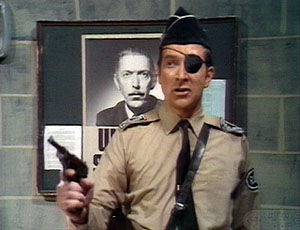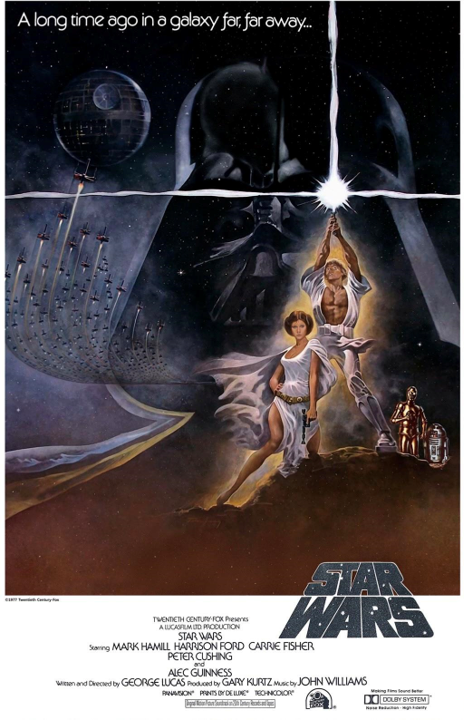
Timestamp #56: The Mind of Evil

Doctor Who: The Mind of Evil
(6 episodes, s08e05-e10, 1971)

Timestamp 056 The Mind of Evil


The Doctor goes to prison, and the show goes back to black and white. Remind me to never lend the BBC my tape collection.

A new device, the Keller Machine, can apparently extract evil thoughts from the mind and rehabilitate prisoners. The Doctor, while attending a demonstration of the device, thinks himself above the primitive 1970s Earth, and feels vindicated after the demonstration yields one comatose prisoner named Barnham, and later, one dead medical student. Meanwhile, UNIT is running security for a world peace conference, and Captain Chin Lee of the Chinese delegation deceives UNIT to help the Master steal a nerve gas missile.

The machine is intelligent, and it feeds off of negative emotions like fear and aggression. It kills people by making them envision their greatest fears so it can feed, and the Master figures out that the machine will overpower both him and the prison, so he teams up with the Doctor to shut it down.  Starved for evil to feed on, the machine learns how to teleport directly to food sources, but it cannot function around Barnham since he completely devoid of negative emotion.

The Doctor offers to trade the missile for the Master’s dematerialization circuit, and knowing that he can’t allow the Master to roam free in time and space, he tries to trap the Master with Barnham and the mind parasite. The Master gets his circuit back in the ensuing chaos, escapes, and runs down Barnham. The Doctor sets the missile to self-destruct, taking the parasite with it.

This is twice now that the Master’s plans have threatened to overcome him: He goes big when he builds a plan to take over the world. The Doctor’s fear of his enemies is fascinating since he hardly shows it when he’s up against them. The Master’s greatest fear, the Doctor looming over him and laughing in victory, betrays his insecurity.

It’s also interesting how the Doctor is so cautious about exposing himself as a Time Lord, but he never misses an opportunity to denigrate the technology of the era in which he’s trapped. No wonder people dislike him so much.

This was a straightforward story with a couple of twists, and a good continuation of this season’s overarching theme of the Doctor and his nemesis.


Rating: 4/5 – “Would you care for a jelly baby?”


UP NEXT – Doctor Who: The Claws of Axos


The Timestamps Project is an adventure through the televised universe of Doctor Who, story by story, from the beginning of the franchise. For more reviews like this one, please visit the project’s page at Creative Criticality.


Timestamp #55: Terror of the Autons

Doctor Who: Terror of the Autons
(4 episodes, s08e01-e04, 1971)

Timestamp 055 Terror of the Autons


The Nestene and Autons are back. The normal title sequences are back. Liz Shaw is… not.

There are so many profanities, obscenities, expletives, and invectives I could throw out here; I guess Liz Shaw can now be the vice president of the Unceremoniously Canned Companions Club with Dodo as the president and founder. She was only around for four serials, but she deserved a lot better (especially as a strong female character) than to be written off in the off-season.

It’s infuriating!

The Doctor’s back as well, still in his fancy ruffles but with a toned down scarlet jacket. He’s still working on TARDIS and meets Jo Grant, the new assistant. Jo’s no Liz, but she’s very independent and has potential, and she did save the Doctor’s bacon from the mirror-universe-goatee-and-slicked-back-hair E-V-I-L that is the Master. I mean, if you’re gonna save the Doctor’s life, you get extra points for doing it against that guy.

The Master arrives in a TARDIS with a fully functional chameleon circuit, enthralls nearly everyone he meets like the vampires of legend, and steals a Nestene egg to invite the invasion force on down. The Doctor and his team investigate the strange signals from the radio telescope, and the Doctor gets a heads up from a random Time Lord. The Third Doctor’s run has been playing fast and loose with time travel vehicles, and this story is no exception: Time Lords can apparently travel without a TARDIS.

The Master takes the disguise of Colonel Masters and embeds himself in a local plastics factory. After killing the production manager with an inflatable plastic chair, he offs the factory’s retired owner with a demonic plastic doll activated by heat. The only way he could be more evil is by killing a puppy.

The Doctor follows the clues to the circus, but is captured by the Master’s hypnotized followers. Jo rescues him after smuggling away in Bessie, and the Doctor steals the dematerialization circuit from the Master’s TARDIS. One mob scene and thrilling Auton battle later, the escape with the Brigadier and Captain Yates. The dematerialization circuit is too new for the Doctor’s TARDIS, but the good news is that the Master is also stranded on Earth.

The Autons, disguised as cartoonish carnival figures, distribute plastic daffodils to the public as the disguised Master replaces the Doctor’s phone cable in his lab. The Doctor and the Brigadier find the plastic factory office to be abandoned with the exception of an Auton in the safe while Jo and Sergeant Benton dispatch the demon doll, and the Doctor gets wrapped up in a phone call. Okay, that phone cord bit was a good idea on paper, but quite silly in execution.

The daffodils attack Jo and try to asphyxiate her, and the Master arrives to confront the Doctor. He kidnaps the pair and places them in the bus that UNIT is about to bomb, but the Doctor communicates with Morse code through the brake lights on the bus and escapes. The Master starts to bring the Nestene invaders down to the planet, but suddenly understands that they will kill him as well. The Doctor and the Master work together to reverse the polarity of the signal and send the Nestene into deep space, and then the Master sacrifices his last follower to escape.

Let’s start with the negatives (aside from Liz’s canning), of which there are only two: There was a lot of blue-screening in this serial, which was probably reasonable for the era but got really distracting; The camera angles let us see a lot of the TARDIS interior, there’s no control room. Aside from the companion kerfuffle, my complaints are petty.

On the positives, this is a tight story told in four episodes that introduces a continuing conflict with a powerful enemy. I was riveted waiting to see how it resolved, and I want more.


Rating: 5/5 – “Fantastic!”


UP NEXT – Doctor Who: The Mind of Evil


The Timestamps Project is an adventure through the televised universe of Doctor Who, story by story, from the beginning of the franchise. For more reviews like this one, please visit the project’s page at Creative Criticality.


Timestamps Supplementals

The Timestamps Supplementals are episodes of podcasts in which I discuss Doctor Who. These can be episode reviews, roundtable discussions, and live events. They are presented here in reverse chronological order – the most recent appearance is first – with links to the episodes so you can listen as well.

Earth Station Who: Episode 350
Woke Who: How Doctor Who Has Always Been Woke!!
May 4, 2024

In this live episode of the Earth Station Who Podcast, hosts Mike Faber and Mike Gordon welcome guests Mike Falkner, Dave Chapman, and Melanie Dean as they dive into the evolution of Doctor Who. They explore the show’s approach to diversity and representation, discussing the societal impact and the importance of inclusivity. The panel addresses the challenges of change within the fandom, emphasizing the Doctor’s message of acceptance. They reflect on personal experiences with the series, its cultural shifts, and the role of social media in the fandom.

Earth Station Who: Episode 300
Introducing the Fourteenth Doctor
May 20, 2022

Recorded via Facebook Live! The ESW crew celebrated their 300th episode by responding to the big announcement of Ncuti Gatwa as the Fourteenth Doctor. Mike, Mike, Mary, Melanie Dean, Neisha T Mulchan, and Michael Falkner share their thoughts on the casting as well as other exciting news about the future of the franchise.

Earth Station Who: Episode 284
Flux – Chapter 3: Once, Upon Time
November 19, 2021

The Thirteenth Doctor and crew face a timestorm of epic proportions. Mike, Mike, Mary, Alan Siler, and Michael Falkner jump into one another’s timelines to review the halfway point of the Flux storyline.

This episode is dedicated to the memory of Shirley Ogle (1938-2021).

Earth Station Who: Episode 275
Doctor Who San Diego Comic-Con Review
July 31, 2021

San Diego Comic-Con at Home 2021 featured a virtual panel with Jodie Whittaker, Mandip Gill, John Bishop, Chris Chibnall, and a very special guest. Mike, Mike, Michael Falkner, and Melanie Dean review all the news and what we can expect in the upcoming Series 13. Recorded via Facebook Live.

Earth Station Who: Episode 257
Doctor Who 101: An Intro to Doctor Who
November 6, 2020

Recorded for Dragon Con 2020! The BritTrack folks and ESW crew reunite to chat about where new fans can get started with the Classic Doctor Who Series, New Series, novels, comics, and audios! Class is in session with Mike, Mike, Mary, Caro McCully, Rob Bowen, and Michael Falkner as they take you through Doctor Who 101.

The 42Cast: Episode 59
Get to Know Your Doctor, Part One – William Hartnell
November 21, 2019

Doctor Who is the longest running science fiction television franchise of all time. With this episode we kick off a series on each Doctor, as we discuss their contributions to the overall story of Doctor Who. In our first installment we discuss William Hartnell. We talk about the first Doctor’s character, Hartnell’s performance, behind-the-scenes details that informed the performance and varied the tone of the first 3 seasons of Doctor Who. We also discuss our favorite companions and favorite stories while Eric tells us to study more history.

Earth Station Who: Episode 224
Deconstructing Doctor Who
September 7, 2019

Recorded live at Dragon Con 2019! What are the essential elements of one of the most popular science fiction series for over 50 years? Mike, Mike, Mary, Tara Newman, and Michael Falkner lead an in-depth discussion on the what, why, and how of Who.

Earth Station Who: Episode 210
Warriors’ Gate
March 9, 2019

The E-Space Trilogy concludes as Mike, Mike, Mary, and Michael Falkner become trapped in dull, er I mean, null white space with the Fourth Doctor and crew.

Earth Station Who: Episode 209
State of Decay
February 23, 2019

The E-Space Trilogy continues as Mike, Mike, Mary, and Michael Falkner swarm with the Fourth Doctor and crew and try to avoid stepping in space guano.

Earth Station Who: Episode 208
Full Circle
February 10, 2019

The E-Space Trilogy begins with the introduction of a new companion for the Fourth Doctor. It is the time of Mistfall and Deciders Mike, Mary, and Michael Falkner leave Howdy Mike to the Marshmen.

Earth Station Who: Episode 199
The Tsuranga Conundrum
November 9, 2018

The Thirteenth Doctor and Team TARDIS are trapped aboard a medical frigate under siege by the deadly Pting, while Mary finds herself surrounded by a drop of Mikes as Michael Falkner joins Mike and Mike to review this week’s episode.

Earth Station Who: Episode 168
50 Years of the Cyberman
September 9, 2017

Recorded live at Dragon Con 2017! The ESW crew arrived to the newly located BritTrack to discuss half a century of the metal men’s menacing adventures. Featuring Mike, Mike, Michael Falkner, RL Grey, and Sue Kisenwether. Plus, a con interview with Alex Kingston!

Earth Station Who: Episode 135
The Sontaran Experiment
July 26, 2016

Sontar Ha! Mike, Mike, Jen, Mary and special guest Michael Falkner transmat down from the station to a far-in-the-future Earth and an all-too-familiar villain, while trying to keep disagreeable noises to a minimum.


cc-break

The Timestamps Project is an adventure through the televised universe of Doctor Who, story by story, from the beginning of the franchise. For more reviews like this one, please visit the project’s page at Creative Criticality.

Timestamp: Seventh Series Summary

Doctor Who: Seventh Series Summary

Timestamp Logo Third


This series started so well. Between Spearhead From Space and Doctor Who and the Silurians, I was really enjoying this new era of the show. Like I mentioned in Spearhead From Space, this series felt like a soft reboot of the franchise with the increased production values and budget, refreshed mythology, slightly altered format and premise, and the shift from monochrome to color. The changes to the show helped rejuvenate the excitement that got dampened with reconstructions.

But that crashed with The Ambassadors of Death and Inferno and the stories that either lacked an overall direction or felt padded with open-ended resolutions. Don’t get me wrong, they were still entertaining and decent enough presentations, but they felt lacking after strong start in the front half of the series.

It feels like growing pains have affected the show at this point. They’re trying so hard as this point in history to regenerate the franchise to accompany the Doctor’s new face that they stumbled under their own weight. And that actually parallels the Third Doctor in a lot of ways. He’s had to re-invent himself to survive, and while he seems cheerful at first, he has a frustrated bitterness that often derails him in the end. The final moments of Inferno encapsulate it nicely.

This series was still one of the highest rated in the Timestamps Project behind the Fifth Series, so I don’t fear a complete demise of the show at this point, but I certainly hope that the downward trend doesn’t hold.


Spearhead From Space – 5
Doctor Who and the Silurians – 4
The Ambassadors of Death – 3
Inferno – 3

Series Seven Average Rating: 3.8/5


UP NEXT – Doctor Who: Terror of the Autons


The Timestamps Project is an adventure through the televised universe of Doctor Who, story by story, from the beginning of the franchise. For more reviews like this one, please visit the project’s page at Creative Criticality.

Timestamp #54: Inferno

Doctor Who: Inferno
(7 episodes, s07e19-e25, 1970)

Timestamp 054 Inferno


Time is the enemy this time around, and the weapon is the planet Earth.

Professor Stahlman, a rather arrogant child, is in charge of a nuclear powered drilling project in search of a previously untapped energy source. The project is experiencing problems, including a mysterious green goo that transforms people into some kind of emerald werewolves, so an expert is called in to help. This upsets Stahlman, who thinks that UNIT and the Doctor are already causing unnecessary interference and that Greg Sutton’s addition will only make things go slower. He even disables the computer, which provides safety guidance based on hard data, because it stands in his way.

The Doctor is using the same reactor to power experiments on the TARDIS console, which launches him into a dimensional void. Liz saves him by cutting the power, but he manipulates the situation as a goo-infected Stahlman increases the pressure to punch through the Earth’s crust and ends up on an alternate Earth that is a few hours ahead of his reality.

This alternate reality is fascist, with a UNIT analogue led by Section Leader Liz Shaw and Brigade Leader Lethbridge-Stewart. Stahlman is still a petulant ass, and the drilling is still on track. In this reality, the crust is breached and the green slime explodes from the site. Stahlman seals himself in the drill room and exposes the crew inside to the goo, and the planet is at the point of no return. This Earth is dead.

The alternate Earth team helps the Doctor to restore power to the console after a brief demonstration of its capabilities, and the Brigade Leader tries to hijack it to save their lives. In a really nice twist, Liz kills him to defend the Doctor. The Doctor travels back to his reality and stops the drilling just in time to save the planet from the inferno.

It took seven episodes to tell that story.

I liked the return of travelling to the franchise. I’m beginning to share the Doctor’s frustration at waiting for the story to come to him. His life at this point revolves around trying to restore his mobility, and while the threats on Earth are interesting and (for the most part) exciting, exploration is one of the key themes of the show.

I liked the main “mirror universe” characters and how well Nicholas Courtney and Caroline John played them. I also liked the escalation of the conflict between the Doctor and the Brigadier. The Doctor is very abrasive toward the Brigadier – this is a trait I think is somewhat justified given how much the Doctor dislikes everything that UNIT represents in terms of military force – but it also highlights how arrogant, bitter, and self-centered he is in this incarnation. It’s like the First Doctor has returned with a slightly more cheery attitude.

There was one brilliant pop culture moment (“What did you expect? Some kind of space rocket with Batman at the controls?”) and one missed moment that highlights another difference between the Doctors (Sutton repeatedly calls the Doctor “Doc”, which his first incarnation vehemently despised).

I truly loved how empowered Petra Williams, the personal assistant to Professor Stahlman, was. She’s not a typist, she’s not to be loaned out, and she challenges the otherwise untouchable professor.

The two things I wasn’t too keen on were the antagonist and the resulting conflict. The immediate enemy was the strange wolf creatures, which are mutated by the unspecified green ooze from inside the planet. The Doctor links this incident to the volcanic eruption at Krakatoa in 1883, but to what end? The planet is saved by stopping the drilling, but the true antagonist, time, remains in play at the end. Eventually, someone else will drill into the planet in search of the power, and this will all start again. The problem wasn’t solved. It was merely delayed.

Between that and the number of episodes to tell what is really a very simple story, the serial slid from good to mediocre in quick order.

On the other hand, we finally have a threat that UNIT can stop with their guns, so at least they’re finally useful in a fight.


Rating: 3/5 – “Reverse the polarity of the neutron flow.”


UP NEXT – Series Seven Summary


The Timestamps Project is an adventure through the televised universe of Doctor Who, story by story, from the beginning of the franchise. For more reviews like this one, please visit the project’s page at Creative Criticality.


Seven Days of Star Wars: Day Seven – A New Hope


Star Wars: Episode IV – A New Hope
(PG, 121 minutes, 1977)
(PG, 125 minutes, 1997)

This is the final installment in a series of looks at each of the wide-released theatrical Star Wars films leading up to the premiere of Star Wars: The Force Awakens. This includes each of the films that comprise the saga’s story after the 2012 purchase of Lucasfilm by the Walt Disney Company and the April 2014 canon reset.

The series progressed through each of the films in reverse chronological order, starting with 2008’s Star Wars: The Clone Wars, and moving onward to Star Wars: Revenge of the Sith, Star Wars: Attack of the Clones, Star Wars: The Phantom Menace, Star Wars: Return of the Jedi, and Star Wars: The Empire Strikes Back. Today wraps up everything with Star Wars: Episode IV – A New Hope, which is the one that started it all.

A New Hope – or (as some of the old guard fans who saw it in first run frequently chastise me) simply Star Wars – is an interesting mix of the science fiction and the sword and sorcery genres. As a result, Star Wars isn’t science fiction, but more of a space opera fantasy. It’s a tale of people and sweeping elements of human mythology, and as a result I give a lot of leeway when – with apologies to nitpickers like Neil DeGrasse Tyson – it comes to the science of spaceflight.

I can’t remember the first time I saw A New Hope, but I know that it was on a pan-and-scan VHS tape, and no matter how many times I saw it that way, it still didn’t compare to the Special Edition theatrical experience. My parents accompanied me to the opening weekend premiere in January 1997, and I knew that they were having a blast watching me watch Star Wars in a way I had never seen it before. I got completely engrossed in the film, and crept to the edge of my seat during Luke’s trench run. I cheered when the Death Star exploded, and when I glanced over with embarrassment for breaking silence during a movie – a cinematic taboo in my youth – my parents were grinning ear to ear.

The Special Edition changes didn’t bother me in general. Most of them were visual updates that neither added nor detracted from the story, but added depth to the atmosphere and environment. The Jabba scene was only okay with me, even though it grinds the plot progression to a halt by repeating information we learned in the cantina.

hanshotfirst

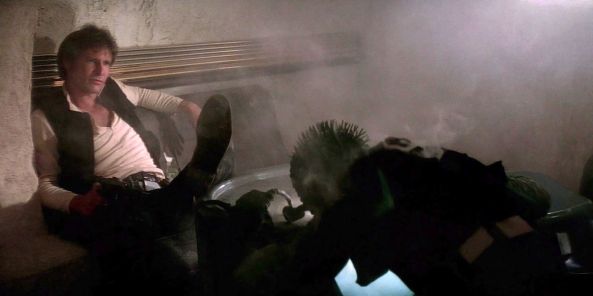
The lone exception in my eyes is the shootout in the cantina. By not letting Han shoot first, or even alone, it removes part of the character’s definition for me. I liked having a Han Solo that was an independent, proactive, and rough smuggler. That element is lost in Han being reactive; even if he’s preparing to kill Greedo, he still hesitates in the Special Edition.

Many people point to Darth Vader in this film as an iconic evil character, but he’s actually quite shallow in this story. He’s a mustache-twirling caricature of a villain, but not terribly complex. He’s visually set apart from both the Imperial troopers and Princess Leia. Interestingly, the Imperial officers are in black, presumably because they are not as expendable as those in white, and Tarkin (who is far more complex a villain than Vader in this movie) is in a somewhat ambiguous grey.

Before I get into the itemized list of things I love about A New Hope, the winning point for this film is how it can be viewed through the lens of any of the heroes. A modern action film, including the prequels to an extent, would limit the story to one character and their journey. A New Hope tells several distinct parallel tales, including those of Luke, Leia, Han, Obi-Wan, and Artoo-Detoo. In fact, A New Hope defines Artoo’s character by making him one of the main characters and true heroes of the film.

That’s really the magic of Star Wars: The franchise has an entire galaxy as a rich setting, and it drops the viewer directly in it instead of feeding elements to an audience through precious minutes of exposition. That element is taken care of in a scrolling block of text, and it only provides enough to frame the home instead of completely furnishing it. The movies feel so realistic because of the immersion, and have defined my favorite type of movie: The one that doesn’t provide answers but rather makes me work for them and figure them out as we go.

That’s the magic that allows me to forgive shoddy dialogue and plot holes. That’s the magic that allows me to indulge my inner child as I travel to a galaxy far, far away.

Obi-Wan Kenobi and The Force

The Force is one of the backbones for the story, and in comparison to the rest of the saga, it’s amazing how much it has evolved from this point. Obi-Wan describes it as “an energy field created by all living things” that surrounds and penetrates and binds the galaxy together.

Consider that. From the perspective of 1977, it’s an all-encompassing energy field that Jedi can tap into. From the perspective of 2005, it’s Obi-Wan Kenobi learning from Qui-Gon Jinn that the Living Force has merit and value.

Obi-Wan truly became a Jedi Master, but it took his failure with Anakin Skywalker, his exile, and his communion with the spiritual world to get him there. It is the foundation for the nature of the Force in this franchise, and an inspiration for millions of fans worldwide.

Of course, by this time, Kenobi is a crazy old wizard living on the outskirts of Tatooine civilization. The first time Luke mentions Obi-Wan, the looks between Owen and Beru are telling, and it’s a detail that I didn’t notice as much before seeing Revenge of the Sith. Now, they stand out as much as the meaning behind the claim that Obi-Wan died around the same time as Luke’s father.

In the post-Revenge of the Sith world, Obi-Wan’s expressions appear more pained when discussing his friendship with Anakin Skywalker and the betrayal of Darth Vader. He lies – a “certain point of view” – about it just as much as he does about Anakin wanting Luke to have the lighsaber, but the conversation still appears to eat away at the Jedi Master.

I also see Kenobi’s small smile as he embraces his destiny in a new light. It still carries an element of acceptance, but it also has a bit more assurance behind it after knowing the Qui-Gon Jinn has passed on his knowledge to his apprentice.

Obi Wan

The Droids

The odd couple of Artoo-Detoo and See-Threepio help drive the plot for a good part of the movie. In what was unique to me, Artoo’s dialogue and feelings are interpreted through See-Threepio and the audience’s own impressions, bringing the viewer into the film instead of leaving them out in the theater.

R2D2-and-C3PO-Star-Wars

A New Hope is where these two droids, characters that have appeared in every film, are introduced. Artoo is unique in that he knows the complete story (so far) and has the power to inform Luke of his father’s destiny and mother’s fate. I consider him one of the true heroes of the franchise.

TIE Fighter Attack

The musical sequence starting with Obi-Wan’s sacrifice and leading into the escape from the Death Star is one of my favorites to play loudly in my car.

It starts with the Force Theme as Kenobi realizes his fate, and then launches into a passionate version of Princess Leia’s theme and the Rebel Fanfare as the Millennium Falcon rockets from the landing bay. Luke mourns with Leia’s consolation over the Force Theme before the music leads into the Rebel Fanfare as a battle theme intercut with bits of the music for the Empire. It is an exhilarating piece that gets the blood pumping.

han tie fighter

This concludes the Seven Days of Star Wars celebration. Of course, there is so much more to the franchise than these seven feature films, including the current official canon of comics and books leading into The Force Awakens, and the thousands upon thousands of hours of content from the former Expanded Universe, which is now called Legends. Even though it isn’t considered “official” by Lucasfilm, it remains a treasure trove of good stories, and as long as they entertain and inspire, they still serve a purpose.

Tomorrow, a movie premieres that fans were told would never happen. It is the beginning of a new era and a brave new world in the Star Wars universe. We don’t know what lies in store for our heroes old and new. Some will live, some will turn, and some will die, but the constant is that we carry on as a society, and our lives and lessons follow suit from generation to generation through tales of the human condition told in metaphor and mythology.

May the Force be with you always.

star-wars-logo

My Rating: 8.5/10
IMDb rating: 8.7/10

cc-break

For more creativity with a critical eye, visit Creative Criticality.

Timestamp #53: The Ambassadors of Death

Doctor Who: The Ambassadors of Death
(7 episodes, s07e12-e18, 1970)

Timestamp 053 The Ambassadors of Death


I spent a good part of this serial trying to figure out if the aliens were the Ice Warriors again.

A recovery capsule attempts to rendezvous with a Mars capsule that has lost contact with Earth and the whole world knows because, a concept completely (and sadly) foreign to us today, the mission is being televised. Over that broadcast, the Doctor (who has somehow removed the TARDIS control console from the blue box and is playing some crazy plot-filler shenanigans with Liz Shaw and micro-trips to the future) hears a sound that he recognizes. He and Liz make haste to the mission control center to figure it out.

Mars: Check. Time Lord familiarity: Check. It could be the Ice Warriors…

The Doctor determines that this sound is an encrypted transmission, and the slightly different version that pings back is a reply message. It’s certainly not a deep conversation; if this were a texting relationship, it would be like “hey” followed by “what up (smiley emoticon)”. There are a couple of investigations around the source of the reply and the freshly landed recovery capsule and gun fights break out. Meanwhile, General Carrington, the head of the Space Security Department, pulls a Homeland Security Department move and extracts the astronauts before UNIT arrives. He has removed the astronauts because of radiation exposure, but the astronauts now feed on it. They also emit it like a virus, which could potentially spread like a plague. The astronauts are not the humans, but rather legitimate aliens, and a criminal named Reegan and a disgraced Cambridge professor named Lennox are tending to them. The aliens don’t have enough radiation to consume and are weakening.

So, not the Ice Warriors, but instead an attempt at domestic terrorism on a large scale by way of a government cover-up, right?

By way of a convenient communications device, the antagonists send the aliens on a raid of the space center. It fails, and the Doctor goes into space to investigate astronauts he believes are still in orbit. He dodges an assassination attempt, docks with the capsule, gets intercepted by an incoming alien saucer, and learns that the aliens on Earth are ambassadors to fulfill a peace treaty with humanity.

Not a domestic terror plot. I didn’t see that twist coming.

In a far too quick resolution for an already thinly stretched plot, it turns out that Carrington met the aliens when he piloted the previous Mars probe, and he signed the peace treaty to lure them to Earth and stop what he interpreted as an invasion. The Doctor takes the ambassadors to space center to stop the general’s plan and exchange the aliens for the missing astronauts. The day is saved. The end.

Can I have the Ice Warriors instead? Please?

No, really. I felt like this story was just all over the place and had no idea where it really wanted to go. Seven episodes is just far too long for that kind of song and dance. There were some fun moments with the Doctor being all scientific again, but there were also some real groaners in here. For one, the strange titles – Main titles, teaser footage, return to the titles for “The Ambassadors… OF DEATH!” with some really bad sound editing – were annoying. For two, the “transmigration” of an object? Ugh. Far too magical despite the Doctor’s magician outfit. For three, the convenience of magic side panels on the escape van. I love my Bond moments, and I get the license plates spinning to conceal the car, but the side panels should have been a more realistic change.

Speaking of Bond, what good is an “anti-thief” device on Bessie if it’s clearly labeled, required to be switched on to immobilize the thieves, and frees the perpetrators after a short time? A thief could just steal the car and not touch the switch. Achievement unlocked: Grand Theft Bessie – +30G.

Finally, the episodes shift in and out of black and white because of more missing master tapes. I don’t hold it against the episode since I survived the first six seasons of the show, but it seems that the BBC certainly has a hard time learning from their mistakes. Especially after what comes across as a significant investment in the show’s future with color, higher production values, and so on.

But, yeah, just like the plot, my attention for this one was touch and go. At the end, I was just happy to see it go.


Rating: 3/5 – “Reverse the polarity of the neutron flow.”


UP NEXT – Doctor Who: Inferno


The Timestamps Project is an adventure through the televised universe of Doctor Who, story by story, from the beginning of the franchise. For more reviews like this one, please visit the project’s page at Creative Criticality.


Seven Days of Star Wars: Day Six – The Empire Strikes Back


Star Wars: Episode V – The Empire Strikes Back
(PG, 124 minutes, 1980)
(PG, 127 minutes, 1997)

This is the sixth installment in a series of looks at each of the wide-released theatrical Star Wars films leading up to the premiere of Star Wars: The Force Awakens. This includes each of the films that comprise the saga’s story after the 2012 purchase of Lucasfilm by the Walt Disney Company and the April 2014 canon reset.

So far, the series has progressed through each of the films in reverse chronological order, starting with 2008’s Star Wars: The Clone Wars, and moving onward to Star Wars: Revenge of the Sith, Star Wars: Attack of the Clones, Star Wars: The Phantom Menace, and Star Wars: Return of the Jedi. Today continues the race toward the beginning with Star Wars: Episode V – The Empire Strikes Back, which is set three years after the events of Star Wars: A New Hope.

The Empire Strikes Back is usually the top film for Star Wars fans, and it’s not hard to understand why. In fact, it’s kind of difficult to find anything in this film that doesn’t work for me. It’s definitely the one I have seen the most out of the entire franchise, and it’s the one that packs the most punch for me. The characters and their motivations are so vivid, even among the secondary characters, and the settings are incredibly detailed and complex. Even the pacing, which is a major complaint from me with modern cinema, is top notch.

Similar to Return of the Jedi, I can’t remember the first time I saw this one, but I do remember my first (and only) experience with it on the silver screen. Just like Return of the Jedi, I saw the Special Edition on opening night back in February 1997, and it was phenomenal.

Out of all of the Special Editions, the changes made in Empire are the least jarring and made the most story sense. The best changes for me were the superficial modifications to Cloud City, including the more dynamic atmospheric lighting. It made the city look so much larger and expansive, and a bit less confusing in the later chase sequences.

evacuation2004

Joss Whedon aired a criticism about the film back in 2013, noting that it doesn’t actually end. He does have a point there: Empire doesn’t actually resolve the primary conflict in lieu of pushing it off to Return of the Jedi. I’m willing to ignore that to an extent because of how far this film pushes the mythos and characters, and how closely the concept of a cliffhanger tracks with the Flash Gordon roots of the franchise.

I love The Empire Strikes Back. But, what do I really love about The Empire Strikes Back?

Han and Leia

The Han and Leia romance is really the centerpiece of the film, and it shows in every aspect. I love that the story gives us a strong woman who doesn’t like to admit that she’s not in control and a stubborn man who actually learns how to speak to her instead of at her.

leia-han

It’s not that Leia has to cede control of her life, but more of the situation: From the moment when the Empire assaults Hoth, Han is in charge of trying to get the princess – a valuable member of the Rebellion – to safety. They run from the snow planet to the asteroid belt, escape the hidden danger of the space slug, hide themselves on a Star Destroyer and in the refuse, and seek refuge on Bespin. Along the way, Leia discovers that this simple blue-collar snarky smuggler actually knows what he’s doing in the galaxy and that he can be trusted. She’s not treated like cargo or a damsel in distress, but like a human being who needs help. When the tables are turned and Han is the one placed in danger, she does everything she can to rescue him.

To that end, this portrayal of Leia was the first female action hero I saw in cinematic pop culture, and she’s still my favorite.

Their love theme is also still one my favorite orchestral pieces ever, and that theme is in the very DNA of the film’s score. Even the chase through the asteroid field and the escape from Bespin use elements as their backbone. This is Han and Leia’s movie.

Yoda

Yoda is my favorite character in the entire Star Wars franchise.

Luke takes an incredible journey in this film, bridging the gap between innocent farmboy in A New Hope and the contemplative warrior in Return of the Jedi. On that path, he receives a mentor in what seems to be a crazed hermit living on a swamp planet who speaks in fortune cookie clichés. It’s the wisdom that inhabits the character behind those sayings that I love.

yoda

Yoda is a puppet, but he feels so unbelievably real thanks to the talents of Frank Oz. The ears and the eyes convey so much emotion from the wise Jedi Master, and the performance felt so magical. Yoda’s musical theme is also a perfect encapsulation of the character, hiding the mystical power behind the almost whimsical and floating notes.

Yoda also reminds me of my late grandmother. She was my closest grandparent when I was growing up, and was kind and wise, stern when she needed to be, and had just a little bit of childlike magic behind her eyes.

The Duel at Bespin

Where I think that Return of the Jedi is the story that provides the greatest depth to Darth Vader, Empire is the one that defines his unparalleled power and legacy. At every turn, he is a match for the running Rebels, and he uses Han and Leia to lure Luke to Bespin through Luke’s attachments and the power of the Force. The parallel is striking: Anakin fell because of his attachment issues, and now his son’s attachments to precipitate another fall.

Lukevaderesb

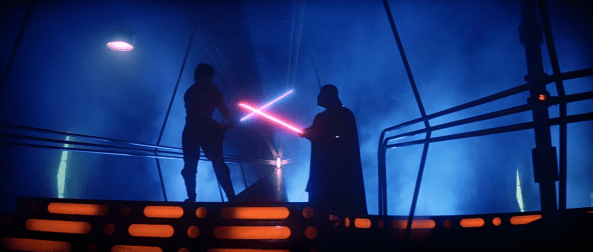
The duel is intriguing because Vader is obviously the cat in this game. He keeps whittling away at Luke’s defenses, toying with him, batting at him, and maneuvering him into the corner before making the killing blow. The trick here is that the killing blow is not a physical strike – sure, he slices Luke’s hand off to (literally) disarm him – but rather an emotional and mental strike. Vader defeats Luke emotionally by revealing a dark truth. He breaks Luke in a last attempt to lure him somewhat willingly to the Darkness.

Luke defeated

That is how the Empire struck back.

Tomorrow’s entry in the Seven Days of Star Wars will wrap things up with Star Wars: Episode IV – A New Hope.

My Rating: 9/10
IMDb rating: 8.8/10
cc-break

For more creativity with a critical eye, visit Creative Criticality.

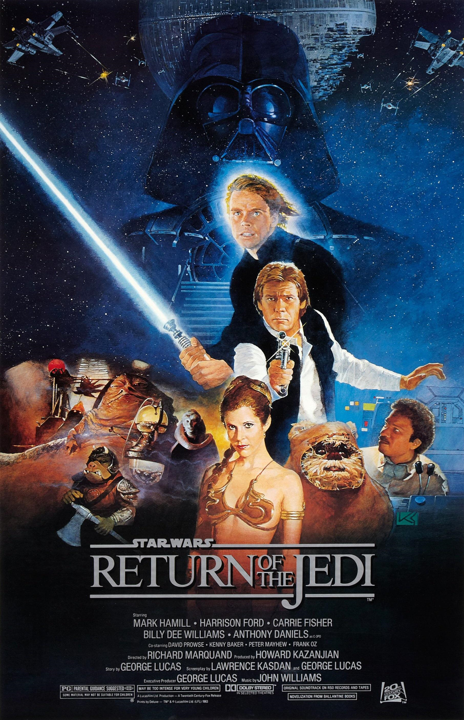
Seven Days of Star Wars: Day Five – Return of the Jedi


Star Wars: Episode VI – Return of the Jedi
(PG, 132 minutes, 1983)
(PG, 135 minutes, 1997)

This is the fifth installment in a series of looks at each of the wide-released theatrical Star Wars films leading up to the premiere of Star Wars: The Force Awakens. This includes each of the films that comprise the saga’s story after the 2012 purchase of Lucasfilm by the Walt Disney Company and the April 2014 canon reset.

Day one examined 2008’s Star Wars: The Clone Wars. Day two looked at Star Wars: Revenge of the Sith. Day three was dedicated to Star Wars: Attack of the Clones. Day four examined Star Wars: The Phantom Menace. Today is about Star Wars: Episode VI – Return of the Jedi, which is set four years after the events of Star Wars: A New Hope.

Return of the Jedi has always been my least favorite of the original movies, but it’s still a good entry in the franchise. I really enjoy most of it, with the exception of the Tatooine sequences which I find rather slow.

I don’t fully recall the first time I saw Return of the Jedi, but I was very excited to see it opening week for the 1997 Special Edition releases. It was originally scheduled for a March 7th premiere, but ended up getting pushed back by a week after Lucasfilm saw how well the other two were performing. The Special Edition changes didn’t bother me at all except for Jedi Rocks, the new musical number in Jabba’s Palace that replaced Lapti Nek. The extra footage with Boba Fett carousing with the band’s backup singers is pretty funny to me, but the musical sequence itself kind of falls flat compared to Lapti Nek.

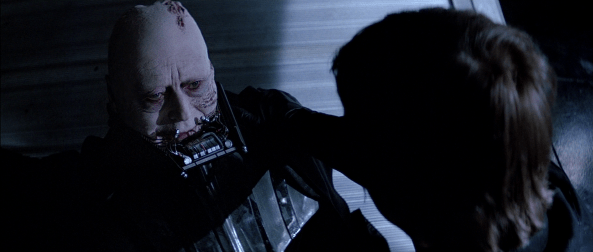
I was okay – okay, not excited, but just okay – with the 2011 Blu-Ray changes as well. I was apathetic about the Jedi Spirits change that replaced Sebastian Shaw with Hayden Christensen since the story logic makes sense – the spirits retain how they saw themselves at their death, Anakin the Jedi Knight died in Revenge of the Sith when he became Darth Vader, and I doubt he ever looked in a mirror after donning the armor – and Shaw is still in the movie when Luke removes Vader’s helmet. His screen time was reduced by, what, ten seconds? I don’t see that as a slight to the actor.

What I do wonder is how Anakin got access to the Force Spirit knowledge. Yoda and Obi-Wan learned from Qui-Gon Jinn’s spirit, but there’s nothing in the story to suggest that Qui-Gon also visited Vader. That is the major plot inconsistency between the Prequel and Original Trilogies that makes me really wonder.

Finally, the biggest thing that annoys me about Return of the Jedi is the music. The soundtrack on the film is fantastic, and when Sony released the full soundtracks in time for the Special Editions, I jumped on the opportunity. The problem with Jedi is how Sony mixed the music when converting it to digital: The sound is muddy and muted, like they over-compressed it when removing some of the background noise. The better sounding version actually comes from 1993’s Star Wars Trilogy anthology release, which compiled one CD for each movie and a fourth disc with previously unreleased tracks. It’s still not the complete soundtrack, and it does have a significant hissing sound, but it sounds a lot better than the Special Edition. It also contains “Lapti Nek” and two versions of the Ewok “Yub Nub” track.

Even as the weakest of the Original Trilogy, there are things that I love about Return of the Jedi.

Luke Skywalker

Luke really comes into his own with this film, growing from the wide-eyed innocent in A New Hope to the impulsive warrior in Empire Strikes Back and finally landing on a calm and pensive Knight in this story. He isn’t as cocky in this story as he was heading into the duel at Bespin, and he takes thoughtful action in an elaborate rescue plan for Han. He’s not afraid to take action, but he also reflects a lot of Qui-Gon Jinn and a later Obi-Wan Kenobi in watching and learning about what’s happening around him before jumping into the fray. He’s deeply in tune with the Force at this point, and confronts his fears to help bring his father back to the Light.

This is my favorite interpretation of the young Jedi.

Luke-Skywalker-Return-of-the-Jedi

The Death of Darth Vader

This is also the story that provides the greatest depth to Darth Vader. Many people tell me that they don’t like Return of the Jedi for neutering the badass Sith Lord we saw in two movies, but this is an enforcer whose motivations are being questioned by his über-evil boss and whose very essence is being torn by his own conscience.

Anakinredeemed

After weighing the options between Palpatine and his son, Anakin re-emerges and saves Luke’s life by killing his own master at the expense of his own life. In one of the moments in Star Wars that brings a tear to my eye, he looks on his son – the very son he thought he lost when Padmé died – without the aid of the armor that defined his second life. The music behind the touching scene between Mark Hamill and Sebastian Shaw only adds to the feeling, using the Imperial March in muted and singular notes to signal Anakin’s passing.

It’s a little different after watching Order 66 in Revenge of the Sith because I find it a little more difficult to forgive someone who kills kids in cold blood, but the nostalgia still fuels my emotions when watching a son seeing his father for the first and last time. It’s not so much the details, but the sweep of the mythology that carries the meaning for me.

The Ewok Celebration

The Ewoks are an element of Star Wars that have never bothered me. First, they’re cute (even though they’ll eat you), and second, they make an example out of the Empire’s arrogance. All that military might at their disposal and they can’t defeat a primitive species that fights with rocks and spears.

an-ewok-village-at-night

The biggest thing I like about the Ewoks is how they party, both after accepting the Rebels into the tribe and after the destruction of Death Star II. I’m a big fan of both the original and Special Edition endings: The original was good for the time in wrapping up the movie, but the Special Edition version wraps up the trilogy and, in part, the six-film arc. I love “Yub Nub” and find myself humming it quite often, but I also love the new music and visuals developed for 1997’s releases. It adds a larger scope to the Rebellion’s actions and the Empire’s defeats.

Imperial_center_ROTJ

Tomorrow’s entry in the Seven Days of Star Wars will take a look at fan-favorite Star Wars: Episode V – The Empire Strikes Back.

My Rating: 8/10
IMDb rating: 8.4/10
cc-break

For more creativity with a critical eye, visit Creative Criticality.

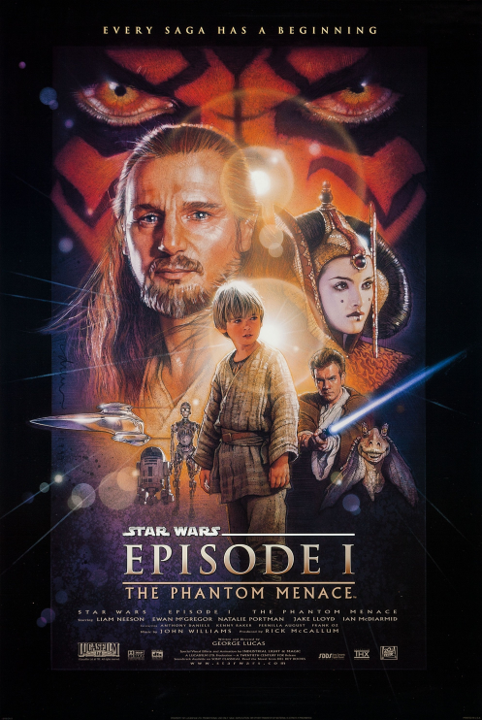
Seven Days of Star Wars: Day Four – The Phantom Menace


Star Wars: Episode I – The Phantom Menace
(PG, 133 minutes, 1999)
(PG, 136 minutes, 2001)

This is the fourth installment in a series of looks at each of the wide-released theatrical Star Wars films leading up to the premiere of Star Wars: The Force Awakens. This includes each of the films that comprise the saga’s story after the 2012 purchase of Lucasfilm by the Walt Disney Company and the April 2014 canon reset.

Day one examined 2008’s Star Wars: The Clone Wars. Day two looked at Star Wars: Revenge of the Sith. Day three was dedicated to Star Wars: Attack of the Clones. Today is all about Star Wars: Episode I – The Phantom Menace, which is set 32 years before the events of Star Wars: A New Hope.

The hype was strong with this one. Not counting the Special Editions or the Ewok TV movies, sixteen years had passed since the last film installment of Star Wars. To say that The Phantom Menace was highly anticipated is an understatement.

I had discovered Star Wars sometime around 1985, but really got into it sometime around 1992 when I started reading Timothy Zahn’s Thrawn Trilogy. The only way I had seen the films was on pan-and-scan VHS tapes or edited television presentations, and after the experience of the Special Editions in 1997, I was stoked for a new story on the silver screen. All I knew about the story of how Anakin became Darth Vader was from the scant lines in the movies and the one-line description of the lightsaber duel “over a volcano” from the Return of the Jedi novelization.

When the trailers came out, I asked a friend of mine who had a CD burner to make a copy for me, which I watched almost every day in what could only be described today as terrible resolution. I bought tickets as soon as I could for opening weekend, and on my meager wage as a part-time elementary school custodian, I treated my family to a new adventure in the galaxy far, far away.

Despite all the hype, I was not disappointed.

Crazy, right?

I’m not an apologist fanboy, and as one can see from the last three days, I don’t love this franchise unconditionally. I get the anger over the prequels. They weren’t what die-hard fans who had been with the franchise since the summer of ’77 expected. Darth Vader’s a morally good and cute kid who likes to race and loves his mother? The conflict is about the politics of trade disputes instead of good vs. evil? The Force is really microbes in your cells? Jar Jar Binks!?

The crux the matter is that the movie those fans expected didn’t happen, and that infuriates them. It makes them believe that George Lucas destroyed their childhoods or tainted the three movies that became a legend. It’s fueled the careers of people like Simon Pegg who take every chance they get to complain about the franchise. It prompts supposed “true fans” to exclude anyone who doesn’t think exactly like them. It makes them cheer when Patton Oswalt suggests going back in time and killing Lucas with a shovel.

It justifies parents actually teaching and wanting their kids to hate. Think about that for a minute.

It also makes some fans think that Star Wars belongs to the public because it has so permeated pop culture. I can’t begin to describe how ridiculous that sounds to me. The ideas and discussions and interpretations certainly belong to the public, but the intellectual property still belongs to the artists who created it. Consider franchises that have been around longer than Star WarsDoctor Who, Star Trek, Superman, Batman, Wonder Woman, and so on – and ask why this one is special enough to be fan property instead of Lucasfilm property. Answer: It’s not.

Don’t get me wrong: The prequels weren’t great movies, and I do place a lot of that at the feet of George Lucas. It’s well known that he didn’t have a lot of opposition in the prequel era. Sure, he’d directed before – American Graffiti, THX 1138, the original Star Wars – but each time he’d had a producer like Francis Ford Coppola acting as the angel/devil on his shoulder pushing him to think a little differently here and there. He was also still hungry to make a name for himself and defy the Hollywood establishment. By 1999, things were different.

George Lucas is a wonderful dreamer, a fantastic innovator, and a great experimental filmmaker. But for mainstream film like Star Wars, he needs a counterbalance, and I don’t think he had one strong enough for the Prequel Era. Those films needed tightening and more polish, and that’s what hurt them in the end.

Also, that “younger” Yoda puppet? That was painful. As much as I adore Frank Oz, I’m so glad they replaced it with a CG Yoda in the Blu-Ray releases.

Puppet and New CGI Phantom Menace Yoda

So, despite the flaws, what makes this movie work for me?

A Gateway to Fandom

Star Wars is, at its core, a children’s story about families and people, the choices they make, and the consequences of their actions. In particular, it’s a story about the Skywalker family. That’s not a dismissal of the story’s complexity, which attracts fans of all ages and drives them to analyze every corner of the universe, but it’s based on the movie serial adventures that inspired George Lucas as a youth.

In the same way that the original 1977 installment inspired young fans – today’s parents – The Phantom Menace inspired young fans in the Generation Y and Millennial sets, and it’s readily apparent in how the Star Wars juggernaut keeps rolling. If The Phantom Menace had been as crappy a movie as people claim, Star Wars would have died at that point. At the very least, it would have been relegated to cult status like so many ‘80s films.

But it wasn’t, and that’s amazing to me. The ‘80s got the Original Trilogy, the ‘90s got the brunt of the Expanded Universe, the 2000s got The Prequel Era, and the 2010s got The Clone Wars, Rebels, and the beginnings of the post-Disney Big Bang. Every generation gets a new vision of Star Wars, and the mythology and the fandom carries on.

Anakin Skywalker

Fan expectations determined that The Phantom Menace’s version of Anakin Skywalker should have been what we got in Attack of the Clones: a reckless Jedi Knight flirting with the Dark Side. Instead, we all got an adorable slave boy with a deep respect for family.

And I’m okay with that.

The Darth Vader we met in the Original Trilogy was a dark and evil mustache twirler who gained depth over the course of three movies. There was no doubt in A New Hope that he was evil: He had a deep, menacing voice, wore all black, and killed people on a whim. He was ruthless, a concept that was built upon in the Expanded Universe as he slaughtered every remaining Jedi and Rebel he could.

But in our history, darkness wasn’t readily apparent in childhood. Even Hitler wasn’t born as a genocidal maniac.

Anakin Shadow

If the episodic Star Wars films are truly about the Skywalkers, then it makes sense to know about Anakin before he becomes a Jedi. The trilogies run in similar narrative styles – if you have the time, take the plunge into Mike Klimo’s Ring Theory – and Luke was also introduced before he discovered the Force. It also provides a greater dramatic pedestal from which Anakin can fall.

I mean, it’s not entirely necessary for the redemption story, but it makes Anakin’s story a little sweeter for me. It also struck an emotional chord for me since The Phantom Menace came out around the time I was considering leaving home for college. When Anakin leaves and his mother tells him to be brave and not look back, I cry a little for the eight year old.

On the dark side of this topic, a lot of people criticized the film and its inclusion of a young Anakin by attacking Jake Lloyd. He was ten years old when the film came out, and he got smacked with a bow wave of negativity and threats, and he doesn’t like talking about his role in Star Wars to this day.

Some people say that it’s just how the internet is, but these are the same people who had no problem bullying a ten-year old kid online for something that wasn’t really his fault. It’s inexcusable.

Qui-Gon Jinn and the Nature of the Force

As I mentioned with Attack of the Clones, the Prequel Era came with the unspoken promise that we would see the Jedi in their prime. The Jedi in The Phantom Menace, with the exception of Obi-Wan and Qui-Gon, were effectively monks in thoughtful seclusion on Coruscant. That made Qui-Gon Jinn a breath of fresh air.

Qui-Gon-Jinn

In this adventure, Qui-Gon bends the Jedi Code because he believes in a cause. He remains dedicated to the Order, but sees the nature of the Force in a different light than his peers, which (for better or worse) prevents him from moving beyond going from mission to mission around the galaxy.

The Jedi at large focused on the Universal Force, but Qui-Gon paid more attention to the Living Force. Amusingly, this appears to have affected Yoda later on as he discusses more elements of the Living Force when he trains Luke in Empire Strikes Back. The Jedi Order played with the Living Force a little bit with the concept of midichlorians, which I see as more of an attempt to use science to explain spirituality and mysticism. At the height of the Republic, so much of everyday life was about technology and science that it makes sense to apply it in all aspects. By the time of Luke’s training, the Order was as much a legend as the Library of Alexandria in our culture. Midichlorians don’t bother me because they don’t stick around long in the saga.

Qui-Gon saw (and lived in) the shades of grey on the galaxy around him, and saw worth in every soul he met. I deeply admire the character, and believe that had he been Anakin’s mentor, things would have turned out so much better for the Skywalkers, the Jedi, and the Republic.

Jar Jar Binks

Qui-Gon Jinn is exactly why I don’t have any problem with Jar Jar Binks.

Yes, he was a misguided comic relief to a movie otherwise waterlogged in political games. Yes, he was silly, which was out of place in Star Wars to this point in time. But he was also valuable to certain messages from the film. He introduced the heroes to the other side of Naboo’s symbiotic relationship, and eventually prompted Queen Amidala to seek peace with the Gungans.

I never picked up on the racism that others saw in him, and wondered from a behind-the-scenes perspective if Ahmed Best, a black man, would portray and advertise a racist character in a movie even if the pay was good. I doubt that he would.

On the topic of behind the scenes movie magic, Jar Jar Binks is also responsible for the motion capture technology in modern cinema. Filmmakers in the last 15 years have built upon the foundations that George Lucas built to make Jar Jar Binks interactive with the actors. Without that character, I don’t know that we’d have character interpretations like Gollum or the Hulk.

Jar Jar Binks also held a message for me. Much of my youth was spent in isolation from my peers, mostly because I wasn’t athletic, I wasn’t dedicated to the majority religion in Utah, and didn’t run with typical in-crowd. I placed academics over dating, and I spent more time writing and reading than anything else. When The Phantom Menace came out, I was coming out of some of my darkest years. It was a period where I nearly always felt cornered, alone, and angry, and I sometimes wondered if the world would even miss me.

Jar Jar Binks actually gave me hope. He was an outcast – a “pathetic life form” – who wasn’t a hero, but someone who was appreciated for what he had to offer to the heroes. He taught the heroes something about the worth of common people in the galaxy who weren’t Jedi or politicians.

I’m not his biggest fan, but I place some value on what he brought to the story, and it makes me sad that he ended up being an ignorant stepping stone who thought he was doing the right thing during Palpatine’s ascension.

Jar_Jar_meets_Jedi

The Lightsaber Duel

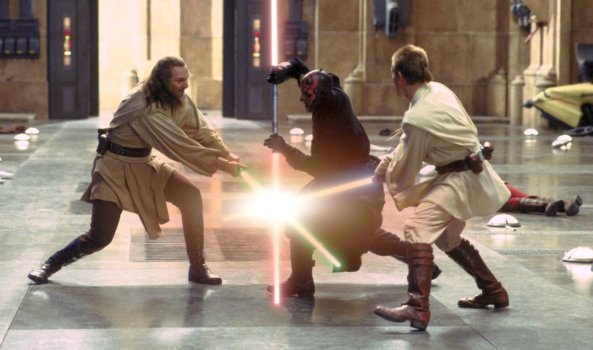
Before The Phantom Menace, lightsaber fights were styled after battles with broadswords. In the Prequel Era, they became something we had never seen before, and the energy they imparted kept me engaged. In the years since, the three-way duel has waned as one of my favorites, but at the time it was both energetic and heartbreaking.

Unfortunately, it has also spawned an entire generation of lightsaber builders who think that swordplay is all about spinning blades and acrobatics.
duel

The Music

The Phantom Menace was also a pioneer in modern Star Wars music, which carried over in several re-used sequences for the following episodes. When people think about music in The Phantom Menace, they start with “Duel of the Fates”, which is a great piece, but not one of my favorites.

“Anakin’s Theme” was a fantastic reflection of the character with its light and gentle airiness that speaks of young Anakin’s empathy. It also foreshadows with the subtle hints of “The Imperial March” in its DNA, telling you that tragedy is in the young boy’s destiny.

The other piece of music that I love from the film is “Augie’s Great Municipal Band”, which plays over the peace ceremony. The part that I love is how it tells you who the phantom menace truly is, and it does it with the voices of the children who will suffer in the future. When you slow and pitch down the children’s choir, it reveals the theme of Emperor Palpatine. I find it cool and so very, very creepy.

Great_Municipal_Band

Tomorrow brings the Original Trilogy with Star Wars: Episode VI – Return of the Jedi.

My Rating: 7.5/10
IMDb rating: 6.5/10

cc-break

For more creativity with a critical eye, visit Creative Criticality.