

The Thing About Today – September 13

September 13, 2020
Day 257 of 366


September 13th is the 257th day of the year. It is Día de los Niños Héroes in Mexico, commemorating the young men killed at Cerro de Chapultepec on September 13, 1847, during the Mexican-American War. Chapultepec Castle served as a military academy that trained officers for the Mexican Army. When the American forces invaded, the staff and cadet volunteers of the academy contributed seventy of the approximately 1,000 defenders. The greatly outnumbered defenders battled General Winfield Scott’s troops for about two hours before General Bravo ordered a retreat, but six cadets refused to fall back and fought to the death. The Niños Héroes are a key part of Mexico’s patriotic lore.


In the United States, today is “celebrated” as National Kids Take Over The Kitchen Day, National Peanut Day, Uncle Sam Day, National Celiac Disease Awareness Day, National Bald is Beautiful Day, National Pet Memorial Day (typically observed on the second Sunday in September), National Hug Your Hound Day (typically observed on the second Sunday in September), and National Grandparent’s Day (typically observed on the Sunday after Labor Day).


Historical items of note:

  • In 1501, Michelangelo began work on his statue of David.
  • In 1788, the Philadelphia Convention set the date for the first presidential election in the United States. It also established New York City as the country’s temporary capital.
  • In 1847, six teenage military cadets known as Niños Héroes died defending Chapultepec Castle in the Battle of Chapultepec. American troops under General Winfield Scott captured Mexico City in the Mexican-American War.
  • In 1848, Vermont railroad worker Phineas Gage survived an iron rod 1 14 inches in diameter being driven through his brain. The reported effects on his behavior and personality stimulated discussion of the nature of the brain and its functions.
  • In 1851, physician and biologist Walter Reed was born. While in the United States Army, Major Walter Reed led the team that confirmed the theory of the Cuban doctor Carlos Finlay that yellow fever is transmitted by a particular mosquito species, rather than by direct contact. This insight gave impetus to the new fields of epidemiology and biomedicine, and allowed the resumption and completion of work on the Panama Canal by the United States.
  • In 1857, businessman Milton S. Hershey was born. He founded The Hershey Company.
  • In 1898, Hannibal Goodwin patented celluloid photographic film.
  • In 1899, Henry Bliss became the first person in the United States to be killed in an automobile accident.
  • In 1924, French composer and conductor Maurice Jarre was born.
  • In 1925, singer-songwriter and actor Mel Tormé was born.
  • In 1931, actress Barbara Bain was born.
  • In 1933, Elizabeth McCombs became the first woman elected to the New Zealand Parliament.
  • In 1937, animator, director, and producer Don Bluth was born. He co-founded Sullivan Bluth Studios and Fox Animation Studios.
  • In 1939, actor and voice artist Richard Kiel was born. He played Jaws in the James Bond film franchise.
  • In 1944, actress and producer Jacqueline Bisset was born.
  • In 1946, director and producer Frank Marshall was born.
  • In 1948, Margaret Chase Smith was elected as a United States senator. She became the first woman to serve in both the United States House of Representatives and the United States Senate.
  • In 1951, actress Jean Smart was born.
  • In 1956, the IBM 305 RAMAC was introduced. It was the first commercial computer to use disk storage.
  • In 1962, an appeals court ordered the University of Mississippi to admit James Meredith, the first African-American student admitted to the segregated university.
  • In 1969, Scooby-Doo Where Are You? debuted.
  • In 1977, General Motors introduced the Diesel engine. The Oldsmobile Diesel engine was debuted in the Delta 88, Oldsmobile 98, and Oldsmobile Custom Cruiser models amongst others.
  • In 1985, Super Mario Bros. was released in Japan for the Nintendo Entertainment System, thus starting the Super Mario series of platforming games.
  • In 1987, the Goiânia accident occurred. A radioactive object was stolen from an abandoned hospital in Goiânia, Brazil. It contaminated many people in the following weeks and caused some to die from radiation poisoning.
  • In 1990, Law and Order premiered. The flagship series ran for twenty years, and it spawned seven spinoffs, one film, and five video game adaptations.
  • In 2005, Supernatural premiered. It is the longest-running North American fantasy series and will end this year after fifteen seasons.


In 1916, British novelist, short-story writer, poet, screenwriter, and wartime fighter pilot Roald Dahl was born.

He served in the Royal Air Force during the Second World War, becoming a fighter ace after scoring five confirmed victories. He became an intelligence officer, rising to the rank of acting wing commander. He rose to prominence as a writer in the 1940s with works for children and for adults.

His works for children include James and the Giant Peach, Charlie and the Chocolate Factory, Matilda, The Witches, Fantastic Mr. Fox, The BFG, The Twits, and George’s Marvellous Medicine. His works have also been adapted for Alfred Hitchcock Presents and Tales of the Unexpected.

He wrote film screenplays for a brief period in the 1960s. Two of them – the James Bond film You Only Live Twice and Chitty Chitty Bang Bang –  were adaptations of novels by Ian Fleming. He also began adapting his novel Charlie and the Chocolate Factory, but missed deadlines so it was completed and rewritten by David Seltzer. Dahl was disappointed in the resulting film, Willy Wonka & the Chocolate Factory, because “he thought it placed too much emphasis on Willy Wonka and not enough on Charlie”. Deviations in the plot between the film and the novel infuriated him, and he refused to allow any further adaptations in his lifetime.

Despite rumors of antisemitism, his life and legacy are continuously honored. He died on November 23, 1990, at the age of 74 from a rare cancer of the blood called myelodysplastic syndrome. His grave is constantly decorated by children with toys and flowers. The Roald Dahl Children’s Gallery at the Buckinghamshire County Museum uses his stories and works to stimulate interest in science and the arts. The Oval Basis plaza in Cardiff Bay has been renamed as Roald Dahl Plass, and is used in several modern productions including Torchwood.

Those memorials only scratch the surface. His books have sold more than 250 million copies worldwide, and he has been referred to as “one of the greatest storytellers for children of the 20th century”.


The Thing About Today is an effort to look at each day of 2020 with respect to its historical context.

For more creativity with a critical eye, visit Creative Criticality.


The Thing About Today – September 12

September 12, 2020
Day 256 of 366


September 12th is the 256th day of the year. It is Saragarhi Day in the Sikh community, commemorating the Battle of Saragarhi. It was a last-stand battle fought before the Tirah Campaign in 1897 between the British Raj and Afghan tribesmen. An estimated 24,000 Orakzai and Afridi tribesmen were seen near Gogra, at Samana Suk, and around Saragarhi, cutting off Fort Gulistan from Fort Lockhart. The Afghans attacked the outpost of Saragarhi, with thousands of them swarming the fort. The soldiers in the fort, all of whom were Sikhs, chose to fight to the death in what is considered by some military historians as one of the greatest last stands in history.


In the United States, today is “celebrated” as National Video Games Day, National Chocolate Milkshake Day, National Day of Encouragement, National Report Medicare Fraud Day, and National Programmers Day (which is observed on the 256th day of the year).


Historical items of note:

  • In 1848, a new constitution marked the establishment of Switzerland as a federal state.
  • In 1910, the premiere performance of Gustav Mahler’s Symphony No. 8 occurred in Munich with a chorus of 852 singers and an orchestra of 171 players.
  • In 1914, Welsh-English soldier and actor Desmond Llewelyn was born. He portrayed Q in the James Bond film franchise.
  • In 1933, Leó Szilárd, waiting for a red light on Southampton Row in Bloomsbury, conceived the idea of the nuclear chain reaction.
  • In 1940, Wayne McLaren was born. He was the American stuntman, rodeo performer, model, and actor who was best known for playing the Marlboro Man. He died of lung cancer in 1992.
  • In 1957, German composer and producer Hans Zimmer was born.
  • In 1958, Jack Kilby demonstrated the first working integrated circuit while working at Texas Instruments.
  • In 1959, Bonanza premiered. It was the first regularly scheduled television program presented in color.
  • In 1962, United States President John F. Kennedy delivered his “We choose to go to the Moon” speech at Rice University.
  • In 1964, A Fistful of Dollars premiered. It was the film that started the Spaghetti Western genre and Clint Eastwood’s career.
  • In 1973, actor Paul Walker was born.
  • In 1978, actor Ben McKenzie was born.
  • In 1981, singer and actress Jennifer Hudson was born.
  • Also in 1981, The Smurfs premiered.
  • In 1986, singer and actress Emmy Rossum was born.
  • In 1992, NASA launched Space Shuttle Endeavour on STS-47, marking the 50th shuttle mission. The shuttle crew included Mae Carol Jemison (the first African-American woman in space), Mamoru Mohri (the first Japanese citizen to fly in a United States spacecraft), and Mark Lee and Jan Davis (the first married couple in space).


September 12th is Defenders Day in the State of Maryland, the city of Baltimore, and Baltimore County.

The day commemorates the successful defense of the city of Baltimore spanning September 12-14, 1814, from an invading British force during the War of 1812.

It was during this conflict, the Battle of Baltimore, that Fort McHenry was shelled by the British Royal Navy’s revolutionary newly-constructed bomb and mortar ketch warships. Although the attacking fleet stayed out of the shorter range of McHenry’s artillery, the Americans refused to surrender. They inspired Maryland lawyer and amateur poet Francis Scott Key to compose a four stanza poem entitled “The Defence of Fort McHenry”.

That poem later became “The Star-Spangled Banner” when it was set a few days later to a musical tune popular with an old English gentlemen’s society from the 18th century. It gained increasing popularity over the next 117 years, eventually becoming the national anthem of the United States in 1931.


The Thing About Today is an effort to look at each day of 2020 with respect to its historical context.

For more creativity with a critical eye, visit Creative Criticality.


The Thing About Today – September 11

September 11, 2020
Day 255 of 366


September 11th is the 255th day of the year.

Between the years of 1900 and 2099, September 11th on the Gregorian calendar is the leap day of the Coptic and Ethiopian calendars. These leap days occur in the years immediately before leap years in the Julian and Gregorian calendars, and in all common years of the Coptic and Ethiopian calendars, September 11th is New Year’s Day.

It is also the anniversary of the terrorist attacks on September 11, 2001, that claimed nearly 3,000 lives and injured over 25,000 others. The attacks precipitated substantial long-term health consequences for responders and servicemembers. They also instigated the ongoing international War on Terror.

That’s all I intend to say about that.


In the United States, today is “celebrated” as National Make Your Bed Day and National Hot Cross Bun Day.


Historical items of note:

  • In 9 AD, the Battle of the Teutoburg Forest ended. The Roman Empire suffered the greatest defeat of its history and the Rhine was established as the border between the Empire and the so-called barbarians for the next four hundred years.
  • In 1297, at the Battle of Stirling Bridge, Scots jointly led by William Wallace and Andrew Moray defeated the English.
  • In 1609, Henry Hudson discovered Manhattan Island and the indigenous people living there.
  • In 1776, the British-American peace conference on Staten Island failed to stop the nascent American Revolutionary War.
  • In 1789, Alexander Hamilton was appointed as the first United States Secretary of the Treasury.
  • In 1792, the Hope Diamond was stolen along with other French crown jewels when six men broke into the house where they were stored.
  • In 1816, German lens maker Carl Zeiss was born. He created the Optical instrument.
  • In 1826, Captain William Morgan, an ex-freemason, was arrested in Batavia, New York for debt. This was after declaring that he would publish The Mysteries of Free Masonry, a book against Freemasonry. This set into motion the events that led to his mysterious disappearance.
  • In 1857, the Mountain Meadows massacre came to a conclusion as Mormon militiamen and Paiutes murdered 120 pioneers at Mountain Meadows, Utah.
  • In 1940, director, producer, and screenwriter Brian De Palma was born.
  • In 1950, actress Amy Madigan was born.
  • In 1956, director, producer, and screenwriter Tony Gilroy was born.
  • In 1961, actress Virginia Madsen was born.
  • In 1970, actress Taraji P. Henson was born.
  • In 1972, the San Francisco Bay Area Rapid Transit system began passenger service.
  • In 1979, actress Ariana Richards was born.
  • In 1987, actor Tyler Hoechlin was born.
  • In 1997, NASA’s Mars Global Surveyor reached Mars.


September 11th is the National Day of Catalonia (Diada Nacional de Catalunya in Catalan), which is a day-long festival and one of its official national symbols. It commemorates the fall of Barcelona during the War of the Spanish Succession in 1714 and the subsequent loss of Catalan institutions and laws.

The Army of Catalonia that initially fought in support of the Habsburg dynasty’s claim to the Spanish throne was finally defeated at the Siege of Barcelona by the army of the Bourbon king Philip V of Spain. This happened on September 11, 1714, after 14 months of siege, and it resulted in the loss of the Catalan constitutions and the institutional system of the Principality of Catalonia under the aegis of the Nueva Planta decrees and the establishment of absolutism.

The holiday was first celebrated on September 11, 1886. As governments have come and gone over the years, the holiday has seen fluctuations in both popularity and demonstrations, but most recently (as of 1980) the Generalitat de Catalunya, upon its restoration after the Francoist State, restored the celebration with the first law approved by the restored Parliament of Catalonia.


The Thing About Today is an effort to look at each day of 2020 with respect to its historical context.

For more creativity with a critical eye, visit Creative Criticality.


The Thing About Today – September 10

September 10, 2020
Day 254 of 366


September 10th is the 254th day of the year. It is Gibraltar National Day, the official national day of the British overseas territory of Gibraltar. The day commemorates Gibraltar’s first sovereignty referendum of 1967, in which Gibraltarian voters were asked whether they wished to either pass under Spanish sovereignty or remain under British sovereignty, with institutions of self-government.


In the United States, today is “celebrated” as National Swap Ideas Day, National TV Dinner Day, and National School Picture Day (which is typically observed on the second Thursday in September).


Historical items of note:

  • In 1846, Elias Howe was granted a patent for the sewing machine.
  • In 1858, George Mary Searle discovered the asteroid 55 Pandora.
  • In 1892, physicist and academic Arthur Compton was born. He won the Nobel Prize in 1927 for his discovery of the Compton effect, which demonstrated the particle nature of electromagnetic radiation. It was a sensational discovery at the time since the wave nature of light had been well-demonstrated, but the idea that light had both wave and particle properties was not easily accepted.
  • In 1918, famous canine actor Rin Tin Tin was born.
  • In 1932, the New York City Subway’s third competing subway system, the municipally-owned IND, was opened.
  • In 1941, paleontologist, biologist, and author Stephen Jay Gould was born.
  • Also in 1941, Japanese video game designer Gunpei Yokoi was born. He invented the Game Boy.
  • In 1958, director, producer, and screenwriter Chris Columbus was born.
  • Also in 1958, Irish singer-songwriter and producer Siobhan Fahey was born. She was a founding member of Bananarama.
  • In 1960, at the Summer Olympics in Rome, Abebe Bikila became the first sub-Saharan African to win a gold medal, winning the marathon in bare feet.
  • Also in 1960, actor and producer Colin Firth was born.
  • In 1993, The X-Files premiered.
  • In 2002, Switzerland, traditionally a neutral country, became a full member of the United Nations.
  • In 2008, the Large Hadron Collider at CERN, described as the biggest scientific experiment in history, was powered up in Geneva, Switzerland.


September 10th is World Suicide Prevention Day, an awareness day to provide worldwide commitment and action to prevent suicides, with various activities around the world since 2003.

The International Association for Suicide Prevention (IASP) collaborates with the World Health Organization (WHO) and the World Federation for Mental Health (WFMH) to host World Suicide Prevention Day. According to WHO’s Mental Health Atlas released in 2014, no low-income country reported having a national suicide prevention strategy, while less than 10% of lower-middle income countries and almost a third of upper-middle and high-income countries had.

As of recent WHO releases, challenges represented by social stigma, the taboo to openly discuss suicide, and low availability of data are still to date obstacles leading to poor data quality for both suicide and suicide attempts.

Most importantly, though, if you are reading this and you need help, please don’t hesitate to reach out to suicide prevention professionals. In the United States, the National Suicide Prevention Lifeline is available 24 hours a day at 800-273-8255.

In other locations, please check on how to find help. The world needs you.


The Thing About Today is an effort to look at each day of 2020 with respect to its historical context.

For more creativity with a critical eye, visit Creative Criticality.


Timestamp #TW31: Children of Earth – Day Five

Torchwood: Children of Earth – Day Five
(1 episode, s03e05, 2009)


The world is safe, but is it worth the cost?

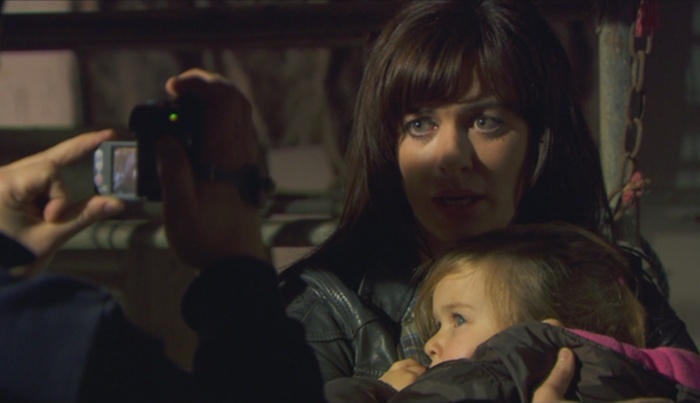
Gwen appears on a camcorder recording, asking why the Doctor has not appeared to save the world. Sometimes, she muses, he must be appalled at how humanity deals with crisis. This tape is her record of the world ended.

Prime Minister Green appears on public television to announce his inoculation plan. Rhiannon and Johnny Davies, following Ianto’s warning, open their doors to the local children and keep their own hidden. The Frobishers also take refuge in their own home.

Colonel Oduya of UNIT talks to the 456, asking why they need the children. The 456 reveals that they are used as recreational drugs. Despite being appalled in their part of an intergalactic drug trade, the government still proceeds on course. The public relations campaign is shifted into full gear while Gwen and Jack meet with Frobisher and Spears.

During the discussion, they realize that the tapes are no longer valid leverage. Releasing them will only hasten the collapse. Gwen calls Rhys to let him know that it’s over, also informing him that Ianto has died. Jack asks Frobisher about his family and to let Gwen inform Ianto’s family of his fate. The government agrees, and Jack is placed into custody as Gwen and Rhys are set free. He’s placed in a cell near Lois.

At Agent Johnson’s facility, Alice and Steven are released. Alice is brought up to speed on the situation, and she tells Johnson that she needs Jack Harkness.

Frobisher is called to the Prime Minister’s office and informed that his children will be inoculated publicly in order to sell the ruse to the public. They will also be taken for processing. Frobisher threatens to tell the world about this campaign, but Green is not swayed. Frobisher has been betrayed despite his loyalty, and he asks Bridget Spears to requisition a gun for him.

With one hour before the operation begins, troops are deployed to start gathering the children. Frobisher returns home while Spears pays a visit to Lois Habiba and tells her the story of how she and Frobisher met. While she tells the story, Frobisher gathers his family upstairs, murders them, and then commits suicide.

Spears tells Lois that John Frobisher was a good man. That this wasn’t his fault. That history will not remember him this way.

Gwen and Rhys meet up with PC Andy Davison and travel to the Davies home. Gwen tells them about Ianto and warns that special forces are on their way to take the children. Jack’s request of her to save the kids has just gotten more complicated.

The soldiers start rounding up the children, causing parents to start panicking and revolting. The soldiers also start canvassing the local neighborhoods, so Gwen, Rhiannon, and Rhys start moving the kids to a hiding place. Johnny informs the local parents that the soldiers are there for the children, and a fight erupts on the street. Davidson joins the fight, but the adults are soon pacified. The distraction worked. The kids are safe for now.

But the rest of the country’s children are not. In the abandoned shelter, Gwen makes her video recording and then talks to Rhys about their unborn child. She had considered abortion, unwilling to bring a child into this new world, but changed her mind when she considered how it would affect Rhys. They’re forced to run again as the soldiers discover the hiding spot.

Jack is taken to Johnson’s facility where he’s reunited with his family. He’s taken to a warehouse with Dekker to devise a plan that will use the 456 wavelength that killed Clem to attack the aliens. Meanwhile, at eighty percent completion, Colonel Oduya asks the 456 if that’s enough. The 456 demand the rest.

Jack analyses the wavelength and considers Clem, realizing that Clem was killed because he was a weapon that could be used against the aliens. Jack deduces that they need to use a child as an antenna to transmit the deadly wavelength. Unfortunately, they only have one child at their disposal: Steven.

And the effort will kill the child.

In a heartbreaking moment, Jack decides to use Steven. Alice pleads for Steven to run, but Steven has blind faith in his “uncle”. Jack ignores Steven’s questions and initiates the wave. As Steven beings singing the wavelength, the children of Earth follow suit, and the 456 react violently, smashing into the glass and exploding. The remains are transported away as the 456 retreat.

Jack watches tearfully as Steven dies a terrible death. Alice is a wreck and the room mourns with her, but the children of Earth are safe.

The Cabinet disbands, leaving Prime Minister Brian Green alone with Bridget Spears and Denise Riley. When Green tries to save himself by framing the American general, Bridget responds that she has recorded the proceedings with help from Lois and the Torchwood lenses. Riley takes charge, promising to have Lois released and that Green’s days as PM are over.

With the threat behind them, Jack waits for Alice in an attempt to apologize. She won’t speak with him, so he leaves without a word.

Six months pass. Gwen and Rhys travel to a remote location, heeding a request for a meeting with Jack. He has been traveling the world, trying to absolve his guilt, but it’s not enough. Gwen gives him his vortex manipulator, which she saved from the Hub. Jack uses it to transport himself to a cold fusion freighter in the solar system, trying to run from what he did.

Gwen cries with her husband as they walk away. Torchwood is finished.


Jack has a point: Death follows him, both literally and figuratively. He dies and resurrects a lot, but he’s also lost several people who were close to him. Suzie CostelloOwen Harper, Toshiko Sato, Ianto Jones, and now Steven Carter. It’s a lot to handle.

Especially since he made such a horrific (but necessary) choice, one which shattered the families he had left.

This story also brings the reverse of a trope highlighted by Meat, Reset, and Planet of the Ood: This time around, humans are the ones being captured and exploited for resources. It also marks one of the few times when a child is explicitly killed on screen.

The shock and awe are only amplified by the masterful performance by Peter Capaldi. Frobisher makes a hard decision because he doesn’t see another choice, and the sequence is heartbreaking.

All of this, the drama and conflict and emotions that tear all of us apart, make for great television and storytelling.


Rating: 5/5 – “Fantastic!”


UP NEXT – Torchwood: Children of Earth (Series Three) Summary


The Timestamps Project is an adventure through the televised universe of Doctor Who, story by story, from the beginning of the franchise. For more reviews like this one, please visit the project’s page at Creative Criticality.


The Thing About Today – September 9

September 9, 2020
Day 253 of 366


September 9th is the 253rd day of the year. It is Emergency Services Day (also known as 999 Day) in the United Kingdom. The annual event promotes efficiency in the UK Emergency Services, to educate the public about using the emergency services responsibly, and to promote volunteering across the emergency services in positions such as Special Constables and NHS Community Responders.


In the United States, today is “celebrated” as National Teddy Bear Day, Care Bears Share Your Care Day, and National Wiener Schnitzel Day.


Historical items of note:

  • In 1543, Mary Stuart, at nine months old, was crowned “Queen of Scots” in the central Scottish town of Stirling.
  • In 1739, the Stono Rebellion, the largest slave uprising in Britain’s mainland North American colonies prior to the American Revolution, erupted near Charleston, South Carolina.
  • In 1776, the Continental Congress officially named its union of states the United States.
  • In 1791, Washington, D.C., the capital of the United States, was named after President George Washington.
  • In 1828, Russian author and playwright Leo Tolstoy was born.
  • In 1839, John Herschel took the first glass plate photograph.
  • In 1850, the Compromise of 1850 transferred a third of Texas’s claimed territory (now parts of Colorado, Kansas, New Mexico, Oklahoma, and Wyoming) to federal control in return for the United States federal government assuming $10 million of Texas’s pre-annexation debt.
  • In 1890, Colonel Harland David Sanders was born. He was the businessman who founded Kentucky Fried Chicken, and his title is honorary as a Kentucky Colonel, the highest honor bestowed by that state.
  • In 1892, Amalthea, the third moon of Jupiter, was discovered by Edward Emerson Barnard.
  • In 1914, the Canadian Automobile Machine Gun Brigade was created. It was the first fully mechanized unit in the British Army.
  • In 1941, singer-songwriter and producer Otis Redding was born.
  • Also in 1941, computer scientist Dennis Ritchie was born. He created the C programming language.
  • In 1947, the first computer bug was found when a moth lodged in a relay of a Harvard Mark II computer at Harvard University.
  • In 1952, actress, author, and singer Angela Cartwright was born.
  • In 1953, Australian actress and Doctor Who actress Janet Fielding was born.
  • In 1954, actor Jeffrey Combs was born.
  • In 1959, French composer and producer Éric Serra was born.
  • In 1960, actor and producer Hugh Grant was born.
  • In 1965, the United States Department of Housing and Urban Development was established.
  • In 1966, the National Traffic and Motor Vehicle Safety Act was signed into law by United States President Lyndon B. Johnson.
  • In 1969, the Official Languages Act came into force in Canada, making French equal to English throughout the Federal government.
  • In 1971, actor and guitarist Henry Thomas was born.
  • In 1972, Croatian-American actor Goran Višnjić was born.
  • In 1975, Canadian singer-songwriter and actor Michael Bublé was born.
  • In 2001, Band of Brothers, the Steven Spielberg-Tom Hanks miniseries based on a book by Stephen E. Ambrose, premiered. At that time, it was the most expensive miniseries ever made.
  • In 2015, Queen Elizabeth II became the longest-reigning monarch of the United Kingdom.


September 9th is Chrysanthemum Day (also known as Kiku no Sekku, 重陽, and Chōyō) in Japan.

It is also known as the Double Ninth Festival, a holiday celebrated in multiple countries on the ninth day of the ninth month in the Chinese calendar. It is a traditional Chinese holiday, mentioned in writing since before the Eastern Han period (before AD 25).

The origin centers on a man named Heng Jing, who believed that a monster would bring pestilence. He told his countrymen to hide on a hill while he went to defeat the monster. Later, people celebrated Heng Jing’s defeat of the monster on the ninth day of the ninth lunar month.

It is called the Chong Yang Festival or Chung Yeung Festival in China, Hong Kong, Macao, and Taiwan, Jungyangjeol (중양절 or 重陽節) in Korea, and Tết Trùng Cửu in Vietnam. According to the I Ching, nine is a yang number; the ninth day of the ninth lunar month (or double nine) has too much yang (a traditional Chinese spiritual concept) and is thus a potentially dangerous date.

To protect against danger, it is customary to climb a high mountain, drink chrysanthemum liquor, and wear the zhuyu (茱萸) plant. Both chrysanthemum and zhuyu are considered to have cleansing qualities and are used on other occasions to air out houses and cure illnesses.

On this holiday some Chinese also visit the graves of their ancestors to pay their respects. In Hong Kong and Macao, whole extended families head to ancestral graves to clean them and repaint inscriptions, and to lay out food offerings such as roast suckling pig and fruit, which are then eaten (after the spirits have consumed the spiritual element of the food).


The Thing About Today is an effort to look at each day of 2020 with respect to its historical context.

For more creativity with a critical eye, visit Creative Criticality.


Debrief: Dragon Con 2020

Debrief: Dragon Con 2020
September 3 through September 7, 2020


Dragon Con 2020 is done.

Obviously, it wasn’t the situation that we wanted, but the Dragon Con social media team did phenomenal work to develop a platform that could deliver the convention experience at home. Alongside the convention staff, several track directors and their respective staffs were fantastic in both building content and stoking the fires throughout the weekend.

This convention gave me a chance to get comfortable with video content at home, and it gives me plenty of ideas going forward to develop ideas and content going forward. It was also good to touch base with my geek family, and even though it wasn’t in person, it still offered me the chance to catch up with them in an era when so many of us are isolated.


Thursday

Typically, Thursday would include breakfast at the local Waffle House, picking up our badges for the weekend, and introducing hundreds of newcomers to the convention via the Dragon Con Newbies events.

Instead, the convention got started here with a Zoom recording with the irregulars from the American Sci-Fi Classics Track. In what was scheduled as a one-hour event, we sat much longer and swapped tales of our various shenanigans and favorite memories from the convention.

It was a good way to catch up and almost feel home again.


Friday

Friday started with some browsing of the Dragon Con Goes Virtual channels before settling in for a chat about the second season of Lost in Space on the American SF & Fantasy Media Track.

The panel was moderated by my long-time friend Lindy Keelan, who I met during our time at The Scapecast. We were joined by Kevin Eldridge of The Flopcast and Nathan Laws of The 42Cast, and the panel was a great discussion about the season, the series so far, and what might be ahead for the family Robinson.

The next panel for Friday was one that I recorded before the convention with the BritTrack and the crew of Earth Station Who. Mike Faber, Mike Gordon, Mary Ogle, and I joined Caro and Rob to talk about where to get started in Doctor Who.

It’s a large topic to tackle, especially since the franchise has been around since 1963 in so many various ways, but this was a fun and informative discussion and I hope that newcomers and long-time fans find it useful.


Saturday

Saturday started with a bit more Dragon channel surfing and a trip at 88 miles per hour with the 35th anniversary of Back to the Future.

I teamed up with Michael Williams, Shaun Rosado, James Palmer, and Joe and Gary to talk about this film, its franchise, and the legacy that they still maintain in science fiction. It got deep at times and was really fun.

Later that night, I popped back into the Classics Track for a look back at the Marvel films that preceded the Marvel Cinematic Universe.

Michael Bailey, Jessa Phillips, and Keith R.A. DeCandido also joined the party as we tried to cover the history of Blade to Iron Man in one hour. We needed so much more time.


Sunday

Sunday brought me back to my podcasting roots on the Digital Media Track with a topic that Mike Faber and I have been talking to people about for quite a while: How to get started in digital media.

The video is available on the track’s Twitch channel, and (with Mike and myself) included Matthew Malis, Sean Weiland, Tyra Burton, and podcasting newbie Channing Sherman. The goal now is to get Channing to record a podcast. Because he really needs to get his content and character on the airwaves.


Monday

Monday brought three more events to round out the weekend.

First up was a pre-recorded panel about Doctor Who that is similar in style to the classic Roll-a-Panel.

With Sue Kisenwether, Jm Tuffley, L. Jagi Lamplighter, Keith DeCandido, and me, Caro spun the wheel and let fortune drive the discussion through the universe of Doctor Who.

The second panel was a discussion on mathematics in science fiction.

I joined Darin Bush, Deanna Toxopeus, Sue Kisenwether, Gary, and Joe on a journey through how our favorite genre uses and abuses one of our favorite technical topics. This is another one that could easily spawn multiple discussion panels.

Finally, the convention came to a close for me with the Dragon Con Newbies team and a quick discussion on Dragon Con TV about coming to the con in person next year.

I joined Kevin Bachelder, Kim McGibony, and Sue to cover some of the basics. We also invite anyone interested in Dragon Con to visit both the website and the Facebook group to get information from a group of helpful convention veterans.


General Notes

As I mentioned before, the biggest benefit to going virtual was that we could have some semblance of a convention this year. That’s key in a time where we’re all siloed and unable to physically convene in celebration of our favorite works.

The other benefit that really stands out is two-fold and focused on the fan tracks: First is ingenuity and creativity, and second is continued access.

Each of the fan tracks had to decide how to best present themselves this year to a virtual audience, and many of the ones that I was able to follow this year did so through widely available platforms like YouTube. Using Zoom or Streamyard, these tracks were able to bring experts and fans together and stream their panels to the world. Those panels remain available for as long as YouTube stores them, and they remain an example of both creative problem solving and what the track has to offer for newcomers.

It’s a win-win.

That path was forged by Joe and Gary with the “quarantine panels” that they have done for months leading into this event. Search this site for “Quarantine Con” or visit their YouTube channel and see. In my estimation, those two are the MVPs of this event.

I’m not just trumpeting that to, as Michael Bailey would say, “wax their car”. It’s absolutely true.


And that brings me to the things that would improve this system going forward.

First, there was too much divergence on where content was available, and that was confusing for the man-on-the-street who just happened to wander in. My perspective on this comes from the fact that I have a Roku device, an XBox, and a television that can run apps. That means that I can stream YouTube and Vimeo from my couch.

I could literally attend Dragon Con this year from my couch.

The convention’s core programming (Dragon Con Main, Dragon Con Fan Tracks, and Dragon Con Classics) was available in one location (dragoncon.tv/virtual). Those streams were hosted on Vimeo and mirrored to a Roku app, but that app was broken for the first day and did not transmit the Fan Track channel.

If it hadn’t been for the broken code, the Roku app would have been perfect for that intent. But, it also limited who could simply switch on and watch since not everyone has a Roku. Ideally, going forward, a Dragon Con streaming app should be available on multiple platforms for more universal access.

A contributing factor was each track’s individual programming. Some tracks used YouTube, which is universally available for anyone who can click a link. Others were limited to Facebook and Twitch, which are fine for attendees who were on their computers or could use one of the streaming sticks (Chromecast, Amazon Fire Stick, etc) to mirror the computer to the television. But Facebook and Twitch are not available on the Roku, and that was a deciding factor in which Dragon Con Goes Virtual content I chose to partake from.

An argument of “well, you wouldn’t have watched anyway” won’t fly here because I have watched several other panels this year that I usually don’t have the time to watch at a live event. One that stands out is the Star Wars droid-building presentation. Others were puppetry panels, including interviews and a Puppetry 101 discussion, and Michael Bailey’s presentation on Green Lantern and The Flash.

I also have a long list that I want to see because they’re now stored on YouTube for the foreseeable future.

An easy solution to that hurdle is to require every streaming track to have a YouTube channel. It’s not that far of a reach since everyone was using Streamyard and Zoom to broadcast, and those tools have the built-in capability to stream to YouTube.

If a track director has a question on how to do it, we obviously have several experts available to share that knowledge. I’m sure that we also have experts who could tie those YouTube videos into the apps (like the Roku one) to make one-stop-shops for people.

The second big stumbling block was the schedule. The main schedule for the three Dragon Con TV channels was available in the Quick Start Guide and on the Eventeny site for the con. The fan tracks, on the other hand, were buried behind a link hidden in plain sight in the Quick Start Guide. That schedule was a Google Sheets file which was not formatted well.

The schedule should have been more accessible and legible. So much content for this con was hard to find because of this stumbling block.

And, again, ingenuity and ease of access, I’ll point to an example: Kelley at the American SF & Fantasy Media track set up all of her panels ahead of time. She sent emails in advance to the panelists with their links to join the Streamyard recording, and she set up each YouTube livestream in advance so anyone subscribed to her track’s channel would have a ready list of what was going on at what time.

All anyone had to do was select the video and wait for it to start. Joe and Gary did the same on Classics, but I noticed it first from Kelley.

Both of these issues popped up while the con was in motion. Fixing them going forward would greatly improve the experience in the future.


Wait. Going forward?

Yes. Because there is some serious potential here for “off-season” programming and contingency planning for the future. Each of these tracks can literally produce panels at any time with this infrastructure, thereby keeping the interest alive throughout the year outside of Facebook groups and localized meetups.

Joe and Gary have a huge library of material to choose from – Dragon Con defines a sci-fi classic as any genre property over ten years old that is not taken by another track – and they have proven that there is interest beyond the scope of their mandate with panels on representation, social issues, and more.

Classics, SF & Fantasy Media, BritTrack, Digital Media, Star Wars, TrekTrack, Space, Science, Skeptics, Animation, Puppetry, the literature tracks… that’s just off the top of my head. All of these tracks have an evergreen presence because there’s so much to talk about. Doing panels year-round (even on a monthly basis) baits the hook for people who might want to come to contribute in person.

The potential is nearly endless.


Final Thoughts

I really enjoyed Dragon Con Goes Virtual, and I applaud the teams that made it happen. This wasn’t an easy choice, I’m sure, but they did fantastic work under the circumstances.

My deepest gratitude goes out to the staff, the directors, the pros and guests, the volunteers, and the attendees for this event. As one of the local news stations reported, the programming was accessed over 600,000 times by fans from over 49 nations.

That’s not insignificant.

You’ve done good work, gang. Congratulations.

I’m looking forward to see you in person next year.

359 days to go until next Dragon Con.


Until then…

The Thing About Today – September 8

September 8, 2020
Day 252 of 366


September 8th is the 252nd day of the year. It is Victory Day in Malta, also known as the feast of Our Lady of Victories or il-Vittorja, which recalls the end of three historical sieges made on the Maltese archipelago. Specifically, the Great Siege of Malta by the Ottoman Empire ending in 1565, the Siege of Valletta by the French Blockade ending in 1800, and, the Siege of Malta during the Second World War by the Italian army ending in 1943.


In the United States, today is “celebrated” as National Ampersand Day, National Ants on a Log Day (observed on the second Tuesday in September), and National Another Look Unlimited Day (observed on the day after Labor Day).


It is also National Pediatric Hematology/Oncology Nurses Day and World Physical Therapy Day.


Historical items of note:

  • In 1504, Michelangelo’s David was unveiled in Piazza della Signoria in Florence.
  • In 1522, Victoria arrived at Seville, technically completing the Magellan-Elcano circumnavigation of the world.
  • In 1565, St. Augustine, Florida was founded by Spanish admiral and Florida’s first governor, Pedro Menéndez de Avilés.
  • In 1810, the Tonquin set sail from New York Harbor with 33 employees of John Jacob Astor’s newly created Pacific Fur Company on board. After a six-month journey around the tip of South America, the ship arrived at the mouth of the Columbia River and Astor’s men established the fur-trading town of Astoria, Oregon.
  • In 1841, Czech composer and academic Antonín Dvořák was born.
  • In 1925, actor and comedian Peter Sellers was born.
  • In 1930, 3M began marketing Scotch transparent tape.
  • In 1937, author and illustrator Archie Goodwin was born.
  • In 1938, American sergeant and radio host Adrian Cronauer was born.
  • In 1945, the division of Korea began when United States troops arrived to partition the southern part of Korea in response to Soviet troops occupying the northern part of the peninsula a month earlier.
  • In 1960, United States President Dwight D. Eisenhower formally dedicates the Marshall Space Flight Center in Huntsville, Alabama. NASA had already activated the facility on July 1st.
  • In 1966, the landmark American science fiction television series Star Trek premiered with its first-aired episode, “The Man Trap”.
  • In 1971, actor Martin Freeman was born.
  • In 1973, Star Trek: The Animated Series premiered.


September 8th is International Literacy Day, declared by UNESCO on October 26, 1966. It was celebrated for the first time in 1967 with the goal of highlighting the importance of literacy to individuals, communities, and societies.

Some 775 million adults lack minimum literacy skills. One in five adults is not literate and two-thirds of them are women. 60.7 million children are out-of-school and many more attend irregularly or drop out. The ability to read would mean so much to improve their lives.

Among several other initiatives to support literacy, the UNESCO mission is supported through the Writers for Literacy Initiative by authors including Margaret Atwood, Paul Auster, Philippe Claudel, Paulo Coelho, Philippe Delerm, Fatou Diome, Chahdortt Djavann, Nadine Gordimer, Amitav Ghosh, Marc Levy, Alberto Manguel, Anna Moi, Scott Momaday, Toni Morrison, Érik Orsenna, Gisèle Pineau, El Tayeb Salih, Francisco Jose Sionil, Wole Soyinka, Amy Tan, Miklós Vámos, Abdourahman Waberi, Wei Wei, and Banana Yoshimoto.


The Thing About Today is an effort to look at each day of 2020 with respect to its historical context.

For more creativity with a critical eye, visit Creative Criticality.


The Thing About Today – September 7

September 7, 2020
Day 251 of 366


September 7th is the 251st day of the year. It is Independence Day in Brazil, celebrating its separation from Portugal in 1822. It is also Labor Day in the United States and Canada, which honors and recognizes the labor movements and the works and contributions of laborers to the development and achievements of their respective countries.


In the United States, today is “celebrated” as National Beer Lover’s Day, National Neither Snow Nor Rain Day, National Grandma Moses Day, National Acorn Squash Day, National Salami Day, National Grateful Patient Day, and National New Hampshire Day.


Historical items of note:

  • In 1695, Henry Every perpetrated one of the most profitable pirate raids in history with the capture of the Grand Mughal ship Ganj-i-Sawai. In response, Emperor Aurangzeb threatened to end all English trading in India.
  • In 1776, according to American colonial reports, Ezra Lee made the world’s first submarine attack in the Turtle, attempting to attach a time bomb to the hull of HMS Eagle in New York Harbor. No British records of this attack exist.
  • In 1911, French poet Guillaume Apollinaire was arrested and put in jail on suspicion of stealing the Mona Lisa from the Louvre museum but was released a week later. The theft of the Mona Lisa was perpetrated by Vincenzo Peruggia, an Italian house painter who acted alone and was only caught two years later when he tried to sell the painting in Florence.
  • In 1914, physicist and philosopher James Van Allen was born. He was instrumental in establishing the field of magnetospheric research in space, and the Van Allen radiation belts were named after him, following his discovery using Geiger–Müller tube instruments on the 1958 satellites Explorer 1, Explorer 3, and Pioneer 3 during the International Geophysical Year. He led the scientific community in putting scientific research instruments on space satellites.
  • In 1923, the International Criminal Police Organization (INTERPOL) was formed.
  • In 1924, composer and conductor Leonard Rosenman was born.
  • In 1927, the first fully electronic television system was achieved by Philo Farnsworth.
  • In 1936, the last thylacine, a carnivorous marsupial named Benjamin, died alone in its cage at the Hobart Zoo in Tasmania. This was the inspiration for National Threatened Species Day in Australia.
  • In 1950, actress Julie Kavner was born.
  • In 1951, trumpet player and composer Mark Isham was born.
  • In 1954, actor Michael Emerson was born.
  • In 1955, Croatian-American actress Mira Furlan was born.
  • In 1973, director, producer, and screenwriter Alex Kurtzman was born.
  • In 1979, the Entertainment and Sports Programming Network (ESPN) debuted.
  • In 1986, Desmond Tutu became the first black man to lead the Anglican Diocese of Cape Town.
  • In 1987, actress and singer Evan Rachel Wood was born.
  • In 1988, Abdul Ahad Mohmand, the first Afghan in space, returns to Earth after nine days on the Mir space station.
  • In 1993, actor Taylor Gray was born.
  • In 1997, the Lockheed Martin F-22 Raptor took its maiden flight.


In 1857, Mormon settlers began a series of attacks that slaughtered most members of a peaceful emigrant wagon train. It became known as the Mountain Meadows Massacre.

The Mountain Meadows Massacre was directed toward the Baker-Fancher emigrant wagon train at Mountain Meadows in southern Utah. It was a place of rest and grazing used by pack trains and drovers on the Old Spanish Trail, and later by Mormons, Forty-niners, mail riders, migrants, and teamsters on the Mormon Road on their way overland between Utah and California.

The attacks began on September 7, 1857, and culminated on September 11, 1857. They resulted in the mass slaughter of most in the emigrant party by members of the Utah Territorial Militia from the Iron County district, together with some Southern Paiute Native Americans.

The wagon train was comprised mostly of families from Arkansas. They were bound for California on a route that passed through the Utah Territory during a time of conflict later known as the Utah War. After arriving in Salt Lake City, the Baker-Fancher party made their way south, eventually stopping to rest at Mountain Meadows. While the emigrants were camped at the meadow, nearby militia leaders, including Isaac C. Haight and John D. Lee, made plans to attack them.

The militia, officially called the Nauvoo Legion, was composed of Utah’s Mormon settlers. They were motivated by war hysteria about a possible invasion of apocalyptic significance. In the months prior to the massacre, Mormon leaders prepared their followers for a seven-year siege predicted by Brigham Young. Mormons were directed to stockpile grain and were prevented from selling grain to emigrants for use as cattle feed.

During the Utah War, an armed confrontation in Utah Territory between the United States Army and Mormon Settlers, far-off Mormon colonies retreated. Parowan and Cedar City became isolated and vulnerable outposts, and Brigham Young sought to enlist the help of Indian tribes in fighting the “Americans”, encouraging them to steal cattle from emigrant trains and to join Mormons in fighting the approaching army.

In August 1857, Mormon apostle George A. Smith (of Parowan) set out on a tour of southern Utah, continuing to instruct Mormons to stockpile grain. He met with many of the eventual participants in the massacre, including William H. Dame, Isaac Haight, and John D. Lee, noted that the militia was organized and ready to fight and that some of them were anxious to take vengeance for the “cruelties” that had been inflicted upon them over the existence of their religion. On his return trip to Salt Lake City, Smith camped near the Baker-Fancher party. The wagon train received a suggestion to stop and rest their cattle at Mountain Meadows, and Smith’s party started rumors that the Fanchers had poisoned a well and a dead ox in order to kill Native Americans. These rumors preceded the wagon train to Cedar City.

In a further attempt to give the impression of tribal hostilities, the militiamen armed some Southern Paiutes and persuade the Native Americans to join with a larger party of militiamen disguised as Native Americans in an attack. During the militia’s first assault, the emigrants fought back, and a five-day siege ensued. Fear eventually spread among the militia’s leaders that some emigrants had caught sight of white men and had likely discovered the identity of their attackers. As a result, militia commander William H. Dame ordered his forces to kill the emigrants.

At this point in the siege, the emigrants were running low on water and provisions and allowed some members of the militia to enter their camp under a white flag of surrender. The militia members assured the emigrants they were protected and escorted them from their hasty fortification. After walking a distance from the camp, the militiamen, with the help of auxiliary forces hiding nearby, attacked the emigrants. The perpetrators killed 120 men, women, and children, but spared seventeen children, all younger than seven.

Following the massacre, the perpetrators hastily buried the victims, ultimately leaving the bodies vulnerable to wild animals and the climate. Local families took in the surviving children, and many of the victims’ possessions were auctioned off.

Investigations, after interruption by the American Civil War, resulted in nine indictments during 1874. Of the men indicted, only John D. Lee was tried in a court of law. After two trials in the Utah Territory, Lee was convicted by a jury, sentenced to death, and executed by Utah firing squad on March 23, 1877.

While growing up in Utah, I found the massacre to be spoken of in hushed tones. Various monuments to the event had been constructed over the years, and the site was designated as a National Historic Landmark in 2011 after joint efforts by descendants of those killed and the LDS Church.

In 2007, the 150th anniversary of the massacre was remembered by a ceremony held in the meadows. Approximately 400 people, including many descendants of those slain at Mountain Meadows and Elder Henry B. Eyring of the LDS Church’s Quorum of the Twelve Apostles attended the ceremony.


The Thing About Today is an effort to look at each day of 2020 with respect to its historical context.

For more creativity with a critical eye, visit Creative Criticality.


The Thing About Today – September 6

September 6, 2020
Day 250 of 366


September 6th is the 250th day of the year. It is Independence Day in Swaziland, commemorating their independence from the United Kingdom in 1968.


In the United States, today is “celebrated” as National Coffee Ice Cream Day and National Read A Book Day.


Historical items of note:

  • In 1620, the Pilgrims sailed from Plymouth, England on the Mayflower to settle in North America.
  • In 1642, England’s Parliament banned public stage-plays. The Long Parliament ordered the closure of all London theatres, citing the current “times of humiliation” and their incompatibility with “public stage-plays”, representative of “lascivious Mirth and Levity”.
  • In 1803, British scientist John Dalton began using symbols to represent the atoms of different elements.
  • In 1870, Louisa Ann Swain of Laramie, Wyoming became the first woman in the United States to cast a vote legally after 1807.
  • In 1916, the first self-service grocery store was opened in Memphis, Tennessee by Clarence Saunders. It was the Piggly Wiggly.
  • In 1958, actor Michael Winslow was born. He is The Man of 10,000 Sound Effects.
  • In 1969, The Brady Bunch premiered.
  • In 1972, actor Idris Elba was born.
  • In 2018, the Supreme Court of India decriminalized all consensual sex among adults in private, making homosexuality legal on the Indian lands.


September 6th is Unification Day (Ден на Съединението) in Bulgaria. It commemorates the unification of Eastern Rumelia and Bulgaria in 1885.

By the terms of the Treaty of Berlin in  1878, Southern Bulgaria (named Eastern Roumelia) was separated from the newly formed Bulgarian state and returned to the Ottoman Empire with partial autonomy. Bulgarian citizens considered the decisions of the Berlin Treaty to be unfair and began a peaceful demonstration against them.

The plan was to annex all territories that Bulgaria had gained after the Treaty of San Stefano but later it became clear that was impossible because of the unsuitable international situation. The Bulgarians had to leave Macedonia and the rest of Thrace and concentrate on the East Roumelian issue.

The first actions were taken in 1880, but it wasn’t until September of 1885 (after a lot of political movements) that the people rose in Goliamo Konare and advanced on the capital. Knyaz Alexander agreed to become a leader of the Unified Bulgaria and dismissed the temporary government. Diplomatic efforts failed and Bulgaria had to defend its interests on the battlefield in the Serbo-Bulgarian War where the Bulgarians were victorious.


The Thing About Today is an effort to look at each day of 2020 with respect to its historical context.

For more creativity with a critical eye, visit Creative Criticality.