Culture on My Mind – Dragon Con Report 2025 #6: Trek Track

Culture on My Mind

Culture on My Mind
Dragon Con Report 2025 #6: Trek Track
August 26, 2025

One of the ways that I like to prep for Dragon Con is by listening to the Dragon Con Report podcast. Brought to you by the ESO Network, the podcast is a monthly discussion on all things Dragon Con that counts down to the big event over Labor Day weekend in Atlanta, Georgia.

The show is hosted by Michael Gordon, Jennifer Schleusner, and Channing Sherman, and it delivers news, notes, tips, and tricks for newbies and veterans alike. The Dragon Con Newbies community has a great relationship with the show and the network.

In the sixth episode for 2025, the team beams up Joe Campbell to discuss the Riker Games, Klingon Karaoke, the Away Team Scavenger Hunt, and all those Star Trek things you’re boldly craving at Dragon Con.

One of my favorites is the late night deep dive into the world of Trek fanfic with Sue Kisenwether. You can find it under “Exploring Strange Old Fics” in the schedule.


The show can be found in video form on YouTube and in audio on the official website and wherever fine podcasts are fed. The Dragon Con Report channels can be found on Facebook, Instagram, and YouTube. You can catch their shows live on those platforms or on demand on their website.

cc-break

Culture on My Mind is inspired by the weekly Can’t Let It Go segment on the NPR Politics Podcast where each host brings one thing to the table that they just can’t stop thinking about.

For more creativity with a critical eye, visit Creative Criticality.

Culture on My Mind – Peter David

Culture on My Mind

Culture on My Mind
Peter David
June 16, 2025

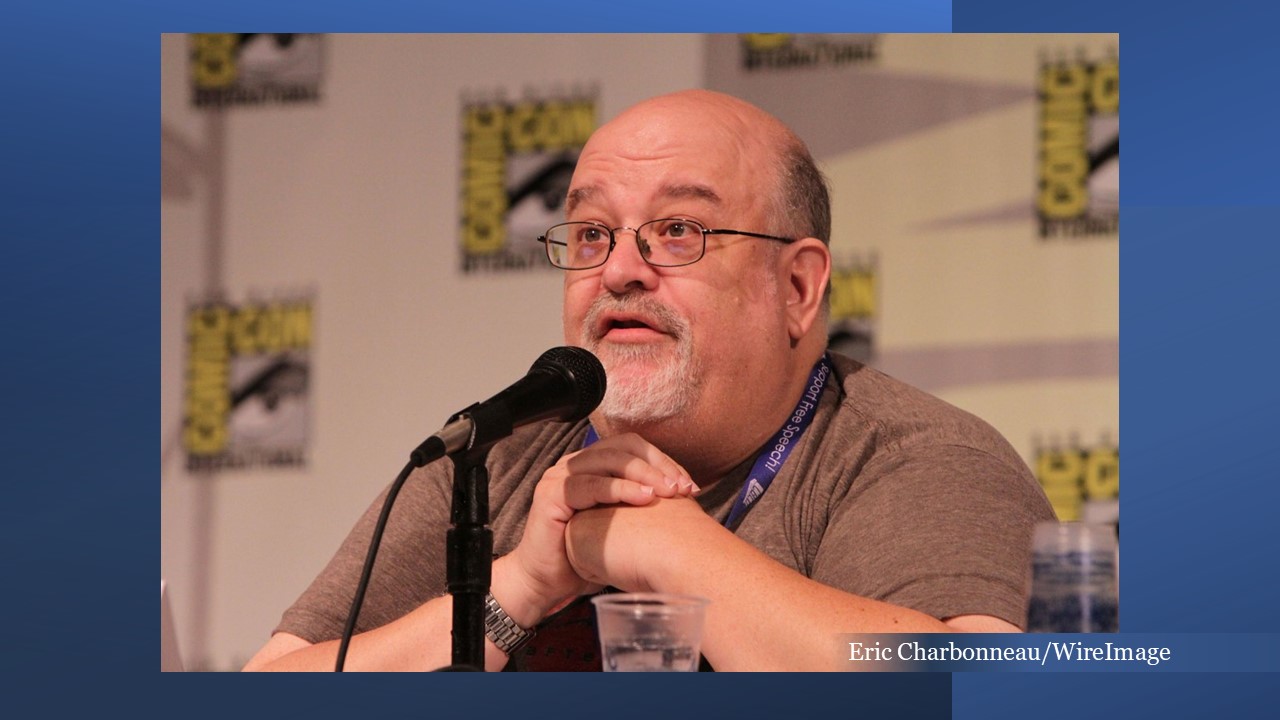
Writer Peter David died on May 24, 2025.

I never met him personally, but his work was some of the best in the franchises I love. I have told the story many times about my introduction to science fiction through Lost in Space and Star Trek reruns. I fell away from Star Trek television in the late ’80s and early ’90s, but came around once again when my friend Ryan introduced me to Star Trek Generations at a small fan gathering in the mid-90s. Around the franchise’s 30th anniversary, after both of us received the Star Trek 30 Years collector’s edition book with my first map of the Trek galaxy, I started a deep dive catch-up through re-runs and the local library.

Among the first books I checked out was the hardcover of Imzadi. It was a wacky adventure full of time travel shenanigans, graced by a Keith Birdsong cover that showcased silver fox Admiral Riker. I soon pivoted to Q-Squared, which blew my young mind with the way Peter David wrote parallel universes. This is a novel I think about quite often. Vendetta followed soon after, and eventually I made it to I, Q, a tale amplified by the voice and experience of John de Lancie.

The first Star Trek book I bought was The Captain’s Daughter. It was an impulse purchase at my local Smith’s supermarket, driven by its role as a sequel to Star Trek Generations. With Captain Sulu on the cover and the promise of further tales of Demora Sulu and Captain Harriman, it was an easy spend for my hard-earned lawn mowing money. It maintains a special place in my heart because of that.

He developed a new series for the Star Trek novels as a spin-off from The Next Generation. Star Trek: New Frontier focused on the crew of the USS Excalibur, commanded by maverick Captain Mackenzie Calhoun. It was the first time that I saw an action figure from the novels – the captain was created from a Playmates DS9/Voyager male body, a generic-looking sword, and a custom-sculpted head – and the series ran for an impressive 21 novels, a handful of crossovers, several comics, and a few short stories in various anthologies. I have only read the first four books, but I liked what I saw and the entire series is on my To Read list.

Peter David even graced the Star Wars universe with an amazing one-off Infinities tale. In an eight-page comic published in Star Wars Tales 1, he crafted a “what if” scenario for R5-D4, the other droid on the Jawa sandcrawler in A New Hope. Long story short, R5-D4 was Force-sensitive in this story, and once he met Luke Skywalker at the Lars Homestead, he saw the future and how important R2-D2 was to the galaxy. In the end, he blows his own motivator and embraces his destiny.

Peter David’s bibliography is immense, and he is one of examples of a working writer. He doesn’t appear on best-selling fiction author lists, but he succeeded and he was loved because of his hustle and passion. His work stood out because he embraced his work, capturing the very essence of those universes with his own special enthusiastic flair. He published novels and comics, and spend decades in pop culture. I know him best from his Star Trek work, but I’m intrigued by his Marvel and DC Comics work as well, especially his time on Supergirl given my recent interest in that character. My friends speak highly of his tenure with Spider-Man.

Peter David is one of my favorites in Star Trek fiction. I’ll remember his working writer wisdom (laced with rapier wit) from his article “Why Writers are Scum“:

If the artist is doing his job, then he’s seen. If the writer is doing his job, he’s not. The writer should be the invisible man. The writer hides behind the characters, melting into the background. The writer’s job is to make the characters take on lives of their own, to be real.

Peter David made my favorite characters real. He will be missed.

cc-break

Culture on My Mind is inspired by the weekly Can’t Let It Go segment on the NPR Politics Podcast where each host brings one thing to the table that they just can’t stop thinking about.

For more creativity with a critical eye, visit Creative Criticality.

Culture on My Mind – Section 31

Culture on My Mind

Culture on My Mind
Section 31
January 13, 2025

This time around, I’m thinking about something new in Star Trek that I’m not really excited about.

I started watching Star Trek in the mid-‘80s when my parents wanted to show me their science fiction. Throughout the years, Star Trek has become one of the cornerstones of my philosophy and life.

The Gene Roddenberry school of Trek described a utopian United Federation of Planets where members upheld strong morals on a quest for self-enlightenment and exploration. While the Federation and Starfleet skirted the edges every so often, they usually embodied what was right and just.

That philosophy still exists in Trek, but Star Trek: Deep Space Nine took a different approach by showing us life on the frontier, deconstructing the status quo and challenging the concepts of utopia and paradise by (as inspired by British screenwriter and playwright Harold Pinter) looking for “weasels under the coffee table.”

Through its history, Trek has explored corruption in the ranks, usually with “Badmirals” – admirals doing questionable things to defend their visions of the Federation’s security. Some of the greatest hits: Fleet Admiral Cartwright spearheaded a conspiracy to drive the desperate Klingon Empire to its knees; Rear Admiral Norah Satie led a paranoid witch hunt in “The Drumhead”; Admiral Mark Jameson supplied weapons to both sides of a war in violation of the Prime Directive; Rear Admiral Erik Pressman violated the Treaty of Algernon by developing a cloaking device for Starfleet; Vice Admiral Toddman threatened the lives of the DS9 crew to protect the Cardassian-Romulan fleet when they tried to destroy the Founders; Vice Admiral Dougherty nearly committed genocide to find a fountain of youth; and Admiral Leyton tried to stage a military coup on Earth by faking a Dominion invasion.

It evolved into the 1998 introduction of Section 31 in Deep Space Nine’s “Inquisition”. A secret branch of Starfleet Intelligence, their existence has been part of the Federation charter since the government’s foundation. To paraphrase the introduction to the tie-in novels, Section 31 is a self-appointed protector of the Federation’s interests, answerable to no one while they act in the shadows.

That’s precisely why I cannot stand Section 31. It flies in the face of what the Federation (and by extension, Star Trek) stands for. While they are more transparent and accepted in the Discovery and Lower Decks eras, their actions are a black mark on the Federation’s moral standing.

I mean, they tried to end the Dominion War by committing genocide and destroying the Founders. Genocide isn’t something that our captains would embrace. We’re talking about literal war crimes committed by villains literally wearing black and sneering at the protagonists.

As Jaime Babb wrote in “‘A Critical Division of Starfleet Intelligence’: Section 31 and the Normalization of the Security State” on Reactor: “I do wish that DS9 had put its weasels away once it was done with them! Instead, they were allowed to escape into the basement of the franchise and breed down there.

To wit, instead of exposing and dismantling this supposedly secret society of obvious villains, the franchise has embraced it across Enterprise, several novels, Into Darkness, Discovery, Lower Decks, and Picard. In that last title, it’s apparent that Starfleet has pretty much legitimized and accepted 31’s goals and methods. It has embraced the security state status quo, suggesting that torture and genocide are okay as long as the good guys are doing it.

Riding this wave of apparent popularity, the franchise is releasing a television movie focused on S31 and Philippa Georgiou (played by Michelle Yeoh).

The backstory is complicated, but the short version is Georgiou was a captain on Discovery who died. Later on, we find out that her Mirror Universe counterpart is the Terran emperor, and she seeks asylum in the prime (normal) universe. Eventually, she encounters the Guardian of Forever and gets a second chance to make a difference. While her story is interesting, however, the advertising for the Section 31 film is not. That is what bothers me.

The teaser, from July 27, 2024:

The trailer, from December 7, 2024:

Both the teaser and the trailer focus on action and the spectacle, but neither divulge any real hint of the story. I would expect some indication of the story beats from the trailer, and added to how Section 31 has been portrayed, the lack of plot concerns me.

Star Trek has had success with Strange New Worlds, Lower Decks, and Prodigy. Discovery was also quite successful, though sometimes dodgy on the story front, but Picard was really rough. That’s almost an understatement of my opinion: Season Two was nonsensical and Season Three was focused more on action and nostalgia hits than actually boldly going anywhere.

These trailers focus on action and nostalgia – Rachel Garrett (“Yesterday’s Enterprise”) and a Cheron alien (“Let That Be Your Last Battlefield”) are prominent – and that makes me worry that this film will be more Picard Season Three and less exploration of the human condition like we expect from Star Trek.

Ideally, a film about Section 31 would do some shady super secret squirrel ops stuff, but also discuss the points above. Especially considering that a future Enterprise captain is among the dramatis personae. This film can’t be all about glorifying war crimes as though they’re sexy and acceptable with the franchise’s ethos. It needs to balance exploration of the human condition with the action and nostalgia.

I’m not convinced that it will.

I hope I’m wrong. I’ll be tuning in on January 24th to see what the film has to offer. I have been on board with ninety percent of what has come since Discovery revived the franchise in 2017. But neither Section 31 nor Section 31 excite me.

As a fan of Star Trek for nearly forty years, that’s a sad thing to consider in this era of strange new worlds and new stories in the universe.

cc-break

Culture on My Mind is inspired by the weekly Can’t Let It Go segment on the NPR Politics Podcast where each host brings one thing to the table that they just can’t stop thinking about.

For more creativity with a critical eye, visit Creative Criticality.

Culture on My Mind – Star Trek: Picard

Culture on My Mind

Culture on My Mind
Star Trek: Picard
May 16, 2022

I have been wrestling with my thoughts on Star Trek: Picard since the second season wrapped on May 5th. 

The series overall has been frustrating for me. It is laden with some great philosophical and socio-political ideas – a hallmark of Star Trek since 1966 – but it frequently misses the mark when actually exploring these ideas.

First, I want to point to the excellent season reviews by Jessie Gender. She has captured a lot of my conflict with this series in these analyses, highlighting many of the elements that I loved and disliked.

Season One:

Season Two:

In Season One, I loved seeing civilian life in the Federation and the aftermath of the destruction of Romulus, something that was born rather hand-wavedly in 2009’s Star Trek film. The world-building grabbed me as it showcased complicated interstellar politics and a Starfleet that had moved on from the troublesome climax of Star Trek: Nemesis.

I rather liked the deconstruction and organic redemption of the former Borg. I liked the idea of the Federation trying to help the fractured and displaced Romulan people, following on from the ground laid in Star Trek: Nemesis. I liked that Jean-Luc Picard actually stuck to his principles and resigned from Starfleet when they refused to back that program. I liked that Starfleet rejected the former captain’s hubris when he demanded a starship to solve the mystery because of who he was.

I liked the Star Trek exploration of Brexit, Trumpism, and the Syrian refugee crisis. I loved the Troi-Riker family and the exploration of trauma. I loved Picard having to face the skeletons in his closet by examining and reconciling his failures. I loved the conclusion of the Picard-Data relationship.

But then we get a Romulan anti-synth religious cult, a lack of resolution on threads like Seven’s adaption of the Borg Queen persona and Narek simply fading into the background, handwaving “space magic” tools and fixes, huge fleet space battles, and yet another galactic-scale conflict teasing a Lovecraftian big bad that we’ll likely never see again. It’s representative of the writers having far too many ideas and not enough time to implement everything to their full potential. That’s where the frustration started for me because each of these ideas ends up half-baked by the final episode.

At the end of the season, the entire synth ban is resolved far too quickly, but Picard’s status is right up Star Trek‘s alley with the mission to seek out new life. I really liked the idea of Picard being resurrected into a synth body that is virtually indistinguishable from “real” life.

Season Two starts off well enough with Picard back in true form and Starfleet being… well… Starfleet. The gang gets back together just in time to meet up with the Borg Queen and consider her application for provisional status in the Federation.

Then everything goes boom and Q pops up, leaving our heroes in an alternate fascist universe that is definitely not the mirror universe.

It’s a decent starting point. I could do without using the Borg once again, but John de Lancie is magnificent. However, it starts to slide downhill from here as the next two episodes rely on nearly the exact same plot as we go from the Prime Universe to this fascist universe to Los Angeles 2024: Figure out the new setting, get everyone back together, develop a plan, and move to the next episode. 

The rest of the season is spent in 2024 (with hardly a mention of the events of Deep Space Nine‘s “Past Tense”) exploring various tangents and failing to analyze the effects of the time jump.

  • The team rescued the Borg Queen from the Confederation future in order to slingshot around the sun and travel to 2024. Even though she shares some kind of temporal link with every universe’s Borg Queen, she’s not the Prime Universe’s Borg Queen, so her existence could very well create a paradox when our heroes succeed.
  • The team is obviously from a future alternative to the Prime Universe because Guinan has no idea who Picard is. The events of The Next Generation‘s “Time’s Arrow” never happened, and given the Confederation’s aggressively xenophobic nature, the Devidians were probably slaughtered anyway.
  • But, wait! The Kirk Thatcher guy on the bus from Star Trek IV: The Voyage Home seems to recall getting nerve pinched by Spock. The planet also remains intact, so something had to stop the whale probe. Did Kirk and company still travel back to retrieve George and Gracie?
  • Finally, do our heroes have the right to “fix” the universe? Star Trek‘s “fix the timeline” stories usually stop a bad thing from happening so that the starting and ending points are the same. The crew starts in the normal timeline, someone goes back and breaks something, and our heroes go back and fix it to keep the timeline as it should be. The deviation here is that our heroes started in the Confederation’s future. In order to put events in 2024 on the path to the Prime Universe, a handful of time travelers have to decide the fate of billions of people and eradicate an entire existing timeline. Those ethical implications were never discussed. 

Q claims that he dropped the cast in the Confederation timeline to teach Picard a lesson. The key to fixing everything was ensuring that Picard’s astronaut ancestor successfully launched on her mission and discovered an alien microbe.

Strangely, Q attempted to snap Renee Picard out of existence halfway through the season. Why? Who knows.

We also meet more of the Gary Seven-style observers (yay!) and tie them into Wesley Crusher and the Travelers (I can buy that, though there was zero build-up to that revelation). Rios has an adventure with a local doctor and immigration officials (but we never explore the sociopolitical implications of immigration in the United States of 2024) before deciding to remain in the past. Seven and Raffi explore their own traumas, as well as plumb the depths of the relationship that was spawned by a random (and unearned) hand-holding flirtation in the first season.

One of Raffi’s traumas? Elnor, who was brutally murdered in the second episode and popped up periodically to justify keeping Evan Evagora in the opening credits. Seriously, he was criminally under-used in the second season.

Picard also faced his own trauma by uncovering the memories of his mother’s suicide. That came with a host of good and bad issues. The good was a discussion of mental health and using it as the framing device for Q’s lesson on Picard’s anxieties. Star Trek has done some good work in the last few years to address trauma and mental health. It’s a reminder that mental health is important for all of us, and also how we need to understand how it shapes us so we can unlock our potential.

On the downside, they dragged that storyline on forever with nary a mention of why it never came up before during his long self-imposed exile at the chateau.

We also spent an entire episode with Picard and Guinan in FBI custody running through a throwaway sidequest. I haven’t even mentioned the Adam Soong storyline because… yeah… yet another Soong means yet another Trek trope. Brent Spiner plays evil so well, but this story thread did nothing for me. 

Oh, and the trauma Jurati experienced in Season One? Hand-waved away. That made me angry.

Where Season One started frustrations with half-baked and abandoned ideas, Season Two capitalized on it in spades. Season Two had a ton of potential to explore, but it did not flow gracefully from idea to idea. Instead, it introduced concepts and then rapidly resolved them through easy yet uninspired tropes.

The whole thing resolves in a predictable manner with the Borg Queen needing Picard to lead a defense against yet another galaxy-killing event.

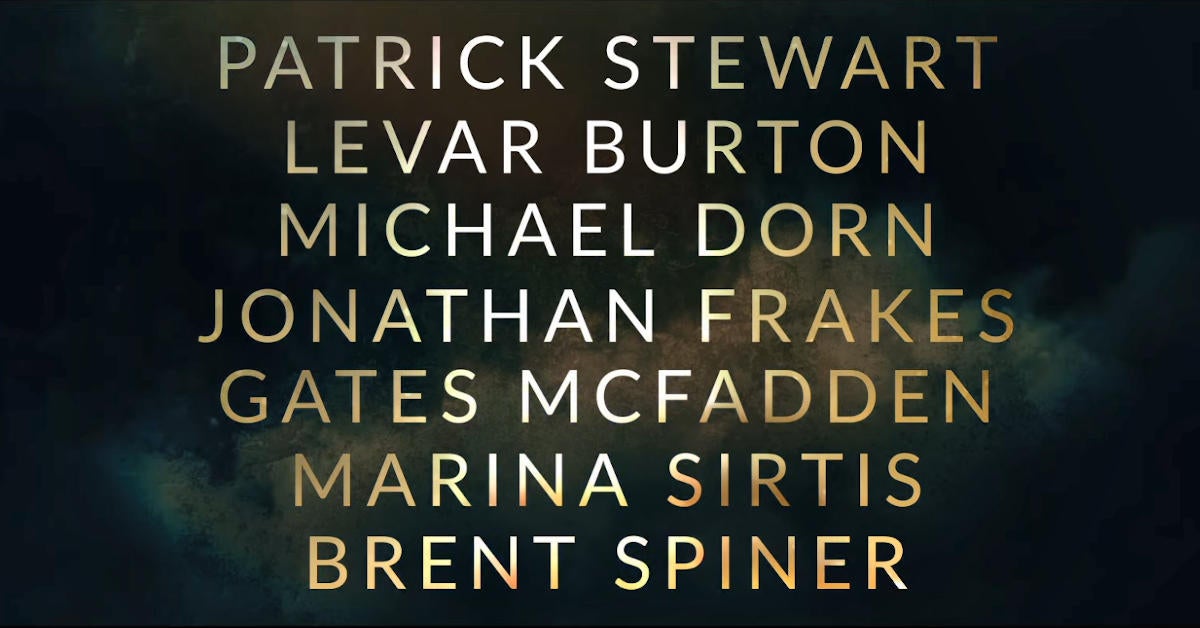
The end of the season brings a huge cast shake-up leading into the final season of the show. Isa Briones, Eva Evagora, Alison Pill, and Santiago Cabrera are done, which leaves room for the TNG regulars to come aboard.

Picard-3-cast-announcement

Where I would normally be excited to see these characters back in action for what is essentially TNG Season 8, I temper that excitement with the show’s performance so far. The characters and franchise deserve far better than a collection of loose story threads that defy cohesion.

While I have loved the new characters in general, I would have rather seen a single season of this show with the TNG characters on a final mission with Picard as he rectifies his mistakes and even sacrifices himself to save the day.

Will I watch Season Three? Yes, but with trepidation, because Star Trek: Picard has definitely been my least favorite series in this modern era of the franchise. It might even be my least favorite overall.

The storytelling potential deserves better.


cc-break

Culture on My Mind is inspired by the weekly Can’t Let It Go segment on the NPR Politics Podcast where each host brings one thing to the table that they just can’t stop thinking about.

For more creativity with a critical eye, visit Creative Criticality.

Culture on My Mind – The IDIC Podcast Festival

Culture on My Mind

Culture on My Mind
The IDIC Podcast Festival

May 14, 2021

This week, I’m promoting a Star Trek-themed podcasting festival helmed by Women at Warp: A Roddenberry Star Trek Podcast.

IDIC Podcast Festival - 1920x1080

The Women at Warp crew will be hosting a virtual podcast festival on July 17-18, 2021. The weekend event will honor the Star Trek principle of Infinite Diversity in Infinite Combinations (IDIC) by celebrating and amplifying the diverse voices in Trek fandom through a series of live podcasts.

The general announcement, call for programming and contributors, and important dates leading up to the event can be found on the event page at the Women at Warp website.

The IDIC principle is something that I believe in and the Women at Warp team is a champion of the cause. I’m more than happy to spread the word.

Today’s press release follows.


Women at Warp Launches the IDIC Podcast Festival

Women at Warp: A Roddenberry Star Trek Podcast is pleased to launch our call for applications for the first IDIC Podcast Festival, set to run July 17-18, 2021. This weekend-long virtual event honors the Star Trek principle of Infinite Diversity in Infinite Combinations (IDIC) by celebrating and amplifying the diverse voices of our fandom through a series of live podcasts.

Over the past year, COVID-19 has taken away so many opportunities to connect with diverse creators and audiences in person. At the same time, we’ve seen fans taking to social media to seek out and share podcasts that approach Trek from diverse perspectives. As an intersectional podcast we know that women’s issues are inextricably connected to issues of race and class, LGBTQIAP2S+ issues, disability issues, and more. The transformative period that we are in gives us an opportunity to truly center voices from all these diverse communities in our fandom.

Any podcast that showcases diversity in its hosting lineup is welcome to apply for the IDIC Podcast Festival, whether newly-launched or well-established. We welcome shows that do not exclusively cover Star Trek in their regular episode lineup, but ask that panel submissions for this event be Trek-related.

Admission to this virtual event is free. Podcasts will be streamed live on Women at Warp’s Facebook and YouTube pages and podcasts will be welcome to share recordings in their own feeds after the event.

The deadline for podcasters to submit applications is Friday, June 18. Click here to apply.

For more information, visit out event page at womenatwarp.com/IDIC-fest or contact us at crew@womenatwarp.com.

-30-

About Women at Warp

Women at Warp is a groundbreaking bi-weekly podcast committed to examining Star Trek from a feminist perspective, exploring Intersectional Diversity in Infinite Combinations with a rotating crew of seven hosts. Tune in for everything from episode and character analysis to history of women behind the scenes and in fan culture to discussion of larger themes and messages throughout the franchise. Women at Warp is part of Roddenberry Podcasts. For more information, please visit womenatwarp.com.

About Roddenberry Podcasts

Roddenberry Podcasts is a network of audio shows that deliver thought-provoking, insightful entertainment wherever you are. Podcasts that dig deep into Star Trek, social commentary, science and critical thinking – all ready to download in one place for you to enjoy on your commute or whenever you need a little lively discussion. For more information, please visit podcasts.roddenberry.com.

cc-break

Culture on My Mind is inspired by the weekly Can’t Let It Go segment on the NPR Politics Podcast where each host brings one thing to the table that they just can’t stop thinking about.

For more creativity with a critical eye, visit Creative Criticality.

The Thing About Today – September 8

September 8, 2020
Day 252 of 366


September 8th is the 252nd day of the year. It is Victory Day in Malta, also known as the feast of Our Lady of Victories or il-Vittorja, which recalls the end of three historical sieges made on the Maltese archipelago. Specifically, the Great Siege of Malta by the Ottoman Empire ending in 1565, the Siege of Valletta by the French Blockade ending in 1800, and, the Siege of Malta during the Second World War by the Italian army ending in 1943.


In the United States, today is “celebrated” as National Ampersand Day, National Ants on a Log Day (observed on the second Tuesday in September), and National Another Look Unlimited Day (observed on the day after Labor Day).


It is also National Pediatric Hematology/Oncology Nurses Day and World Physical Therapy Day.


Historical items of note:

  • In 1504, Michelangelo’s David was unveiled in Piazza della Signoria in Florence.
  • In 1522, Victoria arrived at Seville, technically completing the Magellan-Elcano circumnavigation of the world.
  • In 1565, St. Augustine, Florida was founded by Spanish admiral and Florida’s first governor, Pedro Menéndez de Avilés.
  • In 1810, the Tonquin set sail from New York Harbor with 33 employees of John Jacob Astor’s newly created Pacific Fur Company on board. After a six-month journey around the tip of South America, the ship arrived at the mouth of the Columbia River and Astor’s men established the fur-trading town of Astoria, Oregon.
  • In 1841, Czech composer and academic Antonín Dvořák was born.
  • In 1925, actor and comedian Peter Sellers was born.
  • In 1930, 3M began marketing Scotch transparent tape.
  • In 1937, author and illustrator Archie Goodwin was born.
  • In 1938, American sergeant and radio host Adrian Cronauer was born.
  • In 1945, the division of Korea began when United States troops arrived to partition the southern part of Korea in response to Soviet troops occupying the northern part of the peninsula a month earlier.
  • In 1960, United States President Dwight D. Eisenhower formally dedicates the Marshall Space Flight Center in Huntsville, Alabama. NASA had already activated the facility on July 1st.
  • In 1966, the landmark American science fiction television series Star Trek premiered with its first-aired episode, “The Man Trap”.
  • In 1971, actor Martin Freeman was born.
  • In 1973, Star Trek: The Animated Series premiered.


September 8th is International Literacy Day, declared by UNESCO on October 26, 1966. It was celebrated for the first time in 1967 with the goal of highlighting the importance of literacy to individuals, communities, and societies.

Some 775 million adults lack minimum literacy skills. One in five adults is not literate and two-thirds of them are women. 60.7 million children are out-of-school and many more attend irregularly or drop out. The ability to read would mean so much to improve their lives.

Among several other initiatives to support literacy, the UNESCO mission is supported through the Writers for Literacy Initiative by authors including Margaret Atwood, Paul Auster, Philippe Claudel, Paulo Coelho, Philippe Delerm, Fatou Diome, Chahdortt Djavann, Nadine Gordimer, Amitav Ghosh, Marc Levy, Alberto Manguel, Anna Moi, Scott Momaday, Toni Morrison, Érik Orsenna, Gisèle Pineau, El Tayeb Salih, Francisco Jose Sionil, Wole Soyinka, Amy Tan, Miklós Vámos, Abdourahman Waberi, Wei Wei, and Banana Yoshimoto.


The Thing About Today is an effort to look at each day of 2020 with respect to its historical context.

For more creativity with a critical eye, visit Creative Criticality.


The Thing About Today – August 19

August 19, 2020
Day 232 of 366


August 19th is the 232nd day of the year. It is Afghan Independence Day, commemorating the Treaty of Rawalpindi in 1919 which granted Afghanistan independence from Britain.


In the United States, today is “celebrated” as International Bow Day, National Aviation Day, and National Soft Ice Cream Day.


Historical items of note:

  • In 1570, Italian Jewish violinist and composer Salamone Rossi was born.
  • In 1612, the “Samlesbury witches” were put on trial. The three women from the Lancashire village of Samlesbury, England were accused of practicing witchcraft, and the trial was one of the most famous witch trials in British history.
  • In 1812, the American frigate USS Constitution defeated the British frigate HMS Guerriere off the coast of Nova Scotia, Canada. This engagement during the War of 1812 is what earned her the nickname “Old Ironsides”.
  • In 1839, the French government announced that Louis Daguerre’s photographic process was a gift “free to the world”.
  • In 1854, the First Sioux War began when United States Army soldiers killed Lakota chief Conquering Bear and in return were massacred.
  • In 1871, engineer and pilot Orville Wright was born.
  • In 1906, inventor Philo Farnsworth was born. He invented the Fusor, made many crucial contributions to the early development of all-electronic television.
  • In 1921, screenwriter and producer Gene Roddenberry was born. He is best known for developing the worlds of Star Trek.
  • In 1938, actress Diana Muldaur was born. She played multiple roles in the Star Trek universe, and inspired a catchphrase for Women at Warp: A Star Trek Roddenberry Podcast“Never forget: Pulaski banged Riker’s dad.”
  • In 1940, model, actress, and Bond Girl Jill St. John was born.
  • In 1947, actor Gerald McRaney was born.
  • In 1952, actor and director Jonathan Frakes was born.
  • In 1960, downed American U-2 pilot Francis Gary Powers was sentenced to ten years imprisonment in Moscow, Russia by the Soviet Union for espionage.
  • In 1964, Syncom 3, the first geostationary communication satellite, was launched.
  • In 1965, actress and producer Kyra Sedgwick was born.


August 19th is World Humanitarian Day.

It is an international day dedicated to recognizing humanitarian personnel and those who have lost their lives working for humanitarian causes. It was designated by the United Nations General Assembly as part of a Swedish-sponsored resolution, honoring the day on which the then Special Representative of the Secretary-General to Iraq, Sérgio Vieira de Mello and 21 of his colleagues were killed in the bombing of the UN Headquarters in Baghdad in 2003.

A Brazilian national, Sérgio Vieira de Mello dedicated a lifetime spanning over thirty years in the United Nations, serving in some of the most challenging humanitarian situations in the world to reach the voiceless victims of armed conflict, alleviate their suffering and draw, attention to their plight. His death together with 21 colleagues shocked the humanitarian community and robbed them of one of their most outstanding humanitarian leaders and intellectuals.


The Thing About Today is an effort to look at each day of 2020 with respect to its historical context.

For more creativity with a critical eye, visit Creative Criticality.


The Thing About Today – February 23

February 23, 2020
Day 54 of 366


February 23rd is the fifty-fourth day of the year. In Japan, today is The Emperor’s Birthday, a celebration of the reigning emperor’s birthday. Emperor Naruhito as born on this date in 1960.

In the United States, it is “celebrated” as National Banana Bread Day, National Dog Biscuit Day, and National Tile Day.


My favorite banana bread recipe is very simple.

  • Start with 3 or 4 bananas. The best bananas for this recipe are overripe and soft. Peel them and mash them up in a mixing bowl.
  • Add 1 teaspoon of baking soda and mix thoroughly.
  • Mix in 3 eggs, 1/2 cup softened butter, and 2 cups of flour.
  • Pour the mixture into a greased loaf pan.
  • Bake at 350°F for 50-60 minutes.

The bread is good cold, but it’s even better warm with a pat of butter, a dab of honey, or (even better) homemade honey butter.


Historical items of note:

  • In 1455, the Gutenberg Bible was reportedly first published. This was the first Western book printed with movable type.
  • In 1820, a plot to murder all of the British cabinet ministers was exposed. It became known as the Cato Street Conspiracy.
  • In 1836, the Siege of the Alamo began in San Antonio, Texas. After thirteen days of minor skirmishes, the siege would give way to the Battle of the Alamo.
  • In 1886, Charles Martin Hall produced the first samples of aluminum from the electrolysis of aluminum oxide. He was assisted by his older sister, Julia Brainerd Hall. The element was named aluminium, based on the mineral alum, and the International Union of Pure and Applied Chemistry (IUPAC) adopted the name as the international standard in 1990. In 1993, they recognized aluminum as an acceptable variant.
  • In 1889, Victor Fleming was born. He directed 1939 films The Wizard of Oz and Gone With the Wind.
  • In 1903, Cuba leased Guantánamo Bay to the United States “in perpetuity”.
  • In 1905, Chicago attorney Paul Harris and three other businessmen met for lunch. While there, they formed the Rotary Club, the world’s first service club.
  • In 1927, President Calvin Coolidge signed the bill that established the Federal Radio Commission. Later replaced by the Federal Communications Commission, the organization was created to regulate the use of radio frequencies in the United States.
  • Also in 1927, German theoretical physicist Werner Heisenberg wrote to fellow physicist Wolfgang Pauli to describe his now-famous uncertainty principle for the first time. Related to quantum systems, the uncertainty principle states that the more precisely the position of some particle is determined, the less precisely its momentum can be predicted from initial conditions, and vice versa.
  • In 1930, Gerry Davis was born. He was a script editor on Doctor Who, co-creator of the Cybermen with Kit Pedler, and reportedly originated the idea of the title character changing faces to accommodate replacement of the lead actor.
  • In 1940, Walt Disney’s Pinocchio was released.
  • In 1941, Plutonium was first produced and isolated by Dr. Glenn T. Seaborg.
  • In 1945, during the Battle of Iwo Jima, a group of United States Marines and a U.S. Navy hospital corpsman from the 5th Marine Division reached the top of Mount Suribachi. Joe Rosenthal of the Associated Press captured the iconic Pulitzer Prize-winning image of the group raising the American flag.
  • In 1954, the first mass inoculation of children against polio using the Salk vaccine began in Pittsburgh, Pennsylvania.
  • In 1981, actor, producer, and screenwriter Josh Gad was born.
  • In 1983, actress Emily Blunt was born.
  • In 1997, the NBC network aired an uncensored presentation of Schindler’s List. The film was watched by 65 million viewers.
  • In 2008, a United States Air Force B-2 Spirit bomber crashed on Guam. This was the first operational loss of a B-2 since the aircraft’s maiden flight in 1989.


In 1932, Majel Barrett-Roddenberry was born.

Before she began her quintessential run in the Star Trek franchise, she had some success with stage, film, and television, including comedy training from Lucille Ball. She started with Star Trek with The Cage, the rejected first pilot in which she played first officer Number One. She was romantically involved with series creator Gene Roddenberry and made the transition to the series as Nurse Christine Chapel, a role that carried into the motion pictures as well.

She provided several voices for Star Trek: The Animated Series and breathed life into the outrageous and iconoclastic Lwaxana Troi. She was also the regular voice for computers on Federation starships for every live-action series through Star Trek: Enterprise and most of the films through 2009’s reboot, a role that inspired the Amazon Alexa.

She appeared in several other non-Trek acting roles, but her status as First Lady of Star Trek was the backbone of her legacy. After Gene Roddenberry’s death, she brought two of his ideas to life with Earth: Final Conflict and Andromeda. She was also the creative director for the Gene Roddenberry’s Lost Universe comic book series.

Her final role was as the Enterprise computer in 2009’s Star Trek. She died from leukemia at the age of 76 on December 18, 2008.


The Thing About Today is an effort to look at each day of 2020 with respect to its historical context.

For more creativity with a critical eye, visit Creative Criticality.


Culture on My Mind – The Mystery of the Missing Doctors

Culture on My Mind

Culture on My Mind
The Mystery of the Missing Doctors
October 14, 2019


Funko Pops are the Beanie Babies of the early twenty-first century.

I say that as a statement of fact, not as a slight or insult. Created in 1993, Beanie Babies were a fad collectible from the late 1990s. They weren’t toys in the normal sense, and are collected more for their trading value and the overall cuteness factor. I have several of them, most of them celebrating milestones in my life because they were inexpensive and heartfelt gifts from friends and family. I cherish them because of those intended purposes.

Funko Pops are very similar. They’re difficult to play with, but they serve as inexpensive gifts for the pop culture fiend in your life. The line spans thousands of characters over a wide variety of franchises and licenses. From a collecting perspective, while they’re certainly not as advanced and playable as standard action figures, they do provide an easy way to celebrate particular fandoms.

I don’t collect a lot of Funko Pops. I don’t have any problem with people who do.

My main point of contention is with the Funko company itself, or rather with how they treat licenses that they create for.


Here it comes: Oh, god, he’s going to talk about Doctor Who again, isn’t he?

Yes, I am.

The franchise hardly needs any introduction. It’s a cultural touchstone that has existed for 56 years with fourteen actors in the title role. There are a lot of collectibles on the market to celebrate this franchise, among them Funko Pops.

But I feel like Funko is doing fans of this show (and their product line) a disservice with their offerings.

Funko Pops based on Doctor Who started hitting shelves in 2015. Thirty distinct Pops were released that year, focused mostly on the revival era of the franchise. At this point, the show was between Series 8 (during which Peter Capaldi debuted as the Twelfth Doctor) and Series 9 (during which Jenna Coleman departed). The revival Doctors were highly represented and the classic era got some love as well. The modern companions were fairly well represented as were the monsters. The TARDIS herself got two releases.

Twelve of the figures – forty percent of the year’s figures – were exclusives to geeky stores (Hot Topic, Barnes & Noble, GameStop, ThinkGeek, FYE) and major conventions (San Diego Comic Con (SDCC) and New York Comic Con (NYCC)). The SDCC Twelfth Doctor in the spacesuit commands over $200 alone on the secondary market.

2015 (Thirty releases, twelve exclusives)

  • Ninth Doctor (x2)
  • Tenth Doctor (x4)
  • Eleventh Doctor (x3)
  • Twelfth Doctor (x3)
  • Fourth Doctor (x2)
  • Sarah Jane Smith (The Hand of Fear)
  • K-9
  • Rose Tyler
  • Jack Harkness (x2)
  • River Song
  • Weeping Angel
  • Dalek (x3)
  • Cyberman
  • Adipose (x2)
  • The Silence
  • TARDIS (x2)

The line slowed down considerably in 2016. Six figures were released and all of them but one were Doctors. Only one was exclusive.

2016 (Six releases, one exclusive)

  • Twelfth Doctor
  • Eleventh Doctor (x2)
  • Tenth Doctor
  • War Doctor
  • Davros

The following year brought a major shift in the line as only three figures were released, and all of them were exclusives.

2017 (Three releases, all exclusives)

  • Clara Oswald (SDCC, later Hot Topic)
  • Rory Williams (Hot Topic)
  • First Doctor (NYCC, later Barnes & Noble and Books-a-Million)

In 2018, Funko moved back to six releases. Half of the line was sent to exclusive markets, including to Emerald City Comic Con (ECCC).

2018 (Six releases, three exclusives)

  • Amy Pond (ECCC, later Hot Topic)
  • Thirteenth Doctor (SDCC, later BBC)
  • Vashta Nerada (NYCC, later Hot Topic)
  • Thirteenth Doctor
  • Clara Memorial TARDIS
  • Missy

Finally, 2019 brought five new figures, two of which were exclusives. This year’s lineup was exclusively targeted toward Series 11 of the revival era.

2019 (Five releases, two exclusives)

  • Thirteenth Doctor
  • Reconnaissance Dalek
  • The Kerblam Man
  • P’ting (SDCC)
  • Tzim-Sha (NYCC)

Funko has released 23 figures based on the Doctor, but only 8 Doctors overall. The product line is heavily weighted toward the revival era, with only two Doctors and two companions representing the first 42 years of the franchise’s existence. Technically, Davros could represent the lone enemy from the classic years, but he has also appeared in the revival era which blunts the impact of that figure’s representation.

The problem is that we are missing six Doctors for a complete lineup of the show’s regenerating hero.

Funko has had problems completing lines in the past: Back when they had the Star Trek license, they created Pops for The Original Series, The Next Generation, and Star Trek Beyond. They completed the Enterprise crew for Beyond, but fell short with Next Gen and The Original Series. Specifically, they left out Beverly Crusher and Katherine Pulaski (both women and doctors) and only Kirk, Spock, and Scotty made the cut from the original NCC-1701. The rest of the franchise – Deep Space NineVoyagerEnterprise, the other twelve movies – didn’t get any love at all.

It’s not the only franchise line to fall to the wayside, either.

It would be understandable if Funko didn’t have the money or resources to complete the Doctor Who line, but that doesn’t jive with how they treat other popular franchises. Consider the various chrome sets (Marvel, DC, Star Wars, etc), the flocked versions, the sparkly “Diamond” glitter versions, the Rainbow Batman set (commemorating Batman’s 75th anniversary and Detective Comics #241), the DC Comics Lantern figures (Wonder Woman, Superman, and others became members of various Lantern Corp for a spell, prompting new Funko Pop molds for collectors), and the new Star Wars Skywalker Saga sets (which are really just repainted leftovers).

It also doesn’t pass the smell test when considering how many are coming out this year alone – an entire Mortal Kombat line, Miami ViceThe Dark Crystal, more Star WarsFrozenOverwatch, and the list goes on – and how many are stacked up on store shelves in the meantime. Just like Beanie Babies, these things seemingly reproduce like tribbles.

The evidence is clear. After an impressive debut followed by lackluster follow-up and lack of representation for classic fans, it’s apparent that Funko is failing fans of Doctor Who.


So, what can they do to fix it?

The obvious solution is to create the figures, but given that the market is saturated and (subsequently) distribution is scattershot, big-box brick-and-mortar storefronts are not the best option. I wouldn’t recommend convention exclusives either, since that approach tends to overinflate the price for anyone who cannot make the trip to San Diego, New York, Seattle, or other major conventions. I got lucky when shopping for the First Doctor because I found one on eBay that was missing the NYCC sticker and had a dented box, but not everyone has that.

Funko has worked with widely accessible storefronts such as Hot Topic, GameStop, Entertainment Earth, and Amazon. One option is to sell the missing Doctors through one of those more focused retailers. Another option is to use the online Funko Shop to “pre-order” the figures and judge how many to make. Six months later, distribute the figures to the buyers with a few left over for stragglers (which can by sold via the first option).

If this proves profitable, it could open the way for more companions, more monsters, and more Doctor Who in the Funko line.

Either way, the hole in the collection is painfully obvious. Doctor Who shouldn’t go the way of Star Trek or other incomplete franchise lines. It is a cornerstone and gold standard for science fiction television, and each of the incarnations of the titular hero has a dedicated fan following.

Funko should respect that history and those fans. They should complete the timeline of the Doctor.

cc-break

Culture on My Mind is inspired by the weekly Can’t Let It Go segment on the NPR Politics Podcast where each host brings one thing to the table that they just can’t stop thinking about.

For more creativity with a critical eye, visit Creative Criticality.

Culture on My Mind – Fortnight Philosophy: February 27, 2017

Culture on My Mind

Culture on My Mind
Fortnight Philosophy
February 27, 2017

fortnight-02-27-2017

cc-break

Culture on My Mind is inspired by the weekly Can’t Let It Go segment on the NPR Politics Podcast where each host brings one thing to the table that they just can’t stop thinking about.

For more creativity with a critical eye, visit Creative Criticality.