
Timestamp #111: Meglos

Doctor Who: Meglos
(4 episodes, s18e05-e08, 1980)
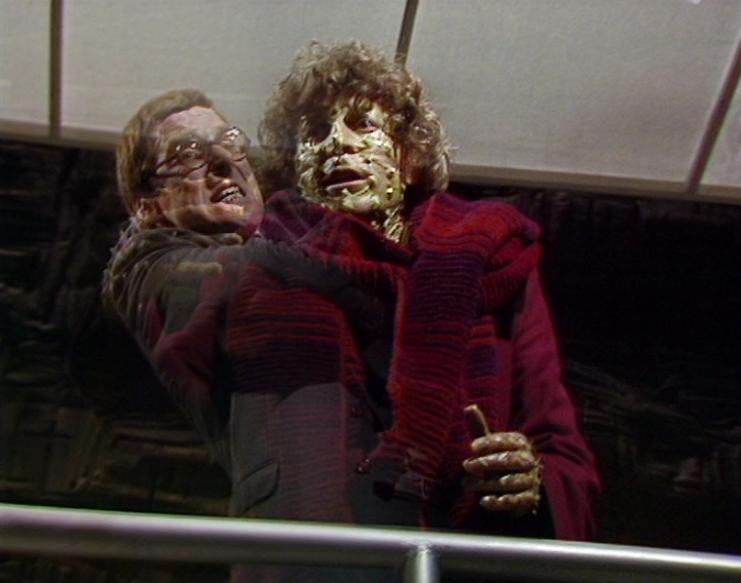
timestamp-111-meglos


Time loops have momentum problems.

Time loops have momentum problems.

Time loops have momentum problems.

Annoying, right? So why did the showrunners think it would hold my attention without irritating me?

In the TARDIS, the Time Lords are repairing K9. Romana puts the TARDIS into a hover over the planet Tigella to avoid any sudden movements during the procedure, and the Doctor reminisces about his last experience on the planet. We’ll see this again.

On the planet below, a transformer blows resulting in a severe casualty for a community that lives below ground. They are the Savants, and are in conflict over an item called the Dodecahedron, a sacred item for the Deon sect of their culture, and the religious leader named Lexa refuses to let them touch it, enter the power room where it resides, or venture above ground. Stuck in the middle of the impasse, Zastor, the leader of the community, sends for the Doctor.

Two notes: First, Lexa looks familiar. It’s good to see Jacqueline Hill again, and she is just relishing this role. Second, the Savants share the same hairstylist as Prince Adam of Eternia and the Romulan Sela.

On a desert world, a ship lands to reveal a party of bounty hunters, including a Clark Kent-style human in a business suit. The human is stunned, and this crew brought him to the world for a reward. A mysterious structure rises from the sand, revealing a door which the party enters. Beyond, they meet Meglos, a giant sentient cactus and the only survivor of the planet. Meglos tasks the bounty hunters with stealing the Dodecahedron, which he claims was constructed on the desert planet and is far more powerful than the Tigellans realize. As Meglos and the human are placed in adjacent chambers for some kind of procedure, the bounty hunters scheme to steal all of the valuable technology within, but Meglos traps them in the structure and forces them to execute his plan. The procedure transfers Meglos into the human, notably changing the human’s skin into something more cactus-like. Meglos then traps the Time Lords in a time loop and assumes the Doctor’s identity. They set course for Tigella.

Time loops. Why did it have to be time loops?

Lexa finally relents and allows the Doctor to visit, but only if he swears allegiance to the Deons. Zastor is upset with the decision, but errs on the side of diplomacy when the bounty hunters ship arrives and the Meglos-Doctor inspects the city. Meglos-Doctor takes the oath, and then sells them on the idea that it is too dangerous for anyone but him to inspect the Dodecahedron. Shortly afterward, Meglos-Doctor steals the Dodecahedron.

The Doctor and Romana break the time loop (thank the maker) by repeating the events within the loop, setting up a destructive interference pattern. They then proceed to Tigella and head for the city, but Romana is waylaid by some bell plants and K9 is sent to find her. The Doctor arrives in the city as his arrest order goes out, stumbles into some guards, and is taken prisoner.

K9’s power runs low, so he returns to the city. Of course, without the Dodecahedron to power it, the city shares a similar fate. Meanwhile, Romana follows a trail of scorched vegetation to find the bounty hunter ship only to encounter the crew and an overacted order to kill her. Romana stalls them by promising to lead the crew to her ship, parading them in circles through the jungle, and snaring them in the bell plants.

While in hiding, Meglos struggles to keep the Clark Kent human in check. In Superman III-style – okay, okay, but that bomb of a movie has its moments – it is fighting his control.  After the Doctor convinces the Savants that he is the victim of a doppelgänger, Meglos kidnaps engineer Caris and convinces her to follow him. As the Doctor and Zastor investigate the Dodecahedron’s whereabouts, the Deons stage a revolution and send all of the non-believers to the surface. Lexa keeps the Doctor and prepares him for sacrifice.

On the run from the bounty hunters, Romana finds K9 stranded in the undergrowth. She barely makes it inside the city and is trapped in the airlock, but she’s safe from the bounty hunters for a moment before they break down the door. As Meglos is plagued by the human he absorbed, Caris takes him hostage, but he breaks away and joins the bounty hunters outside the city. Romana joins forces with Caris to search for the Doctor, who is about to be crushed by a giant stone. They find Zastor and Deedrix, and the four rush to the power room just in time to prevent the sacrifice.

Meglos and the bounty hunters return to Zolfa-Thura, the desert planet from earlier. The Doctor wonders why they would go there until Romana reminds him of the screens on the surface. They head for the TARDIS, and a dying bounty hunter takes a shot at Romana. Lexa steps in front of the bolt, giving her life for the Time Lords and ending Jacqueline Hill’s roles with the franchise. In all seriousness, that woman was such a class act.

When Meglos buries the Dodecahedron inside the perimeter, the screens amplify its power into a Death Star-type of superweapon. Since Dantooine is too remote to make an effective demonstration, the bounty hunters choose Tigella as the test for their new tool of terror. The Doctor leaves Romana, K9, Caris, and Deedrix with the TARDIS as he attempts to stand in for Meglos and stall the countdown. The bounty hunters decide to capture Meglos and operate the weapon themselves, and they end up capturing both the cactus and the Time Lord. Trapped in the same cargo hold, the Doctor informs Meglos that he changed the target’s coordinates to Zolfa-Thura. Meanwhile, the rest of the travelers rescue the pair, presenting an opportunity for Meglos to abandon his humanoid form and slither away.

The travelers and the sacrificial human run for the TARDIS, which has a bit of trouble dematerializing but finally does so before Zolfa-Thura is disintegrated. The Time Lords return everyone to their proper places, but the Tigellans will have to live on the surface now since the Dodecahedron was destroyed. As they get ready to take the Clark Kent human home, they get an urgent message: Gallifrey needs their help.

You know, I enjoyed this one. Except for that stupid time loop sequence that consumed most of the first episode. Carve that out and restore the momentum, and this serial could have sung.

Instead, it merely meets the average.


Rating: 3/5 – “Reverse the polarity of the neutron flow.”


UP NEXT – Doctor Who: Full Circle


The Timestamps Project is an adventure through the televised universe of Doctor Who, story by story, from the beginning of the franchise. For more reviews like this one, please visit the project’s page at Creative Criticality.




Timestamp #110: The Leisure Hive

Doctor Who: The Leisure Hive
(4 episodes, s18e01-e04, 1980)

timestamp-110-the-leisure-hive


It’s a new season with new credits and a new theme! A so very ’80s theme.

We open on a windy beach with a long, long, loooong panning shot that reveals a snoozing Doctor and a disgruntled Romana. In her frustration, she throws her beach ball in to the ocean and K9 tries to fetch it. The robot dog’s head explodes removing him from the story for the time being. Dammit, Romana!

At least he had the right voice again.

Another jarring change: The Doctor’s new outfit is a lot of burgundy and purple. I’m not as keen on it as his original costume.

The source of Romana’s frustration is that the Doctor missed the opening of Brighton Pavilion, mostly because he is still using the randomizer to avoid the Black Guardian, and she suggests an alternative: Argolis, home of the Leisure Hive.

The leaders of the Leisure Hive, a group with amazing hair and makeup, are experiencing financial straits and that is causing discord among them. An Earth businessman offers a way out, but it involves a buy-out by Argolin enemies known as the Fomasi. That causes further discord both among family – Chief Executive Morix’s son Pangol despises the idea – and opens the door for the Fomasi to take advantage of the radioactive wastes beyond the Hive’s walls. During the negotiations, Morix dies from old age.

At this point, I was impressed with the production values. They have improved with this serial, from the filming and scene blocking to the music. It feels very 1980s sci-fi, and it’s a style that carried into productions like Red Dwarf and remained prevalent for a long time in TV sci-fi.

The Doctor and Romana arrive in time to watch a demonstration of the Hive’s newest technology, the tachyon recreation generator. A demonstration goes awry, tearing a volunteer limb from limb. As they watch and debate the sciences, a reptilian cuts into the wall and infiltrates the Hive. As the Doctor and Romana investigate the incident, the new chairman, Mena, requests to see them. It is a case of mistaken identity as Mena is expecting an Earth scientist named Hardin. The Time Lords try to run for the TARDIS as security is alerted about their presence, but the Doctor ends up inside the tachyon generator and is apparently torn apart as a reptilian hand activates the machine.

The image is a cliffhanger and an illusion, revealed as the Doctor slips out the back of the device at the start of a new episode. The Time Lords are captured and taken to Mena for questioning as the actual Earth scientist that the chairman was waiting for arrives. Based on their proven expertise, Mena asks the Time Lords to assist in the tachyon experiments, which are an attempt to rejuvenate the Argolin surface by reversing the flow of time. The radiation causes the Argolins to age rapidly, and has also caused their sterility. Their race is dying.

The big fly in the ointment is that the Earth scientists have been faking their results, and they are very hesitant about involving the Time Lords for fear of discovery. Romana injects herself into the experiment, and Hardin’s partner Stimson ventures off to find the Earth businessman. Instead, the man finds the businessman’s corpse before becoming one himself in short order. The Doctor is snooping around when he found by the supposedly dead businessman and is framed for the Stimson’s murder. So, three options: 1) Businessman Brock is a doppelgänger; 2) Businessman Brock’s corpse is a doppelgänger; or 3) I’m watching The Walking Dead three decades early.

Romana and Hardin are able to make the experiment work, but just as they leave to deliver the good news to Mena, the experiment catastrophically fails. Pangol orders one more test, this time on the Doctor. He agrees, but as the experiment begins Romana finds the remnants of their previous attempt. The Doctor exits the booth, and he has aged several hundred years instead of getting younger. The aged Doctor looks a lot like Donald Sutherland in The Hunger Games franchise.

That’s some really bad science by Romana and Hardin since they didn’t check their results fully before declaring success.

The Time Lords are imprisoned by Pangol, driven by the Doctor’s pending charges for murder, and are fitted with collars that limit the places that they can visit. Pangol uncovers the fraud by the human scientists, and Hardin asks for leniency to continue since he and Romana were so close. Mena allows this, but not Romana’s help. The human is on his own.

As they sit in their cell, the Doctor notes to Romana that Pangol is the only young Argolin at the hive. They are soon freed by Hardin using a borrowed security key, and the they piece together that the machine is not for recreation but for re-creation.  Clever word play, and it comes into the calculation as Pangol sways Mena to turn down the Fomasi offer, claiming that he will rebuild Argolis because he is the first of the new children from the generator. It’s a sort of cloning machine.

Romana goes into the machine since she has more years to spare than the Doctor, and while inside, she encounters an alien. Using the security feeds, Pangol notices that the Time Lords are meddling with the device, and plans to age the occupant by two thousand years. Luckily, the alien, a Fomasi, rescues Romana and reveals a device that was stopping the rejuvenation experiments. The Time Lords escort the Fomasi to the boardroom, where the alien reveals Brock’s true face: The businessman is a Fomasi.

Which we already knew for the most part.

The good Fomasi goes further, unmasking all of the Fomasi in the room and explaining their presence. Brock’s team represents the West Lodge, dissidents of the Fomasi government who were trying to buy out Argolis and foment war. The good Fomasi apprehends the dissidents and makes plans to take them home for trial, the ever skeptical Pangol interferes by destroying their ship upon takeoff.

The Time Lords and Hardin return to the lab and discover that the device from the machine is missing. The Doctor retrieves the randomizer from the TARDIS and installs it in the generator. Pangol dons the Helmet of Theron, a holy artifact, and duplicates himself many times over in the machine. Since the Doctor was in the machine as well, the clones turn out to be images of the Doctor. The process restored the Time Lord, and the clones are unstable and short-lived. As they start to vanish, Hardin takes the ailing Mena to the generator to rejuvenate her, but Pangol pushes by. The process turns Mena into a young adult and Pangol into an infant.

I was impressed by David Haig. He really sold Pangol’s insanity.

After the Doctor stops the machine, the good Fomasi returns, having been kicked out of his shuttle before takeoff. The Argolins and Fomasi begin their discussions again, and the Time Lords depart for that overdue holiday.

I was entertained by this serial, despite several padding moments. I was very disappointed in the lack of K9, especially after John Leeson returned. It came down to a high three grade, and I’m keen on rounding up.


Rating: 4/5 – “Would you care for a jelly baby?”


UP NEXT – Doctor Who: Meglos


The Timestamps Project is an adventure through the televised universe of Doctor Who, story by story, from the beginning of the franchise. For more reviews like this one, please visit the project’s page at Creative Criticality.



Timestamp: Seventeenth Series Summary

Doctor Who: Seventeenth Series Summary

Timestamp Logo Third 2


The franchise is in a bit of a slump.

The Fourteenth Series was strong, even with a farewell to a beloved companion, the welcome of another companion, and a slight stumble with The Deadly Assassin. The Fifteenth, Sixteenth, and now Seventeenth have all been well below that mark, and they have all been at about the same level.

So what happened?

Tom Baker was still the Doctor. The companions shifted from Leela (Louise Jameson) to Romana (Mary Tamm and Lalla Ward). Neither of these elements has stood out as a problem to me. Sure, I liked Leela more than Romana, but neither version of Romana has been objectionable.

What about behind the scenes issues? Series Fourteen had Philip Hinchcliffe producing episodes with Robert Holmes editing. Series Fifteen brought in Graham Williams to produce and added editor Anthony Read, and Robert Holmes was gone by Series Sixteen. Douglas Adams took over script editing for Series Seventeen.

And, after reading up on Graham Williams, that seems to be the linchpin. Hinchcliffe’s era was controversial due to the horror and violence elements, and Williams was asked ordered to tone it down, which he did by injecting more humor. He also had budget cuts, industrial (labor) problems, and friction with Tom Baker.

By the look of things, all three of these troubled seasons should have worked. The problem comes with stories like Image of the Fendahl, Underworld, The Power of Kroll, The Creature from the Pit, and The Horns of Nimon, all of which dragged like anchors on their respective seasons. To be fair, they’re still not bad sets – in fact, they’re all still above my average of a 3.0 grade – but they aren’t up to the standards set within the Fourth Doctor’s run by Series Twelve, Thirteen, or Fourteen.

Now for the highlights of this set: Destiny of the Daleks, City of Death, and Shada were great. They flowed well, were beautiful to watch, and kept me engaged. They were fantastic headers and footers for the series.

In the middle, there’s Romana. Back in the Sixteenth Series Summary, I noted that she wasn’t a stellar companion because she was written as the Doctor Redux. That hasn’t changed, and in fact, it’s gotten worse as Romana becomes more experienced. Lalla Ward is great, just like Mary Tamm was, but the chemistry is wasted in the writing.

Somewhere near the back of the pack is poor K9. I love the character, but the new voice has to go.

By my scoring, the Seventeenth Series is tied with the Fifteenth and Sixth for third to last place. It beats out the Sixteenth and the Third.

I dislike repeating myself, but I’ll do it anyway: I’m really hoping things turn around.


Destiny of the Daleks – 5
City of Death – 4
The Creature From the Pit – 2
Nightmare of Eden – 3
The Horns of Nimon – 2
Shada – 4


Series Seventeen Average Rating: 3.3/5


UP NEXT – Doctor Who: The Leisure Hive


The Timestamps Project is an adventure through the televised universe of Doctor Who, story by story, from the beginning of the franchise. For more reviews like this one, please visit the project’s page at Creative Criticality.
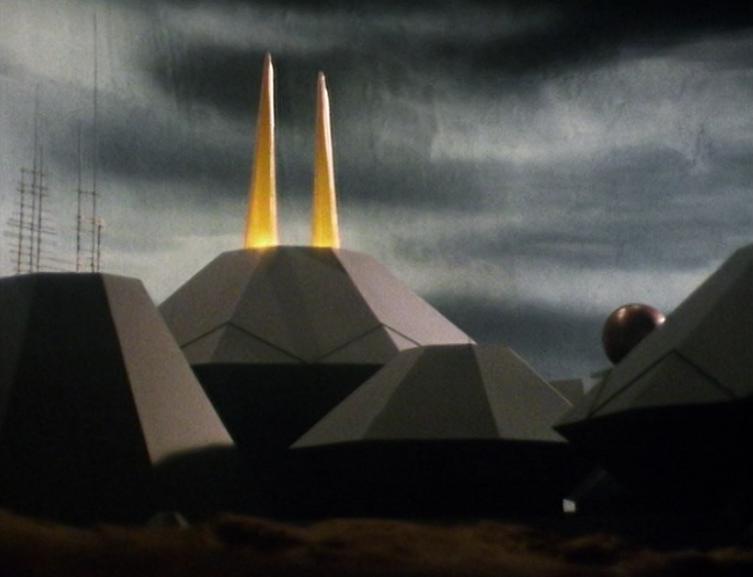
Timestamp #109: Shada

Doctor Who: Shada
(6 episodes, s17e21-e26, 1980/1992)

timestamp-109-shada


The lost (and reconstructed) episode of the color era.

Before the story begins, Tom Baker takes us on a tour a Doctor Who museum that I would have loved to visit. From this point forward, the episode is split between the filmed portions from 1980 and, where the footage wasn’t shot, narrations by Tom Baker in 1992. Now, given the events of The Day of the Doctor and that the linking narrations are given by Tom Baker as the Doctor, I think it could be reasoned (in fan canon at the very least) that this story is being told by the Curator.

The story begins at a think tank in space. One of the hive’s minds awakens and drains his comrades using the computer that they were all attached to before setting a quarantine message and stealing the hard drive. After he leaves, the rest of the hive wakes up and stumbles around like zombies. Moving to what looks like relative present day, a man named Chris Parsons pedals to Cambridge and arrives at the door of Professor Chronotis, an older gentleman with the TARDIS in his office, and asks for a particular book on carbon dating. He leaves in a hurry with a stack of books as the professor reads The Time Machine.

Not too far away, the Doctor and Romana are punting on a river while (unbeknownst to them) being observed by the man from the think tank. The Time Lords hear a strange babbling of voices as they decide to return to the professor’s office. On the way, they encounter Mr. Wilkin, a man who remembers the Doctor’s previous three visits over the last three decades. The Doctor jokes that he was at Cambridge one other time in a completely different body, and the reaction establishes Wilkin as the comic foil for the duration. The Time Lords arrive in the professor’s office where he discloses to Romana that he is a retired Time Lord and offers them tea. The Doctor tells the professor that they came at his summons, but the professor says that he didn’t send the signal. While the Think Tank Man arrives in Cambridge, demands to know where Chronotis works, and is rebuffed by Wilkin, the professor remembers that he summoned the Time Lords to help find the missing book. The book, now in the possession of Chris Parsons, is written an alien dialect, and when Chris tries to analyze it, the tome smokes and glows, burning the student on contact.

The Think Tank Man, looking ridiculous in his sun hat and flowing silver cape, hitches a ride with a stranger. Thankfully, Tom Baker tells us that the man’s name is Skagra and that he used his sphere to knock out the driver before taking over the car and driving to his cloaked spaceship in a field. Kind of like Star Trek IV: The Voyage Home, but without Spock and whales.

The professor explains that the missing book is The Worshipful and Ancient Law of Gallifrey, dating from the era of Rassilon. The Doctor is beside himself: The book is one of the powerful artifacts, and the professor stole it from the Panopticon Archives upon his retirement. As Time Lords past and present continue to search the professor’s library, Skagra absorbs massive amounts of data about the Doctor, then contacts his superiors on a carrier ship to set plans in motion.

The Doctor and Romana briefly discuss Salyavin, a Gallifreyan criminal, before Chronotis scrounges up Chris Parsons’s identity from his spotty memory. The student has left the book with his girlfriend Claire (who initially looks a lot like Sarah Jane) while he researches the book’s origins. The Doctor sets out to find Chris as Skagra returns to Cambridge. As Romana looks in the TARDIS for some milk for their tea, Skagra arrives in contemporary clothes and asks for the book. When Chronotis refuses to yield the book, Skagra uses the sphere to attack the professor.

The Doctor arrives at the lab and examines the book with Claire, determining that it is 20,000 years old. Meanwhile, Chris returns to the professor’s office as Romana and K9 examine Chronotis. The professor has had part of his mind extracted, resulting in severe mental trauma. Romana sends Chris into the TARDIS for a medical kit while she tends to the professor, placing him on life support with the kit. Sadly, he is in a vegetative state, but he does send a message in Gallifreyan morse code warning them of the spheres, Skagra, and Shada before dying and vanishing. Fortunately for them, the information that Skagra extracted did not show Chris’s identity. Unfortunately, Skagra intercepts the Doctor and the book. The Doctor is pursued through Cambridge by the sphere, losing the book in the chase. Skagra retrieves the book, but the Doctor is captured by the sphere and it starts to drain his mind.

There was some really good situational humor during the chase – The Doctor asks the No Cycling sign to pardon him for cycling in its vicinity – as well as good production as the sphere actually knocks over a pedestrian in the hunt.

Romana arrives in the TARDIS and rescues the Doctor. They return to the professor’s offices just after the man disappears – presumably because he was on his last regeneration – and the Doctor vows vengeance. K9 begins scanning for the sphere as the Time Lords and Chris wait in the TARDIS. Meanwhile, the sphere consumes a fisherman for no particular reason.

Claire heads to the professor’s offices with a printout just as the TARDIS dematerializes in pursuit of the sphere. They arrive in the field where Skagra’s ship is located, and Skagra welcomes the group aboard before taking them prisoner. Skagra reveals that he was only interested in the professor’s mind, not in killing him. He demands that the Doctor decode the book, but when the Doctor refuses the sphere attacks him. In their cell, Romana, K9, and Chris look for a way out. They can find nothing, and even K9 cannot blast out. The robotic dog does detect the voices, including a new addition in the Doctor’s voice. Romana is transmatted from the cell and forced by the once more fantastically dressed Skagra to pilot the TARDIS.

Claire runs from the office, revealing to Wilkin that the book is absorbing energy before returning to the office to wait. While searching the rooms, she inadvertently sets off an explosion that results in a time vortex filling the space.

The Doctor awakens on the ship and reveals to the vessel’s computer that since he was playing dumb, the sphere only copied his mind. He convinces the ship that he is dead to secure freedom for him and his companions, and it replies by shutting off the air supply. Chris and K9 are pacing in their cell when they are transmatted into the corridor, prompting the ship to restore the oxygen supply. Meanwhile, the TARDIS arrives on the Krarg carrier ship. She watches as one of the crystalline beings is born, listening as Skagra tells her that he needs a Time Lord to decipher the book. The Doctor pilots Skagra’s ship into space and it dematerializes like a TARDIS as he boosts the power. Unbeknownst to our heroes, a hidden Krarg forms in the shadows.

Claire awakens inside the offices to discover Professor Chronotis. The office is a TARDIS, Claire has activated it, and the capsule restored him in the accidental temporal convergence. The book is revealed to be the key to Shada, a Time Lord prison.

Back on the carrier, Skagra plows through the Doctor’s memories but is unable to crack the code. As the Doctor’s ship arrives at the Think Tank, he and Chris board the ship, and (on the carrier) Skagra and Romana retreat to the Doctor’s TARDIS. As Skagra turns the pages and continues his study, the TARDIS operates, and he deduces that turning the last page will unlock the code.

The Doctor and Chris discover the aged members of the Think Tank, and the Doctor connects Chris to the machine. This restores the Think Tank members, and the lead scientist, Caldera, explains the group’s history with Skagra. Skagra intends to use his intellect to dominate humanity by merging everything into himself, but needs Salyavin to do so. After the Doctor learns this, he is interrupted by K9, who has been holding back the fully formed Krarg. The crystalline creature attacks the group, but in the process it destroys the central computer column. In the smoke, the Doctor, K9, and Chris escape to the Skagra’s ship and escape just in time. Sadly, the Think Tank members die as their ship explodes.

The professor’s TARDIS is wedged between two irrational time interfaces, and Chronotis and Claire attempt to fix the capsule. The retired Time Lord telepathically focuses on Claire’s mind and transfers his knowledge into her. Meanwhile, Skagra’s ship arrives at the carrier, and in the attempt to rescue Romana, the Doctor and Chris end up inside the professor’s TARDIS. In the ensuing discussion, the seeds are sown to reveal Salyavin’s true identity. As they talk, Skagra pilots the Doctor’s TARDIS to Shada using the book and start searching for Salyavin. The Doctor and Chronotis fix the professor’s TARDIS and follow to Shada.

Skagra starts the revival process in the prison, but cannot find Salyavin. The two Time Lords arrive and Chronotis reveals that he is Salyavin. Skagra attempts to drain Salyavin’s mind, but K9 slows him down by blasting the sphere. The fragments of the sphere latched onto the prisoners and the newly arrived Chris, and the brainwashed horde advanced on the Doctor. K9 attempts to slow them down, but is deflected by a Krarg. The Doctor uses the distraction to escort Romana, Claire, and K9 to the professor’s TARDIS. As the Doctor attempts to find a solution, Romana reminds him that all of the captured minds are in the melting pot, including the Doctor’s.

Skagra dispatches his legion throughout the universe to advance the revolution. The Doctor, Romana, and Claire use the professor’s TARDIS to generate a force field as they pursue Skagra in the Doctor’s TARDIS, capturing the phone box in the time vortex. The Doctor attempts to pass through to his TARDIS, but an accident deactivates the force field and throws the Doctor into the vortex. He ends up in a closet inside his TARDIS and formulates a plan.

The professor’s TARDIS arrives on the carrier ship as the Doctor struggles for control of the joint mind. Romana destroys the Krarg generator, defeating the crystalline creatures. Seeing that he has lost, Skagra retreats his ship, but the computer incarcerates him after deciding to serve the Doctor. The group restore the stolen minds and returns the prisoners to Shada. After calling the Time Lords on Gallifrey, it is discovered that Salyavin covered his escape by erasing the memory of Shada from the collective Time Lord memory, including stealing the key.

The TARDISes return to Earth, where Salyavin will supposedly continue to live in his absent-minded persona of Chronotis. The return of the professor’s offices stumps Wilkin, who has summoned a policeman to report the “stolen room,” as the professor entertains his guests to tea.

Overall, this was a highly enjoyable romp. I appreciated the linking narrations as a reconstruction (of sorts) of this lost episode, but they did lack a bit when it came to the action and battle sequences. I was a bit confused about the Salyavin being allowed to remain in retirement instead of being imprisoned once more. I mean, yes, he did help set things right, but he’s still a convicted criminal who escaped and set this entire course of events into motion. Perhaps it’s a measure to keep him out of the reach of Skagra, who is still trapped on his starship?


Rating: 4/5 – “Would you care for a jelly baby?”


UP NEXT – Seventeenth Series Summary


The Timestamps Project is an adventure through the televised universe of Doctor Who, story by story, from the beginning of the franchise. For more reviews like this one, please visit the project’s page at Creative Criticality.


Timestamp #108: The Horns of Nimon

Doctor Who: The Horns of Nimon
(4 episodes, s17e17-e20, 1979-1980)

timestamp-108-the-horns-of-nimon


Doctor Who does mythology once again, and they do it just as well as before. Which, if you’re keeping score, is not well at all.

A Skonnan starship cruises through space. The crewmen grouse about how aged and overwhelmed their equipment is, but, hey, once Nimon fulfills his promise, they will revel in their restored glory. That will happen once their cargo, a batch of children, are delivered. Even before the co-pilot drank the stupid juice, I knew that this crew would attempt delivery at all costs. Lo and behold, the co-pilot simply cannot wait the extra twelve hours, so he overtaxes the engines to make it in half the time. The resulting overload kills the pilot and strands the ship in deep space.

Predictable.

Not too far away, the Doctor, Romana, and K9 are making modifications to the TARDIS. The Doctor expects the time capsule to be motionless in space, but they have stopped in the gravitational field of a black hole. Since the Doctor has shut down console room, the Doctor rigs the force fields and extends them to the nearby Skonnan ship. But first, they collide with it.

You know, I like my silly humor in Doctor Who, but I groaned at the mouth-to-snout resuscitation of K9. It did not work.

The team spacewalks down their makeshift bridge and enters the Skonnan ship. They find a storage room of radioactive crystals and the children that are intended as a sacrifice for Nimon. One of them is Seth, the Prince of Aneth. The Time Lords send K9 back to the TARDIS and are soon discovered by the Skonnan co-pilot. They also observe that the gravity is steadily increasing.

On the Skonnan homeworld, the leader/scholar/priest/overlord named Soldeed is informed of the goings-on and decides to inform Nimon. That whole thing feels like a televangelist in charge of a mega-church. The Nimon is (effectively) a sentient minotaur.

The Doctor and Romana set to work trying to save everyone from the impending black hole. The Doctor returns to the TARDIS as Romana (with her own custom sonic screwdriver!) works on the starship. After Romana completes her work, the co-pilot pulls away and resumes his course, stranding the Doctor and the TARDIS. Within moments, a rogue planetoid bears down on them, caught in the gravity well, ending the boring first episode.

The Doctor sees their situation is hopeless and says his farewells to K9. The “first prize” ribbon for the best dog ever was just about as funny as the earlier mouth-to-snout gag. The Doctor has a last minute revelation and bounces the TARDIS off the planetoid, freeing them from the gravity well. He begins repairs on the TARDIS so he can pursue the Skonnan ship.

Back on Skonnan, Soldeed is scolded by Nimon, and the minotaur repeats already established story details: The contract will not be completed until the shipment arrives. Once we get past this immense plot padding, we find out that Seth is destined to destroy the Nimon, and his father is waiting for Seth’s victory with a vast celebration.

It’s at this point that I understood where this was headed. Aneth is Athens, Seth is Theseus, Nimon is Minos, Crinoth is Corinth, and the last time Doctor Who tried to directly adapt Greco-Roman mythology, we had Underworld.

Adding to the padding, the Doctor is having trouble fixing the TARDIS. The time rotor shorts out with a series of comedic sound effects. Someone whack the showrunner with a wet trout already.

The starship arrives at Skonnan, and Soldeed is unnerved to find Romana among the crew. The co-pilot attempts to frame the Time Lady for all of the problems, but Soldeed sees through his flimsy cover story and sends him to Nimon for punishment. He then sends the children and Romana as tributes. The co-pilot, Romana, and the tributes roam the ever-shifting maze leading to Nimon’s lair in the city’s Power Complex. The maze exists for no reason other than the minotaur of myth lived in a labyrinth.

The Doctor, meanwhile, finally rigs a patchwork repair and sets course for Skonnos. The Doctor arrives in the town square – he bemoans always being the target of guns, phasers, and blasters – and asks to be taken to the Skonnan leader. He is escorted to Soldeed, gains some information, and then escapes into the labyrinth. He keeps track of his progress using green star stickers, however they disappear into the walls. A ball of twine might have worked better.

Romana and the tributes find the previous sacrifices in an Ark in Space cryogenic storage chamber. The co-pilot forces them into Nimon’s lair, but Nimon executes the co-pilot for his previous failure before turning on Romana and her charges. The Doctor arrives, waving a red scarf (¡olé!) to tempt the horned beast, and Romana takes the opportunity to escape with Seth and Tika (a young woman who idolizes Seth). As they meet up with the Doctor and formulate a plan, Nimon loads the radioactive crystals and into a reaction chamber. The Doctor’s group finds a radio room and reasons that the entire complex is a large positronic circuit. He calls for K9 to assist, but the robotic dog runs into Soldeed as the overly dramatic leader analyzes the TARDIS. K9 is immobilized and captured, and the Doctor presumes that the black hole is a gateway through hyperspace.

Nimon arrives in the radio room, forcing our heroes to hide as he begins to transmit, an act that draws Soldeed into the labyrinth to investigate. Nimon opens a portal to reveal a pod containing two more of his kind. His plan is obviously invasion.

The Doctor sends Romana to investigate the capsule as he tries to figure out the portal mechanisms, but he accidentally sends her with the capsule through the hyperspace tunnel. As he attempts to reverse it, Soldeed arrives and shoots the mechanism. As he takes aim on the Doctor, Seth stuns him, and the Doctor begins repairs. As he works, Soldeed comes to and escapes with a melodramatic laugh. On the other side of the cosmos, Romana arrives on a planet chock full of minotaurs and a chase ensues. She is soon saved by Sezom, Crinoth’s version of Soldeed but with less televangelism. He tells the tale of how Crinoth was overrun by the Nimons, a story that parallels the current troubles on Skonnos.

Seth and Tika are separated courtesy of the labyrinth, and she is soon captured by Soldeed and the Nimons.

The Doctor repairs the damage and transmats another pod, but it is full of Nimons. He sends it back, and the angry minotaurs set their contingency plan in motion. It appears that they have drained the planet of energy and must move on before the planet dies. The contingency is a one-shot: They can convert the matter into energy and force the pod through the hyperspace window, but it will destroy the planet. Sezom gives Romana his staff and a quantity of jesonite to supercharge it. They use it to disable the guard at the capsule, but Sezom is killed while providing Romana a chance to escape. The Nimons interrupt the Doctor’s repairs and accidentally bring Romana back. When she arrives, she tosses the jesonite to Seth, and he uses it to stun two of the Nimons.

K9 comes around and forces Soldeed’s assistant to free him from the lab, arriving in time to stun the last Nimon and help seal the hyperspace window. Seth and Romana start to free the cryogenically suspended tributes, and as Soldeed arrives, they confront him with the truth. He activates the reaction chamber with the radioactive crystals before Seth shoots him, setting off a chain reaction that will destroy the complex. K9 leads the entourage through the labyrinth as the Nimons give chase, but they don’t escape before the Horns of Nimon go up in a stunning conflagration.

Back on the TARDIS, Romana and the Doctor watch as Crinoth explodes and the tributes head home. The Doctor muses about being glad that the ship is painted white and points at the painfully obvious premise of the story before joking with Romana and closing the adventure.

The Nightmare of Eden was mediocre. This one was downright painful.


Rating: 2/5 – “Mm? What’s that, my boy?”


UP NEXT – Doctor Who: Shada


The Timestamps Project is an adventure through the televised universe of Doctor Who, story by story, from the beginning of the franchise. For more reviews like this one, please visit the project’s page at Creative Criticality.


Timestamp #107: Nightmare of Eden

Doctor Who: Nightmare of Eden
(4 episodes, s17e13-e16, 1979)

timestamp-107-nightmare-of-eden


We’ve been told since 1971 that drugs are bad. Maybe we should add vicious alien teddy bears to that list?

The cruise liner Empress, drops out of warp into orbit of Azure. All seems well until Captain Rigg realizes that the coordinates are wrong, and as the Empress phases back into real space, she collides with the Hecate. The two ships are fused together, and the navigator, a man named Secker, is useless in the emergency.

The TARDIS arrives at the collision site. The Doctor, Romana, and K9 make their way to the Empress‘s bridge where the two captains are arguing about their losses. The Doctor believes that he can separate the ships, and he and K9 accompany Secker to the power unit. Secker sneaks away and the Doctor follows, discovering that the crewman is under the influence of vraxoin, a deadly drug. While the Doctor worries about that development, Romana and the commander of the Hectate, Captain Dymond, meet with Tryst and Della, two zoologists on an expedition who have a crude matter transference device called the CET. Inside the device are several miniature habitats, similar to the device last seen by the Third Doctor and Jo in Carnival of Monsters.

The Doctor reports back to Captain Rigg with his findings, and Rigg points out that the Doctor’s cover story has some holes. A suspicious Rigg points the Doctor to Tryst for clues about the drugs while he searches for the wayward Secker. As Rigg and the Doctor continue making their way to the power unit, Romana plays with the matter transference device and sees a human face in the trees during the Eden simulation. Coincidentally, Tryst and Della lost a crewmember on the real Eden recently.

Rigg and the Doctor hear a scream and discover Secker in an area of matter flux between the two ships. Rigg takes the crewman to the infirmary as the Doctor returns to the cabinet where the drugs were stored. Unfortunately for the Doctor, a mysterious man shoots him and steals the drugs from his pocket. Also unfortunate, Secker dies from his injuries.

Meanwhile, Romana and K9 locate the Doctor and learn of his assault. Romana also explains what she saw in the CET, and the Doctor sends her to investigate further while Rigg, the Doctor, and K9 continue on to the power unit. While Romana is investigating, something knocks her out, and when the Doctor’s group cuts through a wall, they discover a monster behind it. K9 repels the creature and the Doctor seals the hole before revealing Secker’s addiction to the captain. Rigg and the Doctor return to the bridge and scan the ship for vraxoin, but the results are negative.  They make plans to separate the ships.

Della finds the unconscious Romana and helps her recover with a drink. When Rigg arrives, someone spikes the drink meant for Romana, and Rigg accidentally takes it instead. Rigg returns to the bridge as the Doctor constructs a device and takes K9 to find Romana. In the lounge, Romana tells the Doctor about her experience. Tryst arrives and the Doctor coerces the zoologist into deactivating the device.

The Doctor returns to the bridge and coordinates with Romana and Captain Dymond to separate the ships. They fail, and the Doctor encounters a hip-looking stranger when he tries to find K9. The stranger runs and the Doctor pursues, eventually catching up to him at one of the unstable areas. As they enter the area, the stranger changes into a monster.

Captain Rigg, under the influence of the drugs, accuses the Time Lords of being the drug smugglers. Romana goes in search of the Doctor and encounters the Doctor and the monster at the unstable area. An unseen person shoots the creature, driving it back into the mists, and the Doctor reveals an unexpected prize from the encounter: A radiation wrist band. As they head back to the lounge, Romana explains the captain’s state of mind.

Tryst and Della activate the CET again in a quest to determine if their former crewmate was the smuggler. Tryst finds the Doctor and explains his investigation, speculating that Della is the smuggler. The Time Lords are called to the bridge where the find Azurian Empire Customs officers who question them about their involvement. They discover traces of the drugs on the Doctor’s clothes, and the Time Lords escape before they are arrested. They head to the lounge, tune the CET machine to Eden, and jump into the projection. The customs officers pursue them to the lounge, but don’t think to investigate the projection. Tryst also discovers that the selector switch is missing and that he cannot turn off the machine.

While inside, the Time Lords discuss the logistical problems with the machine before being trapped by a man-eating plant. The Doctor frees them biting its root. They proceed deeper into the Eden projection and are attacked by a monster. Stott, the missing crewman from Tryst’s expedition, saves them from what he calls Mandrels, and provides refuge. He explains that he was left behind, but was able to escape into the CET. He’s also an agent of the Space Corps’ Intelligence Section, and has come to believe that Secker was involved with the smuggling ring. The trio leave the simulation and find K9 in the power unit, and the Time Lords set to work freeing the ships.

The mandrels leave the projection and attack the passengers, and Customs Officer Fisk is appalled at the captain’s disregard for the passengers’ lives. The mandrels also converge on the power unit, and one attacks the Doctor. K9 saves him as Stott stands around. The Doctor claims that the monster is dead, but it’s obviously breathing. As Stott holds off the creatures, the Doctor continues his work.

Fisk arrests Captain Rigg, and orders that the Doctor and Romana are to be apprehended. If they resist, they will be shot. Meanwhile, Tryst pleads that the mandrels not be killed. Why is that, you ask? We’ll find out in short order as K9 takes his position at the Doctor’s device, Romana and Stott head for the bridge, and the Doctor finishes his work on the power unit. The stunned mandrel wakes up and attacks, but the Doctor’s trap electrocutes it. The monster turns to dust, or more accurately, vraxoin crystals. Smuggling drugs in teddy bears, huh?

Romana reaches the edge of the projection and sends Stott back to help the Doctor as she continues on. She reaches the bridge and is attacked by Rigg as he demands more drugs.  She is saved by Fisk as he kills the captain, but he then turns his weapon on her. He orders her not to touch the controls, but she does anyway, and the ships start to shake as they separate. In the chaos, the Doctor vanishes and Romana escapes.

With the ships separated, Dymond requests permission to leave orbit, but Fisk declines as he needs a witness. Romana finds Della, informs her that Stott is alive, and asks her about their history. She reveals that Tryst told her that Stott had died.

The Doctor wakes up on the Hecate and discovers a laser with a direct line of sight to the Empress. He digs into the computer and finds evidence that Dymond is involved in the smuggling operation, then stows away on Dymond’s shuttle as the captain heads back to the cruise liner. He enters a healing trance to survive the trip without atmosphere.

The Doctor is reunited with Romana and K9, but two armed guards ambush them and take Della prisoner. The Doctor asks Romana about the laser and she explains that it could send a CET crystal. Since Tryst and Dymond are the smugglers, they could transport the drugs through the mandrels in the projection. Della confronts the smugglers as the customs officers find the Doctor, but Stott points the officers in the right direction. A mandrel attacks Tryst and Dymond, and they stun it before shooting Della and destroying the Empress‘s control console.

The smugglers fly over to the Hecate as the Doctor lures the mandrels back into the CET. Romana rebuilds the CET to transport the Hecate into the machine, and the smugglers are arrested in short order. The Time Lords make their farewells to Della and Stott, and then set out on an expedition to return the rest of the CET’s occupants to their proper homes.

There’s not much more to say about this adventure than that it was average. Nothing terrible, but nothing extraordinary. Just mediocre.


Rating: 3/5 – “Reverse the polarity of the neutron flow.”


UP NEXT – Doctor Who: The Horns of Nimon


The Timestamps Project is an adventure through the televised universe of Doctor Who, story by story, from the beginning of the franchise. For more reviews like this one, please visit the project’s page at Creative Criticality.
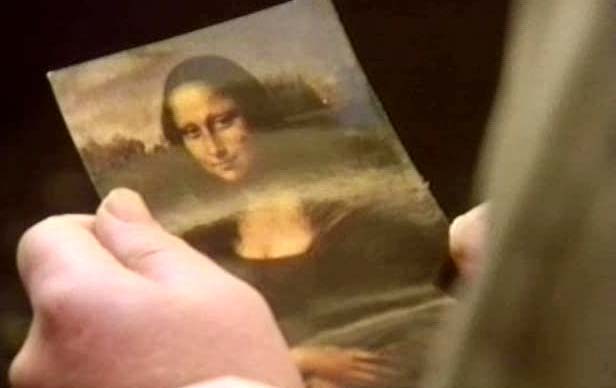


Timestamp #106: The Creature from the Pit

Doctor Who: The Creature from the Pit
(4 episodes, s17e09-e12, 1979)

timestamp-106-the-creature-from-the-pit


With apologies to Edgar Allan Poe, “Death! Any death but that of the pit!”

On a jungle planet, a group of people sacrifice a man by tossing him in a pit. On the TARDIS, Romana is decluttering, K9 is reading The Tale of Peter Rabbit with the Doctor, and WHAT THE FRESH HELL IS THAT VOICE?

No joke, that’s exactly what I wrote in my show notes. I grew to accept it – I didn’t get used to it, but merely accepted that as much as I want to, I cannot change it – but can we have John Leeson back now? Please?

After the emergency transceiver picks up a distress call and the TARDIS diverts to the jungle planet. The Doctor and Romana venture out and discover an enormous eggshell made of metal. The shell is transmitting the signal that the TARDIS detected. The Doctor is trapped by vines under the control of a group of men. They release him and order his execution, but a woman stops them. She explains that the vines are wolfweeds, and that they are in the “place of death,” aptly named because anyone traveling there is sentenced to death.

The Doctor and Romana are taken to see Lady Adrasta, and en route the Doctor warns that they are being followed. The group is ambushed by men who fight the swordsmen with clubs. They take Romana, but the wolfweed group refuses to pursue. The lower-tech group seem interested in metal content, and since Romana has none, they decide to kill her. As they deliberate, the wolfweed group arrives at Adrasta’s palace, where the Doctor attempts escape before being confronted by Adrasta. She discusses the egg with the Doctor, and agrees to search for Romana in the meantime. Back at the bandit camp, Romana logics her way out of the situation and takes charge of the men, tricking them into signaling K9 with the dog whistle.

The Doctor takes interest in a plate in Adrasta’s throne room as she asks about the egg shell. He presumes that it is screaming in pain for help, and disagrees with the Lady’s engineers about the source of the egg. Since one of the engineers failed to make the observations that the Doctor did, he is taken to the pit for execution. The Doctor is taken as a witness.

K9 arrives at the bandit camp, stuns the lead bandit, and rescues Romana. Together they track down the Doctor, arriving just after the execution. K9 stuns one of the guards into the pit, but is quickly overcome by the wolfweeds. The Doctor escapes by the most unthinkable way: He jumps into the pit. Romana notes that the Doctor is just below the edge of the pit, hiding from Adrasta. The Lady takes Romana and K9 (who is wrapped in a guaze cocoon) back to her palace. As Adrasta leaves, she kicks dirt into the pit, unwittingly knocking the Doctor from his perch.

Back at the palace, Adrasta reveals that metal is valuable and precious on the planet, and orders K9 disassembled for his parts. Romana agrees to help Adrasta if she doesn’t harm K9. She claims that K9 holds the information Adrasta seeks about the egg, and that only Romana can operate him.

In the pit, the Doctor explores the caverns and finds the creature. The creature is a large cube with a tentacle, and I assume that the production budget was blown for a trip to Paris and the Dalek premiere. Anyway, as he evades it, he discovers a man in hiding. The man, astrologer Organon, takes the Doctor to a safe space. He was once thrown into the pit for a mistake, but escaped and has been surviving on scraps intended for the creature.

The pit used to be a network of mines, but they are now abandoned. The only remaining mine is owned by Adrasta, and she owns all the metal on the planet. The creature closes in on the Doctor and Organon as they discuss their options. Organon uses his candle to burn the tentacle, and the creature retreats. They decide to explore the caverns to examine the creature.

Romana attempts to escape with K9, but she is stopped. Adrasta interrogates K9, and the robotic dog reveals what he knows of the TARDIS. They decide to use it to control all of the metal, and plan to press Romana into service as a pilot. Adrasta decides to destroy the creature first since she no longer needs it, and she takes K9 to destroy it. Everyone in Adrasta’s court, including the Lady and her prisoners, enters the mine on the hunt.

Everyone in the caverns converges on the creature, and as the Doctor gets a closer look, it attacks him. The guards attack as they fall back, but the creature seals the chamber. The Doctor is unharmed, and Organon and the guards attempt to break through.

Since the palace is empty, the bandits decide to distract the guards and ransack the place. In quick succession, the bandits assault the palace, Adrasta orders K9 to destroy the barrier, and the Doctor explores the mines and attempts to befriend the creature. The creature draws a picture on the wall, and it has the same symbol as the barricade and the plate in Adrasta’s throne room. Simultaneously, the bandits raid the throne room, including said plate, but are forced to retreat into the mines as more guards approach. They are soon hypnotized by the plate as it glows, and they carry it into the depths, which is fortunate because the Doctor agrees to retrieve the plate for the creature.

Romana, Adrasta, and K9 arrive at the barricade. Adrasta is surprised to see Organon, but maintains her attention on the task at hand and orders Romana to kill the creature if K9 can break the seal. Unfortunately, K9’s efforts only result in strengthening the seal. Fortunately, in Douglas Adams fashion, the Doctor breaks through from the other side.

Adrasta holds the Doctor as the Lady sends Romana, K9, and some guards to attack the creature. They cannot find the creature, and when they report back to Adrasta, the Lady inadvertently reveals that it is a Tythonian. The Doctor tricks Adrasta by stunning the guards with K9 and a mirror, and as she attempts to escape the oncoming creature, the bandits arrive with the plate and place it on the creature. The plate enables anyone touching it to communicate with the Tythonian. It’s name is Erato, and it is the Tythonian ambassador to the planet Chloris. It arrived fifteen years prior to negotiate a deal to exchange metal for chlorophyll, which is the Tythonian food source. The egg was its spaceship, and since Adrasta hoarded the planet’s metal, she cast the ambassador into the pit.

Hearing the truth, Adrasta’s people turn on her and force the Lady to communicate with the ambassador. It corroborates her story and then settles the score with her.

The Tythonian’s starship’s engine is concealed in the fragments in the mines, of which the Doctor stole a piece to prevent the ambassador from escaping before negotiating a deal and saving both their worlds. The bandits, fearing that a sudden influx of metal will reduce the value of all metal on the planet, plan to corner the market by stealing everything they can find. The Tythonian reveals that, as a failsafe if the ambassador did not return, her people have sent a neutron star to obliterate the planet. The ambassador plans to build a new ship within the hour, which prompts the Doctor to devise a plan to stop the neutron star and save the planet.

Wait, what? That doesn’t seem like a good negotiation technique at all. I get the impression here that the writers didn’t know how to wrap this up so they threw a neutron star in the mix for fun.

Adrasta’s adviser, Karela, hides the shell, kills the bandit leader, and tries to convince the rest of them to join her as she takes Adrasta’s place. The Doctor arrives and reveals the truth of the matter, and when Karela refuses to surrender the shell, the Doctor forces her hand by destroying the metal. With the shell returned, Erato constructs a new ship and works with the Doctor to construct an aluminum shell around the neutron star. The TARDIS is nearly destroyed, but the neutron star is neutralized and sent hurtling into deep space.

The Time Lords return to Chloris and deliver a trading contract, pushing the planet into a mutually beneficial future with Organon as its leader, before whisking away to the next adventure.

Hopefully it’s better than this one. It was lacking all around, and not even Douglas Adams and his trademark humor could save it.

Also, I’ll ask again: Can we have John Leeson back now? Please?


Rating: 2/5 – “Mm? What’s that, my boy?”


UP NEXT – Doctor Who: Nightmare of Eden


The Timestamps Project is an adventure through the televised universe of Doctor Who, story by story, from the beginning of the franchise. For more reviews like this one, please visit the project’s page at Creative Criticality.


Timestamp #105: City of Death

Doctor Who: City of Death
(4 episodes, s17e05-e08, 1979)

timestamp-105-city-of-death


The Doctor has been to Paris before, but this time he took the camera crew.

The story starts on a rocky, desolate plain where a spider-like ship is attempting to take off. An alien pilot argues with his control team, then begins lifting off before distorting in time and space and then exploding. Transition to Paris in 1979 where the Doctor and Romana are on vacation, taking in the view from the iconic Eiffel Tower before retiring to a local restaurant. While there, Romana attracts the attention of a local artist, but a time distortion changes her face to a broken clock, literally signifying a crack in time.

Completing the setup trifecta at a nearby château, Professor Kerensky is petitioning his employer for more money to perform his experiments. Count Carlos Scarlioni agrees, but notes that he will need to sell more of his rare book collection to earn more money. The Count is obsessed with the professor’s work and demands results now.

The Doctor chalks up the time slip to their frequent travels and takes Romana to see the Mona Lisa, partly as an example to Romana that computers cannot produce art like living beings and partly to show her one of the great treasures of the universe. Romana is unimpressed. Another time slip occurs, and the Doctor collapses. He is assisted by a stranger – who is, as he points out, carrying a gun – before leaving the museum. The trenchcoat man follows, as does a darker man (after being prompted by a woman) who seems a bit more sinister. The Time Lords go to another café where Romana reveals that they have been followed. The Doctor shows her a micromeson scanning bracelet – an advanced piece of technology for a Level Five civilization – that he lifted off the woman at the Louvre. The trenchcoat man arrives and orders the Time Lords inside at gunpoint.

The woman at the Louvre is married to the Count, and the Doctor is mugged for the bracelet by the sinister fellow and a cohort. The trenchcoat man, a detective named Duggan, includes them in his investigation of the Count, the rise of precious paintings on the market, and a plot to steal the Mona Lisa. As the Countess orders the trio to be brought before the Count, two new henchmen arrive to take them away. She goes to find her husband, but the Count is behind a locked door. As he removes his face, he reveals his true identity as one of the aliens from the prologue.

The Time Lords and Duggan are shown to the Countess – “I say, what a wonderful butler. He’s so violent!” – and the Doctor tries to disarm the tension through tomfoolery, but the Countess has none of it. Ramona solves the puzzle box containing the scanning bracelet, which commences a quick discussion with the Count and Countess over the peculiar trinket before the group is imprisoned.

That entire exchange was so much fun. It restores the Fourth Doctor to his original whimsical nature that has been declining since Sarah Jane’s departure.

The Doctor attempts to escape, but his sonic screwdriver is on the fritz. After Duggan applies a little mechanical agitation, the sonic unlocks the door. The Time Lords take the opportunity to investigate the laboratory – Romana had remarked earlier that the geometry of the room suggested some hidden spaces – as Professor Kerensky arrives and conducts a temporal experiment. The Doctor and Kerensky discuss the nature of his experiments – at one point, the Doctor reverses the polarity – and as the Doctor sees the alien creature from the prologue in the time bubble that the experiment has created, Duggan knocks out the professor. Meanwhile, Romana discovers an area in the cellar that has been walled off for centuries.

Upstairs, the Count and Countess conduct a walkthrough of the Mona Lisa’s theft via the bracelet’s holodeck setting. He entrusts the bracelet to the Countess and announces that they will perform the heist for real within hours.

Back in the cellar, the Doctor breaks into the walled off area with a little help from Duggan’s brawn, and they discover several genuine versions of the Mona Lisa. Counting the one hanging in the Louvre, there are seven versions which coincide with seven buyers lined up to purchase the painting. They are interrupted by the Count who, after a small discussion, is knocked out by Duggan. They also knock out the Countess and escape the château. Romana looks after Duggan as the Doctor takes the TARDIS to Renaissance Italy to see Leonardo daVinci. The master is nowhere to be found, but the Doctor encounters a Captain Tancredi who looks a lot like the Count in the future.

At the Louvre, Duggan and Romana trip an alarm and are forced to flee. Meanwhile, Kerensky awakens and finds the vault of Mona Lisas. He tends to the Count, who appears to be living events in modern day Paris and Renaissance Italy simultaneously. In the past, Tancredi explains to the Doctor that he is the last of the Jagaroth, a species that was nearly destroyed four hundred million years ago. During the escape attempt in the prologue, Tancredi’s original self was fractured across time. The captain is also very intrigued by the TARDIS and how the Doctor travels. Tancredi leaves the Doctor under guard and leaves to collect torture tools, but the Doctor escapes and, understanding how Tancredi is duplicating the Mona Lisa in the past, marks the canvasses with messages to the future. His escape attempt is stopped as Tancredi returns.

Kerensky begins to understand his role in the whole affair as Romana and Duggan (literally, in his case) break into the café. The professor cannot believe the scope of the Count’s vision, calling it monstrous and too expensive. On cue, the Count’s henchman arrives with the Mona Lisa from the Louvre, which is worth around $100 million. The seven of them will easily fund the plan.

Real world trivia: That value comes from an assessment of the painting on December 14, 1962. Accounting for inflation, the 2016 value is around $790 million. That’s a lot of time bubbles.

In the past, Tancredi interrogates the Doctor, who reveals that he is a Time Lord. The Doctor asks how the Jagaroth splinters communicate across time, but is deflected. Back in the present, the Count is hearing voices and, after bragging about all of accomplishments, asks the Countess to leave as all of his splinters enter a stupor. The Doctor escapes as the twelve splinters proclaim that the centuries dividing them shall be undone, and realizes the importance of the Time Lords in his plan.

The Doctor returns to the present day as Romana tries to puzzle out how the Count can travel in time. Romana and Duggan leave the Doctor a note before heading for the château. The Doctor receives news of the art theft at the Louvre, then retrieves the note at the café. He follows them to the château where the Count has Romana and Duggan at gunpoint. The Count interrogates Romana about time travel and shows her to the laboratory under threat of destroying the city should she give him any trouble. As a demonstration, he uses the experiment to kill Kerensky through accelerated aging, then offers to do it to the entire city unless Romana can stabilize it. She attempts to bluff her way out, but the Count calls her on it by threatening to kill Duggan. The Count wants to return to where his spaceship is in time and prevent himself from taking off.

The Doctor arrives and is captured. He engages the Countess in a debate about being willfully blind before being escorted to the laboratory, and the Countess begins to ponder on the Doctor’s words. The Doctor tries to stop the Count – his plan to save his people will erase all of history – but the Jagaroth locks them all away and orders their execution. The Count goes upstairs and is confronted by his wife. At the business end of a gun, he explains everything to her, then kills her with the bracelet.

Romana reveals that she has rigged a trap in the Count’s time machine, but the Doctor knows that the trap is not sufficient. They break out of the cell just in time for the Count (now Scaroth) to use the machine, so the Time Lords and Duggan use the TARDIS to follow.

The travelers arrive in what will become the Atlantic Ocean, and the Doctor realizes that the explosion that splintered Scaroth was also the catalyst for the birth of the human race. Scaroth attempts to stop the launch, but Duggan capitalizes on the running gag of him using strength to solve his problems by punching out the Jagaroth. Scaroth is catapulted forward in time where his butler accidentally kills him by throwing something at the newly arrived alien. The time machine explodes, and the threat is over.

The only version of the Mona Lisa to survive the blast is one painted over the Doctor’s “this is a fake” messages. They have a quick laugh about the value of art before the Time Lords depart for their next random adventure.

From what I can gather, this is one of the most beloved serials in the franchise’s history. It’s easy to see why, given the beautiful cinematography of Paris and the relatively tight story. The antagonist is Julian Glover, last seen in Doctor Who as King Richard the Lionheart, but also in some of my faves as General Maximillian Veers, Walter Donovan, and Aris Kristatos, among so many other roles. It has a humorous cameo from John Cleese as an art critic analyzing the TARDIS. It has the return to whimsy for the Fourth Doctor. But it also has that side trip to Renaissance Italy that, while necessary to explain the Jagaroth threat, really slows down the narrative.

I settled on a high three for this one, which I rounded up based on the custom of these reviews. It’s a fun serial, but I don’t hold it in the high regard that many do in fandom.


Rating: 4/5 – “Would you care for a jelly baby?”


UP NEXT – Doctor Who: The Creature from the Pit


The Timestamps Project is an adventure through the televised universe of Doctor Who, story by story, from the beginning of the franchise. For more reviews like this one, please visit the project’s page at Creative Criticality.


Timestamp #104: Destiny of the Daleks

Doctor Who: Destiny of the Daleks
(4 episodes, s17e01-e04, 1979)

timestamp-104-destiny-of-the-daleks


A new series starts with repairs from the previous one. First, K9 and his magnificent brain need a tune-up, but after he (somehow) contracts a form of laryngitis, he’ll have to sit this one out. Second, Romana thinks she also needs a tune-up, so she regenerates into Princess Astra. She cycles through several forms before deciding on the Astra in a pink version of the Doctor’s costume.

For all the drama in fan circles about Romana’s regeneration, it made sense to me. Since the Tenth Doctor was able to rebuild his missing hand within fifteen hours of regeneration, why shouldn’t Romana be able to adjust her form within the same period? The bigger question I now have: Since Time Lords can apparently make these adjustments and perfect their changes, why does the Doctor rely on a cosmic lottery each time?

Back to the story, the TARDIS is still traveling under the influence of the randomizer. They arrive on a planet with a lot of seismic activity and strong radioactivity, and as they explore, the Time Lords find a lot of concrete debris and a mechanical shaking of the ground. They encounter a group of natives who are observing a funeral. After they leave, the Doctor inspects the corpse and discovers that it was a combat pilot from the planet Kantra. The odd thing is that they are not currently on Kantra.

They pursue a landing spacecraft – “It’s not a flying saucer” is funny given the serial’s villain – and after it lands, it drills into the surface before the hatch opens. As the Time Lords move in to investigate, the ship’s unseen occupants open fire, forcing the Doctor and Romana into the ruins. An explosion rocks the building, trapping the Doctor under rubble. Since Romana cannot move the debris, she sets off to find K9 so he can help. When she arrives, a new series of explosions buries the TARDIS, preventing her from entering. K9 cannot blast out of the debris since the Doctor failed to reinstall his brain, so Romana heads back to the Doctor. She doesn’t see a mysterious figure pursuing her, and when she gets back, the Doctor is gone. Romana’s pursuer startles her and she falls down a nearby shaft while trying to escape.

The Doctor was rescued by the crew of the spacecraft – the Movellans – and they inform him that they are on the planet D5GZA, better known as Skaro. Well, that got the Doctor’s attention. The Movellans are on Skaro to wage war against the Daleks.

When Romana wakes up, she explores the area and encounters several Daleks. Meanwhile, her pursuer has rigged a rope to come rescue her and ends up watching as Romana is taken captive. Does Romana know who the Daleks are? She is very afraid of them, but apparently does not know anything about them based on their interrogation of her. The Daleks assign Romana to a labor camp.

The man who was pursuing Romana, starship engineer Tyssan, arrives at the Movellan ship and declares himself as a human prisoner of the Daleks. After he explains what he was working on and reveals Romana’s fate, the Doctor decides to go after her. The Movellans and Tyssan join him.

Working with her labor group, Romana learns about her captors and their goals. If anyone attempts to escape, the Daleks kill the entire group as a deterrent to other groups staging escape attempts. As the radiation poisoning catches up to her, Romana collapses and her fellow workers remove her body from the site.

The Daleks discover the Doctor’s intrusion and move to intercept his group. They are able to evade the patrols and end up in the control room. The Doctor recognizes a map of the old Kaled city, and tries to reason out what the Daleks are after. The patrols find and exterminate one of the Movellan sentries before discovering the Doctor’s team. The group escapes, pursued by the Daleks, and are able to climb back up the shaft. The Doctor taunts them – “If you’re supposed to be the superior race of the universe, why don’t you try climbing after us?” – before leaving. Moments later, he finds an empty grave and a healthy Romana: The Time Lady feigned death by stopping her hearts to escape the Dalek camp.

The Doctor returns to the Dalek headquarters though the back door based on his knowledge of the city. He finds the object that the Daleks are hunting for: Davros. The Dalek creator is in a comatose state after his last encounter with the Doctor, but he begins to wake up as another tremor buries a Movellan in debris. The Doctor examines the body – he was earlier told that it was against the Movellan custom to allow an alien to look upon their death – and proclaims that he was right. About what exactly? That revelation is saved for the back half of the story.

Davros wheels out of his tomb to find the Doctor, who then takes him to a blocked off room for a discussion. Meanwhile, the Daleks have finally broken through to the third level, find the empty tomb, and track the Doctor’s tracks. As they leave the area, the Movellan corpse awakens. There’s a lot of that happening in the Kaled underground these days.

As the group blocks off the room, the Doctor sends Romana and Tyssan out through a window so they can return to the Movellan spaceship. The ensuing discussion is the typical back and forth between the Doctor and the embodiment of the Dalek psyche. As they talk and the Doctor plots, the Daleks discover them and blast into the room. The Doctor threatens Davros with a homemade explosive, forcing the Daleks to back off and setting up a standoff. The Daleks up the stakes by exterminating prisoners until the Doctor surrenders, but Davros recognizes that the Doctor is not bluffing. The workers are released and the Doctor escapes, setting the explosive to remote detonation. The resulting explosion misses Davros but takes out a Dalek.

Romana makes it back to the Movellan spaceship – Tyssan was separated from her to assure her survival – and discovers that the previously dead have returned to life. They stun her, then set to work on something they call the Nova Device, a weapon that will incinerate the atmosphere and destroy the planet.

Tyssan meets up with the Doctor, and they meet up with a Dalek. They are rescued by a Movellan, but the Doctor pulls an object from her belt and she collapses. The object was a power pack, and the Movellans are robots. They continue on, finding Romana in a test chamber with the Nova Device. The Doctor attempts to free her as the counter ticks down, but is found and stunned by the Movellans.

Davros calls for a spaceship to retrieve him, but it will not arrive for six hours. He then reviews the battle fleet’s logistics and status – the details were supervised by the Supreme Dalek, but Davros has none of it and effectively strips the supreme commander of his title – and discovers that the Daleks and Movellans are locked in war, robotic fleet engaged with robotic fleet in logical impasse.

The Doctor also deduces this and, using Rock-Paper-Scissors, demonstrates that a biological influence will alter the balance of power and sway the war. This is why the Daleks sought Davros. The Movellans suggest that the Doctor should become their war planner, but he refuses.

Tyssan leads a prisoner revolt, storming the ship and systematically deactivating the Movellans. Meanwhile, Davros dispatches the Daleks, armed with the Doctor’s explosives, to destroy the Movellan ship. With the ship under Tyssan’s control, the Doctor leaves to confront Davros, but is trapped by a single remaining Dalek who did not join the suicide squad.

The prisoners attempt to defend the ship, but are no match for the Daleks. Romana leaves the group to stop the last Movellan from using the Nova Device. The Doctor distracts the Dalek guard by covering its eyestalk with his hat and causing it to explode. He then triggers the explosives, destroys the Dalek squad, and captures Davros. In the custody of the former prisoners, Davros is placed in cryogenic suspension and sent to Earth for trial.

The Doctor and Romana sneak away and watch the Movellan ship depart, then dig out the TARDIS and prepare to leave. Over a discussion of the Doctor’s ability to win by making mistakes, including a false start dematerialization, the Time Lords leave Skaro for another adventure.

It’s good to see the Daleks and Davros again, and I appreciate a story like this that has a few twists and turns. Romana’s ignorance of the Daleks is a little odd – One would think that Time Lords would learn about a serious threat like them in the Academy – but was a great way to re-establish some power to an enemy that the Doctor has easily and frequently vanquished. It also helps solve one of the big issues that I had with Romana in the Sixteenth Series: This time she’s not just playing “Doctor Lite.”

All told, this was a good start to this series.


Rating: 5/5 – “Fantastic!”


UP NEXT – Doctor Who: City of Death


The Timestamps Project is an adventure through the televised universe of Doctor Who, story by story, from the beginning of the franchise. For more reviews like this one, please visit the project’s page at Creative Criticality.


Timestamp: Sixteenth Series Summary

Doctor Who: Sixteenth Series Summary
The Key to Time

Timestamp Logo Third 2


I remember when Doctor Who did a season-long arc. I liked the Eighth Series a lot more.

Sure, the final scores between the two reflect this, but it goes deeper, much like how I like the Second Doctor more than the Third (even though I scored the latter higher).

The concept seemed solid enough: The Key to Time Arc is a fight between good and evil – literally, the White Guardian versus the Black Guardian – with the Time Lords doing the legwork to maintain the balance of time, order, and chaos. It seems like something that Doctor Who should excel at, especially in how the eternal battle of angels and demons relates to humanity.

But it didn’t.

As I mentioned in The Power of Kroll, one of the biggest failings in this arc is how they handled the fragments of this powerful artifact. Instead of treating them along the same lines as the Infinity Stones in the Marvel Cinematic Universe, the writers here treated them like museum pieces that would be hunted by Indiana Jones. Except that they even shortcut that as well because the fragments didn’t have any real power on their own.

Instead of making the fragments powerful enough to literally bend the story’s narrative – the tale of disparate criminals breaking out of prison becomes a quest to save the universe; a betrayed archaeologist decides to break up a cult, free slaves, and restore the village’s livelihood; a super-powered squid terrorizes a tribe of natives and their mining oppressors – five of the six pieces were effectively impotent and completely random.

The arc even had a chance to redeem itself in The Armageddon Factor by revisiting the ethical discussion from Genesis of the Daleks. The final Key Fragment was literally a human being, and in order to complete the mission and prevent the Black Guardian from enslaving the universe in eternal war, Princess Astra had to die. Is one human life worth completing the mission and saving the universe? That answer is no. What about when there is a completely viable alternative?

The Doctor had the ability to disperse the Key Fragments at the end to stop the Black Guardian from getting the completed Key. There was a perfect opportunity to pit Light and Dark against each other with the Time Lords protecting one human life in a discussion on how important it was. It was an opportunity to explore the human condition through metaphor, and it was missed by a long shot.

Sadly, the story execution was not the only failing in the Key to Time Arc.

I haven’t said a lot about Romana, and there is a really good reason for that. From the beginning, the role of the companion has been as a gateway to understand the Doctor. The Doctor has a cosmic understanding of time and space, and with that comes immense power. The companion balances the Doctor’s power (and his susceptibility to corruption by that power) by introducing an limited knowledge and an eagerness to learn more. We learned back in the Fourteenth Series that the Doctor cannot carry the responsibility (or the franchise) alone. He needs someone to temper the deus in the deus ex machina.

Unfortunately, Romana is written in this series as the Doctor Redux. Sure, she’s not as experienced, but she’s just as (or more) witty and capable, and shortly after her introduction, the pair is operating as equals instead of counterweights. It’s a case of double deus, and it removes our sympathetic window into understanding the Doctor and his adventures.

It’s certainly not Mary Tamm’s fault. She had so much potential in the role, but I feel that the screenplays prevented her from reaching it. There was also the opportunity to introduce the Doctor’s views on Time Lord society to a new recruit, maybe fixing the problems in the system that make the Doctor (and the audience) dislike his own people so much. Sadly, no. It’s unfortunate because there was some good chemistry between her and Tom Baker on screen. It’s doubly unfortunate because of her immediate departure from the role.

On a related note, I sincerely hope that Lalla Ward is better as the next companion. I’m willing to give her a shot, but I wasn’t impressed with her role as Princess Astra. Maybe it was the script? I’ll find out soon. I love the idea of a sympathetic Time Lord, but the character needs to be better.

So where does this put the Timestamps Project? The Sixteenth Series is just under the Fifteenth Series, and continues the decline since the Fourteenth Series. It is one step above last place.

I’m really hoping things turn around.


The Ribos Operation – 4
The Pirate Planet – 4
The Stones of Blood – 4
The Androids of Tara – 3
The Power of Kroll – 1
The Armageddon Factor – 3


Series Sixteen Average Rating: 3.2/5


UP NEXT – Doctor Who: Destiny of the Daleks


The Timestamps Project is an adventure through the televised universe of Doctor Who, story by story, from the beginning of the franchise. For more reviews like this one, please visit the project’s page at Creative Criticality.