

The Thing About Today – March 12

March 12, 2020
Day 72 of 366


March 12th is the seventy-second day of the year. It is World Day Against Cyber Censorship, an online event held each year to rally support for a single, unrestricted internet that is accessible to all and to draw attention to the ways that governments around the world are deterring and censoring free speech online.

In the United States, today is “celebrated” as National Baked Scallops Day, National Girl Scout Day, National Plant a Flower Day, and World Kidney Day. The last one is typically observed on the second Thursday in March.


Historical items of note:

  • In 1710, English composer Thomas Arne was born.
  • In 1912, the Girl Guides (later renamed to the Girl Scouts of the USA) were founded in the United States.
  • In 1930, Mahatma Gandhi began the Salt March, a 200-mile march to the sea to protest the British monopoly on salt in India.
  • In 1933, Franklin D. Roosevelt addressed the nation for the first time as President of the United States. It marked the beginning of his famous “fireside chats”.
  • Also in 1933, actress Barbara Feldon was born.
  • In 1946, Liza Minnelli was born.
  • Also in 1946, voice actor and singer Frank Welker was born.
  • In 1947, the Truman Doctrine was proclaimed to help stem the spread of Communism.
  • In 1968, Mauritius achieved independence from the United Kingdom.
  • In 1984, actress Jaimie Alexander was born.
  • In 1993, North Korea announced that it would withdraw from the Treaty on the Non-Proliferation of Nuclear Weapons and refused to allow inspectors access to its nuclear sites.
  • In 1999, former Warsaw Pact members the Czech Republic, Hungary and Poland joined NATO.
  • In 2011, a reactor at the Fukushima Daiichi Nuclear Power Plant melted down and released radioactivity into the atmosphere a day after the 2011 Tōhoku earthquake and tsunami.


March 12th is also the Aztec New Year, a date that depends on the version of the calendar, but is generally observed at sunrise.

The holiday is observed in some Nahua communities. The Nahua are the indigenous people of Mexico and El Salvador, comprising the largest group in Mexico, the second-largest in El Salvador, and historically present in Guatemala, Honduras, and Nicaragua. The Aztec and Toltec cultures were of this ethnicity. Their language of Uto-Aztecan affiliation is called Nahuatl and consists of many more dialects and variants, a number of which are mutually unintelligible. About 1.5 million Nahua speak Nahuatl and another million speak only Spanish.

To celebrate, ocote (pitch-pine) candles are lit on the eve of the new year. The ocote or ocotl produces a highly flammable and very aromatic resin. Celebrations also include fireworks, drumming, and singing, particularly in places like Huauchinango, Naupan, Mexico City, Zongolica, and Xicotepec. At the end of the celebrations, celebrants burn a flag that represents the year that ended while perfuming the replacement flag.


The Thing About Today is an effort to look at each day of 2020 with respect to its historical context.

For more creativity with a critical eye, visit Creative Criticality.


The Thing About Today – March 11

March 11, 2020
Day 71 of 366


March 11th is the seventy-first day of the year. It is the Day of Restoration of Independence in Lithuania, celebrating the country’s 1990 breakaway from the former Soviet Union.

In the United States, today is “celebrated” as National Funeral Director and Mortician Recognition Day, National Johnny Appleseed Day, National Oatmeal Nut Waffles Day, National Promposal Day, National Worship of Tools Day, and National Registered Dietitian Nutritionist Day. The last one is typically observed on the second Wednesday in March.


Historical items of note:

  • In 1702, The Daily Courant was published for the first time. It was England’s first national daily newspaper.
  • In 1708, Queen Anne withheld Royal Assent from the Scottish Militia Bill. It was the last time a British monarch vetoed legislation.
  • In 1824, the United States Department of War created the Bureau of Indian Affairs.
  • In 1851, the first performance of Rigoletto by Giuseppe Verdi took place in Venice.
  • In 1903, famous bandleader Lawrence Welk was born.
  • In 1946, Rudolf Höss was captured by British troops. He was the first commandant of the Auschwitz concentration camp.
  • In 1954, composer and conductor David Newman was born.
  • In 1956, voice actor Rob Paulsen was born.
  • In 1963, actress Alex Kingston was born.
  • In 1967, actor and singer John Barrowman was born.
  • In 1989, actor Anton Yelchin was born.
  • In 1993, Janet Reno was confirmed by the United States Senate as the first female Attorney General of the United States.
  • In 1997, the ashes of Star Trek creator Gene Roddenberry were launched into space.
  • In 1999, Infosys became the first Indian company listed on the NASDAQ stock exchange.
  • In 2006, Michelle Bachelet was inaugurated as the first female president of Chile.


In 1952, English author and playwright Douglas Adams was born.

Some of his earliest writing was during prep school in 1962, including spoof reviews, short stories, and poetry. After university, he moved back to London with the intent of breaking into television and radio as a writer. He was discovered by Monty Python’s Graham Chapman and began to write for the comedy troupe, becoming one of only two people other than the original Python members to receive a writing credit.

His career stalled as his writing style became incompatible with the current style of radio and television comedy. He took various odd jobs and continued to submit sketches. In 1977, he pitched the idea for The Hitchhiker’s Guide to the Galaxy to BBC Radio 4.

He allegedly made the story up as he went, and he developed a problem keeping deadlines. That problem only got worse as he started working in television and writing novels. He wasn’t a prolific writer and often needed help to get moving, but his work was popular and well-regarded. This resulted in his well-known quote:

“I love deadlines. I love the whooshing noise they make as they go by.”

During the development of The Hitchhiker’s Guide to the Galaxy, Adams began to work on Doctor Who after submitting the pilot script to Hitchhiker’s Guide to them. He was commissioned to write The Pirate Planet, and followed that up with City of Death and Shada. A potential film script, “Doctor Who and the Krikkitmen”, later became his novel Life, the Universe and Everything which evolved into the third Hitchhiker’s Guide to the Galaxy radio series. He also served as script editor Doctor Who‘s seventeenth season.

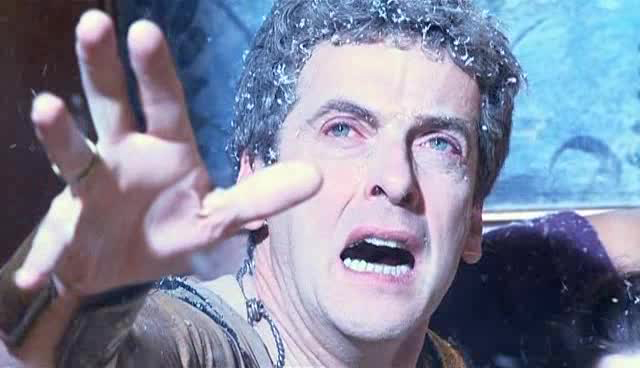
Elements of Shada were reused in his novel Dirk Gently’s Holistic Detective Agency, and a story he pitched called “The Doctor Retires” inspired Steven Moffat’s The Snowmen for Doctor Who in 2012.

Despite his difficulty with deadlines, Adams wrote five novels in the Hitchhiker’s Guide series, published in 1979, 1980, 1982, 1984, and 1992. The series took multiple forms, including print, television, radio, video games, and film.

His other novel universe, the Dirk Gently series, contained two books. He was also a musician who played guitar left-handed and was influenced by Pink Floyd and Procol Harum.

Douglas Adams died of a heart attack on May 11, 2001, at the age of 49. He was survived by his wife, Jane Belson, and his daughter, Polly Jane Rocket Adams.


The Thing About Today is an effort to look at each day of 2020 with respect to its historical context.

For more creativity with a critical eye, visit Creative Criticality.


The Thing About Today – March 10

March 10, 2020
Day 70 of 366


March 10th is the seventieth day of the year. It is National Women and Girls HIV/AIDS Awareness Day in the United States.

It is also Harriet Tubman Day in the United States, a holiday observed in honor of the famous American abolitionist, humanitarian, and armed scout and spy for the United States Army during the American Civil War. Born into slavery, Harriet Tubman escaped and then made around thirteen missions to rescue approximately seventy enslaved families and friends via the Underground Railroad, a network of antislavery activists and safe houses. She later helped abolitionist John Brown to recruit men for his raid on the Harpers Ferry. She was the first woman to lead an unarmed expedition during the Civil War, during which she served as a cook, nurse, armed scout, and spy. After the war, she continued the fight as an activist for women’s suffrage.

She died of pneumonia on March 10, 1913, at the age of 91. She was buried with semi-military honors.


In the United States, today is “celebrated” as National Blueberry Popover Day and National Pack Your Lunch Day.


Historical items of note:

  • In 1804, a formal ceremony was conducted in St. Louis, Missouri to transfer ownership of the Louisiana Territory from France to the United States.
  • In 1848, the Treaty of Guadalupe Hidalgo was ratified by the United States Senate, ending the two-year-long Mexican–American War.
  • In 1891, Almon Strowger patented the Strowger switch. Strowger was a Topeka, Kansas-based undertaker and his device led to the automation of telephone circuit switching.
  • In 1902, a United States court of appeals ruled that Thomas Edison did not invent the movie camera.
  • In 1922, Mahatma Gandhi was arrested in India, tried for sedition, and sentenced to six years in prison. He was released two years later for an appendicitis operation.
  • In 1959, thousands of Tibetans surrounded the Dalai Lama’s palace to prevent his removal by China. The Tibetan uprising and Lhasa Rebellion ended thirteen days later with approximately 85,000 Tibetan casualties as China secured the temple.
  • In 1971, actor and director John Hamm was born.
  • In 1977, astronomers discovered the rings of Uranus.
  • In 1978, The Incredible Hulk premiered on CBS, starring Bill Bixby and Lou Ferrigno.
  • In 1984, actress and producer Olivia Wilde was born.
  • In 1997, Buffy the Vampire Slayer premiered on the WB network, starring Sarah Michelle Gellar.
  • In 2006, the Mars Reconnaissance Orbiter arrived at Mars.


March 10th is celebrated worldwide as Mario Day.

Mario is a fictional character in the Nintendo catalog of video games. He was created by Shigeru Miyamoto and first appeared in 1981’s Donkey Kong, since appearing in over 200 titles since then.

Mario evolved from Miyamoto’s desire to make a game based on the characters from Popeye, but since he couldn’t secure the rights to Popeye, Bluto, and Olive Oyl, he created an unnamed player character and the Donkey Kong game. The English translation of the game’s manual called the character Jumpman – because he jumps from point to point – and Mario in the sales brochures. Miyamoto allegedly settled on the Mario name in response to an altercation with the Nintendo of America warehouse landlord, one Mario Segale.

Miyamoto envisioned Mario as a “go to” character that could be in any game as needed. By the time of Super Mario Bros., Mario’s credit as a hero was established as he defeated the evil King Koopa and rescued Princess Toadstool of the Mushroom Kingdom. Over the years, Mario, his brother Luigi, and his allies have appeared as flagship characters for the Nintendo juggernaut as the games evolved from two-dimensional platformers to three-dimensional adventure games, go-kart racing games, and so much more.

Mario has also appeared in media outside of the video game worlds, from comic books and television (Saturday SupercadeThe Super Mario Bros. Super Show!, and more) to film (1993’s Super Mario Bros.) and beyond as Universal Studios prepares to open Super Nintendo World attractions at its theme parks worldwide.

Mario holds seven world records in the Guinness World Record books, including Best Selling Video Game Series of All Time.

March 10th was picked as Mario Day purely because of how MAR 10 looks like the character’s name. It is a day of celebration and promotion of Mario’s legacy over the last four decades.


The Thing About Today is an effort to look at each day of 2020 with respect to its historical context.

For more creativity with a critical eye, visit Creative Criticality.


The Thing About Today – March 9

March 9, 2020
Day 69 of 366


March 9th is the sixty-ninth day of the year. It is Teachers’ Day, also known as Eid Al Moalim, in Lebanon.

In the United States, today is “celebrated” as National Barbie Day, National Crabmeat Day, National Get Over it Day, National Meatball Day, and National Napping Day. That last one is typically observed on the day after the return of Daylight Saving Time because one has to pick up that extra hour somewhere.


Historical items of note:

  • In 1454, Italian cartographer and explorer Amerigo Vespucci was born.
  • In 1815, English inventor Francis Ronalds described the first battery-operated clock in Philosophical Magazine.
  • In 1841, the Supreme Court of the United States ruled on the case of United States v. The Amistad. They decided that that captive Africans who had seized control of the ship carrying them had been taken into slavery illegally.
  • In 1842, Giuseppe Verdi’s third opera, Nabucco, premiered in Milan. This success established Verdi as one of Italy’s foremost opera composers.
  • In 1862, USS Monitor and CSS Virginia fought to a draw in the Battle of Hampton Roads during the American Civil War. This was the first battle between two ironclad warships.
  • In 1910, pianist and composer Samuel Barber was born.
  • In 1934, Russian cosmonaut Yuri Gagarin was born. He was the first human in space.
  • In 1943, chess grandmaster Bobby Fischer was born.
  • In 1979, actor Oscar Isaac was born.
  • In 2011, Space Shuttle Discovery made its final landing after 39 flights.


At the top, I mentioned that it was National Barbie Day. That’s because, in 1959, the Barbie doll made its debut at the American International Toy Fair in New York.

The iconic (and often controversial) fashion doll was created by Ruth Handler. She was inspired by her daughter, Barbara, who would play with paper dolls and give them adult roles. At that point, most children’s dolls represented infants, and Handler saw an opportunity. She suggested the idea to her husband Elliot, a co-founder of Mattel, but the board of directors wasn’t enthusiastic until the Handlers brought Bild Lilli toy dolls back from a trip to Germany.

The Bild Lilli dolls were exactly what Ruth Handler had in mind. The Lilli doll was based on a popular character from a comic strip drawn by Reinhard Beuthin for the newspaper Bild. Lilli was a blonde bombshell working girl who knew what she wanted and was not above using men to get it. The doll was first sold in Germany in 1955 for adults, but it later became popular with children who dressed her in separately available outfits.

Handler redesigned the Lilli doll with help from aerospace engineer and Mattel toy designer Jack Ryan. (There’s a Tom Clancy joke in here somewhere.) She then named it Barbie – the full name is Barbara Millicent Roberts – after her daughter.

After its debut, the doll was marketed as a “Teen-age Fashion Model” with fashions hand-stitched by Japanese homeworkers. Some parents were unhappy about Barbie’s obvious breasts, but Ruth Handler was adamant that the doll should maintain an adult appearance. The toy has been controversial over the years, from body image concerns to diversity and role model inspirations. Despite this, the toy has an avid following and a healthy collecting market. An estimated one billion Barbie dolls (or more) have been sold worldwide in over 150 countries.

The Barbie doll was inducted into the Toy Hall of Fame in 1998.

Ruth Handler was diagnosed with breast cancer in 1970 and survived, creating her own breast prosthesis after a radical mastectomy. Afterward, she formed a company to follow her designs. She resigned from Mattel after investigations of fraud in the late seventies. She died from complications of surgery for colon cancer in 2002 at the age of 85, and her husband died nine years later at the age of 94.


The Thing About Today is an effort to look at each day of 2020 with respect to its historical context.

For more creativity with a critical eye, visit Creative Criticality.


The Thing About Today – March 8

March 8, 2020
Day 68 of 366


March 8th is the sixty-eighth day of the year. It is International Women’s Day, a focal point in the movement for women’s rights. It’s also International Women’s Collaboration Brew Day, an annual event to help raise awareness of women working in the brewing industry, especially as brewmasters.

In the United States, today is “celebrated” as National Oregon Day, National Peanut Cluster Day, and National Proofreading Day.


Historical items of note:

  • In 1010, Ferdowsi completed his epic poem Shahnameh. It is the national epic of Greater Iran, and is one of the world’s longest epics.
  • In 1618, Johannes Kepler discovered the third law of planetary motion.
  • In 1702, Queen Anne, the younger sister of Mary II, became Queen regnant of England, Scotland, and Ireland.
  • In 1775, an anonymous writer published “African Slavery in America”, the first article in the American colonies calling for the emancipation of slaves and the abolition of slavery. Some believe that Thomas Paine was the actual author.
  • In 1817, the New York Stock Exchange was founded.
  • In 1822, Ignacy Łukasiewicz was born. A Polish inventor and businessman, he invented the Kerosene lamp.
  • In 1910, French aviator Raymonde de Laroche becomes the first woman to receive a pilot’s license.
  • In 1917, International Women’s Day protests in St. Petersburg marked the beginning of the February Revolution.
  • In 1921, actor and Gilligan’s Island alum Alan Hale, Jr. was born.
  • In 1922, Ralph H. Baer was born. He was the video game designer who created the Magnavox Odyssey.
  • Also in 1922, actress and dancer Cyd Charisse was born.
  • In 1943, actress and singer Lynn Redgrave was born.
  • In 1974, Charles de Gaulle Airport opened in Paris, France.
  • In 1976, Freddie Prinze, Jr. was born.
  • In 1979, Philips demonstrated the compact disc publicly for the first time.


It’s the second Sunday in March, and that means that Daylight Saving Time has returned to time zones that observe it.

I heard that grumbling from here, mostly because I share it with you. We can all blame George Hudson, the British-born New Zealand entomologist and astronomer who proposed the idea in 1895. His shift-work job gave him leisure time to collect insects, and that led him to value after-hours daylight. In 1895, he proposed a two-hour daylight-saving shift in a paper to the Wellington Philosophical Society. After considerable interest was expressed in Christchurch, he followed up with another paper.

Another proponent of Daylight Saving Time was the prominent English builder and outdoorsman William Willett, who independently conceived the idea when he noted how many London residents slept through a large part of the summer day. He also fancied golf but did not fancy giving up early when the sun when down. His proposal led to a Daylight Saving Time bill in the House of Commons on February 12, 1908. That bill and several others failed, though Willett lobbied for his proposal until the day he died in 1915.

Daylight Saving Time became a reality on July 1, 1908, in Port Arthur, Ontario, Canada. The German Empire and Austria-Hungary picked it up on a national level on April 30, 1916, as a way to conserve coal during wartime. Britain, its allies, and the European neutrals followed suit, as did Russia and the United States by 1918. Some nations gave it up after World War I, but it became common during World War II. The United States and Europe championed it during the 1970s energy crisis.

Of course, the practice is mired in controversy, and it has been since it began. From energy and public safety concerns to discussions on physical and psychological health, opinions and studies vary wildly. But, until a consensus is reached, it remains part of our lives.

If you are impacted by Daylight Saving Time, remember to spring forward one hour today.


The Thing About Today is an effort to look at each day of 2020 with respect to its historical context.

For more creativity with a critical eye, visit Creative Criticality.


The Thing About Today – March 7

March 7, 2020
Day 67 of 366


March 7th is the sixty-seventh day of the year. It is Teacher’s Day in Albania.

In the United States, today is “celebrated” as National Be Heard Day, National Cereal Day, and National Crown of Roast Pork Day.


Historical items of note:

  • In 1573, a peace treaty was signed between the Ottoman Empire and the Republic of Venice. This ended the three-year-long Ottoman–Venetian War and left Cyprus in Ottoman control.
  • In 1671, the infamous Scottish outlaw Rob Roy MacGregor was born.
  • In 1875, French pianist, composer, and conductor Maurice Ravel was born.
  • In 1876, Alexander Graham Bell was granted a patent for the telephone.
  • In 1941, Günther Prien and the crew of German submarine U-47, one of the most successful U-boats of World War II, disappeared without a trace.
  • In 1956, actor, director, and producer Bryan Cranston was born.
  • In 1959, actress and singer Donna Murphy was born.
  • In 1965, a group of 600 civil rights marchers was brutally attacked by state and local police in Selma, Alabama. The event is known as Bloody Sunday.
  • In 1970, actress and producer Rachel Weisz was born.
  • In 1986, divers from the USS Preserver (ARS-8) located the crew cabin of Space Shuttle Challenger on the ocean floor.
  • In 2007, the British House of Commons voted to make the upper chamber of Parliament, the House of Lords, entirely elected instead of appointed.


In 1965, a group of 600 civil rights marchers was brutally attacked by state and local police in Selma, Alabama. The event is known as Bloody Sunday.

It was the first of three protest marches from Selma to Montgomery, Alabama, held along the 54-mile highway between the two locations. The marches were organized by nonviolent activists to lobby for voting rights for African-American citizens. By highlighting the racial injustices of segregation and voter suppression, they contributed to the passage of the Voting Rights Act in 1965, a landmark civil rights achievement that prohibited racial discrimination in voting.

The marches followed from injustices that remained in place even despite the passage of the Civil Rights Act of 1964. Continuous disenfranchisement and discrimination, as well as violence against black protestors, eventually led to the first nonviolent march. State troopers and county possemen attacked the unarmed protestors with billy clubs and tear gas as they crossed the county line near Edmund Pettus Bridge in Selma. During the altercation, the law enforcement officers beat organizer Amelia Boynton unconscious, resulting in the worldwide publicized image of her lying wounded on the bridge.

A second march followed two days later. The two parties confronted one another again, but the troopers allowed the marchers to return to the church from which they started. That night, minister James Reeb was beaten and murdered by a group of white men.

The violence of Bloody Sunday and Reeb’s murder resulted in national outcry and acts of civil disobedience, targeted toward both Alabama and federal governments. President Lyndon Johnson held a historic, nationally televised joint session of Congress on March 15th to ask for the Voting Rights Act to be passed for his signature. He also stepped in to offer federal protection for the marchers, who conducted their third event on March 21st. They successfully completed their trek and arrived at the Alabama State Capitol on March 25th with 25,000 people in support.

The route is memorialized as the “Selma To Montgomery Voting Rights Trail”, and is designated as a U.S. National Historic Trail. The Voting Rights Act became law on August 6, 1965.


The Thing About Today is an effort to look at each day of 2020 with respect to its historical context.

For more creativity with a critical eye, visit Creative Criticality.


Culture on My Mind – Degrees of Separation

Culture on My Mind
Degrees of Separation

March 6, 2020

This week’s “can’t let it go” is the confluence of mathematics and pop culture.

While working on the January 3rd edition of The Thing About Today, I came across Danica McKellar’s Erdős and Erdős–Bacon Numbers, and my curiosity was piqued by what these meant.

The Erdős Number is named for Hungarian mathematician Paul Erdős, one of the most prolific mathematical minds of the 20th century. The Erdős Number describes the collaborative distance between Erdős and another person as measured by the authorship of mathematical papers. By definition, Paul Erdős has an Erdős number of zero, a direct collaborator has an Erdős number of one, and anybody else’s Erdős number is defined as k + 1 where k is the lowest Erdős number of any coauthor.

Based on her collaborative work on research papers, Danica McKellar’s Erdős Number is four.

A more familiar separation number is related to the Six Degrees of Kevin Bacon parlor game, which is based on the larger “six degrees of separation” concept which posits that any two people on Earth are six or fewer acquaintances apart. The goal is to find the shortest path between any actor and the prolific Kevin Bacon. For example, Ian McKellan starred in X-Men: Days of Future Past with Michael Fassbender and James McAvoy, who were in X-Men: First Class with Kevin Bacon. Thus, James McAvoy and Michael Fassbender have Bacon Numbers of one and Ian McKellen is a Bacon Number two.

Back to our Danica McKellar example, she has a Bacon Number of two: She was in 21 and a Wake-up with Andre Royo who was in Super with Kevin Bacon.

Smashing those two separation numbers together, we end up with a rare measure of collaborative distance called the Erdős-Bacon Number. It is the sum of a person’s Erdős Number and Bacon Number, and is a rarity since the subject needs to have appeared in a film and co-authored an academic paper.

The lowest Erdős-Bacon Numbers among scientists belong to mathematicians Daniel Kleitman and Bruce Reznick at three. Physicist Richard Feynman, one of my favorites, has an Erdős-Bacon Number of six due to his sum of three and three. Stephen Hawking and Carl Sagan are also at six.

Among actors, Albert M. Chan has an Erdős-Bacon Number of four, Misha Collins and Danica McKellar both have a six, and Natalie Portman, Colin Firth, Mayim Bialik, and Kristen Stewart have sevens.

There are other variations and separation numbers, as well as several academic studies on the depth of social connections. One extension on the numbers presented here is the Erdős-Bacon-Sabbath Number (adding in the collaborative distance to the band Black Sabbath, of which Stephen Hawking has an eight and Natalie Portman has an 11). Another is the 1961 small-world empirical study by Michael Gurevich, which is analogous to the 2003 Columbia University Small World Project.

There is a ton of information at the “six degrees of separation” Wikipedia page, though I do caution that you may fall down a rabbit hole just like I did.
cc-break

Culture on My Mind is inspired by the weekly Can’t Let It Go segment on the NPR Politics Podcast where each host brings one thing to the table that they just can’t stop thinking about.

For more creativity with a critical eye, visit Creative Criticality.

The Thing About Today – March 6

March 6, 2020
Day 66 of 366


March 6th is the sixty-sixth day of the year. It is the European Day of the Righteous, a commemoration of those who have stood up to crimes against humanity and totalitarianism with their own moral responsibility.

In the United States, today is “celebrated” as National Dentist’s Day, National Dress Day, National Frozen Food Day, National Oreo Cookie Day, National White Chocolate Cheesecake Day, National Dress in Blue Day, National Speech and Debate Education Day, and National Employee Appreciation Day. The last three are typically observed on the first Friday in March.

Apparently, it’s a busy day.


Historical items of note:

  • In 1475, Italian painter and sculptor Michelangelo was born.
  • In 1619, French author and playwright Cyrano de Bergerac was born.
  • In 1665, Henry Oldenburg – the first joint Secretary of the Royal Society – published the first issue of Philosophical Transactions of the Royal Society. It is the world’s longest-running scientific journal.
  • In 1820, the Missouri Compromise was signed into law by President James Monroe. The compromise allows Missouri to enter the Union as a slave state, allowed Maine into the Union as a free state, and made the rest of the northern part of the Louisiana Purchase territory slavery-free.
  • In 1836, the Battle of the Alamo came to an end. After a thirteen-day siege by an army of 3,000 Mexican troops, the 187 Texas volunteers – including frontiersman Davy Crockett and colonel Jim Bowie – defending the Alamo were killed and the fort was captured.
  • In 1869, Dmitri Mendeleev presented the first periodic table to the Russian Chemical Society.
  • In 1917, illustrator and publisher Will Eisner was born.
  • In 1923, comedian and game show host Ed McMahon was born.
  • In 1943, Norman Rockwell published Freedom from Want in The Saturday Evening Post with a matching essay by Carlos Bulosan as part of the Four Freedoms series.
  • In 1968, actress Moira Kelly was born.
  • In 1981, Walter Cronkite signed off as anchorman of CBS Evening News. This marked his retirement from the program after nearly twenty years. He was succeeded by Dan Rather.

Walter Cronkite left a farewell message for his audience:

This is my last broadcast as the anchorman of The CBS Evening News; for me, it’s a moment for which I long have planned, but which, nevertheless, comes with some sadness. For almost two decades, after all, we’ve been meeting like this in the evenings, and I’ll miss that. But those who have made anything of this departure, I’m afraid have made too much. This is but a transition, a passing of the baton. A great broadcaster and gentleman, Doug Edwards, preceded me in this job, and another, Dan Rather, will follow. And anyway, the person who sits here is but the most conspicuous member of a superb team of journalists; writers, reporters, editors, producers, and none of that will change. Furthermore, I’m not even going away! I’ll be back from time to time with special news reports and documentaries, and, beginning in June, every week, with our science program, Universe. Old anchormen, you see, don’t fade away; they just keep coming back for more. And that’s the way it is: Friday, March 6, 1981. I’ll be away on assignment, and Dan Rather will be sitting in here for the next few years. Good night.


In 1857, the Supreme Court of the United States ruled in the Dred Scott v. Sandford case.

Dred Scott was an enslaved black man whose owners had taken him from Missouri (at that time, a slave state) into the Missouri Territory, most of which had been designated “free” territory by the Missouri Compromise. When his owners later brought him back to Missouri, Scott sued in court for his freedom, claiming that because he had been taken into a “free” United States territory, he had automatically been freed and was legally no longer a slave. He sued first in Missouri state court, which ruled that he was still a slave under its law. He took his case to the federal court, which ruled against him by deciding that it had to apply Missouri law to the case. In his last chance, he then appealed to the Supreme Court.

The Supreme Court held in a 7-2 decision that the Constitution of the United States was not meant to include American citizenship for black people, regardless of whether they were enslaved or free, and therefore the rights and privileges it confers upon American citizens could not apply to them.

Chief Justice Roger Taney had hoped that the ruling would settle the slavery controversy, which at this point was dividing the public and leading into the upcoming Civil War. The effect was the polar opposite, with “unmitigated wrath” from the majority of the populace except for the slave states. In fact, this decision was seen as a contributing factor to the outbreak of the Civil War four years later.

After the Union’s victory in 1865, the Court’s rulings in Dred Scott were superseded by direct amendments to the U.S. Constitution: the Thirteenth Amendment abolished slavery, and the Fourteenth Amendment guaranteed citizenship for “all persons born or naturalized in the United States, and subject to the jurisdiction thereof”. The Dred Scott decision, however, remains judged in the history books as one of the Supreme Court’s worst decisions ever.


The Thing About Today is an effort to look at each day of 2020 with respect to its historical context.

For more creativity with a critical eye, visit Creative Criticality.


The Thing About Today – March 5

March 5, 2020
Day 65 of 366


March 5th is the sixty-fifth day of the year. It is St. Piran’s Day, a national day of Cornwall, observed in honor of the patron saint of tin miners.

In the United States, today is “celebrated” as National Absinthe Day, National Cheese Doodle Day, National Multiple Personality Day, and National Hospitalist Day. The last one is typically observed on the first Thursday in March.


Historical items of note:

  • In 1616, Nicolaus Copernicus’s book On the Revolutions of the Heavenly Spheres was added to the Index of Forbidden Books. This was done 73 years after the book was first published.
  • In 1770, the Boston Massacre occurred. Five Americans, including Crispus Attucks, were fatally shot by British troops. This event would contribute to the outbreak of the American Revolutionary War five years later.
  • In 1853, Howard Pyle was born. An American author and illustrator, he wrote The Merry Adventures of Robin Hood in 1883.
  • In 1868, Arrigo Boito’s opera Mefistofele premiered at La Scala in Milan, Italy.
  • In 1874, Henry Travers was born. He portrayed Clarence Odbody in 1946’s It’s a Wonderful Life.
  • In 1908, actor Rex Harrison was born.
  • In 1933, Adolf Hitler’s Nazi Party received 43.9% of the vote at the Reichstag elections. This allowed the Nazis to later pass the Enabling Act and establish a dictatorship.
  • In 1934, actor James B. Sikking was born.
  • In 1936, actor Dean Stockwell was born.
  • In 1943, Britain’s first combat jet aircraft – the Gloster Meteor – underwent its first flight.
  • In 1946, Winston Churchill coined the phrase “Iron Curtain” in his speech at Westminster College, Missouri.
  • In 1969, actor Paul Blackthorne was born.
  • In 1970, the Treaty on the Non-Proliferation of Nuclear Weapons went into effect after ratification by 43 nations.
  • In 1989, actor Jake Lloyd was born.


In 1970, the film Airport premiered.

The film, directed and written by George Seaton, was based on Arthur Hailey’s 1968 novel of the same name. It was produced on a $10 million budget and made over $100 million, sparking the 1970s disaster film genre that brought us The Poseidon AdventureThe Towering InfernoEarthquakeThe Hindenburg, Black Sunday, and so many more titles. It even surpassed Spartacus as the biggest moneymaker for Universal Pictures.

Starring Burt Lancaster and Dean Martin, the film is about an airport manager trying to keep the Lincoln International Airport open during a snowstorm. Meanwhile, a suicide bomber plots to destroy a Boeing 707 while in flight. It focuses on day-to-day operations at the airport while intertwining personal stories and life-changing decisions.

Filming took place at the Minneapolis-Saint Paul Internation Airport, but the weather was non-cooperative so the production team had to rely on artificial snow to tell their story. It was the final film scored by the legendary Alfred Newman, resulting in a posthumous Academy Award nomination for him, the most received by a composer at that time.

It also spawned three sequels in the era of disaster films – Airport 1975 Airport ’77, and The Concorde… Airport ’79 – of which only the first two were box office hits. The series was later parodied by the 1980 cult classic Airplane!


The Thing About Today is an effort to look at each day of 2020 with respect to its historical context.

For more creativity with a critical eye, visit Creative Criticality.


Timestamp: Torchwood Series Two Summary

Torchwood: Series Two Summary


Torchwood‘s second series took the messages and meanings of Series One to greater heights of humanity, compassion, and companionship.

From tales of family and friendship to a mission to save what was effectively a space whale from a life of torture, we saw the next evolution of empathy and compassion mixed with the dark and gritty atmosphere that made Torchwood so distinct from its parent franchise. That darkness reared its head with multiple deaths this round, including an exploration of what lay beyond with Owen’s trilogy of stories in the middle of the run.

Like Series One, what remains is a shattered team, but this time around we see a stronger resolve among the survivors. Jack, despite the gaping hole in his heart from the dark resolution of his brother’s story, remains as a stronger leader this time around and anchors Ianto and Gwen going forward. Owen and Tosh will be missed, from their combined medical knowledge to their respective acerbic wit and technical expertise. I loved Tosh from the start, but Owen grew on me as time went on. Their unrequited love is the grand tragedy.

As with last time, it’s obvious that we can’t make a direct comparison between Torchwood and Doctor Who, but we can look at the scores so far to get an idea of how it fits within the Timestamps Project’s scope.

Torchwood Series Two earned a 4.0 average. That places it on par with the classic Twelfth Season – the debut of Tom Baker as the Fourth Doctor – which is the ninth highest in the history of the Timestamps Project. It’s also slightly higher than the first series of Torchwood, which is a good sign going forward.


Kiss Kiss, Bang Bang – 4
Sleeper – 4
To the Last Man – 4
Meat – 4
Adam – 4
Reset – 4
Dead Man Walking – 4
A Day in the Death – 3
Something Borrowed – 4
From Out of the Rain – 2
Adrift – 5
Fragments – 5
Exit Wounds – 5

Torchwood Series One Average Rating: 4.0/5


Since I’m approaching the revival era from a (mostly) chronological order, we’re headed back to Doctor Who proper with the return of Donna Noble and Series Four. After that, the second series of Sarah Jane Adventures and the third series of Torchwood, with bits of David Tennant’s final year specials sprinkled throughout.


UP NEXT – Doctor Who: Partners in Crime


The Timestamps Project is an adventure through the televised universe of Doctor Who, story by story, from the beginning of the franchise. For more reviews like this one, please visit the project’s page at Creative Criticality.