Timestamp #21: The Daleks’ Master Plan

Doctor Who: The Daleks’ Master Plan
(12 episodes, s03e10-e21, 1965-1966)
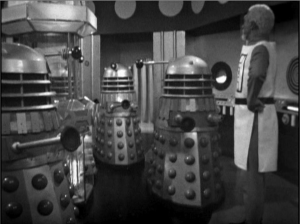
Timestamp 021 The Daleks Master Plan

It’s a fantastic adventure with a lot of intriguing twists and turns that the Doctor and crew stumble into. It nicely capitalized on the thread started in Mission to the Unknown, even if it used the trope of missing an important message due to lack of attention. As a result, one special agent dies and the other almost does, and once again I issue the memo to the future to install annoying ringtones on the communication consoles. If in doubt, ask Nokia.

Meanwhile, Mavic Chen, the Guardian of the Solar System and unfortunate recipient of the yellowface treatment, sides with the Daleks over his own people after preaching about peace and harmony. Politicians never change, I suppose, however I did like how masterful he was in convincing his staff that otherwise faithful agents had betrayed the government.

I did like how Katarina, a girl from ancient Troy, was puzzled over modern medicine. Katarina’s motivations for remaining with the Doctor are unique: She believes that the Doctor is a god who can get her to heaven. It’s quite fitting, given the deus ex machina nature of the Doctor, and particularly chilling in the first-ever companion death in the series. It was an understandable move given how shallow Katarina’s character was, but I was just as shaken as the Doctor and I think it was because of the pure innocence Katarina embodied.

Actually stealing the key from the Doctor was an interesting way to keep TARDIS around, and while I appreciate the creativity in blocking the obvious solution to keeping our heroes out of trouble, I am growing a bit weary of it. The old switcheroo to get the Doctor into the meeting is creative, but how does no one notice the change in his gait or his feet?

I loved Sara Kingdom, a powerful take-charge female character, and her end was chilling as well. It’s a shame that the spin-off series that would have featured her never got off the ground. I also like the footprint effects for the invisible creature, which were impressive for a show of this era and budget.

The re-introduction of the Monk is a bit odd, and it seemed like filler to get the Daleks and Chen in position to chase the TARDIS. Luckily, the writers capitalized on the story point. He did have a suitable end, and as much as I want to see more of the Doctor’s people, I think I’m done with the Monk.

“The Feast of Steven” is an episode that should be excluded from this serial. It doesn’t add to the Dalek story, and the reconstruction doesn’t do it justice. I get what they were trying for since it was broadcast on Christmas Day, but it just doesn’t fit with the plot. On a minor note, the breaking of the fourth wall was a nice touch.

Also, Steven is still an idiot. Why, why, why(!), when he knows that there are Daleks around, would he call attention to himself by yelling for the Doctor? He’s ranking up there as my least favorite long-term companion.

A few minor notes: The cricket pitch scene was humorous, and reminded me of a similar scene in The Hitchhiker’s Guide to the Galaxy; The Doctor’s magic ring is a little too convenient for my tastes; and the final episode is a perfect conclusion to this epic story.

To wrap it up, I finally get the Daleks I know as they betray their allies in their true xenophobic and genocidal fashion.

Rating: 4/5  “Would you care for a jelly baby?”


UP NEXT – Doctor Who: The Massacre of St. Bartholomew’s Eve


The Timestamps Project is an adventure through the televised universe of Doctor Who, story by story, from the beginning of the franchise. For more reviews like this one, please visit the project’s page at Creative Criticality.


An Update on the Timestamps Project

Reports of my surrender are greatly exaggerated. I haven’t given up, nor do I plan on it.

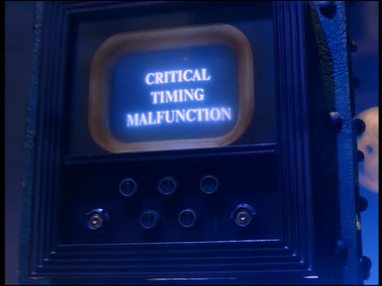
The Timestamps Project was delayed due to an unfortunate hard drive failure that eliminated about half of the content on my media server. Within that data the was consigned to the digital abyss was the Doctor Who collection.

timing

Fear not, as the Timestamps Project will continue. Between efforts to recover the data (apparently, I would need to sell a kidney to afford it) and rebuilding the drives, along with busy season at work, I’ve had to take some time away from the adventures of the Doctor. But that ends tomorrow.

My review of The Dalek’s Master Plan is now in the publishing queue, I have watched The Massacre of St. Bartholomew’s Eve, and will lay eyes on The Ark in the near future. In the rebuilding phase, I have also picked up some backup drives for the server to delay Murphy from visiting again.

This TARDIS is back on track, and I apologize for leaving all of you waiting in the interim. I’m looking forward to getting back to it.

Stay tuned.

Culture on My Mind – Movie Review: Batman Returns (1992)

Culture on My Mind

Culture on My Mind
Movie Review: Batman Returns (1992)
September 4, 2014

Batman Returns is the oft-maligned second child in the Tim Burton-directed Caped Crusader family. Expectations were so high after the first film that, while being an otherwise enjoyable experience, it had no other choice but to disappoint audiences looking for another Batman.

The thing is, this film isn’t supposed to be Batman, and it shows from the beginning with a dark title sequence that tells the origin story of the film’s baddie, The Penguin, to move that element of the plot along during an otherwise useless section of the film. This entry has similar visual styling to the first movie, but the color palette is brighter overall. The sets are better lit and Gotham feels larger and more open with more color added to the shadows and dour grays that dominated the original. This element reaches grotesque levels with Selina Kyle’s apartment, which is dominated in shades of pink to remind the audience (beyond the blatant sexism of Max Shreck) that she is a caricature of the stereotypical female secretary. It’s annoying (and potentially insulting) in its directness, but acts as a deliberate contrast to the strong femme fatale that is Catwoman. It also serves as a setpiece to visually facilitate her destructive transformation. The more lively palette does contrast with the darker, more violent fight scenes in an attempt to convince the viewer of the thematic duality with Catwoman and Batman.

This installment has more of the Burton/Elfman whimsical eccentricity that their collaborations have come to be known for, including sweeping camera pans over highly detailed miniatures with soaring but eerie choral scores. Additionally, the set decoration also retains the art-deco gothic noir mix of the original, melding it with elements of the ’60s camp. All of those exaggerated elements combine with some additional sexual innuendo over the first film to make a still entertaining but slightly lower quality experience. In all honesty, this film has trouble deciding if it wants to be the successor to the 1989 Batman, the 1960s series, or both. That indecisiveness hurts the experience.

Regarding the themes and the plot, this film has trouble deciding how to discuss duality. Catwoman’s motivation is to kill Shreck in both revenge and an attempt to reconcile her new identity. Penguin’s motivation makes less sense, as it seems he wants to gain power over Gotham by killing all of the first born sons and becoming a dictator to, in some way, get revenge against his parents and the society that led to his exile. When Batman stops this threat, Penguin resorts to destroying Gotham to destroy Batman. Batman wants to stop both of them, but also wants to redeem Selina through (here it comes…) the power of love. Though good intentioned, that road to hell is in direct conflict with Catwoman’s thread of feminine power and independence. It also smacks of the backward idea that women who go against societal norms can be “fixed” by providing them with strong male companionship.

It repeats a lot of the romantic themes from the Bruce Wayne/Vicki Vale relationship, but removes part of the duality essential to the Batman character by squeezing the conflict between Catwoman and Batman into the shared overcoming of their split identities. They even hang a lampshade on the plot point of giving up the masks, but then reverse course almost as quickly to retain the character elements. In the end, Batman could not defeat Catwoman because Gotham needed Batman more than Bruce needed Selina. If your head is spinning right now, you’re not alone.

At least the movie addresses the absence of Vicki Vale.

In final random thoughts, the insane Michelle Pfeiffer looks a lot like a more modern Burton alum: Helena Bonham Carter. Second, it is never explained how the Penguin’s minions got schematics for the Batmobile. That plot hole is an annoyance. Last, the obvious eye makeup goof when Batman takes off his mask also annoys me. Audiences are smart enough to realize that the rubber mask doesn’t quite cover the space around Michael Keaton’s eyes.

Overall, Batman Returns is enjoyable, but suffers greatly from indecisiveness, both in themes and tones. It wasn’t horrible, but it could have been more.

My Rating: 7/10
IMDb rating: 7.0/10

cc-break

Culture on My Mind is inspired by the weekly Can’t Let It Go segment on the NPR Politics Podcast where each host brings one thing to the table that they just can’t stop thinking about.

For more creativity with a critical eye, visit Creative Criticality.

Schedule for Dragon Con 2014


Now that the full schedule has been released for Dragon Con 2014, I can tell you where I will be as a panelist for this year’s con.


Thursday

I will be arriving to the convention area on Thursday morning, and will hit up the registration line to get my badge and program. After that…

4pm – Dragon Con Newbies Meetup and Hotel Tour (Marriott A601 – A602)
Want to know the best way to get from one hotel to another? Need to learn where the food court is? If so, come on this walking tour and find out! I will be helping to coordinate this with Kevin Bachelder, Sue Kisenwether, and Kim McGibony.

5:30pm – Dragon Con Newbies Q&A and Social (Marriott A601 – A602)
Meet fellow first time con attendees and many long time attendees in a casual setting. Ask questions and learn about the awesomeness that is Dragon Con. Again, I will be helping to coordinate this with Kevin Bachelder, Sue Kisenwether, and Kim McGibony. This event is schedule for 2.5 hours, but it is not required that attendees stay the entire time. Come and go as you want.


Friday

10am – Dragon Con 101 (Hyatt Regency V)
Connect with fellow newbies and get helpful advice/tips from several long-time con attendees to get the most out of the Dragon Con experience. Again, I will be helping to coordinate this with Kevin Bachelder, Sue Kisenwether, and Kim McGibony. This event is scheduled for 2.5 hrs, but it will be a come and go type of panel. I will be leaving about halfway through for the next event on my schedule.

11:30am – Farscape Revisited! (Hyatt Centennial I)
Check in with the stars who played favorite characters. This year’s guests are Gigi Edgley (Chiana) and Lani Tupu (Pilot/Crais). I will be facilitating the discussion with the fans by standing in the center of the room and holding the wireless microphone.

4pm – Quantum Leap 25th Anniversary (Marriott M303-M304)
Every Scott Bakula show and movie is really Sam, still leaping. Discuss. I will be joining panelists Keith R. A. DeCandido and Tegan Hendrickson.


Saturday

10am – Geek Year 1984: Classic Sci-fi Roll-A-Panel (Marriott M303-M304)
A 20-sided die decides which classic sci-fi TV shows or movies from 1984 this panel will geek out about. For this randomized goodness, I will be joining a large cast of geeky experts including Joe Crowe, Kevin Eldridge, Tegan Hendrickson, Michael D French, Michael Gordon, Melinda R. Mock, and Phantom Troublemaker.

5:30p – Indiana Jones and the Temple of Doom: No Time For Love (Marriott M303-M304)
Celebrating the 30th anniversary of Short Round, Club Obi Wan, and the runaway mine cart. I will be joining panelists Elizabeth Jones, Jessa Phillips, and Shaun Rosado


Sunday

8:30am – Batman: 75th Anniversary of Justice (Marriott M303-M304)
It’s an early morning panel! Cramming a month of awesome things about the best superhero ever into a one-hour window. I’ll be joining panelists Mike Faber, Michael Gordon, John S. Drew, Geena Phillips, and Will Price… along with a large cup of coffee.


The rest of the con will be spent catching up with friends and family, watching the costumes that never disappoint, and celebrating all things geek for four days. See you there!

DC2014 logo

Timestamp #20: The Myth Makers

Doctor Who: The Myth Makers
(4 episodes, s03e06-e09, 1965)

Timestamp 020 The Myth Makers

Doctor Who visits the Trojan war. The serial’s opening battle seems almost comical, but does a decent job of establishing the conflict among the plot’s characters. Looking back from 2014 to 1965, the Doctor pretending to be a god in order to more freely explore the setting is a clever meta nod to the deus ex machina that is Doctor Who. With his virtual immortality, changing faces, and supernatural abilities in comparison to the cultures he visits, The Doctor is, quite literally, a god in a machine.

The serial seems rather run of the mill, though the re-interpretation of the stories from myth are quite refreshing to see. It was a fairly clever ruse to rescue Vicki from the Trojans, and it was hard to watch her leave the TARDIS and the Doctor. I will certainly miss her wit and spunk. Her departure seemed rushed but still emotionally touching, and it will be interesting to see how the Doctor will respond. Unfortunately, this leaves us Steven (ugh) and the unknown (but quite limited) variable of Katarina as companions leading into the twelve-part master plan of the Doctor’s most powerful enemies.

As a side note but not a hit to the score for this review, the reconstruction’s music track is pretty bad. It sounds like a warped 45 RPM record, but there’s probably not much they can do about it since this serial is lost. It was distracting, but easy to work around.


Rating: 3/5  “Reverse the polarity of the neutron flow.”


UP NEXT – Doctor Who: The Daleks’ Master Plan


The Timestamps Project is an adventure through the televised universe of Doctor Who, story by story, from the beginning of the franchise. For more reviews like this one, please visit the project’s page at Creative Criticality.

Culture on My Mind – Goodbye, Robin Williams

Culture on My Mind

Culture on My Mind
Goodbye, Robin Williams
August 13, 2014

Good-Morning-Vietnam-robin-williams-25340806-500-338

Few celebrity deaths in recent times have hit me as hard that of Robin Williams. Unless I have met them in person, I usually see celebrities as people who entertain me for a living, but not as friends or family. It’s a nice touch to wave a greeting, shake hands, or even exchange a few words at a convention, but in general, they are strangers that I invite in for a few hours to make me laugh, cry, or think.

Robin Williams was different for me.

He made a mark with his unique style of original, lively, rapid-fire wit and delivery. His one-man stage shows were always fantastic – Live on Broadway had me in stitches for the entire duration – and his films were a centerpiece of my childhood’s cinematic awakening. He wasn’t family, but he was loved for the impacts he made on my life.

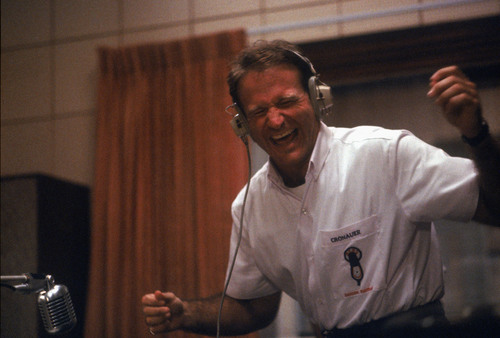
I first encountered him in Good Morning, Vietnam as he portrayed Airman Adrian Cronauer, a DJ for the Armed Force Radio Service. The film has always been my benchmark for his humor and zany voices, as well as his dramatic skills as the horrors of war caught up with Cronauer.

The second major slice of Williams in my life was in Disney’s Aladdin, where his mostly improvised on set lines were the lifeblood of one of my favorite entries from the Mouse House. The third biggest influence on my life from his catalog is the oft-maligned Hook, which grabbed me with the transition from Williams acting like a responsible adult to embracing the bang-a-rang child that is Peter Pan. Robin Williams made Hook work for me.

I adored his comedic turns in films like Happy Feet and Mrs. Doubtfire, and enjoyed his dramatic roles in Dead Poets Society and Good Will Hunting. I deeply enjoyed catching re-runs of Mork and Mindy, and even though his darker roles like One Hour Photo never clicked with me, I was glad to see him trying to break free of comedic typecasting.

Robin Williams made a major impact on both the industry and audiences, and the world is a much darker place without the light of his genius and wit. His death is both tragic and heartbreaking, and has come far too soon.

Godspeed, dearest genie, for you are free. You will be deeply missed.

May you rest in peace.

cc-break

Culture on My Mind is inspired by the weekly Can’t Let It Go segment on the NPR Politics Podcast where each host brings one thing to the table that they just can’t stop thinking about.

For more creativity with a critical eye, visit Creative Criticality.

Culture on My Mind – Protecting our Childhoods

Culture on My Mind

Culture on My Mind
Protecting our Childhoods
July 28, 2014

Jar-Jar-Binks-jar-jar-binks-25900310-500-223

If there’s one thing fans treasure, it’s the memories that their favorite franchises helped them develop. Science fiction is a metaphor for the human condition, and those memories have the power to develop fans into caring and productive members of society starting at childhood. It’s understandable how placing those personality building blocks into another creator’s hands can inspire immediate feelings of revulsion and fear, but it’s far less understandable how a reboot or reimagining is comparable to a violent personal violation.

Ferrell

Let’s presume for the moment that fans actually mean what they say in this case. Rape is a serious crime, and not simply through the books of law. Rape is a physical, mental, and emotional assault that has long-reaching effects in the victim’s life. Rape is a personal violation and an exercise of absolute power over the powerless.

The statistics on sexual assault are staggering. In the United States, another person is sexually assaulted every two minutes. One in six women are victims, as are one in thirty-three men. Sixty percent of sexual assaults are not reported to authorities, and a staggering ninety-seven percent of rapists will never spend a single day in jail for their crimes. Rape victims are three times more likely to suffer from depression, six times more likely to suffer from post-traumatic stress disorder (PTSD, the same disorder found in war veterans), and are four times more likely to contemplate suicide. The effects are so long-reaching that survivors of sexual assault who see references to rape are viscerally reminded of being helpless and powerless and completely at the mercy of a hostile (and often well-known or trusted) force.

There are cases of childhoods that were lived and survived around rape and incest. Those are real lives affected by real crimes, not the pettiness of a bad adaptation of a favorite Saturday morning cartoon. Using rape terminology to describe the latest attempts by Michael Bay, Will Ferrell, George Lucas, or J.J. Abrams to do their jobs trivializes the traumas of real rape victims, as if voluntarily watching the new Teenage Mutant Ninja Turtles adaptation matches in any way with being sexually assaulted.

Using rape terminology to describe feelings over a cherished franchise being revisited is disgusting and insensitive.

Next, let’s presume that when these fans say “rape,” they really mean “ruin.”

We live in an era of geek renaissance. Between the cultural awakening in the mainstream with The Big Bang Theory (one of the most popular panels at conventions) and the financial success of the Marvel Cinematic Universe, geek culture is being catered to with a golden tea set. It’s a digital era dominated by rebirth of cherished franchises once thought dead. Almost anything fans could want to revisit exists on physical or digital media, including BitTorrent. Linked childhood memories are only a click or two away.

Unless the evil creative of choice has a time machine (or fandom are collectively taking mind-altering drugs), both the memories and source material are safe. Quite honestly, the concern behind “ruining” a franchise or childhood memories is a hollow first-world problem dominated by a sense of narcissism and a false sense of ownership over entertainment productions.

As fans, we aren’t owed anything by creators. Hollywood and other entertainment venues are businesses, first and foremost, and those businesses have no contracts to make things exactly the way we want. Entertainment must appeal to the general audience first in order to earn a decent return on investment. If you don’t believe me, take a look at the domestic performances behind Pacific Rim, Sucker Punch, and Watchmen, all of which were niche films designed to attract genre fans and failed to meet their budgets.

Producers, writers, and directors have one job in their fields, and that is to make a generally accepted entertainment product that sells well. To that end, fans are consumers and nothing more, and are not even required to take in entertainment they don’t want to see. Everyone has the freedom to skip entertainment choices that don’t appeal to them.

The argument that modern creatives are ruining properties or memories is a false one. If childhood memories could be destroyed by a lackluster adaptation or vision, there are deeper problems with that childhood than entertainment choices. In that case, I recommend seeking help.

The worst part about either of the arguments about childhood memories being defiled is they both contribute to toxic cultural atmospheres. Both claims infer a personal assault, an act that never truly occurs against any of us, and transform a community based on enjoying, analyzing, and celebrating entertainment and its deeper meanings into a group of pessimists and cynics who tend to find the negative in every minute of film and paragraph of news.

The rape claims do even worse damage by trivializing the horrors of sexual assault and enhancing a culture that uses sexual assault as a punchline. In a community that decries racism, homophobia, and bullying, and is constantly haunted by the stigma of pedophilia and sexism, it is odd that we would so easily laugh off rape.

Science fiction and fantasy often speak of the need for tolerance and open-mindedness, and it is possible for genre fans to be critical of favorite properties without casting themselves as the victims in a fanciful morality play. Modern storytellers won’t have to destroy our childhoods because we are the ones betraying the lessons we claim to have learned.

Our community needs to return to the spirit of acceptance beneath the banner of celebration and wonder, and it needs to stop suffering from prejudice against new perspectives and ideas. We need to stop destroying ourselves in a misguided effort to protect ourselves. Only then will we truly have upheld the legacies of our childhoods.

cc-break

Culture on My Mind is inspired by the weekly Can’t Let It Go segment on the NPR Politics Podcast where each host brings one thing to the table that they just can’t stop thinking about.

For more creativity with a critical eye, visit Creative Criticality.

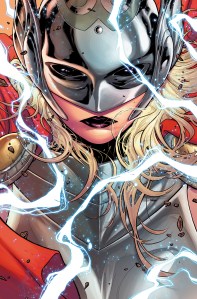
Culture on My Mind – A Mighty Lady Thor

Culture on My Mind

Culture on My Mind
A Mighty Lady Thor
July 21, 2014

You’re right, a female Thor is a publicity stunt.

It honestly couldn’t be any other way. Marvel is an entertainment company, and the way they make money is by drawing as many eyes to their product as possible. That requires publicity. Everything they do requires publicity. The same goes for every book you read, every television episode you watch, and every movie you see. Even the news pays this game, from your local hometown to global giants like CNN and Al Jazeera. Every last marketing effort is designed to provide a pleasing stimulus to your brain which entices you to spend your time and money with them alone.

Publicity stunts are business as usual in today’s era.

So, if we can’t complain about it being a publicity stunt, it must be some politically correct intrusion on comics fandom, right? Only if you discard the Asgardian superheroes Valkyrie and Sif, or even other strong female characters like Captain Marvel, Storm, Jean Grey, Black Widow, Rogue, Mystique, Peggy Carter, and so on. I firmly believe that comics fandom needs more strong and positive female role models, but to suggest that transferring Thor’s powers into a woman is done only to meet some abstract and non-existent diversity quotient is disingenuous and ignorant.

With those two excuses removed, it must be that Marvel is simply ruining this character’s long-standing tradition and legacy, right? Absolutely not. The pure and simple truth is that comics fandom should be fully embracing this experiment. Comic characters tend to exist for decades, and only because they continually get reinvented, for better or for worse. Batman, Superman, and Wonder Woman have undergone several rebirths and redesigns, and they’ve been around for 75 years. The reason that these characters have such longevity is because they stay socially relevant instead of trapped in time. If you want your heroes and myths to continue to exist, they need to evolve and experiment.

The old stories can only go so far before they become stale or stagnant. As a fan of these characters, I want to see them in new situations that haven’t been told before. I’d love to see more gender-swapped characters in our modern myths if only to experience their stories from a new point of view or in new situations that a new perspective provides.

I love the idea of a black Johnny Storm in a modern non-traditional family with a story not based on previous comics. I love the idea of Lex Luthor being a modern Facebook-style billionaire mogul. I love the idea putting the legacy of a light-hearted red-head teenager in the drama of the real world.

I simply love the idea of a woman being worthy to hold Mjolnir and the power of Thor. It means that Thor’s legacy proudly carries on and our modern myths continue to thrive.

THOR-001_cover

cc-break

Culture on My Mind is inspired by the weekly Can’t Let It Go segment on the NPR Politics Podcast where each host brings one thing to the table that they just can’t stop thinking about.

For more creativity with a critical eye, visit Creative Criticality.

Culture on My Mind – Page to Screen: “Sahara” by Clive Cussler

Culture on My Mind

Culture on My Mind
Page to Screen: “Sahara” by Clive Cussler
July 16, 2014

SAHARA

Clive Cussler hadn’t really popped up on my radar before a good friend of mine gave me his collection of novels. I knew that Cussler existed, and that he wrote adventure thrillers, but that’s as far as it went. When my friend piled his collection into my car, he told me that Cussler was what he grew up on and that they were fun but not terribly deep adventures. Before that moment, I had seen the movie version of Sahara, and was eager to read the original novel to see how well they both stacked up.

The premise of the story centers around a rapidly expanding contamination that is threatening the Sahara region and the world. In the book version, this contamination is a red algae bloom that is spreading across the ocean and will absorb the planet’s oxygen supply in short order. Protagonists Dirk Pitt and Al Giordino race to find the source of this algae, which they determine is coming from an underground river system in the Sahara and is being driven by a mad general and a businessman with a solar reactor. Meanwhile, secondary characters Eva Rojas and a UN scientific team are trace a disease stemming from the same contamination source as it ravages the Malian people. The two teams eventually come and chaos ensues. The book is far more complex than the film, and in general, the multiple threads detract from the story. The book deals with the CSS Texas, a buried political conspiracy from the late days of the American Civil War, the mystery of a missing aviator, the red algae, and the Mali illness in conjunction with a corrupt government. The algae/illness thread takes center stage, with Pitt and Giordino driving the story as they uncover the origins and try to stop it. The aviator and the Texas lines take a backseat and are added for spice, with the latter being resolved as a mind-bending (but ultimately hollow) afterthought.

The movie version also centers on Pitt and Giordino, but their motivation is the novel’s tertiary plotline of finding the long-lost American Civil War ironclad CSS Texas. Rojas and Frank Hopper (one of her teammates from the book) are tracking down the same illness, and the movie focuses on trying to resolve that thread while Pitt seeks out the ship. The movie is a straightforward action adventure film with Pitt (played by Matthew McConaughey) and Giordino (played by Steve Zahn) playing Indiana Jones and Sallah seeking treasure. The illness thread comes into play as the pair enter Mali during their search, and Rojas (played by Penélope Cruz) joins Pitt to resolve both plotlines in a rather explosive manner.

The downside to the book is Pitt’s superhero status. He always has the solution to the myriad of situations they land in, quite often making the cinematic James Bond an everyday citizen in comparison. The man is even injured by gunfire, beatings, and severe dehydration, yet always seems to spring back with minor detriment to his skills and abilities. In the movie, he’s still an action star, but he’s a bit more believable with McConaughey’s charm to interpret Pitt’s wit. In both versions, Giordino takes second seat to Pitt, but he’s a slightly better character as a gunslinger in the book rather than the comic relief in the movie. Eva Rojas is a damsel in distress in both instances, but is more empowered in the movie.

The movie drops the Civil War political conspiracy and the missing aviator threads, and also notably drops the book’s cameo by the author. Yes, Cussler wrote himself into the novel for a short period, and the character even shared his name. That moment, which cues the novel version of Pitt into the Texas story, nearly made me set the book down in disgust.

Overall, both versions of the story were fun, but nothing more significant than beach or popcorn fare. I have a soft spot for empty entertainment calories, so that’s not a big hit against either. The book takes a hit from secret agent Super Pitt, where the movie stumbles by changing Pitt’s motivations from ecology to treasure hunting. While the plot of the entire world being in peril is a bit extreme for a maritime ecologist, the movie version seems to be working for NUMA just for the scuba diving. Between the two versions, I prefer the film, although I will continue to read the Cussler novels to further explore Dirk Pitt’s adventures.

Novel rating: 3.0/5
Goodreads rating: 3.92/5

Movie rating: 6.0/10
IMDb rating: 6.0/10

cc-break

Culture on My Mind is inspired by the weekly Can’t Let It Go segment on the NPR Politics Podcast where each host brings one thing to the table that they just can’t stop thinking about.

For more creativity with a critical eye, visit Creative Criticality.

Timestamp #19: Mission to the Unknown

Doctor Who: Mission to the Unknown
(1 episode, s03e05, 1965)

Timestamp 019 Mission to the Unknown

This is a nice interlude that shows the audience a slice of time and space around the Doctor Who mythos in a completely Doctor-less story. In fact, the Doctor passes by the planet at the end of Galaxy 4, totally unaware that this threat is rising to meet him in short order. This is the kind of interweaving mythology and storytelling that I dig.

This episode is pretty much James Bond meets Doctor Who with the Space Security Service and their license to kill. I really want to see the proposed series that this small entry was supposed to springboard, as it would be fun to see the Service as they hunt Daleks across the universe. Since the Doctor usually has trouble defeating them, I really want to know how a group of humans would tackle the Daleks.

By the end, the Daleks are assembling a coalition of the greatest powers across seven galaxies to defeat Earth. It will be interesting to see how this plays out in the twelve-part The Daleks’ Master Plan. The Daleks seem significantly less xenophobic in the early years, but that may just be a ploy in order to destroy everyone all at once.


Rating: 4/5 – “Would you care for a jelly baby?”


UP NEXT – Doctor Who: The Myth Makers


The Timestamps Project is an adventure through the televised universe of Doctor Who, story by story, from the beginning of the franchise. For more reviews like this one, please visit the project’s page at Creative Criticality.